
How Blockchain Ensures Election Integrity: Security, Transparency, and Reality
Imagine casting your vote from your phone and watching it land on a public ledger that no one can alter. It sounds like science fiction, but it is the promise of blockchain technology in electoral systems designed to ensure integrity through immutability and transparency. For decades, we have trusted paper ballots and centralized counting machines. But as cyber threats grow, so does the demand for a system that is both secure and verifiable by anyone.
The core question isn't just whether blockchain *can* work-it's whether it actually makes elections safer than the methods we use today. The answer lies in how distributed ledgers handle data differently than traditional databases. Instead of storing votes in one place where they can be hacked or lost, blockchain spreads them across thousands of computers. This creates a network where changing a single vote would require rewriting history on every device simultaneously-a task that is practically impossible.
The Mechanics of Trust: How Immutable Ledgers Work
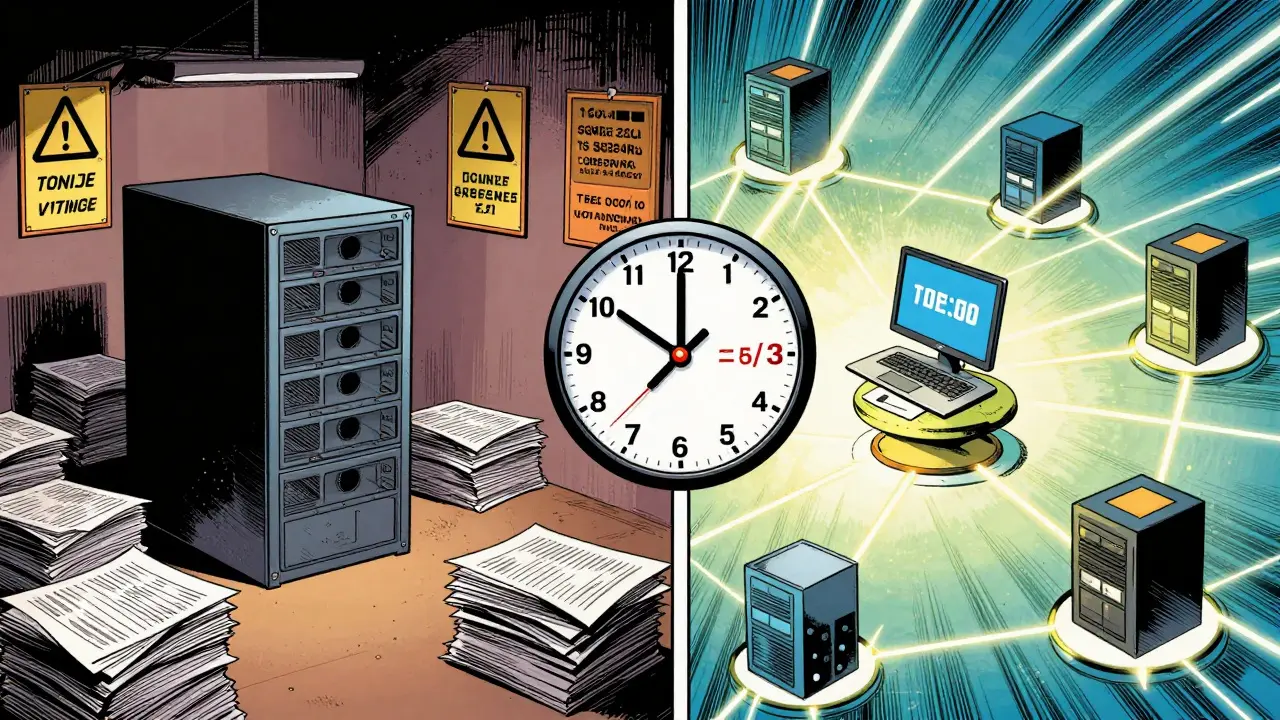
To understand why blockchain is considered a game-changer for election integrity, you need to look at its basic architecture. Traditional electronic voting systems often rely on a central server. If that server is compromised, the entire election is at risk. Blockchain removes this single point of failure.
Here is how it works in practice:
- Distributed Ledger Technology (DLT): Every vote is recorded as a transaction. This transaction is broadcast to a network of nodes (computers). Each node keeps a copy of the ledger. There is no master file.
- Cryptographic Hashing: Each block of votes contains a unique digital fingerprint (hash) of the previous block. If someone tries to change a vote in Block 10, the hash changes. This breaks the chain with Block 11, making the tampering obvious to everyone instantly.
- Consensus Mechanisms: Before a vote is added, the network must agree it is valid. In proof-of-work or proof-of-stake models, this requires significant computational effort or stake, preventing bad actors from flooding the system with fake votes.
This structure ensures that once a vote is cast, it is permanent. You cannot delete it, edit it, or hide it. For an election, this means the final tally is mathematically guaranteed to match the individual inputs. No more "lost" ballots or mysterious discrepancies between precincts and national totals.
Voter Authentication and Privacy: The Double-Edged Sword
Security is only half the battle. An election system must also verify who is voting without revealing how they voted. This is where smart contracts and advanced cryptography come into play.
In a blockchain-based system, voter identity is usually separated from the vote itself. Here is the typical flow:
- Identity Verification: Before voting opens, voters undergo a rigorous KYC (Know Your Customer) process. This might involve biometric data, government IDs, or existing digital identities. Once verified, the voter receives a unique cryptographic key.
- Anonymous Casting: When the voter casts their ballot, they sign it with their private key. The blockchain records the signature to prove the vote came from an eligible voter, but it does not link the signature to the specific candidate chosen.
- Zero-Knowledge Proofs: Advanced systems use zero-knowledge proofs (ZKPs). This allows the network to verify that a vote is valid (e.g., the voter is registered, hasn't voted twice) without revealing any information about the vote content.
This separation is crucial. It prevents coercion because no one can prove *how* you voted, even if you show them your screen. At the same time, it prevents fraud because the system knows exactly who has already voted. Unlike paper ballots, which can be stuffed or duplicated, blockchain keys are unique and non-transferable.
| Feature | Traditional Paper/Electronic | Blockchain-Based System |
|---|---|---|
| Data Storage | Centralized servers or physical boxes | Distributed across multiple nodes |
| Tamper Resistance | Low to Medium (vulnerable to insider threats) | High (requires compromising majority of nodes) |
| Auditability | Manual recounting; slow and expensive | Real-time, independent verification by anyone |
| Transparency | Opaque until results are announced | Public ledger visible throughout the process |
| Cost Efficiency | High logistical costs (printing, transport) | Lower long-term operational costs after setup |
Real-Time Auditing and Public Trust
One of the biggest issues with modern elections is trust. When people don't see the counting process, they suspect foul play. Blockchain solves this by enabling real-time auditing.
In a traditional system, you wait days for results. With blockchain, every vote is timestamped and added to the ledger immediately. Independent observers, journalists, and even candidates can monitor the blockchain in real-time. They don't need access to the internal servers; they just need a wallet address to view the public ledger.
This transparency extends to the entire supply chain of the election. You can track:
- When voter registration updates occur.
- When polling stations open and close.
- When votes are transmitted from local devices to the main ledger.
If a discrepancy arises-say, a precinct reports 5,000 votes but the blockchain only shows 4,900-the issue is flagged instantly. There is no room for "statistical anomalies" to explain away missing votes. The data is either there, or it isn't. This level of scrutiny forces honesty from all parties involved.
Challenges and Risks: It’s Not All Perfect
While the theory is sound, the reality of implementing blockchain voting is complex. Critics raise valid concerns that cannot be ignored.
Scalability Issues: Current blockchain networks can struggle with high transaction volumes. During peak voting hours, millions of users might try to cast votes simultaneously. If the network slows down, it could disenfranchise voters. Solutions like layer-2 scaling protocols are being developed, but they add complexity.
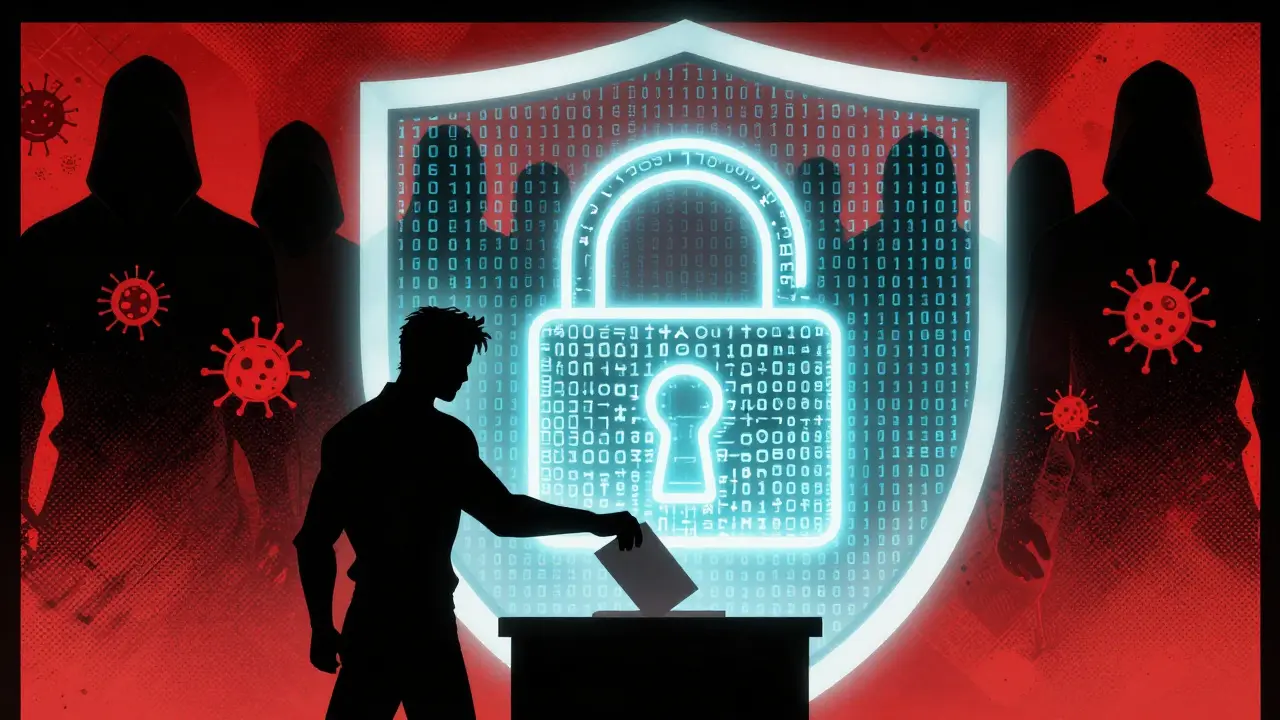
Device Security: Blockchain secures the *ledger*, not the *device*. If a voter’s phone is infected with malware, the attacker could steal their voting credentials or manipulate the input before it reaches the blockchain. This is known as the "client-side vulnerability." Securing the endpoint remains a major challenge.
Accessibility and the Digital Divide: Not everyone has a smartphone or reliable internet access. Relying solely on digital voting could exclude elderly citizens, low-income households, or rural populations. A hybrid model, offering both digital and paper options, is often recommended to ensure inclusivity.
Regulatory Hurdles: Laws vary widely across countries. Some jurisdictions require a physical paper trail for legal recounts. Blockchain votes exist only in digital form. Without clear legal frameworks recognizing digital signatures as equivalent to handwritten ones, blockchain voting faces significant legal barriers.
The Path Forward: Hybrid Models and Pilot Programs
Given these challenges, most experts advocate for a gradual approach. Estonia has been a pioneer, using blockchain for e-residency and some municipal votes, but even they maintain robust backup systems. The future likely lies in hybrid models.
Imagine a system where:
- Voters cast ballots digitally via blockchain for speed and convenience.
- A random sample of votes is printed on paper for physical audit trails.
- Smart contracts automatically trigger recounts if discrepancies exceed a certain threshold.
This combines the efficiency of blockchain with the psychological comfort of paper. It also allows governments to test the technology on a small scale before rolling it out nationally. Pilot programs in local elections can help identify bugs, improve user interfaces, and build public trust.
Education is equally important. Voters need to understand how to protect their devices and verify their votes. Simple tools, like QR codes that let voters check if their vote was recorded correctly without revealing their choice, can bridge the gap between technical complexity and user confidence.
Can blockchain voting be hacked?
The blockchain ledger itself is extremely difficult to hack due to its decentralized nature. However, the endpoints (voters' devices) and the software interfaces can be vulnerable. If a hacker compromises a voter's device, they could steal credentials or manipulate the vote before it enters the blockchain. Therefore, device security is just as critical as network security.
Does blockchain voting reveal how I voted?
No. Properly designed blockchain voting systems use encryption and zero-knowledge proofs to separate voter identity from vote content. While the ledger proves that a valid voter cast a vote, it does not link that vote to a specific candidate or person, ensuring secrecy.
Why aren't all countries using blockchain for elections?
Implementation is complex and costly. It requires significant infrastructure upgrades, new laws, and extensive voter education. Additionally, concerns about scalability, digital divides, and potential technical failures make many governments hesitant to replace proven paper systems entirely.