
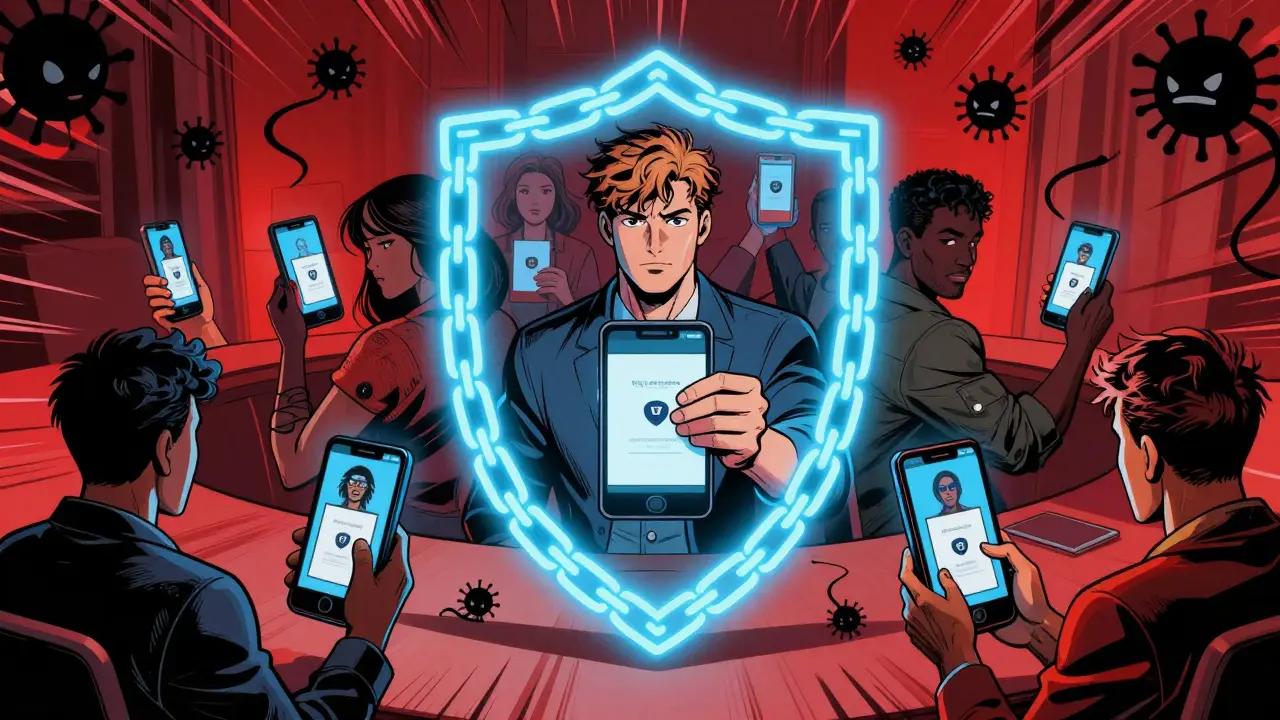
Online Voting with Blockchain Technology: Promise vs Reality in 2026
Imagine casting your vote from your couch, knowing it can’t be lost, changed, or erased. That’s the dream behind blockchain voting. It sounds perfect: tamper-proof records, instant results, and no more waiting days for counts. But here’s the truth - while the idea is exciting, real-world use is still a risky experiment, not a solution.
How Blockchain Voting Actually Works
At its core, blockchain voting replaces paper ballots with digital ones stored on a distributed ledger. Each vote is turned into a unique encrypted token - like a cryptocurrency transaction. It gets a timestamp, a unique ID, and is added to a block. Once that block is linked to the previous one, the vote becomes permanent. No one can delete it. No one can alter it. That’s the immutability promise.
Voters don’t submit their names. Instead, they use a public key - a digital fingerprint - to prove they’re eligible. A ballot token is sent to their secure digital wallet. They cast their vote, and the system records the choice without linking it to their identity. Smart contracts then automatically tally the votes. Systems like BELEM use this method to count votes in real time without human intervention.
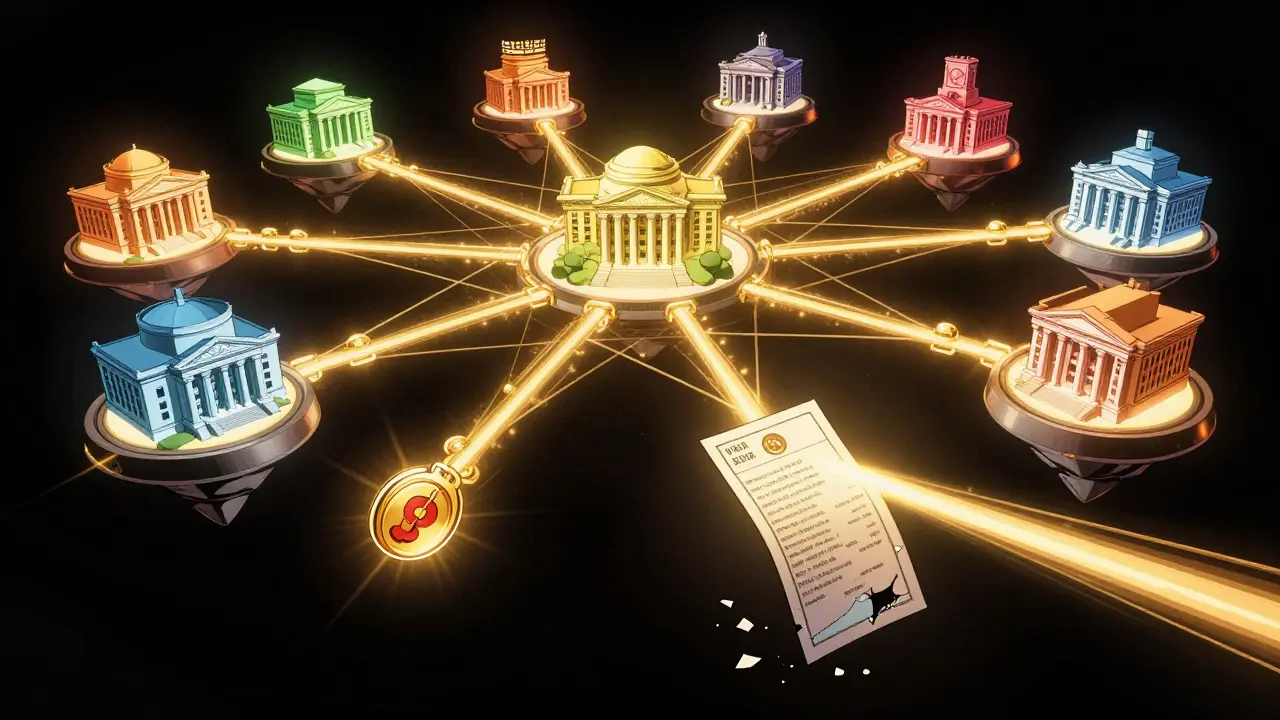
There are two main models. The first is a multi-owner chain, where multiple independent groups - like universities, NGOs, or local governments - run nodes together. No single entity controls the system. The second is a single-owner chain, where one organization runs everything. The first sounds more democratic. The second is easier to manage - but defeats the point of decentralization.
Why People Think It’s a Game-Changer
Supporters point to real benefits:
- Transparency: Anyone can verify the chain. No secret counting rooms.
- Immutability: Once a vote is in, it’s locked forever. No recounts needed.
- Accessibility: People with disabilities, overseas citizens, or those in remote areas could vote easily.
- Speed: Results could be ready in minutes, not days.
- Cost reduction: No printing, no polling stations, no manual counting.
The Brookings Institution says blockchain could cut fraud, boost turnout, and make elections more efficient. Academic papers from the University of Minnesota and PMC highlight its potential for non-repudiation - meaning voters can’t deny they voted, and no one can deny a vote was cast.
Some pilot programs are already testing this. A few cities in the U.S. and Europe have run small-scale blockchain votes for student councils, neighborhood associations, and even co-op board elections. The BELEM system has been tested with electronic voting kiosks, showing it can integrate with existing hardware. But these are tiny tests - not national elections.
The Big Problem: It Doesn’t Solve the Real Risks
Here’s where the dream cracks. Blockchain doesn’t fix the weakest link: the voter’s device.
Let’s say you vote on your phone. What if your phone is infected with malware? What if a hacker intercepts your vote before it even reaches the blockchain? What if someone forces you to vote a certain way while you’re alone at home? The blockchain doesn’t care. It just records what it receives.
David Jefferson from the U.S. Vote Foundation says it plainly: “Blockchain is not a security strategy.” The technology is brilliant at recording data. But it doesn’t stop phishing, coercion, or device hacking. Those threats happen before the vote hits the chain.
MIT’s Digital Currency Initiative warns that online voting - blockchain or not - could lead to nation-scale election failures. A single cyberattack could knock out servers, flood networks with fake traffic (DoS attacks), or corrupt voter registration databases. Blockchain nodes can’t protect against this. They’re just more servers. More redundancy doesn’t mean more safety.
And what about voter secrecy? If someone can link your public key to your identity - through a data leak, a social media post, or a compromised app - your vote becomes traceable. That’s not just a privacy issue. It’s a threat to democracy.
Who Can Even Use It?
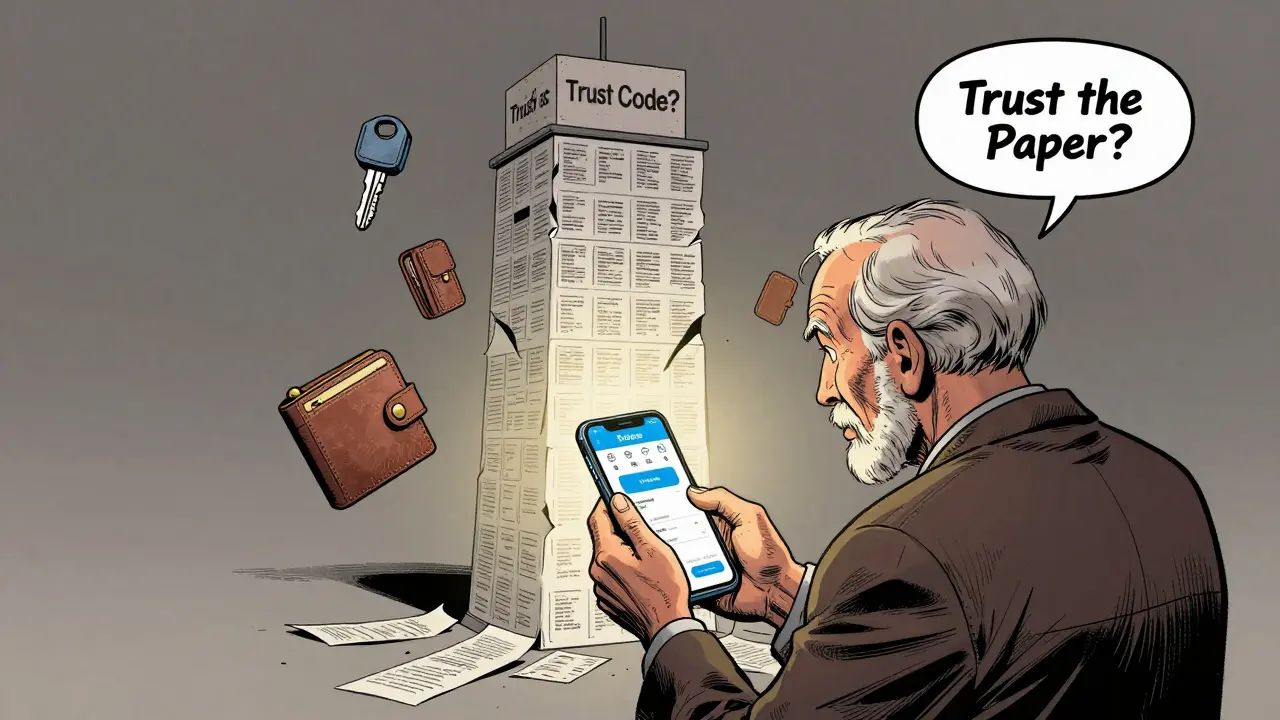
Blockchain voting assumes you’re tech-savvy. You need to:
- Download a secure app
- Set up a digital wallet
- Understand public/private keys
- Keep your private key safe (if you lose it, you can’t vote)
- Trust the software provider
That’s a tall order for elderly voters, low-income communities, or people with limited digital access. The U.S. Vote Foundation found that digital voting systems often reduce participation among marginalized groups - not increase it. People who already struggle to vote may get left behind entirely.
Plus, there’s no paper trail. If a system glitches or gets hacked, there’s no way to audit votes manually. Paper ballots let you recount. Blockchain? You’re stuck trusting the code.
Real-World Use Today - Not Elections, But Smaller Votes
Right now, blockchain voting works best in low-stakes settings:
- Company shareholder meetings
- Homeowners’ association ballots
- University student government elections
- Union votes
In these cases, the risk is low. The number of voters is small. The consequences of a mistake aren’t national. That’s why most real deployments are here - not in presidential elections.
Some governments are experimenting. Estonia has used blockchain in limited municipal votes since 2019. West Virginia tested it for overseas military voters in 2018. But even these pilots had security audits that found flaws. No major country has adopted it for national elections.
The Verdict: Too Early, Too Risky
Blockchain voting isn’t a scam. It’s not magic. It’s a tool - and like any tool, it’s only as good as the job it’s meant to do.
For private organizations, it’s promising. For public elections? Not yet.
The technology delivers on its core promise: unchangeable records. But elections need more than that. They need secrecy, accessibility, verifiability, and protection from coercion - all before the vote even reaches the chain. Blockchain doesn’t solve those problems. It just records them.
Until we can guarantee that every voter’s device is secure, every voter is protected from pressure, and every system is auditable without code - paper ballots remain the most secure option. Not because they’re old-fashioned. Because they’re human.
Blockchain voting might one day play a role. But right now, it’s an experiment. And democracy shouldn’t be a beta test.
Can blockchain voting prevent election fraud?
Blockchain prevents tampering after a vote is cast, but it doesn’t stop fraud before that. If someone hacks your device, impersonates you, or forces you to vote, the blockchain will still record it as legitimate. It protects the record, not the process.
Is blockchain voting more secure than online voting without blockchain?
Not really. Both rely on the same internet infrastructure. Both are vulnerable to phishing, malware, and denial-of-service attacks. Blockchain adds record-keeping, not security. It’s like putting a vault in a house with an open window.
Have any countries used blockchain for national elections?
No major country has used blockchain for national elections. Estonia and West Virginia ran small pilots, but they were limited to specific groups - like overseas voters or municipal ballots. No system has passed independent security reviews for large-scale use.
Why don’t we just use blockchain for everything?
Because blockchain isn’t a fix-all. It’s great for tracking transactions, but elections aren’t just about recording votes. They’re about trust, privacy, and protecting people from coercion. Blockchain doesn’t address those human factors. It’s a ledger, not a shield.
What’s the biggest barrier to adopting blockchain voting?
The biggest barrier isn’t technology - it’s trust. Voters need to believe the system is fair, secure, and accessible. Right now, most people don’t understand how it works. Experts warn it could make elections less secure. And without paper backups, there’s no way to verify results independently.





Interesting take. I’ve been thinking about this a lot since my cousin in rural India tried voting online last year and got locked out because she didn’t understand the wallet setup. Blockchain sounds fancy, but if it leaves out people who need it most, what’s the point?
I appreciate how thoroughly you laid out the risks. The device vulnerability point is critical - no amount of blockchain magic fixes a compromised phone. And the lack of a paper trail? That’s not just a technical flaw, it’s a democratic one. We’ve seen too many systems collapse under blind trust in code.
bro u just said blockchain is a tool like a hammer… but u forgot to mention that hammers don’t get hacked lmao. also who the hell is gonna explain public keys to my grandma? she still thinks ‘email’ is a type of soup. this is peak tech bro delusion.
YESSSS this is exactly why we need to keep pushing forward! 💪 The tech isn’t perfect yet - but that’s why we’re here! Imagine a world where your vote from a tent in a refugee camp is just as valid as someone in a penthouse. That’s the future. Let’s not give up because it’s hard.
There’s something deeply human about paper ballots. Not because they’re analog, but because they’re tangible. You hold it. You fold it. You drop it. There’s ritual in that. Blockchain removes that. It turns participation into a transaction. And democracy isn’t a transaction - it’s a covenant.
Maybe we’re trying to solve a social problem with a technical fix. That’s like trying to heal loneliness with a better Wi-Fi signal.
I agree with the core argument - and I’d like to add: the assumption that blockchain voting increases accessibility is dangerously naive. It assumes universal access to smartphones, stable internet, digital literacy, and tech support - all of which are wildly uneven. In fact, it may actively disenfranchise those who already face barriers. This isn’t innovation - it’s exclusion disguised as progress.
The biggest issue isn’t the blockchain - it’s the lack of transparency in implementation. Who audits the smart contracts? Who controls the key recovery process? Who gets to decide what ‘secure’ means? Without independent oversight, this becomes a black box with a fancy label.
why do we even try? just use paper. everyone knows how to use paper. this blockchain stuff is just for tech nerds who think everything should be on the internet.
blockchain cant fix a person holding a gun to your head while you vote lmao
From a systems governance standpoint, the immutability of blockchain introduces a non-repudiation paradox: while it ensures vote integrity post-submission, it simultaneously erodes the ability to correct procedural errors - such as voter misidentification, ballot misclassification, or compromised credential issuance. The absence of a reversible audit layer fundamentally contradicts democratic accountability frameworks.
Oh wow, a blockchain voting system? How quaint. Next you’ll tell me we should use QR codes to prove we’re not robots. Honestly, if you think this is a solution, you’ve clearly never read a single security paper from the last decade. Also, who’s maintaining these nodes? Elon? The NSA? My cat?
It's truly alarming how casually people dismiss the foundational principles of democracy - secrecy, verifiability, and integrity - in favor of technological novelty. This isn't progress. It's negligence. We're not building a better app. We're safeguarding the soul of self-governance. And we're failing.
Let’s be real - the whole blockchain voting thing is just a distraction. The real problem? Voter suppression, gerrymandering, and corporate influence. You think a fancy ledger fixes that? Nah. You’re just making it harder for grandma to vote while billionaires sip champagne in their private voting booths. This isn’t innovation. It’s theater.
Let’s not kid ourselves - this isn’t about democracy. It’s about control. Who owns the blockchain? Who controls the nodes? Who gets to update the software? The moment you centralize trust in a tech provider - even a decentralized one - you’ve already lost. This isn’t a tool. It’s a Trojan horse for digital authoritarianism.