Future of Cryptocurrency Exchange Models: AI, Regulation, and Hybrid Platforms
Remember when a crypto exchange was just a website where you swapped Bitcoin for dollars? Those days are gone. If you're still thinking about trading platforms as simple order books, you're missing the bigger picture. The Cryptocurrency Exchange is no longer just a venue; it's becoming a full-stack financial institution wrapped in blockchain code. We are watching a fundamental shift happen right now, driven by three massive forces: regulatory clarity from the US, the integration of artificial intelligence, and the aggressive entry of traditional finance giants. It’s messy, it’s exciting, and if you’re an investor or trader, you need to understand how these new models work before they leave you behind.
The Great Consolidation: Why Big Money is Moving In
Let’s be real-crypto used to be the wild west. Now, it’s getting gentrified. Major financial institutions aren't just dipping their toes in; they are buying entire swimming pools. Fidelity and Bank of America aren't waiting around. They are acquiring crypto-native firms to plug directly into the digital asset economy. This isn't just about hype; it's about infrastructure. Traditional banks have the compliance teams and the capital, but they lack the tech stack. Crypto exchanges have the tech but often lack the regulatory shield. So, they merge.
We saw this play out with Visa, Mastercard, and PayPal actively hunting for blockchain integrations. But here is the kicker: Coinbase CEO Brian Armstrong recently stated he expects his company to acquire two or three foreign exchanges soon. Why? Because local regulations are fragmented. Buying a local player is faster than building from scratch in every country. This consolidation means fewer, stronger players. For you, this likely means more stability, better customer support, and deeper liquidity, but potentially less innovation from scrappy startups that get swallowed up.
Regulatory Harmony: The SEC and CFTC Finally Talk
For years, traders lived in fear of the next lawsuit. Was your token a security? Who regulates your futures contract? That uncertainty is fading. As of late 2025, we’ve seen a coordinated approach between the SEC Chair Paul Atkins and the CFTC Acting Chair Caroline Pham. They announced a harmonized framework on September 5, 2025, aimed at eliminating regulatory arbitrage.
This matters because it allows exchanges to expand trading hours for digital assets and list event contracts on prediction markets without fearing immediate shutdowns. The SEC’s Spring 2025 Regulatory Agenda specifically targets supporting innovation while protecting investors. They are introducing safe harbors for DeFi protocols that enable peer-to-peer trading. This doesn't mean the Wild West is over, but the fences are being built. Exchanges can now offer perpetual futures and margin products under clear rules, making them competitive with traditional stock exchanges.

AI Meets Blockchain: The New Tech Stack
If you think AI is just a buzzword for chatbots, look at what’s happening on-chain. The convergence of AI and crypto is creating entirely new types of exchanges. Take the Artificial Superintelligence Alliance, formed by the merger of SingularityNET, Fetch.ai, and Ocean Protocol. They replaced their individual tokens (FET, OCEAN, AGIX) with a single ASI token. This isn't just a rebrand; it’s a functional shift. These platforms use autonomous agents to optimize trading strategies and manage data exchange networks securely.
Then there’s Render, which crowdsources GPU power for graphics rendering. Imagine an exchange model where you don't just trade tokens, but you trade computational resources. This is the future of "DePIN" (Decentralized Physical Infrastructure Networks). Solana has positioned itself as the leader here thanks to its Firedancer validator client, which dramatically boosted network reliability. If you want low fees and high speed for consumer-facing apps, Solana is currently the go-to ecosystem. Ethereum isn’t sitting idle either, with its EIP-4844 upgrade reducing gas fees significantly, making Layer-2 applications viable for everyday trading.
Beyond Spot Trading: The Revenue Revolution
Old-school exchanges made money on trading fees. New-school exchanges make money on everything else. Look at the revenue models emerging in 2026. Staking services are huge. Lending protocols allow users to earn yield on idle assets. Institutional custody solutions generate recurring revenue. And let’s not forget perpetual futures, which now dominate volume on many platforms.
This diversification protects exchanges from market downturns. When spot trading volumes dry up during a bear market, staking and lending keep the lights on. It also changes the user experience. You’re not just logging in to buy; you’re logging in to earn, borrow, and hedge. This "super-app" approach blurs the line between a bank, a broker, and a wallet. If your current exchange only offers spot trading, you’re probably leaving money on the table-or worse, paying higher effective costs due to lower efficiency.
Hybrid Models: Where CeFi Meets DeFi
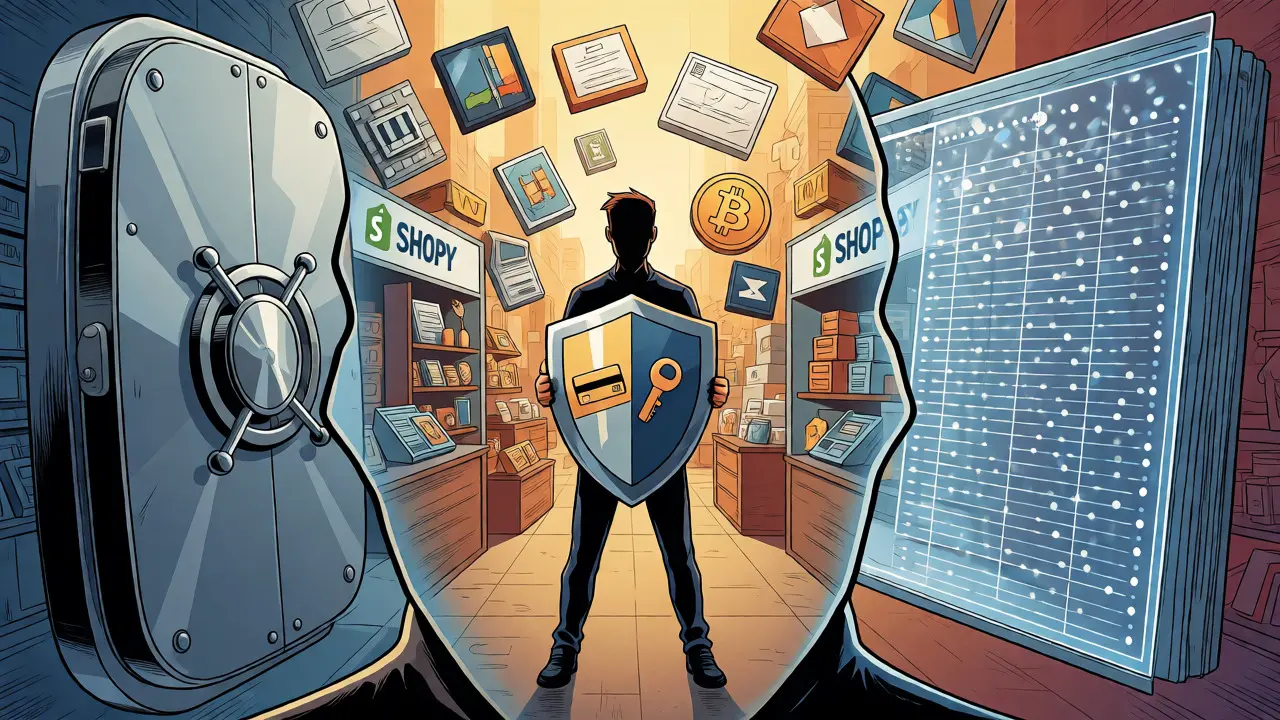
The debate between Centralized Finance (CeFi) and Decentralized Finance (DeFi) is ending. The winner is Hybrid. Users want the ease of use of Coinbase but the transparency and self-custody options of Uniswap. We are seeing exchanges build interfaces that abstract away the complexity of blockchains while giving power users access to raw on-chain data.
Solana Pay’s integration with Shopify is a perfect example. It brings crypto payments into real-world retail commerce seamlessly. BlackRock and other institutional giants are evaluating Ethereum’s infrastructure for tokenizing traditional assets. This means you might soon trade fractional shares of real estate or art alongside your Bitcoin, all on the same platform. The technology is ready; the regulatory frameworks are catching up. The barrier isn't technical anymore-it's legal and operational.
| Feature | Traditional Exchange (2020) | Future Hybrid Model (2026+) |
|---|---|---|
| Revenue Source | Spot trading fees only | Staking, lending, futures, custody, AI services |
| Regulation | Unclear, jurisdiction-hopping | Harmonized SEC/CFTC frameworks, safe harbors |
| Technology | Basic order matching engine | AI-driven agents, Layer-2 scaling, cross-chain interoperability |
| User Base | Retail speculators | Retail + Institutions + Automated Agents |
What This Means for You
So, how do you navigate this shifting landscape? First, stop looking for the "cheapest" fee. Look for the most robust ecosystem. An exchange that offers staking, lending, and seamless fiat on-ramps is worth a slightly higher fee because it saves you time and risk. Second, pay attention to regulatory compliance. With the SEC and CFTC aligning, exchanges that fail to adapt will face heavy fines or shut down. Stick with platforms that are transparent about their licensing.
Third, consider the tech stack. If you are trading frequently, Solana-based exchanges offer speed and low cost. If you are holding long-term assets, Ethereum’s security and institutional backing via ETFs make it a safer bet. And finally, keep an eye on AI integration. Autonomous trading agents are becoming accessible to retail users. You might soon delegate your portfolio management to an AI agent that executes trades based on real-time data, removing emotional bias from the equation.
How does the SEC-CFTC cooperation affect my trading?
The harmonized framework reduces legal uncertainty, allowing exchanges to offer more diverse products like perpetual futures and event contracts without fear of sudden regulatory bans. It also streamlines reporting standards, making it easier for you to track tax liabilities across different platforms.
Are centralized exchanges going to disappear?
No, but they are evolving. Centralized exchanges are adopting decentralized features, such as non-custodial wallets and on-chain settlement proofs. Conversely, decentralized exchanges are adding centralized conveniences like fiat on-ramps. The result is a hybrid model that dominates the market.
What role does AI play in modern crypto exchanges?
AI is used for automated market making, fraud detection, and personalized investment advice. Projects like the Artificial Superintelligence Alliance demonstrate how decentralized AI networks can optimize trading strategies and manage data efficiently, creating new utility for tokens beyond simple speculation.
Why is Solana gaining popularity for exchange infrastructure?
Solana’s introduction of the Firedancer validator client has significantly improved network reliability and speed. Its low transaction fees make it ideal for high-frequency trading and consumer-facing applications like NFT marketplaces and DePIN projects, attracting both developers and users.
Should I worry about exchange consolidation?
Consolidation generally leads to better security and compliance, which benefits users. However, it may reduce competition. To mitigate risks, diversify your holdings across top-tier, regulated exchanges and maintain some assets in self-custody wallets to avoid counterparty risk.