
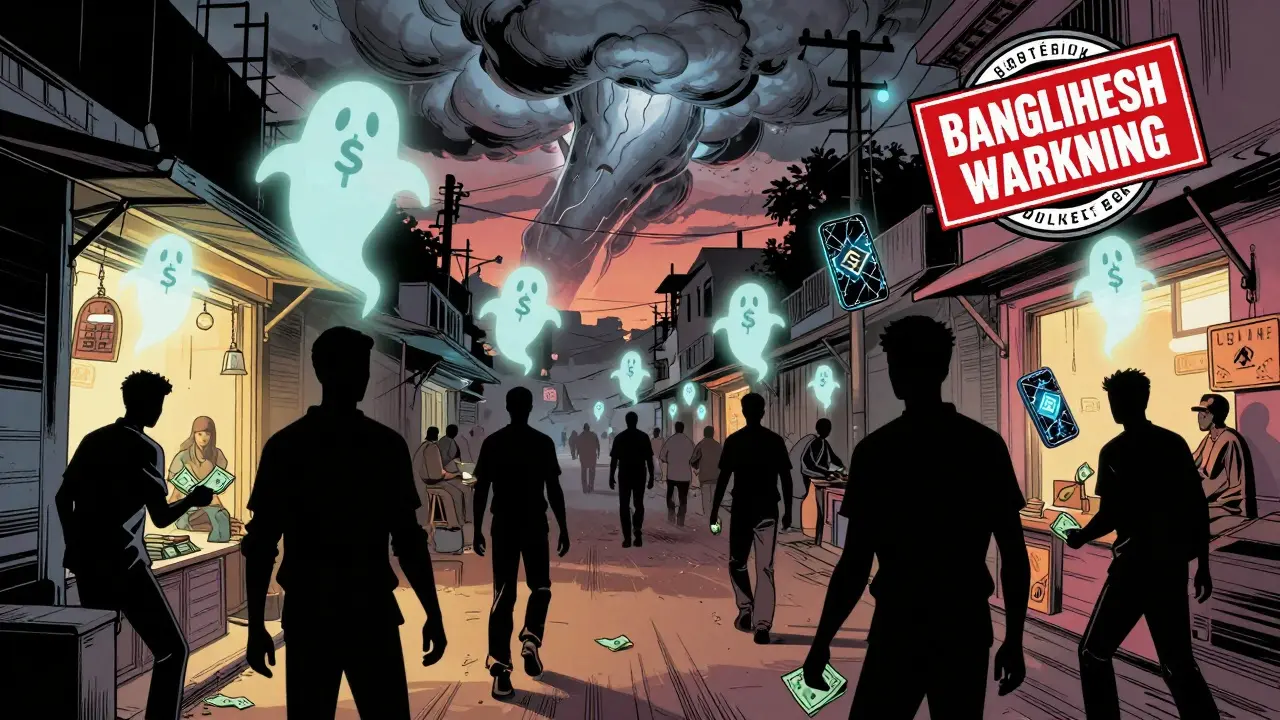
Why 600,000 Bangladeshis Use Binance Despite Crypto Ban
Over 600,000 people in Bangladesh are using Binance every day-even though the government says it’s illegal. Not because they’re reckless. Not because they’re tech rebels. But because they have no other choice. The country has one of the strictest crypto bans in the world, yet digital currencies keep flowing. This isn’t a glitch. It’s a system failure.
How a Ban Can Fail So Completely
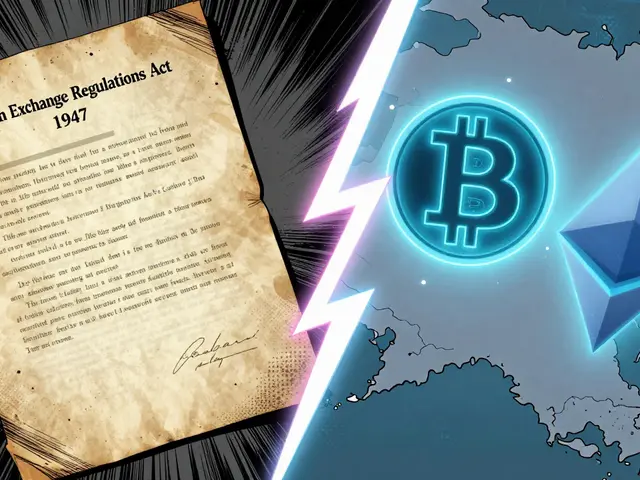
Bangladesh doesn’t have a law that says "crypto is illegal." Instead, it uses older rules to crush it. The Foreign Exchange Regulation Act of 1947 and the Money Laundering Prevention Act of 2012 are the weapons. The central bank, Bangladesh Bank, says cryptocurrencies aren’t legal tender. They can’t be used to pay for goods. They can’t be exchanged through banks. And if you try, you’re breaking the law.But here’s the problem: the internet doesn’t care about laws written in the 1940s. Binance, KuCoin, and other platforms are still available on the Google Play Store. You can download them. You can sign up. You can buy Bitcoin or Tether with a local debit card. Banks might see the transaction, but they can’t stop it. And even if they try, users just switch to agents.
The Agent Network: How Crypto Flows in the Shadows
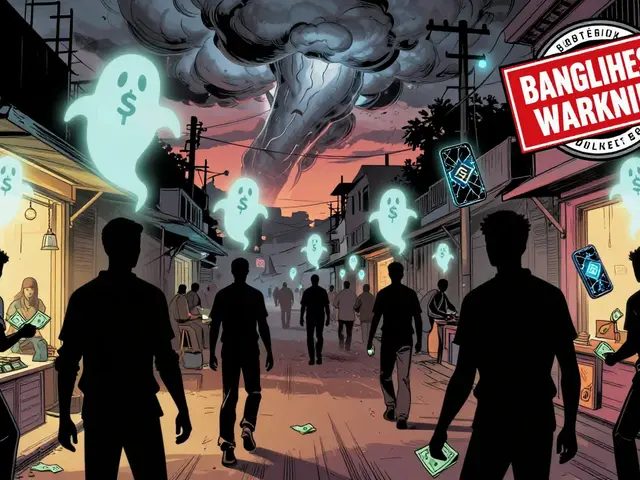
Most Bangladeshis don’t buy crypto directly with credit cards. Too risky. Too traceable. Instead, they use local agents-people who sit in small shops, cafes, or even homes, acting as human ATMs for digital money.You walk in with 10,000 Bangladeshi Taka. The agent gives you $80 worth of USDT (Tether). They take a 1-3% cut. No bank account. No ID. No paperwork. Just cash in, crypto out. These agents aren’t criminals. They’re small business owners. Their customers? Students sending money home from abroad. Freelancers getting paid in crypto. Shopkeepers buying goods from India without waiting weeks for bank transfers.
This underground network is efficient. It’s fast. And it’s growing. Every day, more people find out about it. More agents open up. More wallets fill with Bitcoin. The government warns against it. The police occasionally raid shops. But the system keeps running.

Why Blockchain? But Not Crypto?
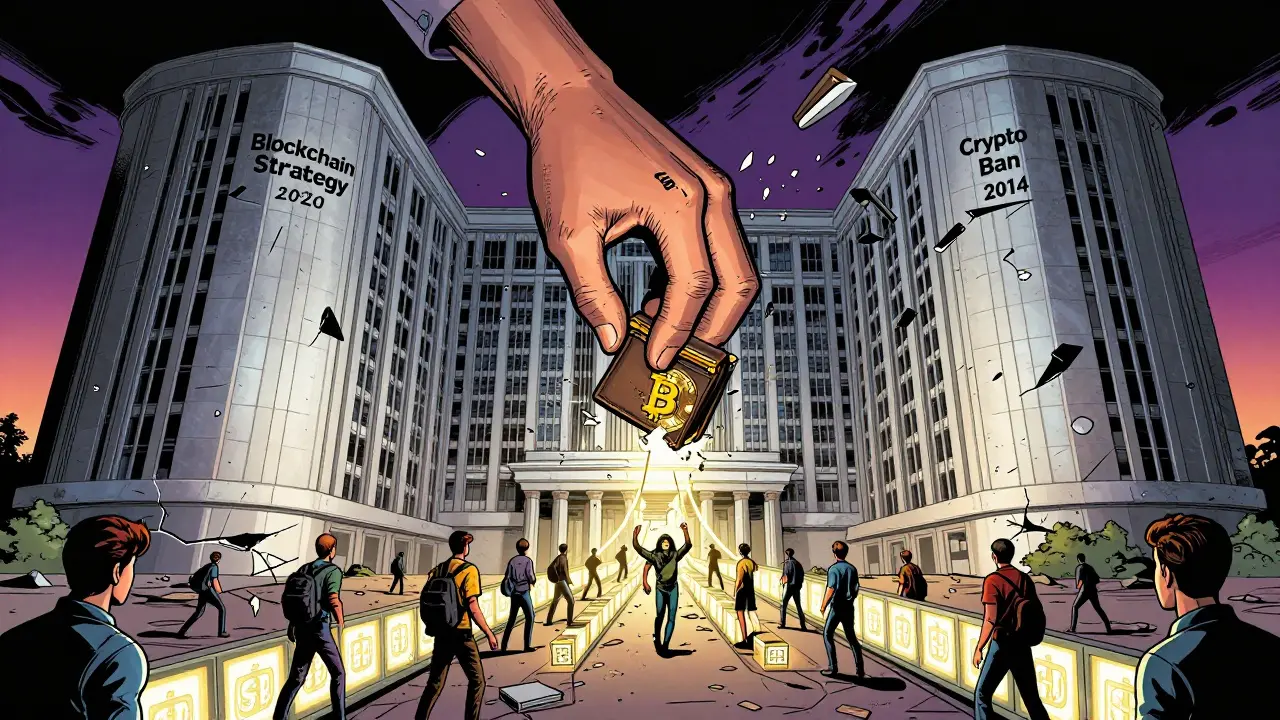
Here’s the biggest contradiction: Bangladesh’s government released a National Blockchain Strategy in 2020. It says blockchain is essential for digital transformation. For land records. For public services. For transparent governance.So why ban the thing that runs on blockchain? Because they’re scared of the money. They think crypto = anonymity = crime. They don’t see that blockchain can be public, traceable, and secure. They don’t understand that banning crypto doesn’t stop blockchain-it just pushes it into the dark.
Meanwhile, countries like India, Nigeria, and Indonesia are trying to regulate. They limit crypto to investment use. They require exchanges to know their users. They tax gains. Bangladesh? It’s still stuck in 2014-when Bitcoin was just a weird internet idea.
The Real Cost of the Ban
The ban doesn’t protect Bangladesh. It hurts it.Imagine you run a small export business. You sell garments to buyers in India. They pay you in crypto. You want to convert it to Taka to pay your workers. You can’t. So you wait. Days. Weeks. You pay extra fees to traditional money transfer services. Your margins shrink. Your competitors? They’re using crypto. They’re faster. Cheaper.
Or think about a student in Dhaka working remotely for a company in the U.S. They get paid in Bitcoin. They need to cash out. Banks won’t touch it. So they pay an agent 5% to convert it. That’s $500 lost every year. Multiply that by 600,000 people. That’s $30 million in hidden fees. Money that could’ve stayed in the economy.
And for tax purposes? The National Board of Revenue says crypto earnings are taxable under the Income Tax Ordinance of 1984. But how do they track it? No one reports. No one files. The government has no system. So they lose revenue. And they lose trust.
What Experts Are Saying
Dr. B M Mainul Hossain, a professor at Dhaka University and director of its Institute of Information Technology, says it plainly: "Banning is not a solution." He’s not pro-crypto. He’s pro-reality. "Sitting back and doing nothing is not the answer," he says. "We need to monitor, regulate, and educate. Look at how other countries are doing it. We can too."He points out that crypto is legal in over 100 countries. Some have strict rules. Others have clear tax systems. None have banned it outright and expected people to stop using it. The data doesn’t lie: when you ban something popular, you don’t kill demand. You just make it riskier, more expensive, and harder to control.
What’s Next?
The 600,000 users aren’t going away. They’re not hiding forever. They’re building a parallel economy. And the longer the government waits, the harder it will be to bring it back into the light.Some hope for change. Maybe pressure from young, tech-savvy voters. Maybe pressure from businesses losing money. Maybe pressure from neighboring countries that are already regulating. But right now, the government is stuck between fear and ignorance.
The real question isn’t whether crypto should be allowed. It’s whether Bangladesh wants to be a country that leads-or one that lags behind, watching its own people build a future it refuses to understand.
Is it really illegal to use Binance in Bangladesh?
Yes. The Bangladesh Bank has repeatedly warned that cryptocurrency transactions violate the Foreign Exchange Regulation Act and the Money Laundering Prevention Act. Holding, trading, or facilitating crypto is considered illegal. But enforcement is inconsistent, and many users continue without consequences.
How do people buy crypto if banks block it?
Most use local agents who accept cash in Bangladeshi Taka and send crypto (usually USDT) to the buyer’s wallet. Others use peer-to-peer (P2P) platforms like Binance P2P, where buyers and sellers negotiate directly. Some still use international credit cards, though banks may freeze those accounts later.
Can the government shut down Binance in Bangladesh?
Technically, yes-but they haven’t been able to. Binance and similar apps remain on the Google Play Store. The government has blocked some websites, but app stores are harder to control. Even if they block the app, users download APK files from third-party sites. The ban is symbolic more than effective.
Do people get arrested for using crypto?
Rarely. Most enforcement targets large-scale operators or agents running organized networks. Individual users are rarely prosecuted. The government lacks resources to track millions of wallets. Instead, they issue warnings and pressure banks to monitor transactions.
Why does the government allow blockchain but ban crypto?
They see blockchain as a tool for public services-like land records or voting-where transparency and security matter. But they fear crypto because it enables anonymous, cross-border money flows. They don’t understand that blockchain and crypto are linked. Banning one while supporting the other is contradictory and unsustainable.
Is there a chance Bangladesh will legalize crypto?
It’s possible. Pressure is growing. Experts, academics, and young entrepreneurs are pushing for regulation. Countries like India and Nigeria are showing that clear rules work better than bans. If the underground market keeps growing-and it is-the government may have no choice but to regulate, not ban.

This is one of those rare cases where the law is completely out of touch with reality. People aren’t using Binance because they’re rebels-they’re using it because it’s the only way to survive economically. Imagine having to pay 5% just to get paid for your work. That’s not a choice. That’s exploitation by a broken system.
The government’s blockchain strategy is a joke if they’re banning the actual currency that makes it work. It’s like banning gasoline but promoting cars. They don’t get it. And honestly? They’re not trying to.
This is why America doesn’t have this problem. We have regulations. We have oversight. We don’t let people run wild with unregulated digital currency. Bangladesh is a mess because they let chaos rule. If you can’t control the money, you shouldn’t allow it. Period.
I’ve read this whole thing twice. The agent network is fascinating. It’s not just crypto-it’s a grassroots financial infrastructure that’s more reliable than the official banking system. I wonder how many of these agents are women. That’s the quiet revolution no one’s talking about.
I just want to say thank you for writing this. So many people think crypto is just about gambling or crime. But this? This is dignity. This is survival. A student in Dhaka getting paid in Bitcoin so they can feed their family? That’s not illegal. That’s human.
idk like... maybe the govt is just scared? like... what if everyone just... stops using banks? like... what then? i mean... they dont even have a plan. its just like... ban it. dont think. just ban.
You people are delusional. This isn’t freedom. This is chaos. You think these agents are heroes? They’re money launderers. They’re enabling crime. And you call it 'survival'? That’s just a fancy word for 'I don’t want to follow the rules.' Wake up.
The real tragedy isn’t the ban-it’s that the government could’ve been a leader. Instead, they chose fear. They could’ve built a national crypto wallet system with KYC, taxed gains fairly, and used blockchain for land records. They had the blueprint. They just didn’t have the courage. And now? They’re losing 600,000 people to a shadow economy they refuse to understand.
This is why I hate Western narratives. You act like Bangladesh is some backward country. But we’ve been doing this for years-informal economies, cash-based systems, agent networks. It’s not a failure. It’s adaptation. You Westerners think you have the only valid system. You’re wrong.
i think the real issue is that no one is talking about the fact that these agents are basically micro-businesses. they’re not criminals. they’re small entrepreneurs. and the government’s refusal to see that? that’s the real policy failure.
One thing people miss: Tether (USDT) isn’t even really crypto in the traditional sense. It’s a stablecoin pegged to the dollar. It’s basically digital cash. Banning it is like banning PayPal because you don’t like how it works. The government isn’t banning innovation-they’re banning utility.
Ban crypto? Why not ban smartphones too? Everyone uses them to access Binance. You cant have one without the other. The government is out of touch. They think they can control the internet with 1947 laws. Pathetic.
I’m just here to say: I didn’t know any of this. This post changed my perspective. Thank you.