
State Bank of Vietnam Crypto Policy and Stance in 2026
The State Bank of Vietnam used to ban cryptocurrency outright. No trading. No banking services. No payments. If you bought Bitcoin in 2023, you did it quietly-through P2P platforms, cash deals, or offshore exchanges. But everything changed in 2025. By June, Vietnam passed the Law on Digital Technology Industry, and suddenly, crypto wasn’t illegal anymore-it was regulated. Not welcomed with open arms, but given a legal shelf to sit on, under strict rules.
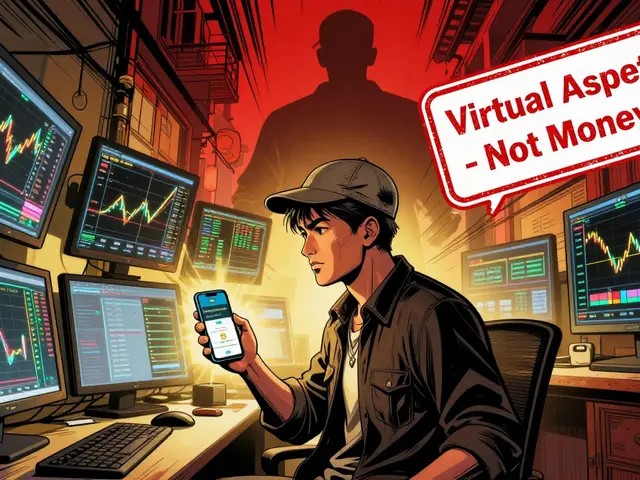
Virtual Assets, Not Money
The State Bank of Vietnam doesn’t call Bitcoin or Ethereum money. They call them virtual assets. That’s not just semantics. It means you can own them, sell them, inherit them-but you can’t use them to pay for coffee, rent, or groceries. Vietnamese dong is still the only legal tender. This distinction keeps the central bank in control. If crypto were money, it could undermine monetary policy. If it’s just an asset, it’s like gold or stocks-something you hold, not spend.The Five-Year Pilot: Strict, Slow, and Controlled
In September 2025, the bank launched its biggest move yet: a five-year pilot program for licensed crypto exchanges. Only five companies will ever be allowed to run exchanges in Vietnam during this period. And the bar to get in is sky-high. To even apply, a company needs at least 10 trillion Vietnamese dong in capital-that’s about $379 million. Not just any company can throw money at the problem. The capital must come from at least two established players: commercial banks, securities firms, insurance companies, fund managers, or tech enterprises. And those backers? They need to show two straight years of profits. No startups. No foreign firms. No solo entrepreneurs. It’s designed to keep the system stable, but also to keep it small.Trading Only in Vietnamese Dong
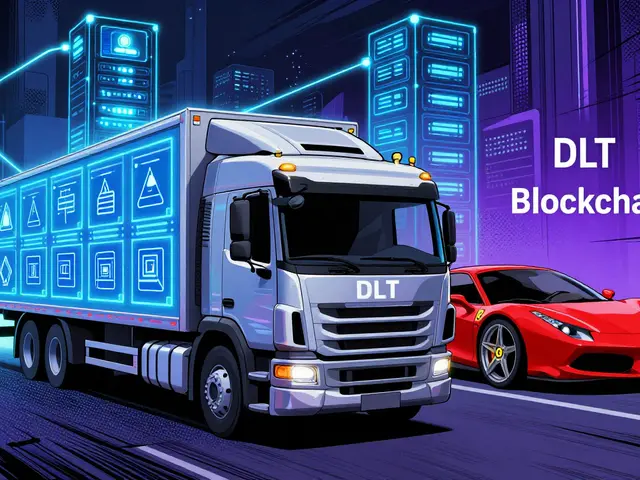
Starting in 2026, every trade on a licensed exchange must be in Vietnamese dong. No USDT. No BTC/USD pairs. No ETH/EUR. Everything goes through VND. That’s a massive constraint. It means traders can’t hedge against volatility by switching to stablecoins. It forces liquidity to stay within Vietnam’s financial system. It also makes it harder for international traders to jump in without going through a local broker. The government didn’t just stop at exchanges. They created NDAChain-a national, permissioned blockchain. It’s not public like Ethereum. It’s a closed network controlled by the state. Tokenized bonds, carbon credits, even land titles can be recorded on it. The goal? To build infrastructure for digital assets without giving up control. Every transaction on NDAChain is visible to regulators. No anonymity. No dark pools. Just traceable, auditable activity.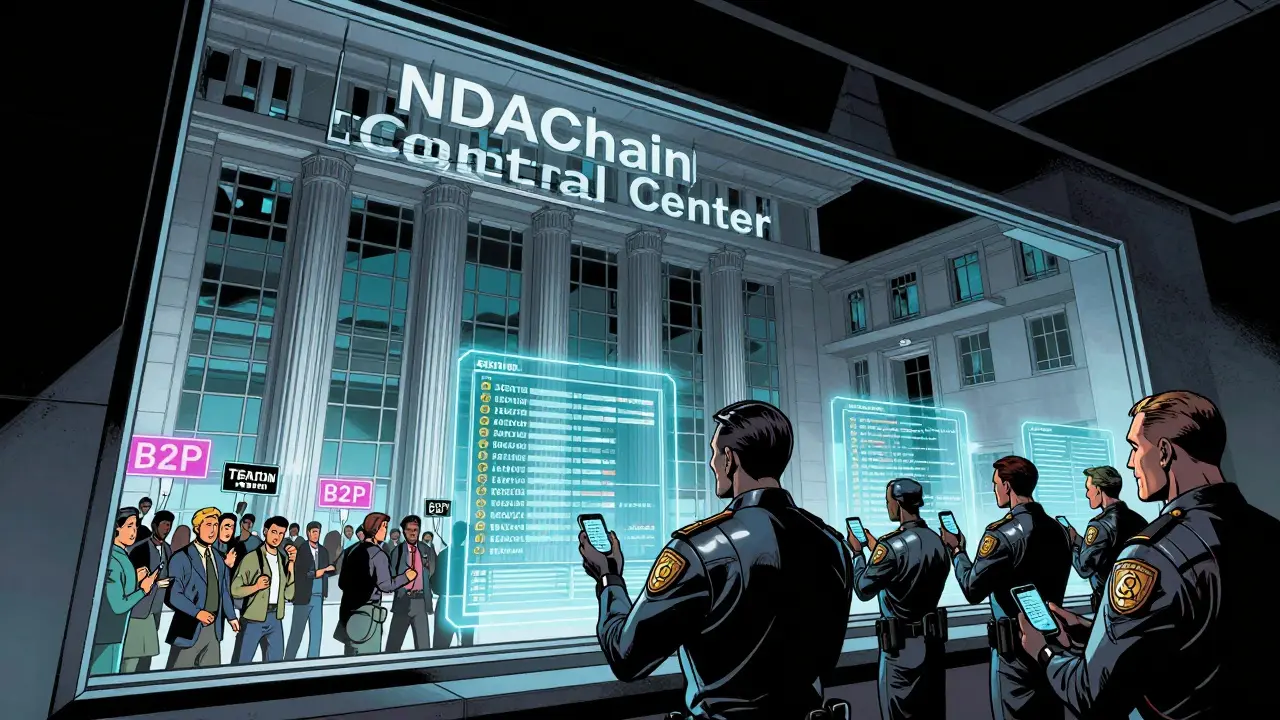
Why No One Has Applied Yet
Here’s the odd part: as of October 2025, no company had submitted a single license application. Not one. Not even a big bank or a tech giant. Why? The rules are so strict that even well-funded firms are hesitating. The capital requirement alone could scare off local players. The ownership rules block foreign investment, which means no Binance, no Coinbase, no Kraken. And without global players, the market lacks depth. Liquidity stays thin. Fees stay high. Traders might still use Binance P2P-but that’s outside the system. It’s a loophole the government knows about but hasn’t cracked down on yet.High Adoption, Low Compliance
Vietnam ranks fourth in the world for crypto adoption, according to Chainalysis 2025. Over 20% of tech-savvy Vietnamese own digital assets. Most of them aren’t on licensed exchanges. They’re trading on P2P platforms, using peer-to-peer apps, sending crypto through Telegram groups, or buying with bank transfers disguised as “service fees.” The State Bank knows this. That’s why they didn’t try to shut it down. Instead, they created a parallel system-one that’s legal, but hard to access. The hope is that over time, as the pilot proves safe, more people will move from the gray market into the regulated one. But right now, the gap between what people are doing and what the law allows is wide.What This Means for Investors
If you’re an individual investor in Vietnam, you can legally own crypto. You can buy it on P2P. You can hold it. You can sell it. But you can’t do it through a bank. You can’t use your savings account to buy Bitcoin directly. You can’t get a loan backed by your ETH. And if you want to trade on a licensed exchange? You’ll have to wait until one opens-and even then, you’ll be limited to VND pairs. For institutional investors? The door is barely cracked. Insurance companies and pension funds are supposed to be allowed to hold crypto assets eventually. But until the pilot proves stable, and until licensed exchanges actually launch, no one’s touching it. The risk of regulatory backlash is too high.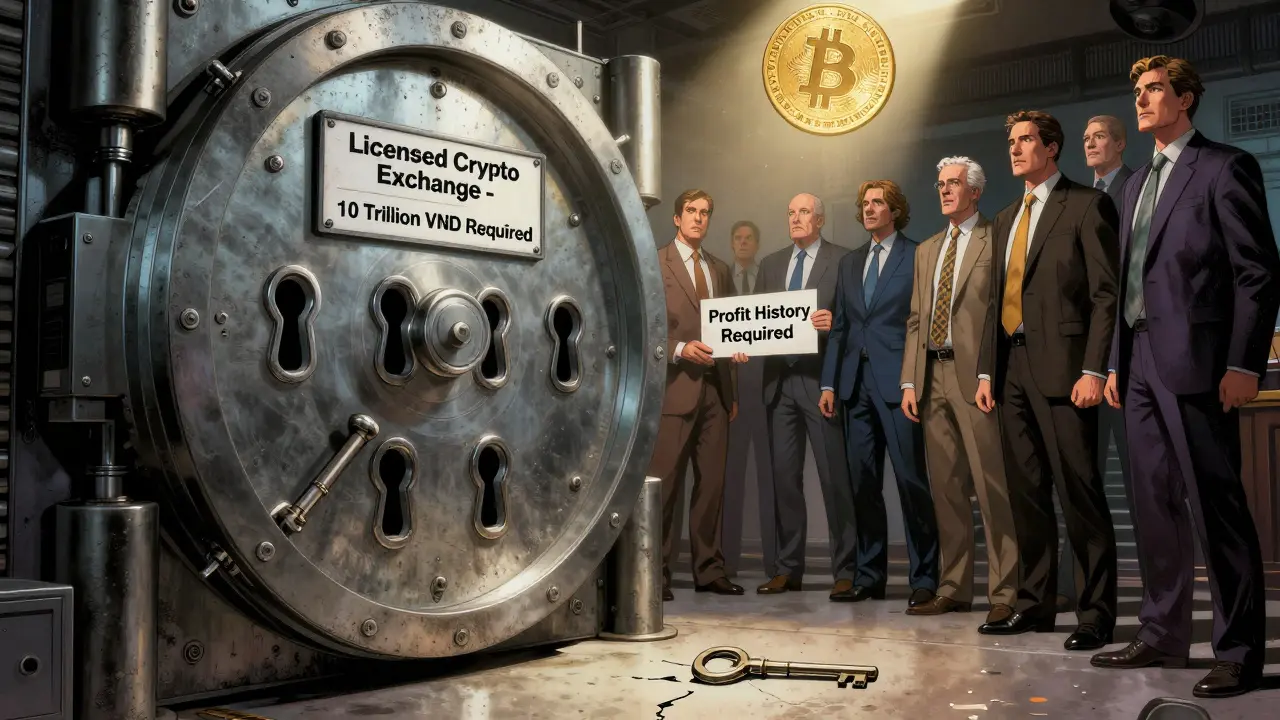
Compared to the Region
Vietnam’s approach is the opposite of Singapore’s. Singapore says: “Here’s a license, here’s a sandbox, here’s your stablecoin.” Vietnam says: “Here’s a locked room. You need $379 million to get the key.” The Philippines allows crypto payments through licensed providers. Thailand lets banks offer crypto custody. Even Indonesia has a more open path for retail traders. Vietnam? It’s the strictest in Southeast Asia. But it’s also the most active market. That tension-between high adoption and low compliance-is what defines its policy.The Bigger Picture
The State Bank isn’t trying to kill crypto. They’re trying to tame it. They want to capture the tax revenue. They want to protect consumers. They want to prevent capital flight. And they want to use digital assets to fuel economic growth-not disrupt it. Deputy Governor Pham Thanh Ha has said crypto adoption could drive 20% credit growth in 2025. That’s not a prediction. It’s a target. They believe regulated crypto can unlock liquidity, attract foreign investment, and modernize finance. But they’re not rushing. They’re building a cage first, then letting the animals inside.What’s Next?
The next 18 months will be critical. If no exchanges launch by mid-2026, the pilot could be seen as a failure. If a few big local firms finally apply and get approved, it could trigger a wave of institutional interest. The government will be watching tax receipts, trading volumes, and how much activity moves from P2P to regulated platforms. For now, Vietnam’s crypto policy is a paradox: legal but hard to access, controlled but widely used, restrictive but growing. It’s not the future most crypto fans imagined. But it might be the only future that works in a country that still values order over innovation.Is cryptocurrency legal in Vietnam in 2026?
Yes, but only as a virtual asset, not as legal tender. You can own, trade, and inherit Bitcoin and Ethereum under Vietnam’s 2025 Law on Digital Technology Industry. However, you cannot use crypto to pay for goods or services. Only the Vietnamese dong is legal for payments.
Can I trade crypto on licensed exchanges in Vietnam right now?
No. As of early 2026, no companies have applied for or received a license to operate a crypto exchange under the State Bank of Vietnam’s pilot program. The licensing system is still in pre-implementation, even though the rules were finalized in September 2025.
Why are so many Vietnamese using crypto if it’s so restricted?
Vietnam ranks fourth globally in crypto adoption. People use peer-to-peer platforms like Binance P2P, Telegram groups, and cash deals to buy and sell crypto outside the official system. The demand is high, especially among young, tech-savvy users, but the official channels are too slow and expensive to meet that demand.
Can foreign investors trade crypto in Vietnam?
Only through Ministry of Finance-approved Crypto Asset Service Providers (CASPs). Foreign individuals or firms cannot directly access licensed Vietnamese exchanges. All trading on those platforms must be in Vietnamese dong, and only Vietnamese entities can operate them.
What is NDAChain and why does it matter?
NDAChain is Vietnam’s government-run, permissioned blockchain. It’s not public-it’s controlled by the state. It’s used to tokenize assets like bonds, carbon credits, and property records. It gives the government visibility into digital asset flows without allowing anonymity. It’s part of their strategy to innovate while staying in control.
Will Vietnam ever allow crypto payments?
Not anytime soon. The State Bank of Vietnam has made it clear that crypto will not replace the Vietnamese dong as legal tender. Their goal is to use crypto as an investment asset, not a payment tool. Allowing payments would risk destabilizing monetary policy and reducing control over the money supply.
Are there penalties for breaking crypto rules in Vietnam?
Yes. Violating the 2025 regulatory framework carries heavy fines and possible criminal charges. The State Bank has been explicit that unlicensed trading platforms, crypto payment processing, or using crypto for remittances are illegal. Enforcement has been selective so far, but the legal threat is real.