
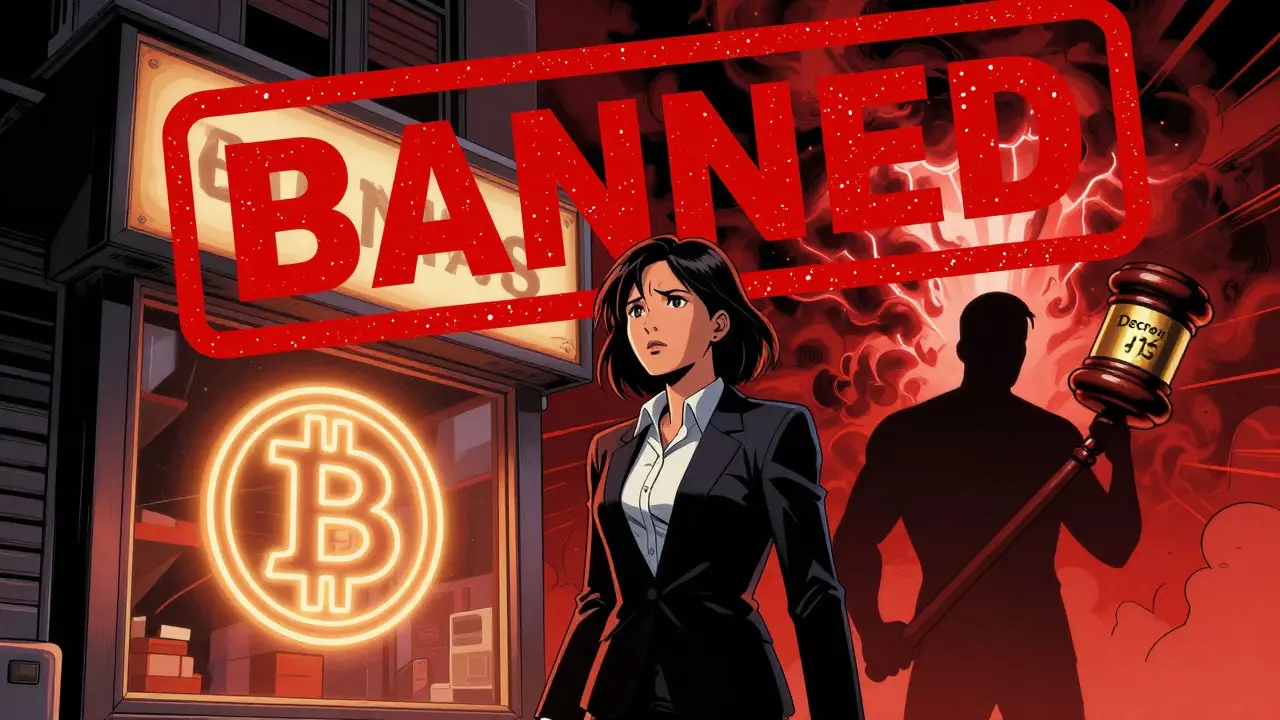
150-200 Million VND Fines for Crypto Payments in Vietnam: What You Need to Know
If you're running a business in Vietnam and someone pays you in Bitcoin, Ethereum, or any other cryptocurrency, you could be hit with a fine of 150 to 200 million VND - roughly $6,500 to $8,900 USD. It’s not a rumor. It’s the law. And it’s been in effect since January 1, 2018.
Why Vietnam Banned Crypto Payments
The State Bank of Vietnam (SBV) didn’t wake up one day and decide to ban crypto payments out of nowhere. They had clear reasons. Cryptocurrencies operate outside traditional banking systems. That means no oversight, no audit trail, and no way for the government to track where money is going. Tax evasion, money laundering, and unregulated financial flows became real concerns. In 2017, the SBV reviewed reports from the General Department of Vietnam Customs showing Bitcoin transactions were already in the thousands of dollars daily. Meanwhile, universities and small businesses were testing crypto payments. One university even planned to accept Bitcoin for tuition. The SBV stepped in immediately - not with a warning, but with a legal hammer. Their official stance? Cryptocurrencies aren’t illegal to own. But using them to buy coffee, pay rent, or settle invoices? That’s a violation. The legal basis comes from Decree No. 96/2014/ND-CP, which lists unauthorized payment methods. Only things like bank cards, payment orders, and checks are allowed. Everything else? Illegal.The Fine Isn’t Just a Warning - It’s Enforced
You might think this is just a paper law, something no one actually enforces. But that’s not true. In 2017, before the official ban took effect, a major university in Hanoi announced it would accept Bitcoin for tuition. Within days, the SBV issued a public notice: “This violates Article 27 of Decree 96.” The university dropped the plan immediately. No trial. No negotiation. Just a shutdown. By 2019, the SBV confirmed it had coordinated additional penalties for crypto payment violations. While exact numbers of fines issued aren’t public, enforcement isn’t theoretical. Businesses that openly advertise crypto as a payment option - especially online marketplaces or service providers - are at risk. Even if the fine isn’t applied every time, the threat is enough to scare off most merchants.What’s Allowed? What’s Not?
This is where people get confused. Vietnam doesn’t ban you from owning Bitcoin. You can buy it, hold it, sell it. You can even trade it peer-to-peer on platforms like LocalBitcoins or Paxful. But if you use it to pay for goods or services? That’s where the line is drawn. Think of it like this: You can own a rare coin collection. But if you try to use those coins to buy groceries, the store owner could be fined - not you, the buyer. The law targets the business accepting the payment, not the person paying. So if you’re a freelancer in Ho Chi Minh City and a client sends you $500 in Ethereum? That’s fine - as long as you don’t try to spend that crypto at a local café. But if you start selling products on Facebook Marketplace and list “Bitcoin accepted,” you’re opening yourself up to legal action.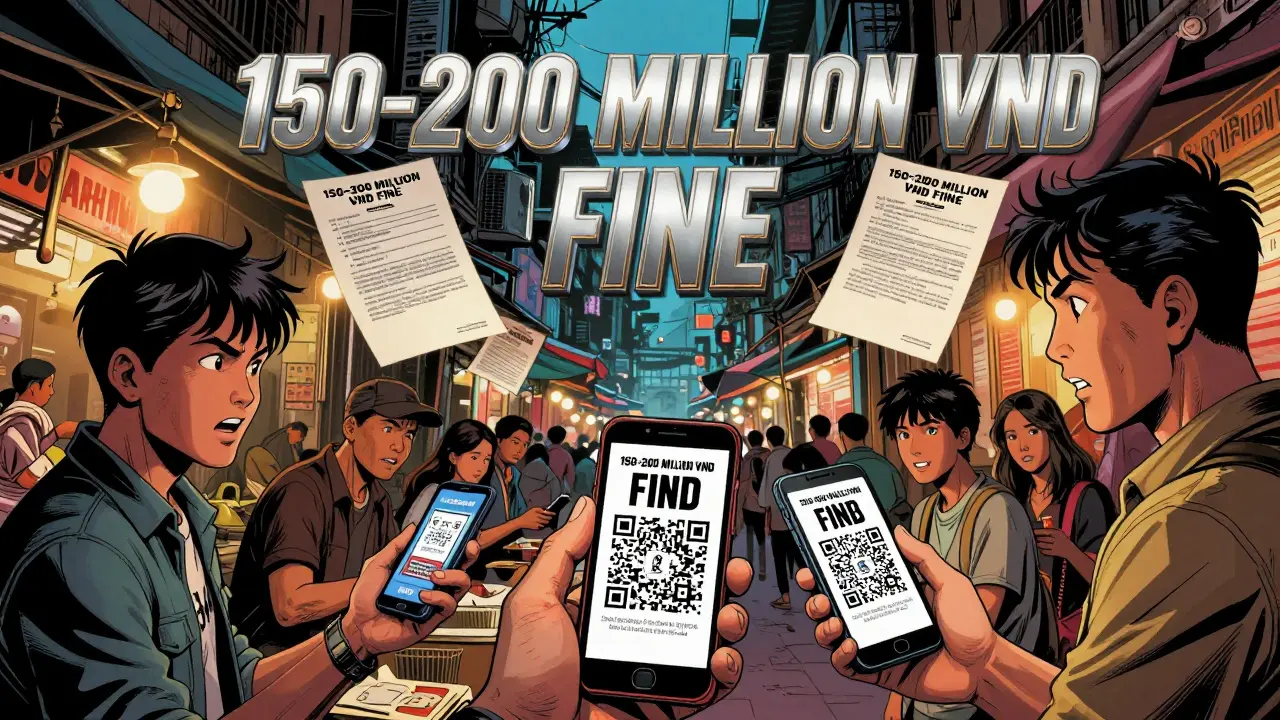
Why Is This Still a Thing in 2026?
Vietnam is one of the top 10 countries in the world for crypto adoption, according to Chainalysis. Millions of people trade, hold, and use crypto daily. Yet the payment ban remains untouched. The SBV’s logic hasn’t changed: They want control. Digital payments are growing fast - 35% annual growth since 2015 - but only through approved systems like ZaloPay, MoMo, or bank transfers. The government doesn’t want a parallel financial system. They want every transaction traceable, taxed, and tracked. In 2021, Vietnam drafted a new decree that would treat crypto as an asset - not money. That means you’d still be taxed if you sold it for profit. But you’d still be fined if you used it to pay for anything. The result? A strange duality. People use crypto. The government says it’s illegal. But enforcement is patchy. Most small businesses don’t get caught. Large corporations? They avoid it entirely.How Does This Compare to Other Countries?
Look at Thailand. They created licensing rules for crypto exchanges. Singapore? They regulate digital payment tokens under strict oversight. Even the U.S. has a patchwork of state and federal rules - but no outright ban on using crypto as payment. Vietnam’s approach is one of the strictest in Southeast Asia. Experts argue it’s outdated. Dr. Nguyen Xuan Thanh, formerly of Harvard’s Kennedy School, pointed out: “Vietnam sees crypto as a threat to monetary sovereignty, not as a tool.” Le Hong Hiep from Singapore’s ISEAS Institute put it bluntly: “A blanket ban ignores the reality of demand. People want alternatives. The state should regulate, not ban.” But Vietnam’s central bank isn’t listening. The 150-200 million VND fine remains the official penalty. And as long as it’s on the books, businesses risk it.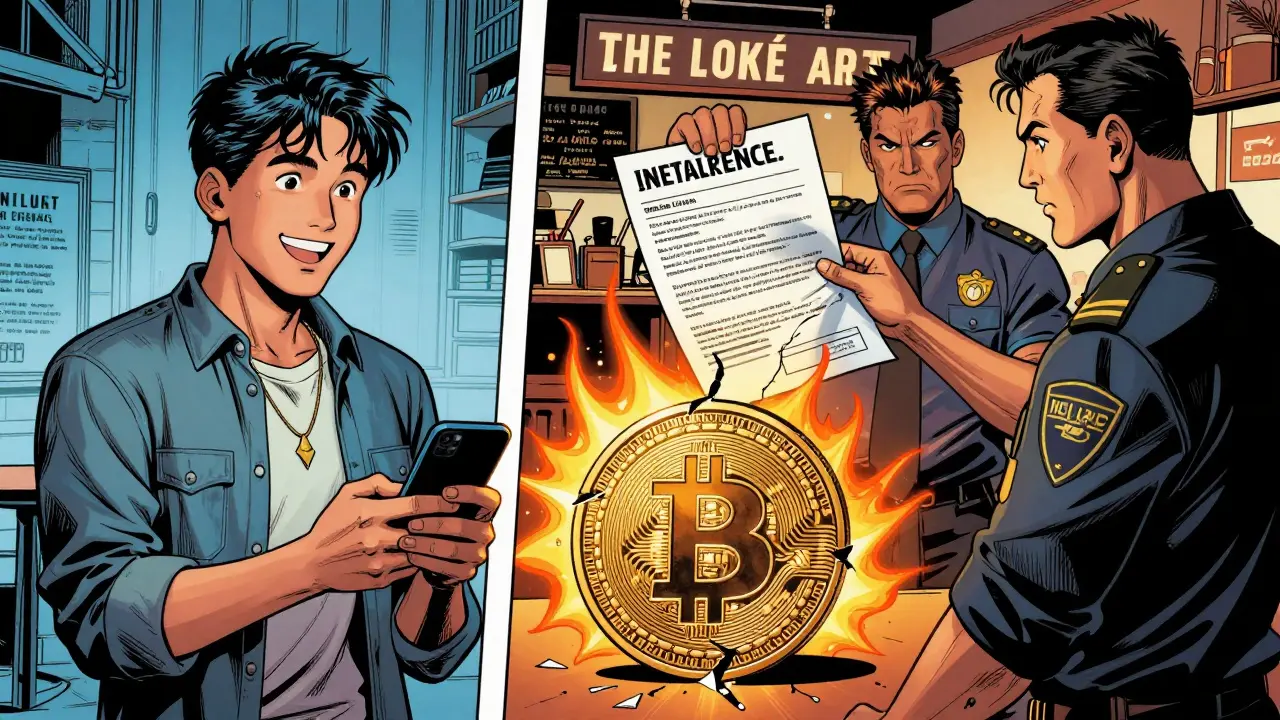
What Should You Do If You’re in Vietnam?
If you’re a business owner:- Don’t advertise crypto as a payment option - even on social media.
- If a customer offers crypto, politely decline. Offer bank transfer or digital wallet instead.
- Don’t assume “everyone does it” means it’s safe. The law doesn’t care about popularity.
- Keep records of all transactions. If questioned, you’ll need proof you didn’t accept crypto.
- You can buy and hold crypto. No problem.
- You can sell it for VND. No problem.
- But if you try to pay a store with Bitcoin? They’re the ones at risk - not you. Still, don’t push it.



so like... if i buy a coffee with btc in hanoi, the barista gets fined? 😱 that's wild. i mean, i get the gov wants control, but this is like banning cash because you can't track it. also, why is no one talking about the crypto atm in the alley behind my favorite pho place? 🤔
Ugh. Another country being paranoid about tech. Can we just... not? I'm tired. Seriously. I just want to pay for my tacos in crypto. Why is this so hard?
I think the real issue here isn't crypto-it's sovereignty. The SBV isn't just scared of unregulated payments; they're terrified of losing control over the entire monetary narrative. When people start bypassing banks, it doesn't just threaten tax revenue-it threatens the legitimacy of the state's role as gatekeeper of value. This isn't about crime. It's about power. And power doesn't like being decentralized. Even if the people want it. Especially if the people want it.
Let’s be clear: this isn’t a ban on crypto-it’s a ban on *monetary autonomy*. Vietnam’s regulatory framework treats crypto as a vector for financial instability, not as a neutral asset. Under Decree 96/2014/ND-CP, any non-approved payment instrument is classified as ‘unauthorized financial activity.’ That’s not policy-it’s central bank dogma. And until they reclassify crypto as a payment token under the new 2023 draft, they’re just enforcing a 2017 mindset in a 2026 world. The irony? They’re fighting a battle that’s already been lost at the grassroots level.
People who use crypto to pay for stuff are literally enabling tax evasion and money laundering. This isn’t rocket science. If you’re running a business and accepting untraceable digital cash, you’re part of the problem. Stop romanticizing this. The fine exists for a reason. If you can’t play by the rules, don’t play at all.
The State Bank of Vietnam has acted with appropriate caution and institutional rigor. To permit unregulated digital asset transactions as a medium of exchange would represent a fundamental erosion of fiscal accountability and macroeconomic stability. One must consider the systemic implications, not merely individual convenience.
People want alternatives. The state should adapt, not punish.
If you’re using crypto to pay for coffee, you’re not a pioneer-you’re a delusional libertarian. This isn’t 2014. The world moved on. You didn’t.
The Vietnamese government's position is both legally sound and economically prudent. Cryptocurrencies, by their very nature, lack intrinsic value and are susceptible to speculative manipulation. Permitting their use as a medium of exchange would undermine the credibility of the Vietnamese đồng and invite systemic financial risk. The fine is not punitive-it is preventive.
I think what’s happening here is deeper than policy. It’s about trust. The average Vietnamese person doesn’t trust banks-they’ve seen corruption, inefficiency, inflation. But they also don’t trust the government to let them have freedom. So you get this weird limbo: people use crypto anyway, but the system pretends it doesn’t exist. The fine isn’t about stopping crypto-it’s about making people feel like they’re doing something wrong for wanting control over their own money. And that’s sad. Because it’s not about legality. It’s about dignity.
This is why I hate when governments think they can outsmart human behavior. You can ban it, but you can’t stop it. People in Vietnam are using crypto because it works better than the alternatives. The fine is just a bandaid on a broken system. We need innovation, not intimidation.
I’ve seen crypto ATMs in Ho Chi Minh City. No one cares about the fine. People just don’t get caught. The law’s there. But the will to enforce? Not so much.
If you're a small business owner in Vietnam, here's what you do: keep your head down. Accept bank transfers. Use MoMo. If someone offers crypto? Say thanks but no thanks. It's not worth the risk. But don't feel bad for them-most of the time, they're just trying to help you avoid trouble. This isn't about being anti-crypto. It's about being smart. And honestly? That's the real crypto wisdom.
The SBV is doing its job. You think crypto is freedom? It’s chaos. And chaos doesn’t build economies. It destroys them. Stop pretending this is about innovation. It’s about control. And control is what keeps nations from collapsing. 🤷♂️
I just feel bad for the small shop owners. They’re not trying to break the law-they’re trying to survive. If crypto makes it easier for them to get paid, why not help them? Instead, we punish them. That’s not justice. That’s fear.
I think the real question is: if 43% of adults in Vietnam use crypto, and the government bans its use as payment, are we really talking about regulation-or repression? Maybe the answer isn’t more fines. Maybe it’s better education, clearer rules, and a willingness to evolve. People aren’t breaking the law because they’re criminals. They’re breaking it because the system doesn’t work for them anymore.
The State Bank of Vietnam has adopted a position grounded in prudence and institutional responsibility. The legal framework governing payment instruments must remain coherent, transparent, and accountable. The imposition of penalties for unauthorized payment methods is not an overreach but a necessary safeguard against systemic financial risk. One must consider the broader implications for monetary stability.
This whole thing is a joke. The government’s so scared of people having power they’d rather fine them than fix their own busted banking system. Meanwhile, the real criminals? The ones with offshore accounts and luxury condos. But nah, let’s go after the guy who took crypto for his handmade sandals. Classic.
I see so much fear in this. Fear of change. Fear of losing control. But the truth? People are already using crypto. Not because they hate banks. Because they want to be free. And if the government can’t see that? Then maybe it’s not the people who need fixing.