
Orderly Crypto Exchange Review: The Omnichain Infrastructure Powering the Next Wave of DeFi Trading
When you think of a crypto exchange, you probably picture Binance, Coinbase, or Kraken - centralized platforms where you deposit your coins and trade them under their rules. But what if the exchange itself wasn’t a single platform at all? What if it was a network - a hidden layer underneath dozens of decentralized exchanges, making them faster, cheaper, and connected across blockchains? That’s Orderly Network. And it’s not just another trading site. It’s the engine behind a new kind of crypto trading ecosystem.
What Exactly Is Orderly Network?
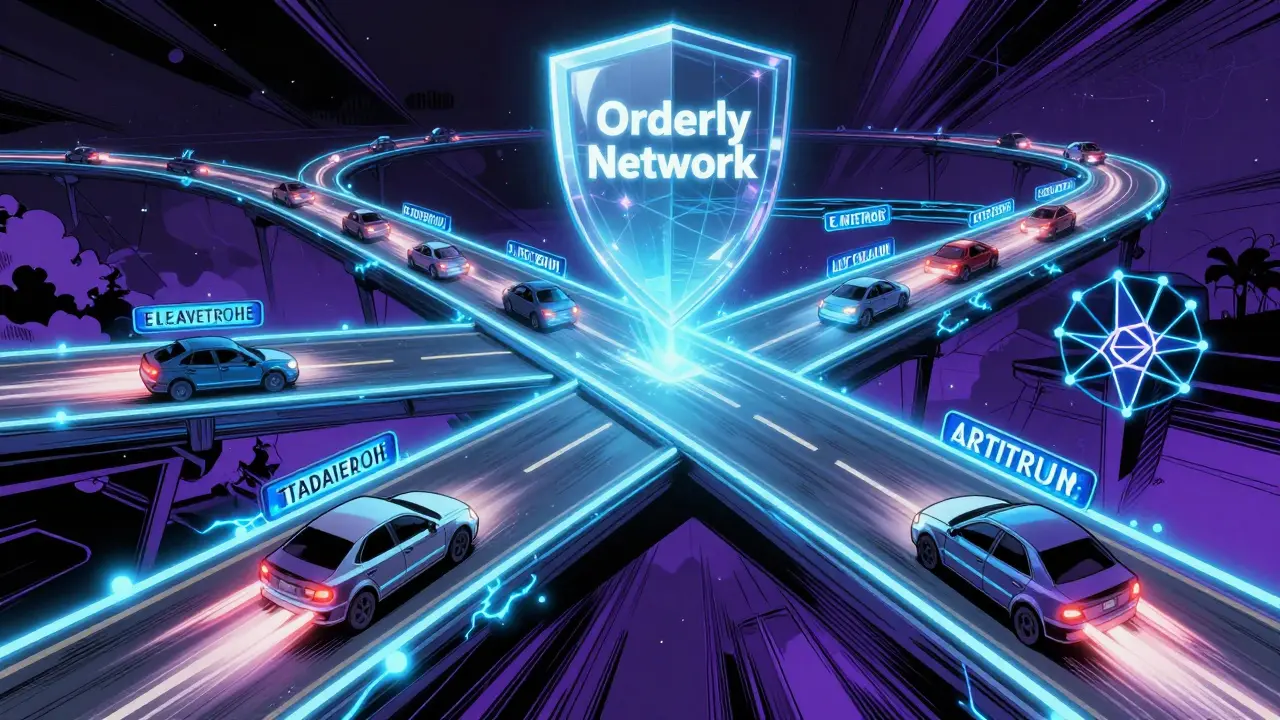
Orderly Network isn’t a traditional exchange you sign up for. You won’t find a login page or a wallet deposit screen. Instead, it’s a blockchain infrastructure that powers decentralized exchanges (DEXs) by connecting liquidity across multiple blockchains. Think of it like a highway system that links all the different gas stations (DEXs) so drivers (traders) can fill up anywhere without switching lanes.
Founded with $20 million in backing from top investors like Pantera Capital and Sequoia China, Orderly has already processed over $90 billion in trading volume. More than 400,000 users interact with it directly - not through a single app, but through dozens of DEXs that rely on its backend. This isn’t hype. This is real infrastructure, built to solve one of DeFi’s biggest headaches: fragmentation.
The Problem: Fragmented Liquidity
Imagine trying to trade Bitcoin on Ethereum, but your wallet only works on Solana. You’d have to bridge your assets, wait hours for confirmation, pay high fees, and risk losing money if the bridge fails. That’s the reality for most DeFi traders. Liquidity is split across chains - Ethereum, Polygon, Arbitrum, Avalanche - and each one has its own DEX with thin order books. That means slippage, bad prices, and slow trades.
Orderly fixes this by creating a single, unified order book that spans all major EVM chains. Whether you’re trading on a DEX built on Base, Optimism, or Polygon, you’re still accessing the same deep liquidity pool powered by Orderly. This isn’t just convenient - it’s revolutionary. It means traders get better prices, lower fees, and faster execution without leaving their preferred chain.
How It Works: The Omnichain Engine
Orderly’s core tech is its omnichain liquidity layer. Here’s how it actually functions:
- It aggregates order flow from 17+ DEXs across six major blockchains (Ethereum, Polygon, Arbitrum, Optimism, Base, Avalanche).
- It matches buy and sell orders in real time, regardless of which chain the trader is on.
- It routes trades through the most efficient path, minimizing gas fees and slippage.
- It supports advanced order types - including perpetual contracts - which most DEXs still don’t offer.
Unlike Uniswap or SushiSwap, which use Automated Market Makers (AMMs), Orderly uses a traditional orderbook model. That means you can place limit orders, stop-losses, and leverage trades - just like on Binance. But without giving up custody of your coins. Your wallet stays connected. Your keys stay yours. That’s the key difference between centralized and decentralized infrastructure.
Orderly One: The No-Code DEX Builder
Here’s where Orderly gets even more interesting. Meet Orderly One - a no-code platform that lets DAOs, meme coin teams, and communities launch their own branded DEX in under an hour.
Before Orderly One, building a DEX meant hiring developers, writing smart contracts, integrating liquidity, and setting up a frontend. It took months. Now, you go to dex.orderly.network, pick a template, set your fees, choose your leverage, and hit deploy. Orderly handles everything else: order matching, funding rates, cross-chain routing, and risk management.
Since its launch, Orderly One has powered the creation of 773 new decentralized exchanges in just seven days. Projects like BabyDoge and Pnut used it to launch their own trading interfaces - and keep 100% of the trading fees. That’s a game-changer for meme coin communities that used to rely on centralized exchanges to move volume.
The ORDER Token: Value, Supply, and Price Action
The native token, ORDER, is the fuel of this ecosystem. It’s not just a governance token - it’s a revenue-sharing mechanism. Every time a DEX built on Orderly One collects trading fees, a portion flows back into the ORDER token economy.
Here’s what happened in late September 2025:
- ORDER hit an all-time high of $0.433.
- Price surged 54% in 24 hours.
- Trading volume exploded to $393 million - up 388%.
- Market cap hit $120 million.
This spike wasn’t random. It followed a major listing on Upbit - South Korea’s largest crypto exchange - which added ORDER/BTC and ORDER/USDT pairs. Overnight, trading volume jumped 355%. That’s institutional-grade exposure. It’s not just retail hype - it’s real demand from one of the world’s most active crypto markets.
Price predictions vary. CoinLore forecasts a drop to $0.3396 by end of 2025, then long-term growth to $2.92 by 2040. 3Commas sees a more stable range: $0.284-$0.447. But here’s the real driver: token burns. As trading volume grows, more ORDER is bought back and destroyed. That’s a deflationary model - and it’s already working.
How Orderly Compares to Other Platforms
Let’s cut through the noise. Here’s how Orderly stacks up against the competition:
| Feature | Orderly Network | Uniswap / SushiSwap | Binance / Coinbase |
|---|---|---|---|
| Type | Infrastructure layer | Single-chain DEX | Centralized exchange |
| Liquidity | Omnichain (6+ chains) | Single-chain only | Centralized pools |
| Order Types | Limits, stops, perpetuals | Market only | All types |
| Custody | Self-custody | Self-custody | Exchange custody |
| Build Your Own DEX? | Yes - Orderly One | No | No |
| Trading Volume (2025) | $90B+ cumulative | $10B-$15B per chain | $100B+ daily |
Orderly doesn’t compete with Uniswap - it enhances it. It doesn’t replace Binance - it gives decentralized alternatives the same tools. That’s why institutional analysts call it the "missing layer" in DeFi.

Who Is Orderly For?
Orderly isn’t for everyone. If you’re a casual trader who just wants to buy Bitcoin and hold it, you don’t need this. But if any of these sound like you, Orderly matters:
- You’re part of a DAO or meme coin team and want to launch your own trading platform.
- You’re a trader who wants better prices on perpetual contracts across multiple chains.
- You’re a developer tired of rebuilding DEX infrastructure from scratch.
- You believe in self-custody but still want institutional-grade trading features.
For teams using Orderly One, the learning curve is short - often just hours. For developers building custom interfaces, expect a 2-4 week ramp-up if you’re already familiar with EVM chains and smart contracts. The documentation is solid. The support is responsive. But you do need to know your way around wallets, RPCs, and frontend frameworks.
Future Roadmap: Quantum Pools and Beyond
Orderly isn’t standing still. The latest upgrade, Quantum Pools, introduces dynamic liquidity mechanisms that adjust based on market volatility. This means tighter spreads and even less slippage during big price moves.
Looking ahead, expect deeper integration with non-EVM chains like Solana and Aptos. Partnerships with LayerZero and Celestia are already driving 28% and 35% of their cross-chain traffic - and that’s just the start. Institutional tools for hedge funds and market makers are in development. If Orderly keeps this pace, it could become the AWS of DeFi trading infrastructure.
Final Thoughts: The Invisible Exchange
Orderly Network doesn’t look like a crypto exchange. It doesn’t have a flashy app or a Twitter feed full of memes. But it’s quietly powering the future of decentralized trading. It’s not about replacing centralized exchanges - it’s about making decentralized ones better, faster, and connected.
When you trade on a DEX built on Orderly, you’re not just using another platform. You’re tapping into a global liquidity network that’s growing by the day. And for the first time, the power to build, control, and profit from trading infrastructure is in the hands of communities - not corporations.
This isn’t the next big exchange. It’s the foundation for a thousand new ones.
Is Orderly Network a centralized exchange?
No. Orderly Network is not a centralized exchange. It doesn’t hold users’ funds or operate a trading interface. Instead, it’s a decentralized infrastructure layer that powers other decentralized exchanges (DEXs). Traders always retain full custody of their assets using their own wallets. Orderly enables better trading performance across chains, but never takes control of your coins.
How do I start using Orderly Network?
You don’t use Orderly directly. Instead, you trade on DEXs that are built on top of it - like the ones launched by meme coin communities or DAOs. Just connect your wallet (MetaMask, Phantom, etc.) to any DEX that says "Powered by Orderly" and trade as normal. If you’re a developer or team, visit dex.orderly.network to build your own DEX in minutes using Orderly One.
Can I buy ORDER token on major exchanges?
Yes. As of September 2025, ORDER is listed on Upbit - South Korea’s largest exchange - with trading pairs for BTC and USDT. It’s also available on several DEXs like Uniswap, SushiSwap, and PancakeSwap. You can swap ETH, USDC, or other tokens for ORDER directly on these platforms using your wallet.
Why does Orderly support perpetual contracts?
Perpetual contracts are the fastest-growing segment in crypto derivatives, accounting for over 70% of institutional trading volume. By supporting them on-chain, Orderly brings institutional-grade trading tools to decentralized markets. This allows traders to hedge positions, go long or short without expiring contracts, and access leverage - all while keeping custody of their assets.
Is Orderly Network safe to use?
Yes, but with caveats. The core infrastructure has been audited and is built on battle-tested blockchain protocols. However, since Orderly powers hundreds of third-party DEXs, your safety depends on the specific platform you’re using. Always check if the DEX you’re trading on is officially listed on Orderly’s website. Avoid unverified clones or fake interfaces - they’re not part of the real network.
What makes Orderly different from other omnichain projects?
Most omnichain projects focus on bridging assets between chains. Orderly focuses on bridging order books. It doesn’t just move your tokens - it moves your trades. By aggregating liquidity into a single, unified order book across chains, it eliminates the fragmentation that cripples DEXs. No other platform offers this level of cross-chain trading depth with institutional-grade order types like perpetuals and limit orders.
Can I build my own DEX with Orderly One if I’m not a developer?
Absolutely. Orderly One is designed for non-developers. DAOs, content creators, and meme coin teams have launched fully functional DEXs with zero coding. You just pick a template, set your fee percentage, choose leverage levels, and click deploy. The platform handles all the backend complexity - smart contracts, liquidity routing, and cross-chain syncing. You get full control over branding and fees without touching a line of code.








Let’s cut through the FUD - Orderly isn’t just another omnichain play, it’s the first infrastructure layer that actually solves liquidity fragmentation at the order book level. Most projects like LayerZero or Axelar focus on asset bridging, which is like moving trucks between highways - but Orderly moves the entire traffic flow. That’s why perpetuals on-chain are a game-changer. You’re not just trading tokens, you’re accessing institutional-grade depth without KYC. This is the missing link between CeFi and DeFi - and nobody else has the execution.
And don’t get me started on Orderly One. 773 DEXs in seven days? That’s not innovation, that’s a systemic shift. DAOs are now sovereign trading hubs. No more relying on Binance for volume. The power is decentralized - literally.
This is actually really cool. I’ve been using a DEX powered by Orderly for a week now and my slippage dropped from 3% to like 0.4% on ETH/USDC. No more waiting 20 minutes for bridges. Just connect MetaMask, trade, done. Also the fact that I can do limit orders on a DEX? Mind blown. I didn’t even know that was possible without a centralized exchange.
Also lowkey love that meme coins can now launch their own trading platforms. BabyDoge’s DEX looks like a meme but the liquidity is real. 🤯
okay but like… ORDER token went from $0.18 to $0.43 in 3 weeks?? 🤭 i just bought more bc i trust the tech but also i’m scared i’m fomoing but like… if you look at the burns and the upbit listing and the 388% volume spike… it’s not a pump it’s a foundation?? idk i’m confused but also rich?? 💸
Orderly is the quiet revolution no one’s talking about. Imagine if Amazon Web Services existed for DeFi - not selling apps, but selling the engine underneath. That’s Orderly. It’s not flashy. It doesn’t have a TikTok campaign. But every time you trade on a DEX without slippage, without waiting, without bridge drama - you’re using Orderly.
And Orderly One? That’s the real magic. It’s like Canva for decentralized exchanges. A DAO leader with zero coding skills can now build a DEX, set their own fees, and keep 100% of the revenue. That’s not just innovation - it’s economic sovereignty. The future isn’t centralized apps. It’s thousands of community-owned trading hubs. And Orderly built the tools to make it real.
USA built the internet. China’s building 5G. And now we’re letting some crypto startup from nowhere power the next financial system? This isn’t innovation - it’s surrender. Orderly’s ‘infrastructure’ is just a glorified bridge for degens who can’t handle one chain. Real traders use Binance. Real institutions use Nasdaq. This whole DeFi thing is a bubble wrapped in blockchain buzzwords. Stop pretending decentralization is progress. It’s just chaos with a whitepaper.
I’ve been watching Orderly for months and I’m genuinely impressed. The way they’ve managed to unify order books across EVM chains without compromising custody is technically brilliant. What stands out to me is how they’ve prioritized developer experience - the documentation is clear, the API is stable, and the support team actually responds. That’s rare in DeFi.
Also, the fact that they’re integrating non-EVM chains like Solana and Aptos shows they’re thinking long-term. Not just chasing the current trend. That’s the mark of real infrastructure.
Just wanted to say thank you for writing this. As someone who’s been in crypto since 2017, I’ve seen a thousand ‘revolutionary’ platforms come and go. But Orderly? It actually feels different. Not because of the token price - but because it solves real pain points.
I used to hate trading on DEXs because of the slippage. Now I can trade BTC on Polygon with the same liquidity as on Ethereum. That’s not marketing. That’s engineering. And Orderly One? My friend who runs a DAO launched their own DEX in 45 minutes. No devs. No budget. Just a template. That’s power.
so like… orderly is kinda like… the airbnb of crypto exchanges? it dont own anything but its like… everywhere? idk im tired. also i think the order token is gonna crash soon bc everyone is buying it and what if no one wants it next week? also why does it say 2040 predictions? who even lives that long?? 🤔
ORDER token is being MASSACRED by FOMOers and it’s beautiful. The burns are real. The volume is real. The upbit listing? That’s not a coincidence - that’s institutional validation. And Orderly One? It’s not just a tool - it’s a movement. DAOs are now financial institutions. Meme coins are now trading platforms. This isn’t crypto. This is capitalism 3.0. And if you’re not building on it, you’re already behind.
Also - why are people still using Uniswap when this exists? 😭
Just traded my first perpetual on a DEX powered by Orderly. No KYC. No withdrawal delays. No ‘we’re doing maintenance’. Just me, my wallet, and a limit order that filled at the price I set.
It felt… normal. Like trading on a real exchange. Not some glitchy DeFi experiment.
Orderly didn’t try to be flashy. It just fixed the broken system. And that’s why it’s going to win.
orderly is a fedora. they’re using your wallet data to track your trades and sell it to the cia. the ‘omnichain’ thing? it’s a honeypot. they’re not building infrastructure - they’re harvesting liquidity. look at the investors: pantera and sequoia. they’re linked to wall street. this isn’t decentralization. it’s crypto-washing. you’re being played. don’t touch order. burn it.
I love how Orderly lets small communities take control. My sister runs a nonprofit DAO and they launched their own DEX for their token - no devs, no lawyers, just a template. Now they’re funding their projects with trading fees. It’s not about profit. It’s about autonomy.
That’s what DeFi was supposed to be. Orderly didn’t just build a tool - it gave people back power. 🌍✨
There’s something deeply poetic about Orderly. It doesn’t scream. It doesn’t have a coinflip campaign. It doesn’t need influencers. It just works. Quietly. Reliably. Like a river that carved a canyon over centuries.
I used to think DeFi was about speculation. Now I see it’s about infrastructure. And Orderly is the foundation no one sees - until they trade on it.
It’s not about the price of ORDER. It’s about the quiet dignity of a system that lets anyone, anywhere, build their own financial future. That’s rare. That’s beautiful.
Orderly One is the future. I’m from Nigeria and I’ve seen how hard it is for small teams to access trading tools. Before Orderly, we had to rely on Binance or gateways that took 15% fees. Now? My friend’s meme coin team launched their own DEX in 2 hours. They keep 100% of the fees. No middlemen. No permission.
This isn’t just tech. It’s liberation. Africa doesn’t need permission to build. We just need tools. Orderly gave us one.