What are Smart Contracts on Blockchain: A Simple Guide
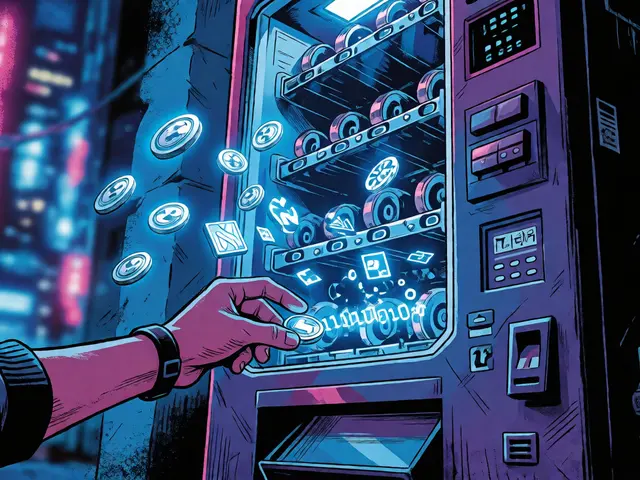
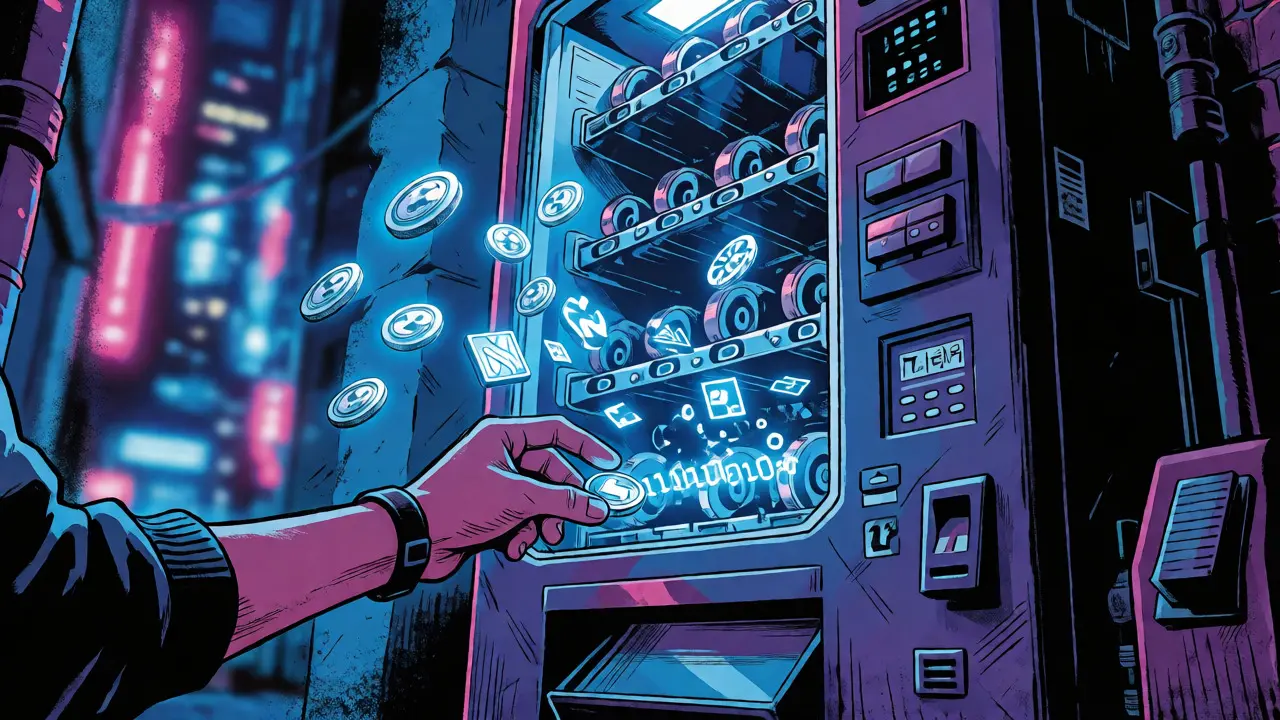
Imagine buying a coffee. You put in the coins, press the button for a latte, and the machine grinds beans, heats water, and pours the drink. No barista checks your change. No manager approves the order. The machine just does what it was programmed to do. That’s essentially what a smart contract is, but for digital agreements.
You’ve probably heard the term thrown around in crypto circles, often mixed up with Bitcoin or Ethereum. But here’s the kicker: smart contracts aren’t actually "smart" in the human sense, and they aren’t always legally binding "contracts." They’re just code. Powerful, self-executing code that lives on a blockchain. If you’re trying to wrap your head around how DeFi works, why NFTs exist, or how to send money without a bank, understanding this concept is your first real step into Web3.
The Vending Machine Analogy (And Why It Matters)
Let’s stick with that vending machine idea because it’s the best way to visualize the logic. Traditional contracts rely on trust. If I lend you $100, we trust you’ll pay me back. If you don’t, I have to chase you down or go to court. That’s slow, expensive, and messy.
A smart contract removes the need for that trust by replacing it with math. It runs on an "if/then" logic. If you send me 1 ETH, then the contract automatically sends you my NFT. There is no middleman holding the money in escrow. The code holds the assets. Once the condition is met, the transaction executes instantly and irreversibly.
This isn’t new tech, technically. Nick Szabo, a computer scientist who many suspect is Satoshi Nakamoto (the creator of Bitcoin), proposed the idea back in 1994. He wanted to digitize traditional contracts to cut out intermediaries like lawyers and notaries. It took another decade and the rise of blockchain to make his vision a reality.
How Do They Actually Work?
Smart contracts live on blockchains like Ethereum, which is currently the dominant platform for these programs. Unlike Bitcoin, which mostly just tracks who owns how much coin, Ethereum is designed to run applications. These applications are built using specialized programming languages like Solidity.
Here’s the lifecycle of a smart contract:
- Creation: Developers write the code defining the rules. For example, "If user A sends 5 tokens, transfer ownership of Item X to User A."
- Deployment: The code is uploaded to the blockchain. This costs gas fees (transaction fees) to pay the network validators for their work.
- Execution: Users interact with the contract. When someone meets the conditions (like sending the payment), the network verifies the action.
- Finality: The result is recorded on the ledger. Because the blockchain is decentralized, thousands of computers agree on the outcome. No one can change it afterward.
The key feature here is immutability. Once deployed, you generally cannot edit a smart contract. If there’s a bug in the code, it stays there until you deploy a new version. This makes testing critical. One typo can drain millions of dollars from a protocol, as seen in various historical hacks.
Why Use Them? The Real Benefits
It’s easy to get lost in the hype, so let’s look at concrete reasons why businesses and individuals use this tech.
- Speed: Traditional settlements can take days. Smart contracts execute in seconds or minutes, depending on network congestion.
- Cost Reduction: By removing brokers, agents, and lawyers, you cut out their fees. In cross-border payments, this saves significant amounts.
- Transparency: On public blockchains, anyone can read the code. You don’t have to trust the company; you can verify the rules yourself.
- Accuracy: Automation eliminates human error. If the code says "pay," it pays. No typos in invoices, no forgotten deadlines.
Consider insurance. Instead of filing a claim, waiting weeks for an adjuster, and hoping for approval, you could buy flight delay insurance via a smart contract. The contract connects to an oracle (a data feed) that checks flight status. If your flight is delayed by two hours, the contract automatically pays out your compensation. No forms. No phone calls.
Smart Contracts vs. Dapps: Clearing Up Confusion
People often use "smart contract" and "Dapp" (Decentralized Application) interchangeably, but they aren’t the same thing. Think of a smart contract as the engine of a car. It does the heavy lifting-burning fuel, moving pistons. A Dapp is the whole car, including the steering wheel, dashboard, and seats that you actually interact with.
A Dapp might consist of multiple smart contracts working together plus a user interface (website or app). For instance, Uniswap is a Dapp. Behind its pretty website are several smart contracts that handle swapping tokens, providing liquidity, and calculating prices. Understanding this distinction helps when you’re debugging issues or reading technical documentation.
The Risks: Code Is Law, Even If It’s Bad Law
Because smart contracts are immutable, bugs are permanent. In traditional software, if a banking app has a glitch, developers push an update. In blockchain, updating requires deploying a new contract and migrating users, which is complex and costly.
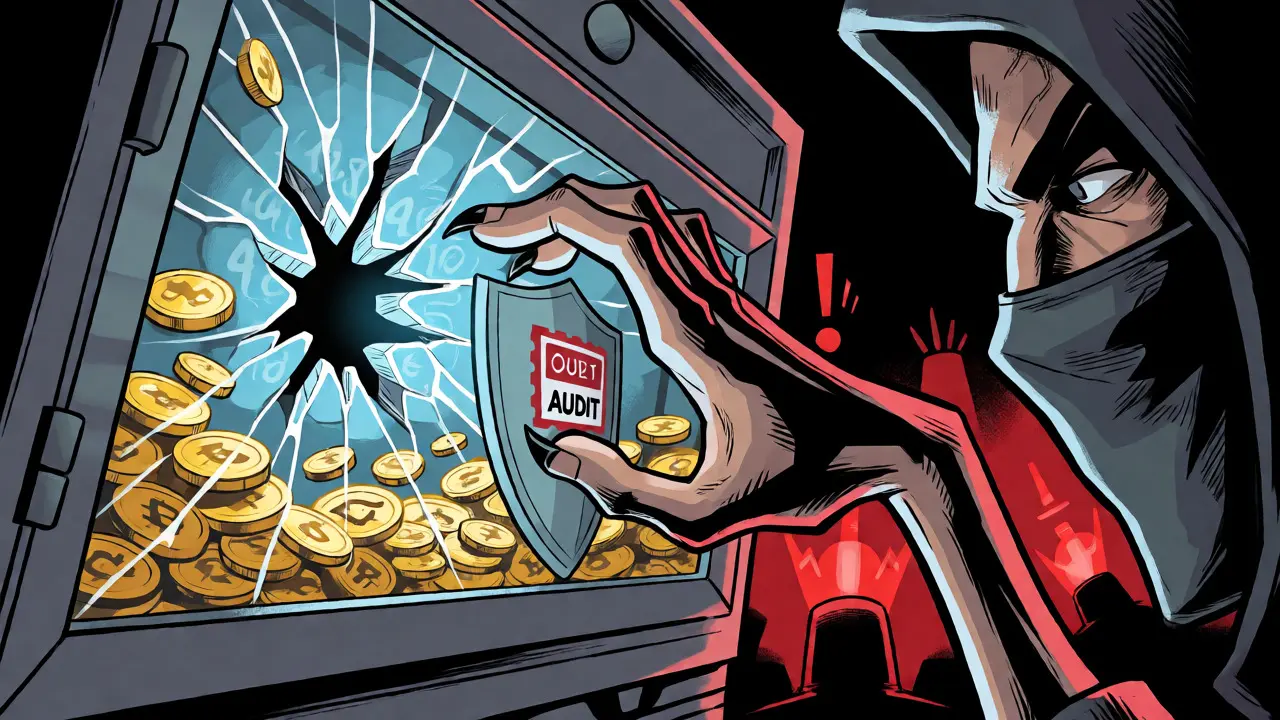
Security vulnerabilities are the biggest headache. Hackers constantly scan deployed contracts for weaknesses. Famous incidents, like the DAO hack in 2016 where $60 million was stolen due to a reentrancy bug, highlight the stakes. Always check if a project has undergone third-party audits before interacting with its contracts. An audit doesn’t guarantee safety, but skipping it is a major red flag.
| Platform | Language | Primary Strength | Best For |
|---|---|---|---|
| Ethereum | Solidity | Largest ecosystem & security | DeFi, NFTs, Enterprise |
| Solana | Rust/C++ | High speed, low cost | Gaming, High-frequency trading |
| Cardano | Haskell | Academic rigor, formal verification | Identity, Government projects |
| Polkadot | Rust | Interoperability between chains | Cross-chain applications |
Where Are Smart Contracts Used Today?
Beyond simple token transfers, smart contracts power entire industries now.
Decentralized Finance (DeFi): This is the heavyweight champion. Lending platforms like Aave allow you to deposit crypto and earn interest automatically. Borrowers provide collateral, and if the price drops too low, the smart contract liquidates their position instantly to protect lenders. No bank branch required.
Supply Chain: Companies like Walmart use blockchain-backed smart contracts to track food products. If a sensor detects that refrigeration failed during transit, the contract can automatically flag the batch as spoiled and trigger refunds or penalties.
Gaming: Play-to-earn games use contracts to ensure true ownership of items. If you find a rare sword in-game, it’s an NFT controlled by a smart contract. You can sell it to another player directly, and the game developer can’t confiscate it.
Getting Started: What You Need to Know
If you want to build or interact with smart contracts, you don’t need a PhD. Start small. Use test networks like Sepolia or Goerli, which mimic Ethereum but use fake money. This lets you experiment without risking real cash.
For developers, learning Solidity is the standard entry point. Resources like CryptoZombies offer interactive tutorials that teach coding by building a zombie game. For users, simply understanding how to approve transactions in your wallet (like MetaMask) is crucial. Every time you sign a transaction, you’re telling the smart contract to run its code. Read what you’re signing.
Remember, the technology is still maturing. Scalability remains an issue; when too many people use Ethereum, fees spike. Layer 2 solutions like Arbitrum and Optimism help by processing transactions off the main chain, making them cheaper while still relying on Ethereum’s security for final settlement.
Are smart contracts legally binding?
Not necessarily. While some jurisdictions recognize code-as-law, most smart contracts operate independently of traditional legal systems. They enforce terms through code execution rather than legal recourse. If a dispute arises outside the code's parameters, you may still need traditional courts.
Can smart contracts be changed after deployment?
Generally, no. Most smart contracts are immutable once deployed. However, developers can design upgradeable patterns using proxy contracts, allowing the logic to be updated while keeping the address constant. This adds complexity but offers flexibility.
Do smart contracts replace lawyers?
They reduce the need for lawyers in routine, automated transactions. However, drafting the initial logic, handling edge cases not covered by code, and dealing with regulatory compliance still require legal expertise. They automate enforcement, not interpretation.
What happens if a smart contract has a bug?
If a bug allows unauthorized access or incorrect calculations, funds can be lost permanently. Since the blockchain records every transaction, hackers can exploit these flaws quickly. Rigorous testing and professional audits are essential to minimize this risk.
Which blockchain is best for smart contracts?
Ethereum remains the leader due to its large developer community and security track record. However, Solana offers higher speed and lower costs, while Polkadot focuses on interoperability. The "best" choice depends on whether you prioritize security, speed, or cross-chain compatibility.