Understanding Provenance in NFT Collections: A Complete Guide to Digital Ownership
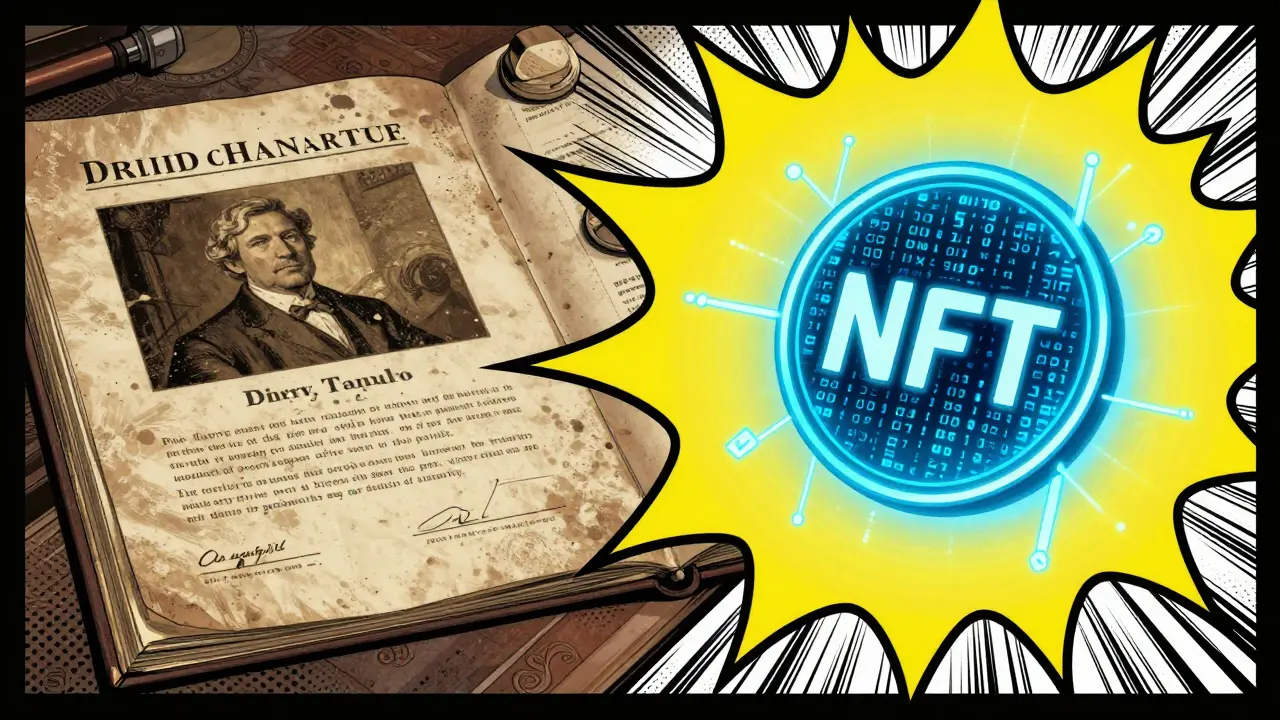
Imagine buying a painting from an auction house. You get the canvas, but you also get a certificate of authenticity and a ledger showing who owned it before you-the museum, the private collector, the artist’s estate. That history adds value. It proves it’s real. Now imagine buying that same painting as a JPEG file on your computer. Without extra help, there is no history. No proof. Just a file that can be copied infinitely.
This is the problem NFT provenance solves. In the world of Non-Fungible Tokens (NFTs), provenance is the complete, tamper-proof record of ownership and origin for a digital asset. It is the digital equivalent of that auction house ledger, but instead of paper records that can be lost or forged, it lives on a blockchain. For collectors, artists, and investors, understanding this concept is not just about tech jargon; it is about knowing exactly what you own, where it came from, and why it matters.
What Is NFT Provenance?
At its core, NFT provenance is the transparent, chronological history of a digital asset recorded on a blockchain network. When you buy an NFT, you are not just buying the image or the video. You are buying a unique token that points to that content, and the blockchain remembers every single time that token changed hands.
In traditional art markets, provenance can be murky. Documents get lost. Signatures get faked. History gets disputed. With NFTs, the history is baked into the technology. From the moment an artist mints (creates) the NFT, every transfer, sale, and trade is permanently recorded. This creates an unbreakable chain of custody. If you look at the history of a specific Bored Ape Yacht Club NFT, you can see exactly which wallet address bought it first, when it was sold, and at what price, all the way back to day one.
This transparency does two things. First, it verifies authenticity. You know the asset comes from the original creator because the minting transaction is public and immutable. Second, it builds trust among buyers. Collectors are more likely to pay premium prices for items with a clear, verifiable history because they know they are not buying a copy or a scam.
How Blockchain Tracks Ownership History
To understand how provenance works, you need to look under the hood of the blockchain. Think of a blockchain like a giant, shared spreadsheet that everyone can read but no one can edit alone. Each page in this spreadsheet is called a "block," and each block contains a list of transactions.
When an NFT is created, a process called minting occurs. During minting, the digital file is linked to a unique identifier on the blockchain. This isn’t just saving a file to a server. It involves creating a new entry in the ledger that says, "This specific token now exists, and it belongs to Wallet Address A." This initial entry is the start of the provenance trail.
Every time that NFT is sold or transferred, a new transaction is added to the next block. The blockchain uses cryptographic hashing to link these blocks together. This means if someone tried to go back and change an old record-say, pretending they were the original owner-the mathematical links would break, and the entire network would reject the change. This makes the record tamper-proof.
The role of smart contracts is crucial here. These are self-executing programs stored on the blockchain. They automate the rules of the NFT. For example, a smart contract might ensure that whenever the NFT is resold, 5% of the sale price goes automatically to the original artist. This royalty payment is also recorded on the blockchain, adding another layer to the provenance data. It shows not just who owns it, but how value has been distributed throughout its life.
Token Standards: The Rules of the Road
Not all NFTs are built the same way. Different blockchains use different technical standards to define how these tokens work. These standards determine how provenance data is structured and accessed.
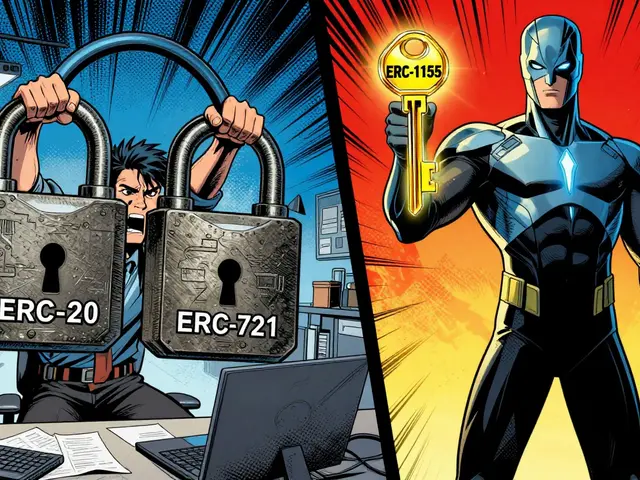
The most famous standard is ERC-721, introduced on the Ethereum blockchain. It was the first widely adopted standard for unique digital assets. Each ERC-721 token is distinct and cannot be divided. If you own half an ERC-721 token, it doesn’t make sense-it’s either yours or it isn’t. This fits perfectly with collectibles like art, where uniqueness is key. Later, ERC-1155 was introduced to allow for both unique and semi-fungible tokens in a single contract, improving efficiency for games and platforms that manage many different items.
Ethereum isn’t the only player. Other networks have their own standards:
- Solana: Uses the SPL Token Standard. Solana is known for high speed and low fees, making it popular for high-volume trading where quick provenance updates are needed.
- Polygon: Often compatible with Ethereum standards (ERC-721/1155) but operates as a Layer-2 solution, offering cheaper transactions while maintaining security.
- NEAR: Uses NEP-171, designed for scalability and user-friendly account abstraction.
Why does this matter for provenance? Because the standard dictates what metadata is attached to the token. Metadata includes details like the title, description, and a link to the actual image file. If the standard is poorly implemented, the link to the image might break, even if the ownership record remains valid. This is known as "metadata mutability" risk, a critical aspect of provenance integrity.
| Standard | Blockchain | Key Feature | Provenance Impact |
|---|---|---|---|
| ERC-721 | Ethereum | Unique, indivisible tokens | Gold standard for high-value art; robust history tracking |
| ERC-1155 | Ethereum/Polygon | Batch transfers, mixed types | Efficient for gaming/assets with multiple copies |
| SPL | Solana | High speed, low cost | Fast provenance updates; suitable for high-frequency trading |
| NEP-171 | NEAR | User-friendly accounts | Simplifies ownership verification for non-crypto users |
Provenance vs. Traditional Art Authentication
Let’s compare NFT provenance to the traditional art world. In physical art, proving an item is genuine often requires experts, certificates, and sometimes scientific testing. Even then, fakes exist. The Mona Lisa has had countless replicas, and distinguishing them requires deep expertise.
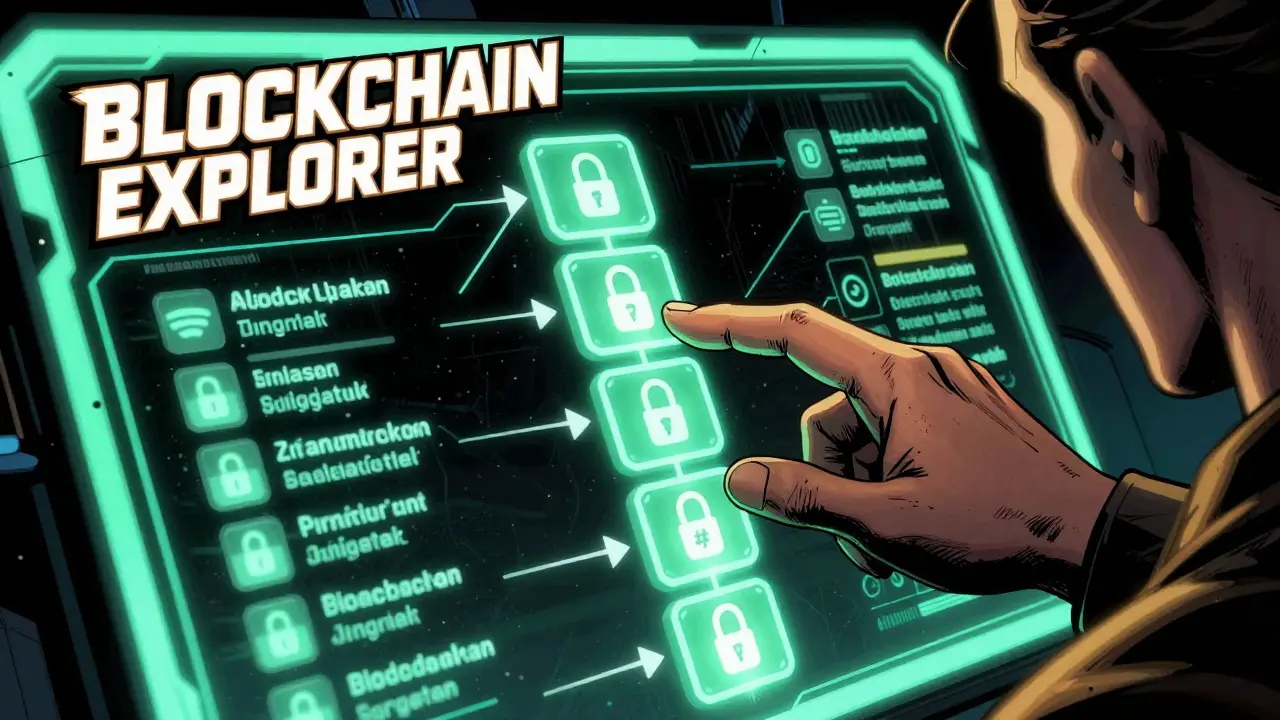
NFTs flip this model. The authenticity is inherent in the code. You don’t need an expert to tell you if an NFT is the "original" version minted by the artist. You just check the blockchain explorer. If the token ID matches the official collection contract, it is authentic. This democratizes verification. Anyone with an internet connection can verify ownership, not just insiders.
However, there is a catch. Blockchain proves the token is authentic, but it doesn’t always prove the content is original. An artist could mint a photo they stole from Instagram. The NFT will still have perfect provenance-it will show who minted it and who bought it-but the underlying content might be infringing copyright. This is the "garbage in, garbage out" problem. Provenance tracks the token, not necessarily the moral rights of the content. Buyers must still do due diligence on the creator.
Real-World Applications Beyond Art
While digital art got the headlines, NFT provenance is finding serious use in other industries where ownership history is critical.
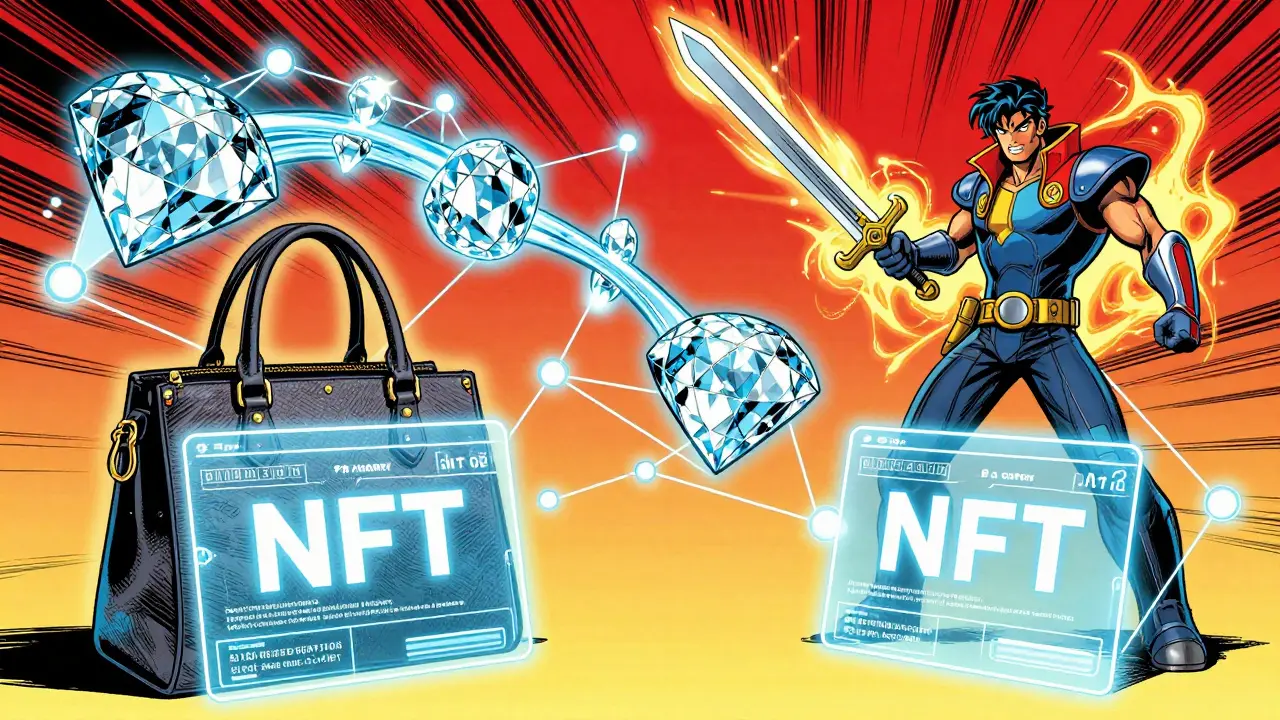
Luxury Goods: Brands like LVMH are experimenting with NFTs to track the history of physical handbags and watches. Each bag gets a digital twin (an NFT). Every time the bag is repaired or resold, the NFT is updated. This prevents counterfeits and ensures the buyer knows the item’s full service history.
Supply Chain: Companies use NFTs to track goods from factory to shelf. For example, a diamond’s journey from mine to jewelry store can be recorded on a blockchain. This provides ethical provenance, ensuring the stone wasn’t mined in conflict zones.
Real Estate: Property deeds are being tokenized as NFTs in some jurisdictions. This simplifies the transfer of ownership. Instead of weeks of paperwork, the deed changes hands instantly via a smart contract, with a permanent public record of the transaction.
Gaming Assets: In blockchain games, players truly own their swords, skins, and characters. If a player sells a rare sword, the provenance shows its battle history-who wielded it, what battles it survived. This adds narrative value to the item, similar to a vintage baseball bat used in a historic game.
Challenges and Risks in NFT Provenance
Despite the benefits, NFT provenance is not perfect. There are significant risks that buyers and creators should understand.
Metadata Hosting: Many NFTs store the actual image file on centralized servers like Amazon S3 or IPFS (InterPlanetary File System). If the server goes down or the IPFS pinning service fails, the image disappears. The NFT still exists, and the provenance is intact, but you’re left with a broken link. This is why decentralized storage solutions like Arweave are gaining popularity-they promise permanent, uncensorable storage.
Rug Pulls and Scams: Bad actors can create fake collections that mimic popular ones. They might copy the artwork and mint it on a different contract. The provenance will look clean because it’s new, but it’s worthless. Buyers must verify the contract address against official sources.
Privacy Concerns: Because blockchain is public, your ownership history is visible to everyone. If you buy expensive NFTs, your wealth and spending habits are exposed. Some platforms are developing zero-knowledge proofs to hide ownership details while still verifying authenticity, but this is still emerging technology.
The Future of Digital Ownership
As the technology matures, we can expect several trends to shape NFT provenance. Interoperability will improve, allowing NFTs to move seamlessly between different blockchains and virtual worlds. Imagine wearing a digital jacket you bought on Ethereum in a game running on Solana. Standards like ERC-6551 are already working toward this by giving NFTs their own wallets, enabling them to hold other assets.
We will also see greater integration with legal systems. Governments may begin recognizing NFTs as official property titles, bridging the gap between digital provenance and real-world law. This could revolutionize industries from music royalties to academic credentials, where diplomas are issued as NFTs to prevent fraud.
For now, NFT provenance offers something the digital world never had before: a reliable, transparent, and permanent record of ownership. It turns ephemeral pixels into tangible assets with history, value, and identity. Whether you are an artist protecting your work, a collector seeking authenticity, or a business streamlining supply chains, understanding this foundation is essential for navigating the future of digital value.
Is NFT provenance secure?
Yes, the ownership history recorded on the blockchain is highly secure and tamper-proof due to cryptographic hashing. However, the security of the associated digital file (like the image) depends on how it is stored. If stored on a centralized server, it can be deleted. Using decentralized storage like IPFS or Arweave enhances long-term security.
Can I trace the original creator of an NFT?
You can trace the wallet address that first minted the NFT. However, this does not always reveal the real-world identity of the creator, as blockchain addresses are pseudonymous. To verify the human creator, you often need to rely on external reputation systems or platform verification badges.
What happens if an NFT marketplace shuts down?
Your NFT and its provenance remain safe on the blockchain. Marketplaces are just interfaces to view and trade tokens. If one closes, you can connect your wallet to another marketplace or a blockchain explorer to access your asset and its history.
Does provenance guarantee the quality of the art?
No. Provenance guarantees the authenticity of the token and its ownership history, not the artistic merit or originality of the content. Someone can mint a low-quality or stolen image, and the provenance will still be technically valid. Buyers must assess the content separately.
Which blockchain is best for NFT provenance?
Ethereum is considered the gold standard due to its large ecosystem and security, especially for high-value assets. However, Layer-2 solutions like Polygon offer lower fees, and Solana provides faster transactions. The best choice depends on your needs for cost, speed, and community size.