
Smart Contracts for Conditional Donations: How Blockchain Ensures Your Charity Money Is Used Right
Donation Efficiency Calculator
How Smart Contracts Impact Your Donation
Traditional charities lose 15-25% of donations to overhead. Smart contracts reduce this to 2-5%. See how your donation's impact differs:
Your Impact Comparison
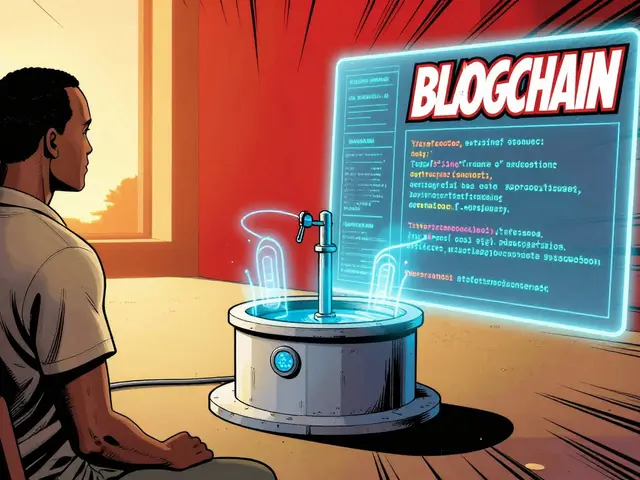
Imagine giving $500 to build a clean water well in Kenya-and seeing the exact moment the well is finished, verified by sensors, before your money is released. No guesswork. No delays. No middlemen taking a cut. This isn’t science fiction. It’s how smart contracts for conditional donations are changing charity today.
What Exactly Are Smart Contracts for Conditional Donations?
A smart contract is just code running on a blockchain. But when you tie that code to a donation, it becomes a rulebook that only lets money move when certain things happen. For example: "Send $1,000 to the clinic only after 500 mosquito nets are delivered and photographed by a local partner." The contract checks the data, and if it matches, the money moves automatically. This isn’t just about sending crypto. It’s about control. Traditional donations rely on trust-trust that the charity will use your money wisely. But surveys show only 23% of donors truly believe charities are accountable. With smart contracts, you don’t just trust. You verify.How It Works: From Donor to Impact
Here’s the step-by-step flow:- You choose a charity that uses smart contracts-like Malala Fund or Firefly Giving.
- You set the condition: "Release funds when the school roof is completed and verified by satellite imagery."
- You send your crypto (ETH, XDC, or BTC via DLCs) to the contract address.
- External data (like weather, GPS, or IoT sensors) feeds into the contract through an "oracle"-usually Chainlink.
- When the condition is met, the contract automatically sends the funds to the charity’s wallet.
- You get a real-time update. No emails. No reports. Just proof.
Why This Beats Traditional Giving
Traditional charities often lose 15-25% of donations to overhead-banks, payment processors, admin staff, audits. Smart contracts cut that to 2-5%. That means $95 of every $100 goes to the cause, not the office. Take matching gifts. Normally, if a company says, "We’ll match your donation," it can take weeks to process. With a smart contract, it happens in minutes. The United Way tested this in 2023. Their smart contract matched donations within 15 minutes of verification. The old system? 30 to 90 days. And the transparency? Game-changing. Donors using these systems report 42% higher retention. Why? Because they know exactly where their money went. One donor on Reddit said: "I funded a water well in Kenya. I got live updates. I saw the sensors confirm installation. I didn’t just donate-I witnessed the impact."Where It Falls Short
But this isn’t magic. There are real problems. First, rigidity. In 2022, UNICEF ran a pilot in Pakistan during massive floods. Their smart contract was programmed to release funds only when supplies reached specific villages. But the floods changed routes. Roads were gone. The contract couldn’t adapt. $220,000 sat frozen because the code didn’t allow for emergency changes. Second, complexity. Small charities struggle. Setting up a smart contract costs $8,000-$25,000. Many don’t have the budget. A nonprofit CEO on LinkedIn said: "We spent $8,500 just to get this working. We’re a $200K/year org. That’s 4% of our whole budget just for tech." Third, the digital divide. 72% of people globally don’t have access to crypto wallets. You need a smartphone, internet, and the know-how to use MetaMask or Trust Wallet. For many in need, that’s impossible. So while the tech helps donors, it might leave the most vulnerable behind.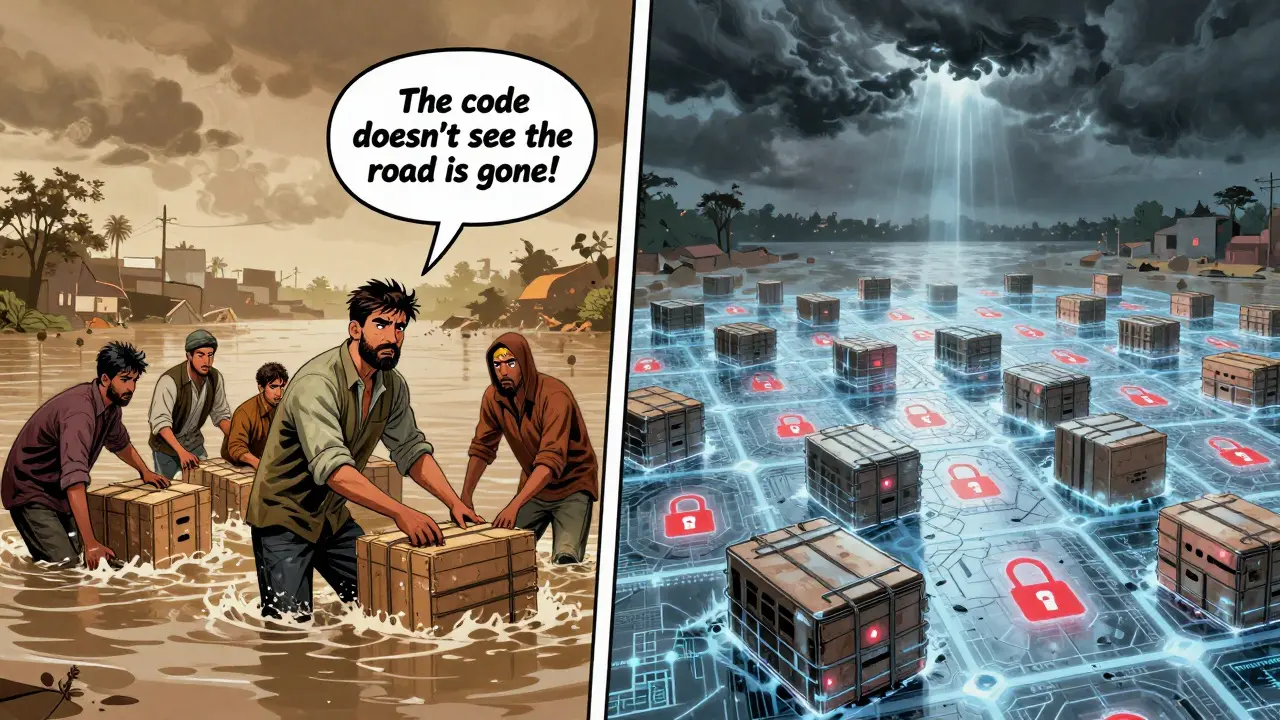
Who’s Using It-and Who Isn’t
Big players are in. Fortune 500 foundations? 41% have tried or are piloting conditional donations. Major financial firms like JPMorgan now offer it to high-net-worth clients. Why? Tax docs auto-generate. Compliance is easier. It’s efficient. But small nonprofits? Only 8% have adopted it. TechSoup’s 2024 survey found 68% of small charities say the learning curve is too steep. Donors love the idea. Staff? They’re overwhelmed. One grant writer on Reddit said: "I had 12 people start the donation process. 10 dropped out because they couldn’t set up a wallet." Platforms like Firefly Giving, Bloom Solutions, and CharityChain are trying to fix this. They’re building simpler interfaces. But the gap remains wide.Legal Gray Zones
What happens if the code has a bug? Or if the data feed is wrong? Who’s liable? In January 2025, a U.S. court case (Bryant v. JPMorgan Chase Bank) ruled that "conduct can manifest acceptance of terms" even in code-based agreements. That’s a big deal. It means smart contracts might finally be legally enforceable. But it’s still shaky. If a donor didn’t fully understand the terms buried in the code, can they sue? Courts are still figuring this out. Most charities now hire lawyers who understand both nonprofit law and blockchain-costing $350/hour.The Future: What’s Coming in 2025 and Beyond
The good news? Things are improving fast. In February 2024, Ethereum launched ERC-7217-the "Philanthropy Module." It’s a standard template for conditional donation contracts. Developers no longer need to build from scratch. Setup time dropped 40%. And ISO is working on ISO 23026, a global standard for blockchain in social impact. Expected in late 2025, this will finally create rules everyone follows-security, transparency, accessibility. Gartner predicts 35% of large charities (budgets over $1M) will use smart contracts by 2027. But experts warn: without better usability, adoption will stay below 15% by 2030.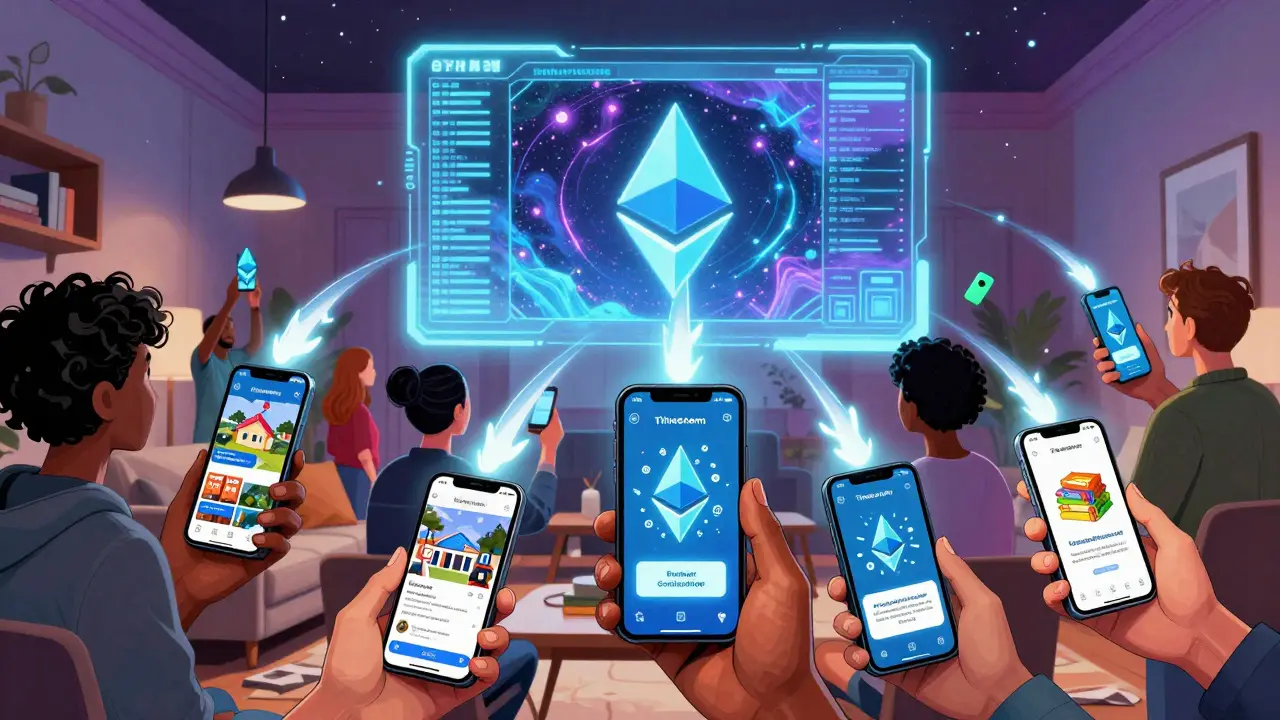
Should You Use It?
If you’re a tech-savvy donor who wants proof your money makes a difference-yes. It’s the most transparent way to give. If you’re a small nonprofit with limited staff? Maybe not yet. The cost and complexity are still high. Start by partnering with a platform like Firefly Giving instead of building your own contract. If you’re a large foundation or corporation? This is no longer experimental. It’s strategic. Automated compliance, higher donor retention, lower overhead-it adds up. The real question isn’t whether it works. It’s whether you’re ready to give up control-and trust the code.Real Examples: Success and Failure
Success: The Malala Fund used smart contracts in 2023 to fund girls’ education in Pakistan. Donors could track when scholarships were awarded, when books were delivered, and when teachers were trained. Donor confidence jumped 37%. Failure: UNICEF’s 2022 flood relief in Pakistan failed because the contract couldn’t adapt. The funds were locked. The need was urgent. The code didn’t care. $220,000 sat idle. The lesson? Smart contracts are powerful-but they’re not smarter than people. The best systems leave room for human judgment when things go off-script.Getting Started: What You Need
If you want to try this:- Use a platform like Firefly Giving or CharityChain. Don’t code your own contract.
- Make sure the charity clearly explains the conditions in plain language-not just in Solidity code.
- Use a wallet you’re comfortable with: MetaMask, Trust Wallet, or Coinbase Wallet.
- Start small. Try a $50 donation to see how the process works.
- Ask the charity: "How do you verify the conditions? What happens if something goes wrong?"
Can I use Bitcoin for conditional donations?
Yes, but it’s harder. Bitcoin doesn’t natively support smart contracts like Ethereum. However, Discreet Log Contracts (DLCs) and Covenants allow conditional payouts on Bitcoin. They’re more private and use less blockchain space, but require technical setup. Platforms like Lightspark are making this easier, but Ethereum still handles 68% of charitable smart contracts as of 2024.
Are smart contract donations tax-deductible?
In the U.S., yes-if the charity is a registered 501(c)(3) nonprofit. The IRS treats crypto donations as property, so you avoid capital gains tax and can deduct the fair market value. Firefly Giving and other platforms auto-generate IRS-compliant receipts within minutes, which is 92% faster than manual systems. Always confirm the charity can issue a tax receipt before donating.
What if the data feed is wrong or hacked?
That’s why oracles matter. Most charities use Chainlink, which pulls data from multiple trusted sources (like satellite providers or government databases) to reduce risk. Still, no system is perfect. If a feed is compromised, the contract could release funds incorrectly. That’s why the best systems include a manual override-usually a small group of trusted community members who can pause or adjust the contract if something looks off.
Do I need to own cryptocurrency to donate?
Yes, currently. You need a wallet and some crypto (ETH, XDC, etc.) to send funds to a smart contract. Some platforms let you buy crypto directly through their interface using a credit card, but you still end up with crypto in a wallet. If you don’t have crypto, you can’t use smart contract donations yet. That’s one of the biggest barriers to wider adoption.
Is this just for rich people?
Not by design, but right now, yes. High gas fees on Ethereum (up to $50 during peak times) make small donations impractical. That’s why platforms like XDC Network are gaining traction-they charge less than $0.01 per transaction. But most users are still tech-savvy donors with access to crypto. Until wallets become as easy as Venmo and fees drop, this tech will remain a tool for the connected, not the global majority.



It’s wild to think we’re now outsourcing trust to code. For centuries, charity was about human connection-handing cash to someone in need, seeing their eyes light up. Now? We want sensors and satellite images to prove it happened. I’m not saying it’s bad… but what happens when the algorithm decides a child’s smile isn’t ‘verified’ enough? We’re turning compassion into a QA checklist.
I’ve donated to a few of these smart contract projects and honestly? It felt like watching a magic trick. One second I hit ‘send,’ next thing I know-boom-photo of the well, GPS coordinates, timestamp. No follow-up emails. No ‘please donate again.’ Just proof. I’ve never felt more connected to a cause. Even if it’s tech, it still feels human.
Oh please. You think this is transparency? LOL. The same companies pushing this tech are the ones lobbying to kill regulation on data privacy. Chainlink? Owned by the same VC firms that backed crypto scams. And don’t get me started on ‘oracles’-they’re just centralized servers with a fancy name. You’re not trusting code-you’re trusting the people who wrote it. And they’re not saints. They’re investors. 🤡
So you’re telling me a 12-year-old in Nairobi with a broken phone and no internet is supposed to benefit from this? Meanwhile, some bro in Silicon Valley gets a tax write-off for donating ETH to a ‘smart’ contract that froze $220K during a flood because he didn’t feel like updating the code? 😂 We’re not saving the world-we’re just making rich people feel better about their crypto gambling. Bravo.
...they're watching you... the sensors... the satellites... the oracles... they're not just verifying wells... they're mapping your donation habits... building a profile... your crypto wallet... your IP... your location... they know you gave $50... they know you care about water... they know you're vulnerable... they're using this to target you... next time... it won't be a well... it'll be a vaccine... or a ballot... or a drone... you think this is charity? It's surveillance with a heart emoji... 🕵️♂️💧
While the technological innovation is undeniably compelling, one must consider the epistemological implications of delegating fiduciary responsibility to immutable, non-interpretive code. The very notion of ‘trust’ becomes ontologically unstable when mediated by Turing-complete protocols. Furthermore, the legal personhood of autonomous agents remains jurisprudentially contested, as evidenced by the Bryant v. JPMorgan Chase precedent. One cannot simply assume that ‘code is law’ without first interrogating the moral architecture beneath the bytecode.
I love this idea so much 🥹 But honestly? The biggest win isn’t the tech-it’s the peace of mind. I used to feel guilty donating because I never knew if my money helped. Now? I get a photo of a girl holding her new schoolbook. That’s it. No report. No fundraiser email. Just her. That’s enough. We don’t need to overcomplicate kindness. Sometimes, proof is just a picture.
I’m skeptical but curious. I’ve tried using Firefly Giving. The interface was clean, but I still had to buy ETH, set up MetaMask, and pay gas fees. I gave $25. Took me 45 minutes. I’m not tech-averse, but I’m not sure most donors will stick with this. Maybe we need a ‘donate like Venmo’ button that handles the crypto backend. Otherwise, we’re just preaching to the choir.
There’s a deeper question here: Are we trying to fix charity… or just make it more efficient for donors? What about the dignity of the recipients? If you’re a community in Kenya, and your only interaction with donors is a sensor and a blockchain transaction-do you feel seen? Or just monitored? Technology shouldn’t erase humanity in the name of transparency.
Hey, if you’re new to this-start small! I did a $10 donation to a school roof project last month. Got a video of the kids cheering when the last beam was placed. I cried. 🥲 You don’t need to be an expert. Just find a platform that explains it in plain words. And ask: ‘Who’s checking the data?’ If they say ‘an oracle,’ ask what that means. You’re not dumb for not knowing crypto-you’re smart for caring enough to ask.
As someone who’s worked with NGOs in Southeast Asia, I’ve seen firsthand how tech can help-or hurt. Smart contracts are great if the local partners have internet and power. But in rural Laos? Not so much. The real win isn’t the blockchain-it’s partnerships. Platforms like Firefly are good because they handle the tech so the local teams can focus on the people. Tech should serve the mission, not replace it.
I’ve donated to two of these projects. One worked perfectly. The other? The sensors broke. The contract froze. The charity had to email donors to ask for manual approval. So… it’s not magic. It’s just a tool. And tools need people behind them. If you want to use this, pick a charity that’s transparent about the risks-not one that makes it sound like a robot is running the world.
THIS IS THE FUTURE. STOP HATING ON IT. People who say ‘it’s for rich people’ are just scared of change. Gas fees? Use XDC. Wallets? Use Coinbase. The tech is getting easier EVERY DAY. And guess what? The kids in Kenya don’t care if you used ETH or BTC. They care that their school got built. So stop overthinking. Just give. And if you don’t understand crypto? Learn. Or step aside. The world isn’t waiting for you to get comfortable.
So… does this mean I can now track my donation to the dog shelter in Texas? Like, can I see the exact moment the vet administers the rabies shot? 🐶 Just curious. Also, why do all these contracts need oracles? Can’t they just use a photo? I feel like we’re over-engineering this
I’m from India, and I’ve been following this for a while. The real issue isn’t the tech-it’s the power imbalance. The donors get the data, the transparency, the receipts. The recipients? They get a well, a school, a net. But they don’t get to see who gave it. They don’t get to know the story behind the donation. The blockchain records everything… except the human connection. Maybe the next step isn’t just tracking money… but letting the recipients tell their own stories back to the donors. Not just sensors… but voices.
Y’all are missing the REAL issue. The smart contract that froze $220K in Pakistan? That wasn’t a glitch. That was a TEST. The govts and Big Philanthropy are using these contracts to create ‘donor-controlled’ aid ecosystems. No local autonomy. No adaptive response. Just cold code. They’re building a system where the poor are dependent on Western donors’ blockchain preferences. This isn’t charity. It’s digital colonialism. And Chainlink? They’re the new IMF. 🚨
Works if you know what you're doing. Don't overthink it. Use Firefly. Send ETH. Wait for update. Done.