

Oracle Security and Manipulation Risks: A Guide to Blockchain Oracles
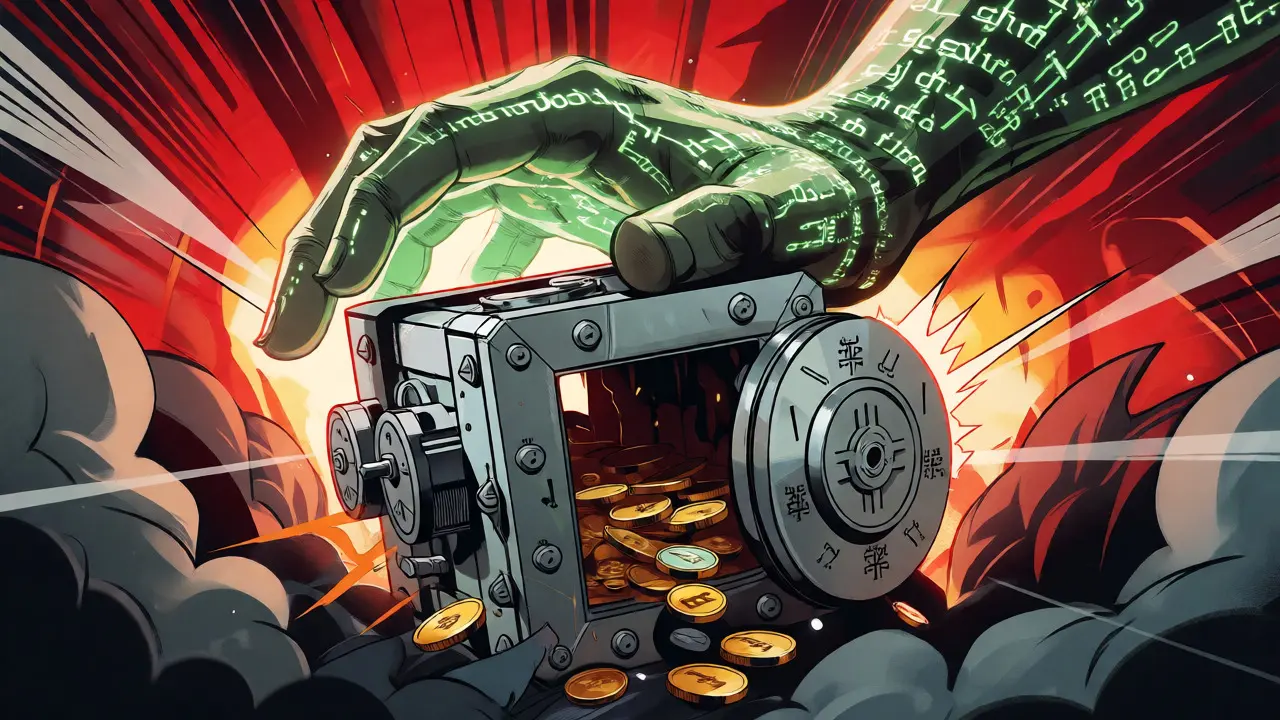
Imagine you're playing a card game where the dealer is also the one shuffling the deck, dealing the cards, and announcing who wins. If that dealer decides to cheat, you have no recourse. This is essentially the problem with blockchain oracles. They are the bridges between the isolated world of on-chain data and the messy, unpredictable reality of off-chain information. Without them, smart contracts are blind. With them, they become vulnerable to manipulation.
The core issue isn't just technical; it's economic. Smart contracts execute automatically based on inputs. If those inputs are wrong-whether by accident or malicious design-the contract executes wrongly. And in crypto, "wrong" often means someone loses millions of dollars overnight. The term oracle security refers to the mechanisms that ensure these external data feeds are accurate, timely, and tamper-proof. But achieving this is harder than it sounds.
Why Blockchains Need Oracles
Blockchains are deterministic systems. They need every node to agree on the same state. If Node A sees a temperature of 20°C and Node B sees 21°C, consensus breaks. To solve this, blockchains don't fetch live data themselves. Instead, they rely on oracles to push verified data onto the chain. These oracles can provide anything from the current price of Bitcoin to the result of a sports match or the weather in Wellington.
But here’s the catch: the oracle itself is usually off-chain. It might be a centralized server run by a single company, or a network of independent nodes. This creates a trust gap. You’re trusting the oracle provider more than you’re trusting the blockchain itself. If the oracle lies, the blockchain faithfully records the lie. That’s the fundamental risk.
The Three Main Types of Oracle Attacks
Manipulation isn't just about hacking a server. Attackers use three primary strategies to corrupt oracle data:
- Data Source Manipulation: The attacker influences the underlying source. For example, if an oracle pulls prices from Uniswap V2, an attacker could swap large amounts of tokens to artificially spike the price, tricking the oracle into reporting a higher value.
- Oracle Provider Compromise: The oracle service itself is hacked or goes offline. If a centralized oracle like Chainlink (in its early days) had its API key stolen, an attacker could feed false data directly to the smart contract.
- Consensus Failure: In decentralized oracles, attackers might bribe enough nodes to agree on a false value. If 51% of the reporting nodes say ETH is $10 when it’s actually $3,000, the majority rule accepts the lie.
Each type requires a different defense strategy. Data source issues need robust aggregation methods. Provider compromise needs decentralization. Consensus failure needs economic incentives for honest reporting.
Case Study: The bZx Incident
In February 2020, DeFi protocol bZx suffered a massive exploit due to oracle manipulation. An attacker used flash loans to manipulate the price of Compound’s cUSDC token. By borrowing huge sums, swapping assets, and repaying loans within a single transaction, the attacker skewed the price reported by the oracle. The smart contract, trusting this manipulated price, allowed the attacker to withdraw more collateral than they should have. The result? A loss of roughly $400,000. While not huge compared to later hacks, it was a wake-up call. It proved that even small liquidity pools could be tipped over by sophisticated financial engineering.
This incident highlighted a critical flaw: many protocols relied on single-source spot prices. They didn’t account for the fact that a single trade could distort the market temporarily. Modern protocols now use time-weighted average prices (TWAP) to mitigate this, but the lesson remains: never trust a single snapshot.
Centralized vs. Decentralized Oracles
Not all oracles are created equal. Your choice of oracle determines your risk profile.
| Feature | Centralized Oracle | Decentralized Oracle |
|---|---|---|
| Single Point of Failure | High. One server down means all data stops. | Low. Multiple nodes report independently. |
| Speed & Cost | Fast and cheap. No consensus overhead. | Slower and more expensive due to multiple confirmations. |
| Trust Model | You trust the company (e.g., Bloomberg). | You trust the code and economic incentives. |
| Manipulation Risk | Bribery or hack of the central authority. | Attacking a majority of nodes simultaneously. |
Centralized oracles are easier to integrate but carry significant counterparty risk. If the company behind the oracle gets sued, goes bankrupt, or changes its terms, your smart contract breaks. Decentralized oracles like Chainlink aim to remove this single point of failure by aggregating data from dozens of independent providers. However, they introduce new complexities, such as node collusion or latency issues during high volatility.
Mitigation Strategies for Developers
If you’re building on-chain applications, how do you protect yourself? Here are practical steps:
- Use Aggregated Data: Never rely on a single exchange or source. Use oracles that pull from multiple exchanges and take the median. This filters out outliers and flash loan attacks.
- Implement Circuit Breakers: Program your smart contract to pause execution if the price moves more than X% in Y minutes. This prevents catastrophic losses during extreme volatility.
- Delay Execution: Add a timelock to sensitive operations. If an oracle reports a sudden drop, wait 10-15 minutes before executing. Often, manipulative spikes reverse quickly.
- Audit the Oracle Code: Don’t just audit your own contract. Audit the oracle integration. Ensure there are no hidden dependencies or upgradeable proxies that the oracle provider controls.
These steps won’t eliminate risk, but they significantly reduce the surface area for attack. Remember, security is a spectrum, not a binary switch.

The Future: Zero-Knowledge Proofs and Beyond
Emerging technologies promise to make oracles more secure. Zero-knowledge proofs (ZKPs) allow an oracle to prove that data was fetched correctly without revealing the raw data or requiring full trust in the provider. Projects like Tellor and UMA are experimenting with optimistic oracles, where anyone can challenge a data point if they believe it’s wrong. If challenged, a dispute resolution mechanism kicks in, adding a layer of social consensus to technical verification.
As DeFi grows, so does the incentive to manipulate oracles. We’re already seeing attackers spend millions to gain control over price feeds. The arms race between oracle security and manipulation tactics will only intensify. Staying informed about which oracles your favorite protocols use is no longer optional-it’s essential for protecting your capital.
Frequently Asked Questions
What happens if a blockchain oracle goes offline?
If a centralized oracle goes offline, any smart contract relying on it may halt execution or revert transactions because it cannot verify the required data. In some cases, protocols have fallback mechanisms, such as using a secondary oracle or pausing the contract entirely until the feed returns. Decentralized oracles are less likely to fail completely because they aggregate data from multiple sources, but individual node failures can still cause delays or increased costs.
Can smart contracts be hacked if the oracle is secure?
Yes. Even with a perfectly secure oracle, smart contracts can be vulnerable to logic errors, reentrancy attacks, or governance exploits. The oracle only ensures the accuracy of the input data. If the contract’s logic mishandles that data-for example, by incorrectly calculating interest rates or failing to check user permissions-the contract can still be exploited. Security must be holistic, covering both the data feed and the application logic.
How do flash loans affect oracle security?
Flash loans allow attackers to borrow large amounts of cryptocurrency without collateral, provided they repay it within the same transaction. This enables them to manipulate spot prices on decentralized exchanges momentarily. If an oracle relies on a simple spot price from a low-liquidity pool, an attacker can skew the price dramatically, tricking the oracle into reporting a false value. Using time-weighted average prices (TWAP) helps mitigate this by averaging prices over a period, making momentary spikes less impactful.
Is Chainlink completely immune to manipulation?
No system is completely immune. Chainlink reduces risk through decentralization and economic incentives, but it is not invulnerable. Potential risks include collusion among a majority of nodes, bugs in the oracle contract code, or attacks on the underlying data sources. Additionally, if the cost of attacking the oracle is lower than the potential profit from manipulating a specific smart contract, rational actors may attempt an attack. Continuous auditing and monitoring are necessary to maintain security.
Why do some DeFi protocols use their own oracles?
Some protocols create custom oracles to optimize for speed, cost, or specific data requirements that general-purpose oracles don’t meet. For example, a lending platform might need highly frequent updates for liquidation triggers. However, building a custom oracle introduces additional security risks, as it may lack the extensive testing and decentralization of established solutions. Users should carefully evaluate whether a custom oracle has been audited and if its decentralization level matches the value locked in the protocol.



They don't want you to know this but the oracles are already compromised. The whales control the feeds. We are just pawns in their game. 😡
This is such a great breakdown of the risks involved! I think it's really encouraging to see developers actively working on mitigation strategies like circuit breakers and TWAPs. It shows that the ecosystem is maturing and learning from past mistakes like the bZx incident. We should all feel optimistic about the future of secure DeFi if we keep pushing for these best practices.
It is absolutely morally wrong to rely on centralized entities for truth. 🤨 When one company holds the keys to reality, corruption is inevitable. We have seen this throughout history with banks and governments. Blockchain was supposed to fix this but now we are recreating the same power structures with Chainlink and others. If the oracle provider decides to lie, who punishes them? No one. That is not justice. That is tyranny disguised as technology. We must demand true decentralization or we deserve to lose our money. Every time a protocol uses a single source they are gambling with user funds without consent. This lack of accountability is unacceptable in any ethical system. We need strict moral guidelines for code deployment. Otherwise we are just moving bad actors from Wall Street to Web3. The community has a duty to reject lazy architecture. Do not let convenience override integrity. True freedom requires distributed trust not rented trust. 😠
I appreciate the passion here Clarence. It is important to remember that decentralization is a spectrum and not a binary switch. Many projects are trying to find a balance between speed and security which is a difficult trade-off. Instead of condemning all centralized elements perhaps we can look at how hybrid models are evolving to address those specific concerns you raised. Collaboration among developers seems more productive than pure rejection of current tools.
From a technical standpoint the distinction between data source manipulation and consensus failure is critical for proper risk assessment. Developers must implement multi-source aggregation to mitigate outlier effects effectively. Furthermore the use of time-weighted average prices significantly reduces the vulnerability to flash loan attacks by smoothing out instantaneous volatility spikes. One must also consider the latency implications when deploying decentralized oracle networks during periods of high network congestion. Proper auditing of both the smart contract logic and the oracle integration layer remains paramount for comprehensive security coverage. Economic incentives must be calibrated correctly to ensure node operators act honestly under all market conditions. Failure to account for these variables often leads to catastrophic exploits despite robust theoretical frameworks. Therefore rigorous testing environments and continuous monitoring systems are indispensable components of any serious DeFi infrastructure project. Only through meticulous attention to these details can we achieve sustainable growth in the blockchain sector.
the oracle is the eye of the beast
and eyes can be blinded
or deceived
we build castles on sand
thinking it is stone
truth is relative
until proven otherwise
by the majority
which is easily bribed
so we sleep
while wolves feed
on our ignorance
and call it progress
what is security
if not illusion
maintained by code
that we do not read
we trust machines
more than men
yet men write the code
and men are flawed
thus the machine is flawed
inevitably
tragically
beautifully
flawed
You guys are overcomplicating this. Just use a bigger exchange. Binance is big enough. Problem solved. Why make it so hard?
Hey there! I totally get where you're coming from Sagan. It feels simpler to just pick one big source. But imagine if that one big source gets hacked or lies? Then everything breaks. Using multiple sources is like having backup plans. It keeps your money safer when things go sideways. It might seem complicated now but it saves headaches later. Let's try to see it as building a safety net rather than adding complexity. It helps everyone sleep better at night knowing there are checks and balances in place. 😊
The analysis regarding zero-knowledge proofs is particularly insightful. These technologies offer a promising path toward verifiable data integrity without sacrificing privacy. As the regulatory landscape evolves, ensuring compliance while maintaining decentralization will become increasingly complex yet necessary for institutional adoption.
yeah man ZKPs are gonna change everything. super cool stuff. definitely worth keeping an eye on.