
Interdax Crypto Exchange Review: High Leverage, No KYC, and Hidden Risks
Imagine being able to trade Bitcoin with 100x leverage without ever showing your passport or bank statements. That is the promise of Interdax, a cryptocurrency derivatives exchange that has carved out a specific niche for traders who value anonymity above all else. Launched in November 2019 and incorporated in Seychelles, this platform isn't trying to be the next Coinbase. It doesn't want your personal data. Instead, it offers a raw, high-speed environment for experienced traders who understand the risks of leveraged positions.
But here is the catch: there is no such thing as a free lunch in crypto. The lack of identity verification (KYC) means there is also no regulatory safety net. If you are an advanced trader looking for aggressive tools and zero friction, Interdax might be exactly what you need. If you are a beginner just dipping your toes into crypto, this platform could wipe you out before you even figure out how to log in. Let’s break down whether Interdax is worth your attention in 2026.
The Core Value Proposition: Anonymity and Leverage
What makes Interdax stand out in a crowded market? Two things: privacy and power. Most major exchanges now require strict Know Your Customer (KYC) checks. You upload your ID, take a selfie, and wait days for approval. Interdax skips all of that. You can create an account, deposit funds, and start trading almost instantly. This no-KYC policy is its biggest selling point for privacy-conscious users.
Alongside anonymity comes leverage. Interdax allows traders to borrow up to 100 times their capital to open positions. For context, regulated platforms like Coinbase Advanced Trade often cap leverage at 3x for retail users. Even giants like Binance, which offer up to 125x on some pairs, usually restrict those higher limits to verified accounts with significant history. Interdax gives you the keys to the car immediately, but remember: driving fast without a seatbelt is dangerous.
| Feature | Interdax | Binance Futures | Bybit | Coinbase Advanced |
|---|---|---|---|---|
| KYC Requirement | No | Yes (for high limits) | Partial (limits apply) | Yes (Strict) |
| Max Leverage | 100x | 125x | 100x+ | 3x - 10x |
| Maker Fees | 0% | 0.02% - 0.04% | 0.01% | Variable |
| Taker Fees | 0.05% | 0.04% - 0.06% | 0.055% | Variable |
| Fiat On-Ramp | No | Yes | Limited | Yes |
Understanding the Sub-Account System
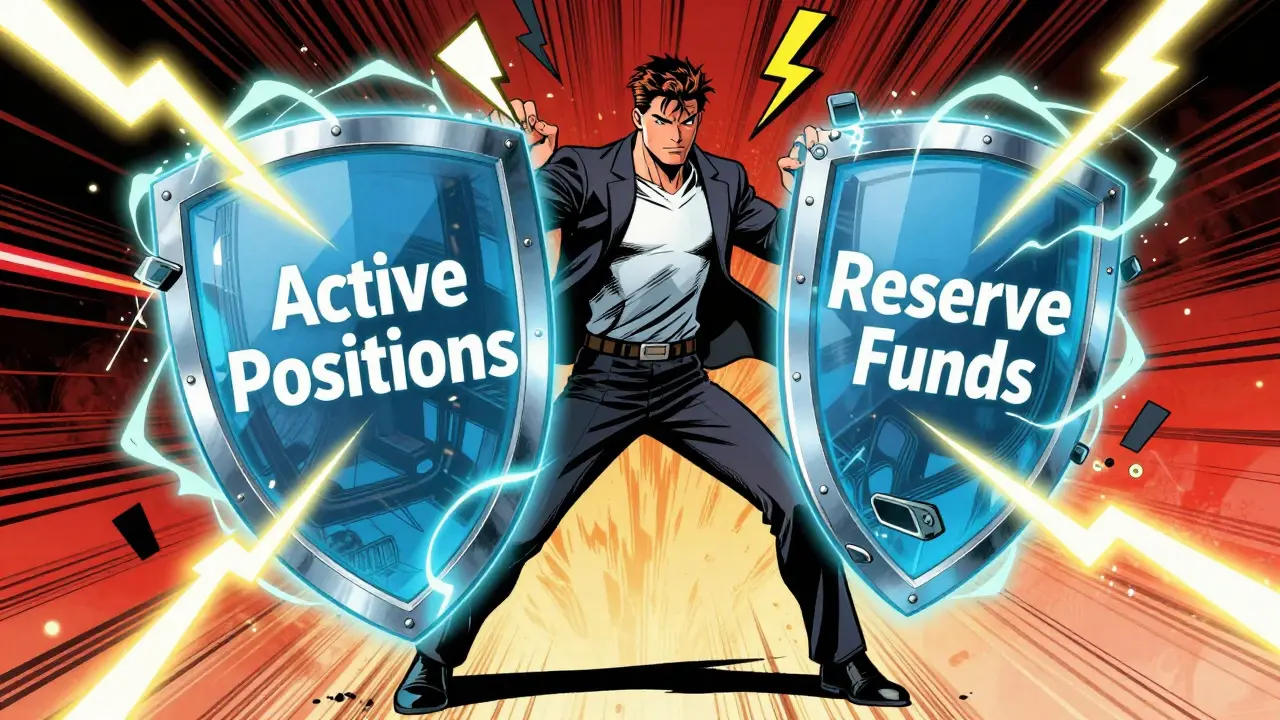
If you have traded on other platforms, Interdax’s approach to risk management will feel different. The platform uses a unique sub-account system designed to give you granular control over your exposure. Think of it as having two separate wallets within one account.
Sub-account 1 holds your active trading positions. Sub-account 2 acts as a reserve for additional funds. Here is why this matters: when you use high leverage, small price movements can trigger liquidation. With Interdax, you can transfer funds between these sub-accounts instantly and for free. If your position in Sub-account 1 starts looking shaky, you can move more collateral from Sub-account 2 to lower your effective leverage and avoid getting wiped out. This feature is rare among competitors and appeals to sophisticated traders who want to manage margin calls manually rather than relying on automated stop-losses alone.
Fees: Cheap to Enter, Costly to Exit?
Let’s talk money. Interdax boasts one of the most competitive fee structures in the industry. Makers-those who add liquidity by placing limit orders that don’t execute immediately-pay 0%. Takers-those who remove liquidity by hitting the bid or ask-pay just 0.05%. Compare that to the industry average, where taker fees often range from 0.05% to 0.1%, and you see the advantage.
However, keep in mind that while trading fees are low, withdrawal fees still apply. Since Interdax does not support fiat currencies like USD or EUR, you must already hold cryptocurrency to deposit. You’ll likely pay network gas fees to send BTC, ETH, or USDT from your external wallet to Interdax. These blockchain transaction costs are outside of Interdax’s control but are a real expense you need to factor into your strategy.
Security: Trustless or Just Unregulated?
Security is always a concern with unregulated exchanges. Interdax incorporates several technical safeguards. They use a novel shielded multi-signature scheme to protect customer funds, meaning no single key holder can drain the treasury. Users are encouraged to enable two-factor authentication (2FA) via Google Authenticator, and emails are protected with PGP encryption.
But technology isn’t everything. Because Interdax operates under Seychelles law and lacks oversight from major financial bodies like the SEC or FCA, you have limited recourse if something goes wrong. There is no insurance fund publicly disclosed to cover losses due to hacks or insolvency. In the world of crypto, "not your keys, not your coins" is a mantra for a reason. When you leave your assets on an exchange, especially an unregulated one, you are trusting their operational integrity completely.
Who Should Use Interdax?
Not everyone is built for this platform. Interdax is clearly targeting intermediate to advanced traders. Here is a quick checklist to see if it fits your profile:
- You already own cryptocurrency and don’t need to buy with a credit card.
- You understand derivatives, futures contracts, and the mechanics of leverage.
- You prioritize privacy and want to avoid sharing personal documents.
- You are comfortable managing your own risk using tools like sub-accounts.
- You accept the risk of trading on an unregulated platform.
If you are a beginner, stick to regulated exchanges with lower leverage and better customer support. The learning curve on Interdax is steep. While they offer a testnet funded with demo BTC, ETH, and USDT, jumping straight into live trading with 100x leverage without prior experience is a recipe for disaster.

The Regulatory Risk in 2026
The landscape for crypto exchanges is shifting rapidly. As of 2026, regulations like MiCA in Europe are forcing many platforms to tighten their KYC procedures. Interdax’s no-KYC model is becoming increasingly rare. While this is currently its biggest strength, it may also become its biggest liability. Governments are cracking down on anonymous trading venues to prevent money laundering. If global pressure increases, Interdax may be forced to change its policies or face restrictions in certain jurisdictions. Keep an eye on news regarding their compliance status, as this could impact your ability to withdraw funds or access the platform in the future.
Verdict: A Niche Tool for Pros
Interdax is not a general-purpose crypto exchange. It is a specialized tool for derivatives trading. Its combination of 0% maker fees, 100x leverage, and no KYC requirements makes it attractive for a specific type of user: the privacy-focused, experienced trader who wants maximum flexibility. However, the lack of fiat support and regulatory oversight means it should probably remain a secondary exchange in your portfolio, not your primary hub. Use it for specific trades where its features shine, but keep the bulk of your assets elsewhere.
Is Interdax safe to use?
Interdax employs strong technical security measures like multi-signature wallets and 2FA. However, because it is unregulated, there is no government-backed insurance or legal recourse if the exchange fails. It is safer than many offshore alternatives but riskier than regulated giants like Coinbase or Kraken.
Can I buy Bitcoin directly with USD on Interdax?
No. Interdax does not support fiat currency deposits. You must already own cryptocurrency (like BTC, ETH, or USDT) and transfer it from another wallet or exchange to start trading.
What is the maximum leverage available?
Interdax offers up to 100x leverage on its derivatives contracts. This allows you to control a large position with a small amount of collateral, but it significantly increases the risk of liquidation.
Does Interdax require KYC verification?
No. Interdax operates on a no-KYC basis, allowing users to trade anonymously without submitting identity documents. This is a key differentiator but also contributes to its unregulated status.
How do the fees compare to Binance?
Interdax generally has lower fees for makers (0% vs 0.02-0.04% on Binance) and competitive taker fees (0.05%). However, Binance offers deeper liquidity and more trading pairs, which can result in better slippage execution for large orders.
What is the sub-account system?
The sub-account system splits your funds into two parts: one for active trading positions and one for reserves. You can transfer funds between them instantly to adjust your leverage and manage risk without closing your positions.


It is fascinating how the desire for anonymity often outweighs the basic human need for security. We see this pattern in so many areas of life, not just finance. The promise of freedom is seductive, but one must ask if it is truly free when the price is potential total loss. I appreciate that the article highlights the sub-account system as a tool for risk management. It shows a level of sophistication that most retail traders lack. Perhaps we are evolving into a more nuanced understanding of digital assets. 🌱
The entire premise of this platform is rather tedious and frankly, a bit insulting to anyone with actual financial literacy. Why would one choose an unregulated Seychelles entity over established markets? It reeks of desperation. The writer tries to sound objective but fails miserably at hiding the bias towards these shady operations. Truly exhausting to read such low-effort analysis.
Oh my gosh!! I actually tried signing up last week... and wow! The interface is super sleek but kinda scary too?? I love the idea of no KYC because who wants to send selfies to strangers right?? But then I read about the 100x leverage and got like... terrified?? 😱 Like imagine losing everything in seconds!! That’s wild!! Does anyone else feel weird about trading without showing ID?? It feels so underground and cool but also risky!! 🤷♀️✨
i think it's interesting how they handle the fees. zero maker fees is pretty rare these days. usually you pay something. but yeah the risk is real. i stick to smaller amounts on these places. better safe than sorry. the sub account thing is clever though. gives you more control. good info overall.
The moral decay of society is evident in platforms like this. Anonymity breeds corruption. You think you are free but you are merely hiding from justice. The soul rots in the shadows of unregulated markets. Wake up people. Trust is earned not given blindly to faceless servers. This is the end times for honest trade.
Ugh, please. Only the desperate use these kinds of exchanges. Real wealth is managed through proper channels. Not some sketchy offshore server farm. It’s just pathetic really. One should have standards. If you can’t pass KYC maybe you shouldn’t be trading at all. How vulgar.
Let me explain something to you all since clearly none of you understand derivatives. Interdax is a niche product. It is not for everyone. If you don't know what liquidation means stay away. The 0% maker fee is a trap for those who don't understand liquidity provision. Most of you will get wrecked. I've seen it happen repeatedly. The sub-account feature is the only redeeming quality here. Use it or lose it.
they want to track every move you make. that is why people go here. the government is watching. always watching. kyс is just data harvesting for the deep state. interdx keeps your money yours. mostly. until they change the rules. which they will. be prepared. trust no one. especially not the feds.
I really hope everyone reading this understands the gravity of what they are getting into. It’s not just about making money; it’s about protecting your peace of mind. The lack of fiat support is a huge barrier for newcomers. Imagine trying to explain to your family where your funds are stuck. It’s stressful. Take it slow. Breathe. Don’t let the hype consume you. We are all learning together in this chaotic space. 💙
honestly just looks like another place to gamble. i mean sure no kyc is nice but if the site goes down u r screwed. heard bad things about seychelles regs. probably fine for small trades tho. whatever floats ur boat i guess lol.
This is exactly what happens when regulations fail. Chaos. Pure chaos. They think they are smart avoiding KYC but they are just pawns in a larger game. The elites laugh while you risk your savings on a platform that could vanish overnight. Wake up! The conspiracy is real. They want your data because they want to control you. Resist.
You fools. Trading without knowledge is suicide. This platform is a test of character and most fail. The leverage is a curse disguised as a blessing. Only the wise avoid it. Seek truth not profit. The market punishes the arrogant. Remember that.
I checked their terms of service last night. Buried in clause 42b is a jurisdictional shift that allows them to freeze assets if local laws change. It’s subtle but dangerous. Most users won’t read it. I did. Be careful what you deposit. Once it’s in there it’s not really yours anymore. Just a number on a screen controlled by someone else’s code.
Indian traders should stay away. Too much risk. Stick to regulated brokers here. This is western chaos imported. Not needed here. We have our own systems. Do not waste time on this.