

China's Complete Crypto Ban: What It Means for Bitcoin Holders
China doesn’t just regulate cryptocurrency-it outlaws it. Since 2021, the Chinese government has enforced a total ban on all crypto-related activities. For Bitcoin holders inside China, this isn’t a gray area. It’s a legal wall. No exchanges. No mining. No bank support. No legal protection. And yet, people still hold Bitcoin. Why? And what happens if you’re one of them?
How China’s Crypto Ban Actually Works
It’s not one law. It’s a web of rules. In 2013, Bitcoin was labeled a "virtual commodity," not money. That meant you could own it, but no bank could touch it. Then in 2017, all domestic crypto exchanges were shut down. By May 2021, the government went further: mining was declared illegal. Not just discouraged. Not just taxed. Banned. The State Council’s Financial Stability and Development Committee explicitly ordered a "crack down on Bitcoin mining and trading behavior." Today, the rules are clear:- No cryptocurrency exchanges can operate in China.
- Financial institutions can’t open accounts for crypto trading or settle crypto payments.
- Overseas exchanges are banned from serving Chinese residents.
- Internet companies must block crypto-related content and report users.
- Miners must shut down operations. Any equipment left running is subject to seizure.
What Happens to Your Bitcoin If You Live in China?
If you bought Bitcoin before the ban, you still own it. But owning it doesn’t mean you can use it. You can’t cash out through a bank. You can’t pay for anything with it legally. You can’t trade it on a local platform-those are all gone. Most people who hold Bitcoin in China keep it in private wallets. Cold storage. Hardware wallets. Paper keys. They don’t touch centralized exchanges. Why? Because if you do, you risk being flagged by the state’s monitoring system. The Ministry of Public Security tracks crypto transactions as part of its anti-money laundering efforts. If your bank account suddenly receives funds from a wallet linked to a crypto exchange-even indirectly-it triggers a red flag. You could be investigated. Your accounts frozen. Your identity flagged. There’s no legal recourse. If someone scams you out of your Bitcoin, you can’t go to court. Chinese courts don’t recognize cryptocurrency as property under civil law. No judge will help you recover it.But People Still Trade Bitcoin in China
Here’s the contradiction: the ban is total. But enforcement is patchy. A 2024 survey by a Beijing-based blockchain research group found that 18% of urban Chinese adults still hold some form of cryptocurrency. Most use P2P platforms like LocalBitcoins or Telegram groups to trade with others. They pay in cash. They meet in coffee shops. They use QR codes to transfer Bitcoin directly. These transactions are risky. There’s no escrow. No dispute resolution. If you send 5 BTC and they ghost you, you’re out of luck. But for many, the risk is worth it. In cities like Shanghai and Shenzhen, where inflation has eroded savings and stock markets are volatile, Bitcoin remains a store of value-even if it’s illegal. The government knows this. They’ve raided mining farms. Shut down P2P meetups. Arrested traders. But they can’t monitor every wallet, every phone, every cash exchange. Decentralized systems are hard to kill.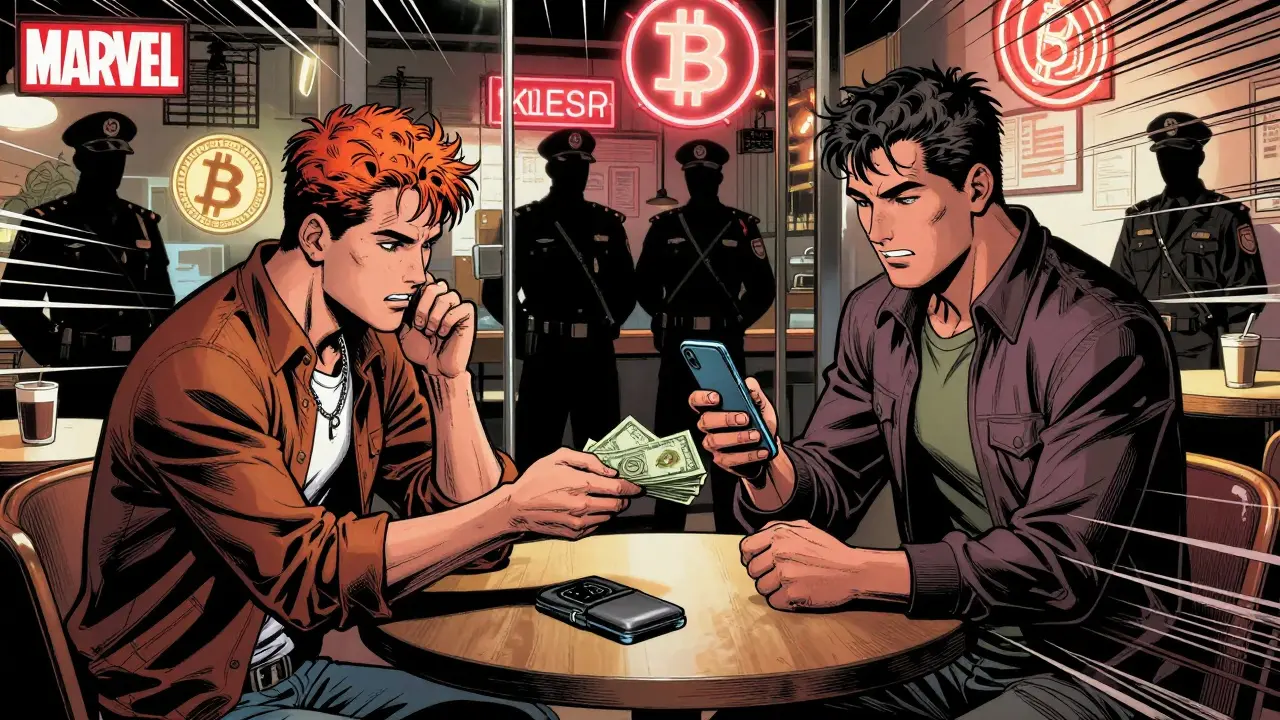
Why China Fights Bitcoin So Hard
It’s not just about control. It’s about competition. China’s government has spent over $10 billion developing its own digital currency: the Digital Yuan (e-CNY). Unlike Bitcoin, the Digital Yuan is fully trackable. Every transaction is logged. Every user is identified. It’s not just money-it’s surveillance. The government sees Bitcoin as a threat to that system. Why? Because Bitcoin is anonymous. It’s borderless. It can’t be frozen. It can’t be censored. If people start using Bitcoin instead of the Digital Yuan, the state loses control over capital flows. That’s why they banned mining too. Bitcoin mining in China used to account for over 70% of global hash power. It was energy-intensive. It used coal. But more importantly, it created a decentralized network outside state control. When the government shut down mining farms in 2021, they didn’t just stop energy use-they broke the backbone of Bitcoin’s global network.What About Bitcoin Holders Outside China?
If you’re not in China, the ban doesn’t directly affect you. But it still ripples through the market. China used to be the biggest driver of Bitcoin demand. When the ban hit in 2021, prices dropped 30% in two weeks. Why? Because Chinese investors were selling en masse. Many moved their holdings offshore. Others liquidated into cash. Today, Chinese demand for Bitcoin is still hidden. It’s not gone. It’s underground. Analysts estimate that 5-10% of global Bitcoin holdings are controlled by Chinese citizens. That’s 1-2 million BTC. If China ever eased its ban-even slightly-those coins could flood back into the market. Or, if confidence returned, they could trigger a massive buying wave. The market watches China like a hawk. Every rumor of a policy shift-whether real or fake-spikes volatility. In early 2025, false reports spread on social media claiming China had lifted its ban. Elon Musk retweeted it. Crypto influencers amplified it. Bitcoin jumped 12% in 12 hours. Then the Chinese government issued a statement: "No change." The price crashed.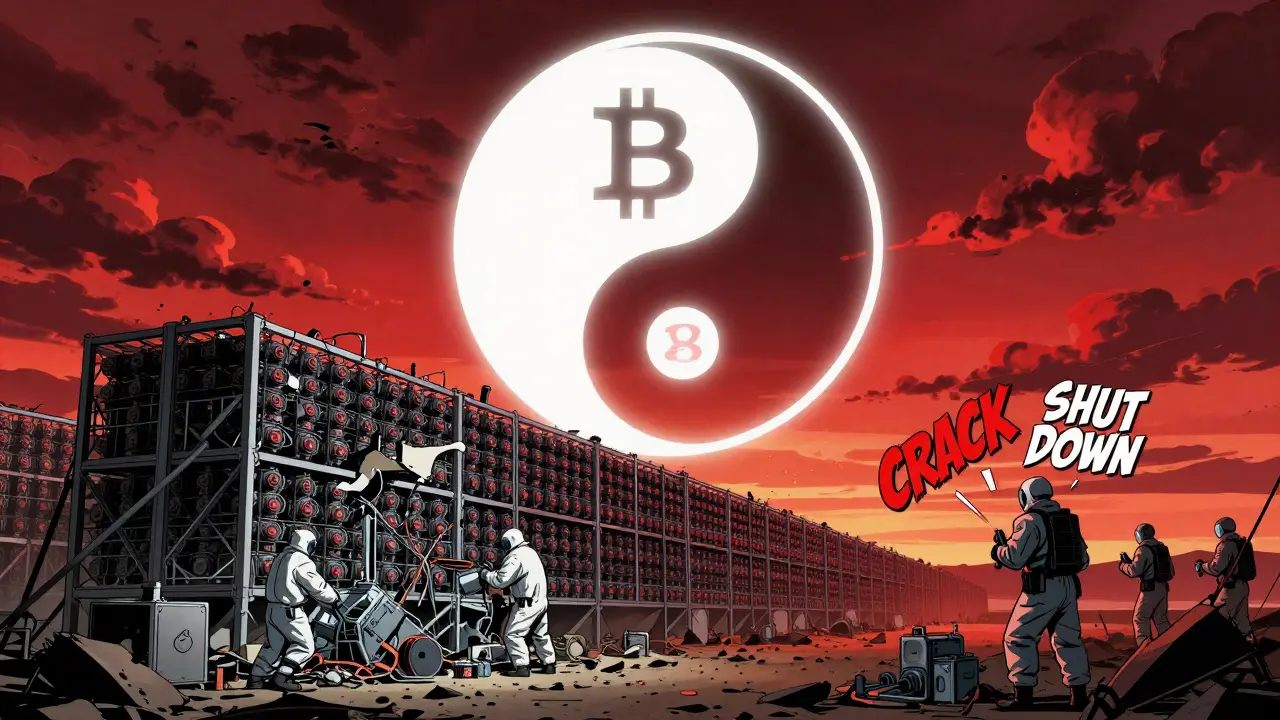
The Future: Will China Ever Lift the Ban?
Don’t count on it. There’s no indication the government is reconsidering. The Digital Yuan rollout is accelerating. By 2026, it’s expected to be mandatory for all large commercial transactions. The state is betting everything on centralized control. Some experts argue that China might one day allow Bitcoin trading on licensed exchanges-with KYC, taxes, and surveillance. But that’s unlikely. Why? Because Bitcoin’s core value is decentralization. If you force users to identify themselves, you’re not allowing Bitcoin-you’re allowing a state-controlled copy. The government doesn’t want a decentralized alternative. It wants a tool. And the Digital Yuan is that tool.What Should Bitcoin Holders Do?
If you’re a Bitcoin holder in China:- Don’t use banks to move crypto funds. Ever.
- Use hardware wallets. Keep private keys offline.
- Avoid P2P trades with strangers. Use trusted networks.
- Don’t advertise your holdings. Silence is safer.
- Understand: if you lose your keys, there’s no recovery.
- Don’t believe rumors about policy changes. Always check official sources.
- Remember: China’s ban isn’t over. It’s just hidden.
- Watch the Digital Yuan. Its success could mean more pressure on Bitcoin globally.
Final Thought: Power vs. Permission
China’s ban isn’t about technology. It’s about power. Bitcoin doesn’t need permission to exist. The Chinese state does. And it won’t allow a system that operates outside its control. For Bitcoin holders, that means one thing: you’re on your own. Your coins are yours. But if the government decides to take action, there’s no law, no court, no bank to protect you. The only thing that matters now is how you store it. And how quietly you hold it.Is it illegal to own Bitcoin in China?
Yes and no. Owning Bitcoin isn’t explicitly illegal, but using it, trading it, or exchanging it for yuan is. You won’t be arrested just for holding Bitcoin in a private wallet. But if you try to cash it out, trade it, or use it to pay for goods, you’re breaking the law.
Can Chinese citizens use Binance or Coinbase?
Technically, no. Chinese law bans overseas exchanges from serving Chinese residents. Binance and Coinbase have blocked Chinese IP addresses and KYC verification for users with Chinese IDs. Some people use VPNs to access them, but that’s against the rules and can lead to account freezes or legal scrutiny.
Did China ban Bitcoin mining in 2025?
No. The mining ban was enacted in May 2021. Rumors of a new ban in 2025 were fake, spread by social media bots and unverified financial influencers. The Chinese government confirmed in late 2025 that its 2021 policy remains unchanged.
Can I send Bitcoin to someone in China?
You can send Bitcoin technically-it’s a decentralized network. But if the recipient tries to convert it to yuan, they risk legal consequences. Banks monitor transactions for crypto links. If they detect a wallet address tied to trading, they’ll flag it. Sending Bitcoin to someone in China is not illegal for you, but it puts them at risk.
Why does China hate Bitcoin but love the Digital Yuan?
Bitcoin is decentralized. No government controls it. The Digital Yuan is the opposite-it’s fully controlled by the People’s Bank of China. Every transaction is tracked. Every user is identified. China doesn’t want to eliminate digital money. It wants to own it completely.
What happens if I get caught trading Bitcoin in China?
Most people aren’t arrested. But you could face fines, account freezes, or be flagged in the national credit system. In rare cases, individuals running large-scale operations have been prosecuted for illegal financial activity. The punishment is usually administrative, not criminal-but it can ruin your ability to get loans, travel, or even rent an apartment.







Really appreciate this breakdown. I’ve been following China’s crypto stance for years, and it’s wild how they’ve managed to suppress it without outright arresting people. Just quiet, systematic erasure. It’s like digital quietism.
China doesn’t hate Bitcoin. They hate the idea that power can be decentralized. The Digital Yuan isn’t money-it’s a leash. And anyone holding Bitcoin is holding a mirror to their control fantasy.
Let me be clear: this is not a regulatory issue. This is a sovereign power play. The Chinese state does not tolerate any parallel financial infrastructure. Period. The notion that individuals can ‘hold’ Bitcoin without consequence is dangerously naive.
So if I send BTC to a friend in Shanghai, am I putting them at risk? Or just them if they try to cash out?
Yeah but what if the ban is just theater? Like… what if they secretly let it continue underground because it’s useful for capital flight? You think the state is that dumb?
Interesting how the West screams about censorship while ignoring that China’s ban is less about ideology and more about economic sovereignty. The Digital Yuan isn’t evil-it’s inevitable. Bitcoin’s value is in its chaos. China wants order.
Bitcoin is freedom. China wants control. That’s the whole story. End of discussion. No compromise. No middle ground. You either believe in decentralization or you don’t.
This article is too long. Too many words. Too much fluff. Just say: China banned it. People still do it. End.
They don’t ban Bitcoin because it’s dangerous. They ban it because it’s a threat to their narrative. The state needs to control the story. Bitcoin tells a different one.
I wonder how many people in China even know what a private key is. Most just hold on a wallet they got from a friend. No real security. Just hope.
THEY’RE ALL BEING WATCHED 😱📱💻 The PBOC has AI that tracks wallet patterns. Even cold storage is traceable through IP leaks. This isn’t crypto-it’s a surveillance trap. 🤫💣
Let’s not romanticize this. China’s ban is effective because it’s brutal. They don’t negotiate. They don’t compromise. They don’t care about individual rights. They eliminate. And yes, 18% still hold crypto-but that’s not a victory. It’s a symptom of desperation. People aren’t holding Bitcoin because they believe in decentralization. They’re holding it because their yuan is losing value faster than a leaking bucket. This isn’t ideology. It’s survival. And survival doesn’t make you brave. It makes you desperate.
Why is this even a topic? China banned crypto. End of story. The rest is noise.
You got this. Keep your keys safe. Stay quiet. Stay smart. And remember-your Bitcoin is yours. No government can take it if you’re careful. You’re not alone. 💪🙌
China’s Digital Yuan is a masterclass in control. Bitcoin is the ghost in the machine. One is a cage. The other is the wind. And wind doesn’t need permission to blow.
Just keep it cold. Stay quiet. That’s the whole strategy.
So like… you’re telling me I can’t even send BTC to my cousin in Guangzhou? That’s wild. I thought crypto was supposed to be borderless. Guess not.
Let’s be real: the entire narrative here is built on cherry-picked anecdotes and speculative surveys. The 18% figure? From a Beijing-based group with funding ties to crypto VC firms. The ‘underground trading’? Mostly just a few tech bros in Shenzhen using Telegram. The truth? Most Chinese citizens don’t care. They’re focused on jobs, housing, and their kids’ education. Bitcoin is a niche obsession for urban elites who have too much time and too little trust in the system. And even then, the number of active traders is likely under 2%. The rest? Just holding because they heard it was ‘a good investment’ before the ban. This isn’t a revolution. It’s a relic.
If you’re holding Bitcoin in China, you’re not just holding an asset-you’re holding a quiet act of resistance. And that’s something worth protecting.
While the article is, in many respects, a thoughtful exposition, one must acknowledge the inherent epistemological limitations of extrapolating behavioral patterns from anecdotal evidence, particularly in a context where data opacity is not merely a feature but a systemic imperative. The assertion that 18% of urban Chinese adults hold cryptocurrency is, in my estimation, statistically suspect, given the absence of verifiable, independently audited data sources. Furthermore, the conflation of ‘holding’ with ‘usage’-a distinction of cardinal importance in legal and economic theory-is not merely imprecise; it is conceptually misleading. The notion that Bitcoin represents a form of ‘resistance’ is, frankly, a romanticized anthropological projection, one that fails to account for the pragmatic, often transactional motivations underlying individual economic behavior. Moreover, to frame the Digital Yuan as a tool of surveillance-as if surveillance were an aberration rather than a constitutive element of modern governance-is to misunderstand the nature of the modern state. The Chinese state does not ‘hate’ Bitcoin. It simply does not recognize its legitimacy within a framework of sovereign monetary authority. And that, dear interlocutors, is not a moral failing. It is a legal one.