

Bappebti Crypto Oversight and Licensing: What Changed in Indonesia in 2025
Indonesia’s crypto market exploded over the last five years. By 2023, over 17 million people were trading digital assets. By 2024, transaction volumes hit over IDR 650 trillion. But the rules changed-dramatically. On January 10, 2025, Bappebti stopped being the main regulator of cryptocurrency in Indonesia. It wasn’t just a name change. It was a full handover of power, from a commodity watchdog to the country’s financial services authority.
What Was Bappebti’s Role?
Bappebti, short for Badan Pengawas Perdagangan Berjangka Komoditi, was Indonesia’s go-to agency for crypto oversight from 2019 until early 2025. It didn’t treat crypto like stocks or bank products. It treated them like soybeans or crude oil-commodities. That meant the agency focused on trading platforms, exchange rules, and fraud prevention, not investor protection or financial stability. Under Bappebti, only crypto assets approved by the agency could be traded. By mid-2023, that list had grown to 501 coins, including Bitcoin, Ethereum, and Solana. Traders needed to use registered exchanges. Exchanges had to follow strict rules on custody, reporting, and risk controls. Bappebti even set up its own clearing house and digital asset storage providers to bring structure to the market. But there was a problem. Crypto wasn’t just a commodity. People were using it to save, invest, and send money. Some were treating it like a financial asset. Bappebti didn’t have the tools to handle that. It couldn’t enforce anti-money laundering rules like a bank. It couldn’t require disclosures like a stock exchange. It couldn’t supervise lending or staking services. The gap was growing.Why Did Indonesia Switch Regulators?
The answer is simple: Indonesia needed a regulator that could handle crypto like finance, not farming. In December 2020, Indonesia passed Law No. 4 of 2023 on Financial Sector Development and Strengthening (P2SK Law). This law gave the Financial Services Authority-known as OJK-the legal power to take over crypto oversight. The goal? Bring crypto into the same system as banks, insurance, and securities. No more gray zones. No more loopholes. The handover wasn’t rushed. It took nearly four years to prepare. Bappebti, Bank Indonesia, and OJK worked together. On January 10, 2025, they signed the official handover documents in Jakarta. Bappebti’s acting chief, Tommy Andana, handed over the keys. OJK’s deputy commissioners accepted them. The message was clear: crypto is now part of Indonesia’s formal financial system.What Changed Under OJK?
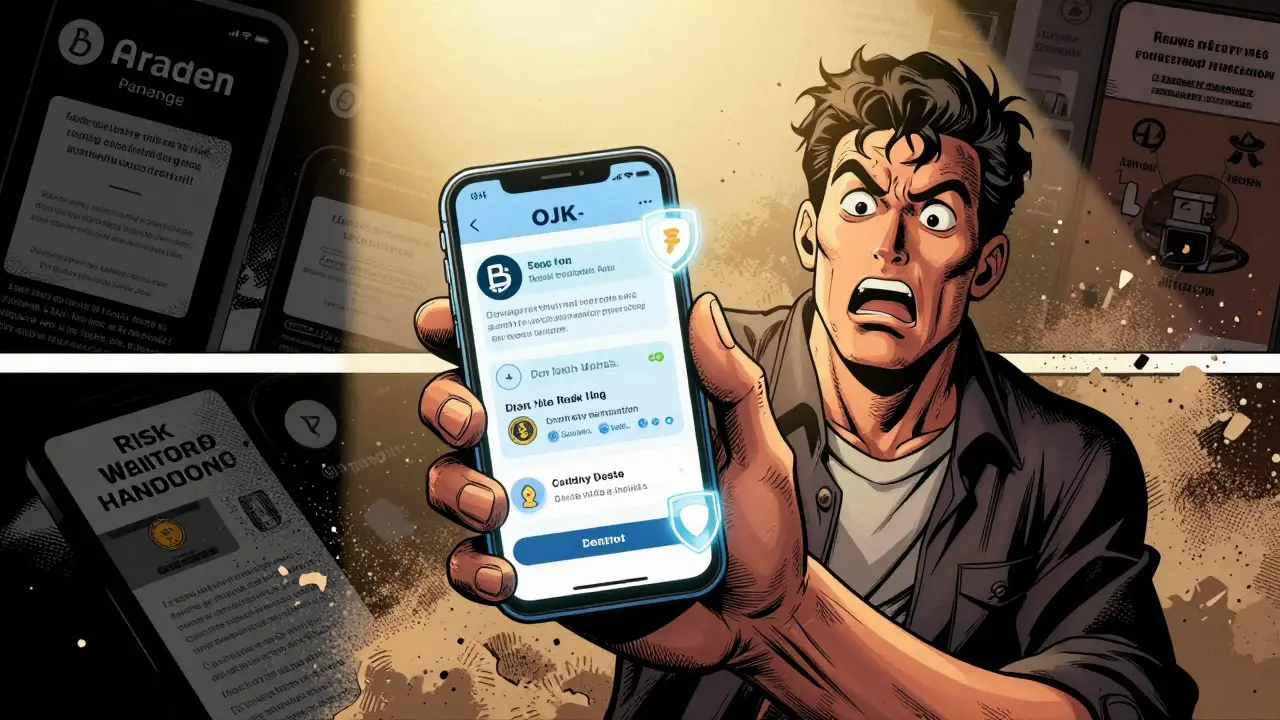
OJK Regulation No. 27 of 2024 replaced everything Bappebti had built. The biggest shift? Crypto assets are no longer commodities. They’re now called digital financial assets. That change has real consequences:- Trading platforms must now be licensed as Digital Financial Asset Traders-same as stock brokers.
- Disclosures are required for every crypto product offered to retail investors.
- Investor protection rules now include risk warnings, suitability assessments, and dispute resolution systems.
- Anti-money laundering controls are enforced by OJK’s financial intelligence unit, not just exchange self-reporting.
- Staking, lending, and DeFi services now fall under OJK’s supervision if offered to Indonesian users.
Who’s in Charge Now?
OJK runs the show for trading, custody, and investor-facing services. But crypto doesn’t live in a vacuum. Payments? That’s still Bank Indonesia’s job. If a crypto exchange lets users pay with e-wallets or bank transfers, BI steps in to make sure the payment rails are secure and compliant. This split means crypto companies now answer to two regulators:- OJK: What you sell, how you market it, who you serve, and how you protect investors.
- Bank Indonesia: How you move money in and out of the system.
What Does This Mean for Traders?
If you’re an Indonesian retail investor, the change is mostly good news. You still trade the same coins-Bitcoin, Ethereum, BNB, and the rest. But now, exchanges must tell you what you’re getting into. They can’t just say, “Buy this, it’ll go up.” They have to explain risks, fees, and how your assets are stored. If something goes wrong, you have a clear path to complain. For institutional investors, the change opens doors. Hedge funds, asset managers, and foreign crypto firms now have a clearer path to enter the market. OJK’s rules are modeled after global standards. That means more legitimacy. More trust. More capital. But there’s a catch. The bar is higher. New exchanges must prove they have strong cybersecurity, independent audits, and real-time monitoring. Many small platforms couldn’t keep up. Some shut down. Others merged. The market is now more concentrated-fewer players, but stronger ones.What About the Future?
The OJK era is just starting. Experts believe this is the foundation for Indonesia to lead in Southeast Asia’s crypto evolution. OJK is already working on rules for:- Tokenized assets (like real estate or bonds on blockchain)
- Stablecoins backed by rupiah or other assets
- Non-fungible tokens (NFTs) used for ownership or access
- Decentralized finance (DeFi) protocols targeting Indonesian users

What Happened to Bappebti?
Bappebti didn’t disappear. It still exists. But its role is now limited to traditional commodities-palm oil, rubber, coffee, gold futures. Crypto is gone from its portfolio. The agency’s crypto team was absorbed into OJK. The infrastructure it built-the clearing house, the custody systems-is still running. Just under new management. Think of it like this: Bappebti built the first highway for crypto. OJK is now adding traffic lights, toll booths, and emergency lanes.How to Know If a Crypto Platform Is Legal in Indonesia
If you’re trading crypto in Indonesia, here’s how to stay safe:- Check if the platform is listed on OJK’s official website under Digital Financial Asset Traders.
- Look for the OJK license number on the platform’s homepage or terms of service.
- Don’t trust platforms that only mention Bappebti. That’s outdated.
- Verify that the platform offers clear risk disclosures and customer support channels.
- If it allows deposits via e-wallets or bank transfers, confirm it’s also compliant with Bank Indonesia’s payment rules.
Final Thoughts
The shift from Bappebti to OJK wasn’t a setback. It was a upgrade. Indonesia didn’t slow down crypto. It made it real. It moved from a Wild West market to a regulated financial sector. That’s not just policy. That’s progress. For users, it means more security. For businesses, it means more clarity. For Indonesia, it means crypto is finally being treated like the financial tool it is-not a gimmick, not a fad, but part of the future of money.Is Bappebti still regulating crypto in Indonesia?
No. As of January 10, 2025, crypto oversight in Indonesia was fully transferred to the Financial Services Authority (OJK). Bappebti no longer handles any cryptocurrency-related regulations or licensing. It now focuses only on traditional commodities like palm oil and gold futures.
What happened to crypto licenses issued by Bappebti?
All existing Bappebti licenses were automatically recognized under OJK’s new framework. Exchanges and service providers didn’t need to reapply, but they had to comply with OJK Regulation No. 27 of 2024. This included updating disclosures, improving investor protections, and aligning with financial services standards.
Are Bitcoin and Ethereum still legal in Indonesia?
Yes. Bitcoin, Ethereum, Solana, and over 500 other crypto assets remain legal to trade in Indonesia. They are now classified as digital financial assets under OJK’s rules, not commodities. As long as you trade them through an OJK-licensed platform, your activity is fully compliant.
Can I use a foreign crypto exchange in Indonesia?
Technically, no. OJK requires all crypto platforms serving Indonesian users to be licensed locally. Foreign exchanges without an OJK license are not permitted to actively market to or accept deposits from Indonesian residents. While some users still access them, doing so carries legal and financial risks-there’s no local recourse if funds are lost or frozen.
What’s the difference between Bappebti and OJK rules?
Bappebti treated crypto like a commodity-focused on trading volume and exchange safety. OJK treats it like finance-focused on investor protection, transparency, and systemic risk. OJK requires disclosures, suitability checks, anti-money laundering controls, and formal dispute resolution. Bappebti had none of that.
Is staking or lending crypto legal in Indonesia?
Yes-but only if offered by an OJK-licensed platform. Staking and lending services are now classified as digital financial asset activities. Any platform offering them must be registered with OJK and follow strict rules on disclosures, custody, and risk management. Unlicensed platforms offering these services are operating illegally.





So Bappebti was basically the crypto wild west sheriff, and now OJK is the federal agent showing up with a warrant and a spreadsheet? Honestly? Long overdue. I’ve seen too many friends lose money because some exchange said ‘trust us bro’ with zero disclosures. This feels like the first real step toward making crypto actually useful, not just a gambling app with blockchain glitter.
Of course they waited until the market was huge to regulate it. Classic. Now they’ll tax it into oblivion and call it ‘investor protection.’
The transition from commodity-based oversight to financial regulation represents a profound institutional maturation. While the administrative burden on exchanges may be substantial, the structural integrity conferred upon retail participants-through mandatory disclosures, dispute resolution mechanisms, and AML enforcement-is not merely beneficial, but ethically imperative. This is governance, not control.
Big win for everyday traders. I used to be scared to even ask my exchange where my coins were stored. Now they gotta tell me, in writing, what I’m signing up for. Not perfect, but way better than before. Also, props to the teams who made this happen-this wasn’t easy.
They’re just trying to control the money now that they can’t print it themselves. OJK doesn’t care about you. They care about control. The moment they start regulating staking, they’ll start taxing it like interest. And then they’ll ban DeFi because it’s ‘too risky.’ This isn’t protection. It’s enclosure.
This is the kind of progress we need! 🌱 No more shady platforms pretending they’re safe. Now you’ve got real rules, real accountability, and real options. Indonesia’s showing the whole region how to do it right. Keep going, OJK-you’re doing amazing work!
They said ‘investor protection’ but they’re really just making it harder to use crypto. 🤔 Remember when they banned crypto in 2018? Now they’re letting it back in… but only if you jump through 17 hoops. And who’s gonna audit OJK? 👀 #DeepStateCrypto
Bappebti was the only thing keeping this from being a full-on scam zoo and now they hand it to the bankers? lol. Next they’ll require a notary to buy BTC. Good luck with that OJK. The people already left.
How quaint. A developing nation finally caught up to the regulatory frameworks of the OECD. How long before they start requiring KYC for Bitcoin wallets? Honestly, I’m surprised they didn’t mandate a background check for staking.
Finally someone’s listening. My cousin lost everything on a Bappebti-registered site that just vanished. This feels like a real upgrade.
This isn’t just a regulatory shift-it’s a philosophical one. Bappebti saw crypto as a commodity to be traded, like coffee beans or soy. OJK sees it as a financial instrument, embedded in the broader economy. That’s the difference between treating it as a product and treating it as a piece of the monetary fabric. The former invites chaos. The latter invites responsibility. Indonesia chose responsibility. That’s rare.
Tokenized real estate under OJK? That’s the real play. Bappebti couldn’t touch DeFi because they lacked the legal architecture. OJK has the infrastructure for programmable finance. This is the foundation for ASEAN’s digital asset hub.
Wait so now I can’t use Binance anymore? But I’ve been using it since 2020. What’s next, a government app to buy crypto? 😂
They took away my freedom. Now I have to fill out forms. I just wanted to trade. Why does everything have to be so complicated?
They didn’t ‘upgrade’ anything. They just made it harder for normal people to access crypto. Now only rich guys with lawyers can play. That’s not regulation. That’s exclusion dressed up as safety.
YESSSS!!! 🎉 Finally someone got it right! OJK’s rules are actually kinda beautiful-clear, fair, and not trying to crush innovation. I used to be scared to recommend crypto to my sister… now I can say ‘use this licensed exchange’ and mean it. Huge win for Indonesia!! 💪🔥