

Using Multiple Crypto Exchanges to Avoid Restrictions: Risks and Realities
Using multiple crypto exchanges to avoid restrictions might sound like a smart workaround-maybe you’re blocked from trading a certain coin, hit a daily limit, or live in a country with tight controls. But what looks like a clever hack is often a legal minefield with real consequences. This isn’t just about convenience. It’s about crossing lines that regulators, law enforcement, and even your own funds can’t easily undo.
Why People Try This (and Why It’s Dangerous)
People turn to multiple exchanges for different reasons. Some want access to coins not listed on their main platform. Others need higher trading limits. A few are trying to bypass geographic blocks or avoid taxes. But behind these reasons lies a darker pattern: using layered platforms to hide where money comes from or where it’s going. The most common method? Nested exchanges. These aren’t standalone platforms. They’re middlemen that take your deposit, then trade on your behalf using accounts on bigger exchanges like Binance or Coinbase. Sounds harmless? It’s not. Many nested exchanges skip KYC entirely. No ID. No address proof. No questions asked. That’s exactly why criminals use them. If you deposit $10,000 into one of these, you’re handing over control of your assets to someone who doesn’t have to follow the law. And if that platform gets shut down-or worse, linked to a sanctioned entity-you lose everything. There’s no customer support. No insurance. No recourse.How Criminals Use Multiple Exchanges to Hide Money
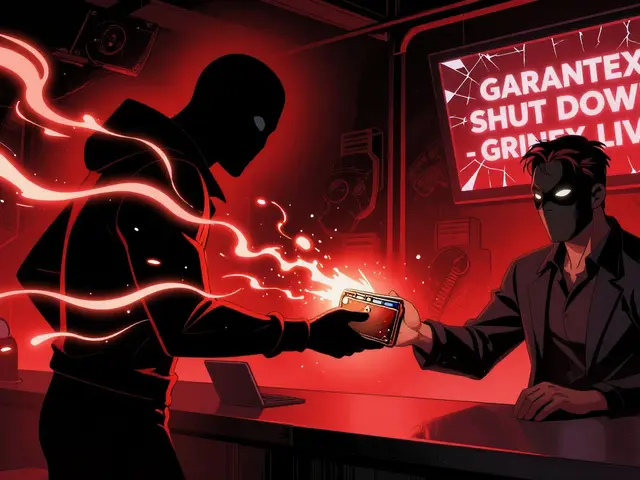
According to Merkle Science, criminals use at least eight methods to launder crypto through multiple exchanges. One of the most common is stealing legitimate user accounts. They hack into KYC-verified wallets, then move funds through several platforms in quick succession. Each hop makes tracing harder. By the time law enforcement picks up the trail, the money’s already in a decentralized exchange-or converted into privacy coins like Monero. Then there are non-compliant exchanges. These are platforms based in countries that either ignore sanctions or actively help evade them. Russia, North Korea, and certain offshore jurisdictions host exchanges that openly welcome funds from sanctioned entities. In March 2025, U.S. authorities shut down Garantex, a major Russian-based exchange. Within days, its operators launched Grinex-a direct successor-with the same team, same infrastructure, and the same mission: bypass sanctions. Grinex moved billions in crypto after its launch, openly advertising itself as a replacement for Garantex. Decentralized exchanges (DEXs) like Uniswap or PancakeSwap are another tool. Because they run on blockchain code and have no central owner, governments can’t force them to freeze accounts or block transactions. Criminals use DEXs to swap tracked tokens for untraceable ones, then move them back to centralized platforms under fake identities. This creates a loop that’s nearly impossible to break without blockchain analytics tools.What Regulators Are Doing About It
The U.S. Treasury’s Office of Foreign Assets Control (OFAC) doesn’t just warn about this-they act. Their 2025 designation of Grinex wasn’t a warning. It was a takedown notice. Anyone who traded with Grinex after March 6, 2025, became a potential violator of U.S. sanctions. That includes ordinary users who thought they were just “switching platforms.” The SEC is also stepping up. Chair Gary Gensler has repeatedly said most crypto trading platforms operate like unregistered securities exchanges. If you’re buying tokens on a platform that matches buyers and sellers automatically, you’re likely trading a security-and that platform should be registered with the SEC. Most aren’t. And now, regulators are auditing them. In New Zealand, the Financial Markets Authority (FMA) has started requiring all crypto service providers to register and report suspicious activity. If you’re using a platform that doesn’t ask for ID, it’s not just risky-it’s illegal under local law.
Red Flags You Can’t Ignore
Here’s how to spot a dangerous exchange before you deposit a cent:- Instant trading with no KYC-If you can trade $50,000 in 60 seconds without uploading a passport, walk away.
- No clear company info-No registered address? No team page? No contact email? That’s a red flag.
- Only accepts crypto deposits-Legit platforms let you deposit via bank transfer, credit card, or e-wallet. If it’s crypto-only, it’s likely hiding something.
- Offers coin-swap services via Telegram or WhatsApp-These are classic money laundering tools. No sign-up. No records. Just a chatbot and a wallet address.
- Low trading volume but high liquidity claims-If a platform says it has $100M in daily volume but no public order book, it’s faking it.
The Hidden Cost of Bypassing Rules
You might think, “I’m not laundering money. I just want to trade.” But the system doesn’t care about your intent. If your funds pass through a sanctioned exchange-even once-you could be flagged. Your bank might freeze your account. Your wallet could be blacklisted. Future access to legitimate exchanges could be blocked permanently. In 2024, a trader in Wellington used a nested exchange to access a token not listed on NZ-based platforms. He didn’t know the platform was later sanctioned by OFAC. Six months later, his Coinbase account was locked. He lost access to $22,000 in Bitcoin because the blockchain trail led back to a flagged wallet. He had no way to prove he wasn’t involved in illegal activity. Even if you’re not breaking the law, you’re still putting your assets at risk. Nested exchanges don’t have insurance. They don’t have cold storage. Many are run by anonymous teams with no accountability. If the site goes offline, your money vanishes.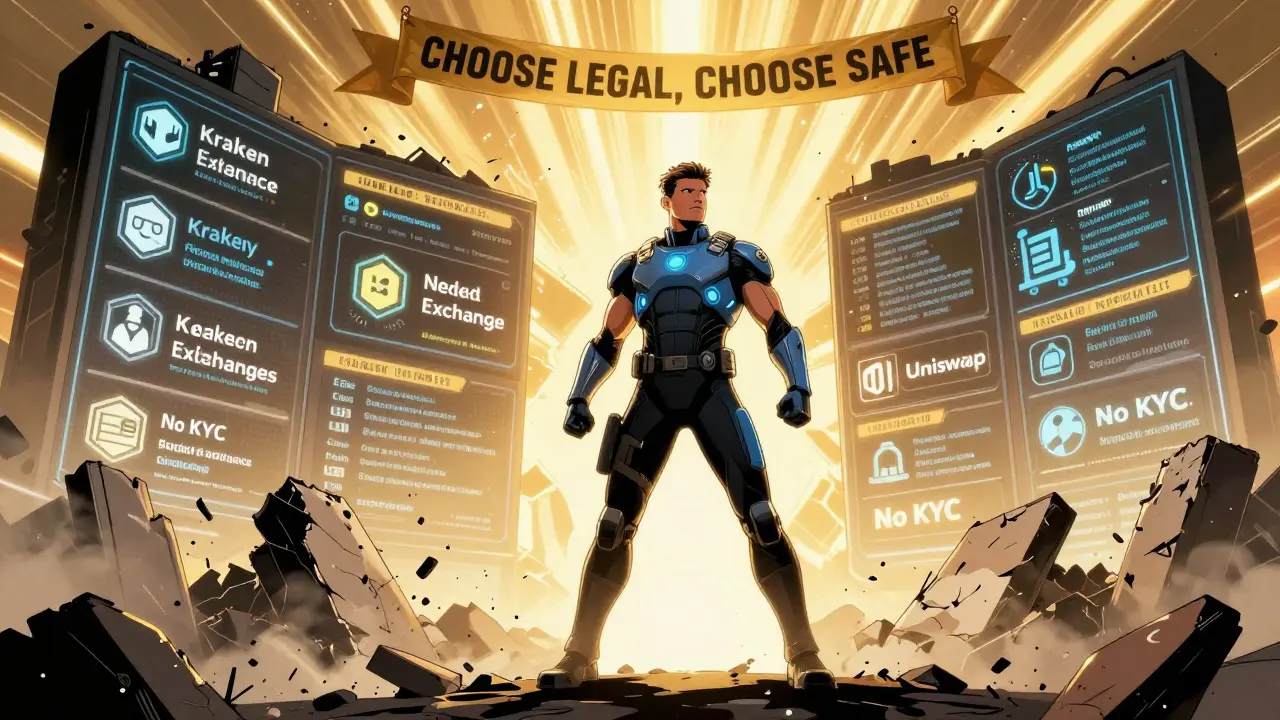
Legitimate Alternatives to Avoid Restrictions
You don’t need shady platforms to get what you want. Here’s how to stay legal and still trade freely:- Use regulated global exchanges-Platforms like Kraken, Bitstamp, and Coinbase operate in over 100 countries. They may have limits, but they’re transparent and secure.
- Use decentralized exchanges for privacy-If you want to trade without KYC, use a well-audited DEX like Uniswap or SushiSwap. You still control your keys. No middleman. No risk of platform seizure.
- Split your holdings across compliant platforms-Keep some funds on Binance, some on Kraken, some on a local NZ exchange. This isn’t evasion-it’s diversification.
- Wait for new listings-If a coin isn’t available on your exchange, check its official website. Many tokens launch on multiple platforms over time.
What Happens If You Get Caught?
If you’re caught using multiple exchanges to evade sanctions or bypass KYC, the consequences aren’t theoretical. In the U.S., violations can lead to fines up to $1 million per incident or 20 years in prison. In the EU, fines can reach 5% of annual turnover. Even in New Zealand, the FMA can freeze assets and ban you from operating any crypto service. You won’t get a warning. You won’t get a second chance. Your name goes on a global sanctions list. Your crypto gets seized. Your bank accounts get reviewed. Your credit score tanks. And you’ll have to prove your innocence-without any records, because you used anonymous platforms.The Bottom Line
Using multiple crypto exchanges to avoid restrictions isn’t a loophole. It’s a trap. The systems designed to catch this are more powerful than ever. Regulators have blockchain analytics, international cooperation, and real-time monitoring tools that can trace transactions across dozens of platforms in seconds. If you need access to more coins, higher limits, or better pricing, there are legal ways. Use them. The cost of cutting corners isn’t just financial-it’s personal, legal, and irreversible.Is it illegal to use multiple crypto exchanges?
It’s not illegal to use multiple exchanges by itself. Many traders do this for arbitrage, liquidity, or risk management. But if you use them to bypass KYC, hide fund sources, or evade sanctions, you’re breaking the law. The intent and method matter more than the number of platforms.
Can I get in trouble if I didn’t know the exchange was sanctioned?
Yes. Regulators don’t require proof of intent to impose penalties. If your funds pass through a designated platform-even once-you can be flagged. The burden of proof falls on you to show you weren’t involved in illegal activity. That’s nearly impossible if you used a non-KYC exchange.
What’s the difference between a nested exchange and a regular one?
A regular exchange holds your funds and executes trades directly. A nested exchange acts as a middleman: you deposit with them, and they trade on your behalf using accounts on other platforms. Nested exchanges often skip KYC and have no transparency. They’re not regulated, and your money isn’t protected.
Are decentralized exchanges safe for avoiding restrictions?
DEXs like Uniswap are safe if you’re just trading your own crypto and keeping control of your keys. But if you use them to launder money or evade sanctions, you’re still breaking the law. DEXs don’t have gatekeepers, but blockchain analytics tools can still trace your activity and link it to you.
How do regulators track crypto across multiple exchanges?
They use blockchain analytics firms like Chainalysis and Elliptic that track wallet addresses across hundreds of exchanges and DEXs. Even if you swap coins multiple times, patterns emerge-like consistent timing, address reuse, or links to known blacklisted wallets. These tools are now standard for law enforcement and major exchanges.
What should I do if I’ve already used a restricted exchange?
Stop using it immediately. Don’t move any more funds through it. If you’re unsure whether it’s sanctioned, check OFAC’s SDN list or consult a legal expert. If you’ve deposited funds, consider them potentially frozen. Do not attempt to withdraw or transfer them-this could trigger a flag. Document everything and seek professional advice before taking further action.



Look, I get it-you want to trade that new memecoin and your main exchange won’t let you. But pretending you’re just ‘diversifying’ while using a no-KYC middleman is like saying you’re ‘just borrowing’ a car that was stolen last week. The system doesn’t care if you’re ‘innocent’-it sees the trail, and it doesn’t forgive.
Legit platforms have limits because they’re accountable. If you’re mad about that, maybe don’t try to outsmart the entire financial infrastructure with Telegram bots and fake wallets.
I’ve seen too many people lose everything thinking they’re clever. You’re not a hacker. You’re a liability.
Use Kraken. Use Uniswap. Just don’t hand your keys to some anonymous Discord admin who’s probably running a rug pull on the side.
Bro, I used a nested exchange last year because I was tired of waiting 3 days for Binance to list a token.
Turns out, the ‘platform’ was just a Telegram bot with a MetaMask address.
I lost $8K.
Now I just wait. And I cry in the shower. 😭
One thing people miss: even if you don’t break the law, using non-KYC platforms makes you part of the problem. You’re enabling the infrastructure that lets criminals move money undetected. That’s why regulators crack down so hard-not because they hate crypto, but because they’re forced to clean up after people who think ‘no KYC’ means ‘no consequences.’
It’s not about trust. It’s about systemic risk. And you’re contributing to it, even if you think you’re just ‘hustling.’
Let’s be real-most people who use nested exchanges aren’t laundering money. They’re just trying to buy a token that’s not on their local exchange. But the system doesn’t distinguish between the guy who’s trading $500 of Shiba Inu and the guy moving $50M from a North Korean wallet.
That’s the problem. The law treats everyone the same, and that’s why it’s so dangerous. You don’t need to be guilty to get punished.
And yeah, I’ve used a DEX to swap a token I couldn’t find elsewhere. I kept my keys. No middleman. No Telegram bot. Just a gas fee and a prayer. That’s the line between smart and stupid.
Don’t be the person who says ‘I didn’t know’ after their wallet gets blacklisted. Knowledge is the only armor here.
It’s not about legality
It’s about control
When you use a nested exchange you surrender autonomy
When you use a DEX you own your keys
That’s the difference between freedom and illusion
Regulators don’t care if you’re innocent
They care if you’re traceable
And if you’re not traceable
You’re already part of the problem
Oh so now we’re all criminals because we want to buy a coin that’s not on Coinbase? 😂
Let me guess-next they’ll ban VPNs because someone used one to pirate Netflix.
Regulators are just scared because crypto is the only thing left that lets regular people bypass their control. They’re not protecting the system-they’re protecting their monopoly.
And don’t give me that ‘but criminals use it!’ line. So do banks. So do tax havens. So do credit card companies. But you don’t see them shutting down all of banking because of fraud.
Double standard much?
Yeah yeah, ‘it’s not illegal to use multiple exchanges.’
But it’s illegal to be dumb.
Why are you using a platform with no contact info, no team, no history, and no insurance?
Because you’re lazy.
Because you want to skip the 5-minute KYC.
Because you think you’re too smart to get caught.
You’re not.
You’re just the next guy whose Bitcoin vanished into the void.
And now you’re crying on Reddit like a baby.
Don’t blame the regulators. Blame yourself.
There’s a metaphysical layer here we’re ignoring.
When you use a nested exchange, you’re not just transferring tokens-you’re transferring trust.
You’re trusting an anonymous entity with your life’s savings.
That’s not finance.
That’s faith.
And faith without evidence is delusion.
Blockchain was supposed to liberate us from intermediaries.
But instead, we’ve created new intermediaries that are worse than banks.
They’re invisible.
They’re unaccountable.
And they’re hungry.
So when you say ‘I’m just trying to trade,’ you’re really saying ‘I’m willing to gamble my future on a ghost.’
And ghosts don’t pay back debts.
They just take.
Everyone here is acting like using multiple exchanges is the same as bank fraud.
Bro I live in India, Binance doesn't support rupees, Kraken doesn't exist here, and Coinbase is too slow.
So I use a local P2P platform that lets me buy ETH with UPI.
They then deposit it on Binance.
Is that illegal? Or just inconvenient for the West?
Why do we have to beg permission to trade when the blockchain doesn't care about borders?
Stop pretending this is about law.
This is about control.
And you're all just scared of a world where money isn't owned by governments.
My buddy got his account frozen because he used a no-KYC exchange to buy a token that got flagged later. He didn’t even know it was sketchy. Just saw a 20% APY and clicked ‘deposit.’
Now he’s stuck with $15K in limbo.
He’s not a criminal. He’s just someone who trusted a random link.
That’s the real tragedy here.
Not the criminals.
The people who didn’t know any better.
Let’s not romanticize DEXs.
Uniswap doesn’t care if you’re laundering money.
Neither does PancakeSwap.
They’re code.
But the people who built them? They’re not immune to regulation.
And guess what? If you use them to move funds from a sanctioned wallet, you’re the one who gets hit-not the protocol.
So don’t pretend decentralization makes you safe.
It just makes you invisible to the law.
And invisibility doesn’t equal innocence.
It equals risk.
Why are we even having this conversation?
Because Americans think they’re above the law.
You want to trade? Fine.
But don’t pretend your ‘freedom’ means you’re exempt from global rules.
Other countries don’t have your luxury of ignoring sanctions.
And now you’re dragging the whole crypto space into the dirt because you’re too lazy to wait 48 hours for a listing.
Grow up.
Or get banned.
Either way, you’re not a victim.
You’re the problem.
As someone who works in compliance, I can tell you: the moment a transaction passes through a non-KYC entity-even once-it becomes a red flag. Not because of intent. Not because of amount. Just because the system cannot verify origin.
It’s not about punishing you.
It’s about protecting the entire ecosystem from collapse.
When one user’s $500 transaction triggers a global freeze, everyone suffers.
So yes, even if you’re innocent, you’re still a liability.
And liability is not tolerated in regulated systems.
It’s not personal.
It’s architecture.
What if the real crime isn't using multiple exchanges
But believing you can outsmart a system designed to catch you
What if the system isn't broken
But you're just too impatient to wait
What if freedom isn't about bypassing rules
But about accepting the consequences of your choices
And what if the only thing you're really escaping
Is responsibility
Let’s cut the crap.
You don’t need a nested exchange to trade globally.
Use Kraken. Use Bitstamp. Use a DEX.
They’re all legal. They all work.
So why risk everything?
Because you want the thrill?
Because you think you’re a crypto rebel?
Newsflash: you’re not a rebel.
You’re a liability.
And the moment your wallet gets flagged, you’ll be begging for help.
And no one will help you.
Because you chose the path of least resistance.
And now you’re paying the price.
Stop pretending you’re clever.
You’re just careless.
My cousin used one of those ‘instant swap’ Telegram bots and lost $12K.
He thought it was a ‘new feature.’
It was a scam.
He still doesn’t get it.
And now he’s mad at the government.
Bro.
It’s not the government.
It’s you.
Stop blaming the system.
Start using your brain.
This whole thing is a psyop.
They want you scared.
So they make it sound like you’re a criminal just for using a different exchange.
But the real criminals? The ones running the banks? The ones laundering billions in fiat?
They get tax breaks.
They get pardons.
They get invited to Davos.
Meanwhile, you get your account frozen because you used a no-KYC platform to buy Dogecoin.
That’s not justice.
That’s control.
And they’re winning.
Just use Kraken. Seriously.
It’s in 100+ countries.
It’s regulated.
It’s safe.
You don’t need to risk your life savings for one token.
Wait a week.
It’ll come.
And when it does, you’ll still have your money.
And your peace of mind.
That’s worth more than any memecoin.
Author here.
Thank you for all the thoughtful replies.
I didn’t expect this many people to share their stories.
But your comments prove something important: most of you aren’t trying to break the law.
You’re just trying to survive in a broken system.
And that’s the real tragedy.
Not the use of multiple exchanges.
But the fact that the legal alternatives are so slow, so limited, so inaccessible.
So yes-don’t use shady platforms.
But also-demand better.
Because crypto was supposed to be for everyone.
Not just the people who live where the rules are convenient.