
AOFEX Crypto Exchange Review: The Rise and Fall of a Rug Pull
Imagine waking up to find your trading platform gone. Not down for maintenance, not glitching-just vanished. That’s the harsh reality for thousands of traders who trusted AOFEX. Once boasting over $1 billion in daily volume, this London-headquartered exchange promised non-standardized options and high leverage. Today? It’s a ghost town. If you’re digging into an AOFEX crypto exchange review, you’re likely trying to understand what happened or checking if it’s safe to use. Spoiler alert: it isn’t. It’s defunct.
This isn’t just another "bad experience" story. This is a classic case of a potential exit scam that left users stranded with worthless tokens and inaccessible funds. Let’s break down exactly what went wrong, why the hype didn’t translate to longevity, and what you should look for in exchanges to avoid repeating these mistakes.
The Short Version: Why AOFEX Failed
- Status: Defunct (Ceased operations ~2022).
- Main Issue: Suspected rug pull; site never returned after a claimed system upgrade.
- User Impact: Funds locked; native token AQ became worthless.
- Red Flags: Lack of regulatory transparency, aggressive marketing, sudden disappearance.
What Was AOFEX Trying to Be?
Launched around 2019, AOFEX positioned itself as a heavyweight in the crypto space. They weren’t just offering spot trading; they pitched themselves as the first platform for Non-Standardized Option trading. For context, standard options are like buying insurance on Bitcoin at a fixed price. Non-standardized ones are more flexible but riskier, appealing to pro traders looking for edge cases.
Their tech stack looked impressive on paper. We’re talking about:
- High Leverage: Up to 100x margin trading. Yes, 100x. That’s enough to wipe out your account in seconds if the market sneezes.
- Vast Selection: Over 370-400 trading pairs. You could trade Bitcoin, Ethereum, Litecoin, XRP, and dozens of altcoins.
- Fiat Gateway: Direct purchases via credit card and bank transfers in USD, CNY, JPY, and others.
- Ecosystem: They had a launchpad for new tokens, OTC desks, and mobile apps for iOS and Android.
At its peak in late 2021, CoinMarketCap reported daily volumes hitting $1.2 billion. That’s serious money. But volume doesn’t equal trust. And as we’ll see, it certainly didn’t equal stability.
The Red Flags Nobody Saw Coming
If you were active in crypto forums back then, you might have noticed whispers. AOFEX was aggressive with marketing, often popping up in ads alongside bigger names like Binance or KuCoin. But behind the flashy interface, there were structural issues that seasoned investors flagged early.
First, the regulation. Wikibit noted that AOFEX had issues with its FinCEN license status. In the US, FinCEN compliance is a big deal-it’s how regulators track anti-money laundering efforts. When an exchange has "exceeded" or questionable license status, it’s a yellow flag turning red.
Second, the team opacity. Unlike Coinbase, which lists every executive and their background, AOFEX kept things vague. Headquarters in London? Sure. Offices in Singapore? Okay. But who actually ran the show? Hard to say. In crypto, anonymity is cool for coins, but risky for exchanges holding your cash.
Third, the native token, AQ. Like many platforms, AOFEX issued its own token. Usually, these give you fee discounts or voting rights. But when the exchange is shaky, the token becomes a liability. Holders of AQ watched their investment evaporate when the platform died.
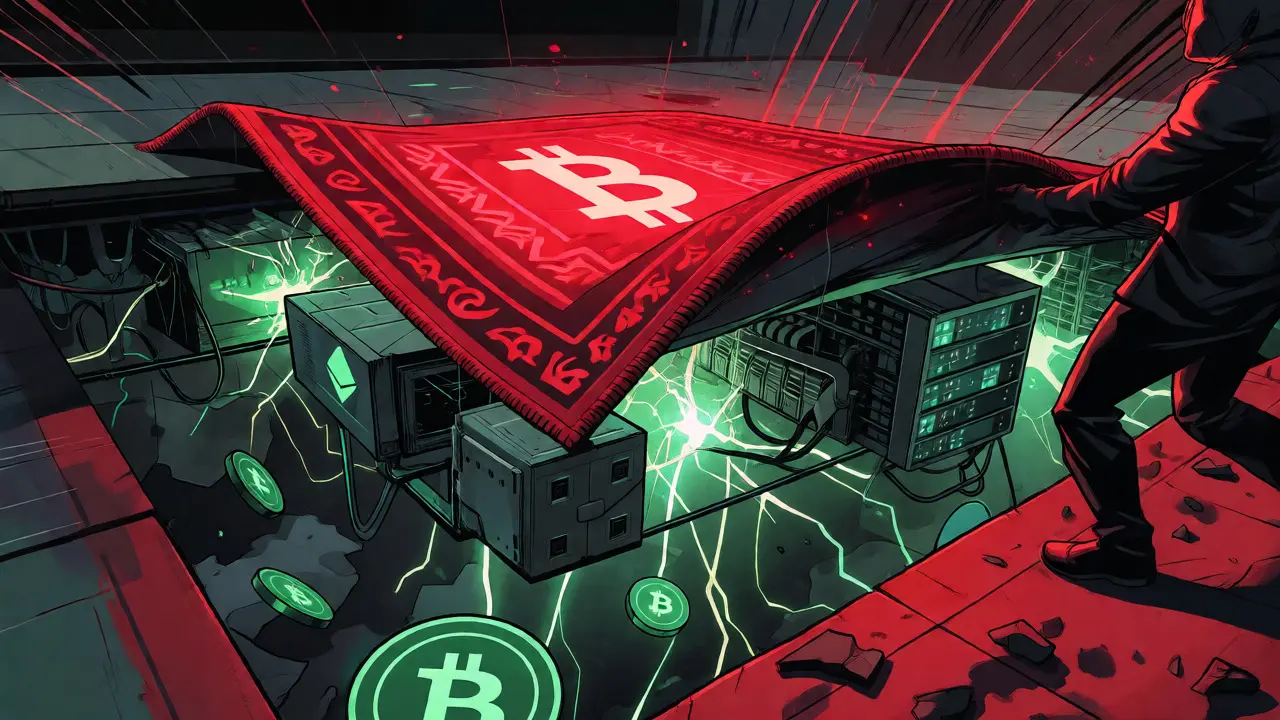
The Disappearance: How the Rug Pulled
Here’s where the story gets dark. In early 2022, AOFEX announced a "system upgrade." Traders know upgrades happen. Sometimes sites go down for hours. Rarely, they go down for days. AOFEX stayed down for ten days. Then weeks. Then months.
CaptainAltcoin, a reputable crypto review site, didn’t mince words. Their headline read: "WARNING Barely Legit, More Likely a Scam." They argued this wasn’t a technical failure-it was a strategic exit. The funds were likely moved before the servers went cold. Users tried to withdraw, but support tickets went unanswered. Phone lines? Silent. Emails? Bounced or ignored.
Think about it: if a legitimate business has a catastrophic server failure, they communicate. They offer compensation timelines. They don’t just vanish. The silence from AOFEX was deafening. It followed the pattern of other failed exchanges where liquidity dried up, withdrawals slowed, and then the lights went out permanently.
| Feature | AOFEX (Defunct) | Binance/Kraken (Active) |
|---|---|---|
| Operational Status | Shut down (~2022) | Active & Growing |
| Regulatory Transparency | Limited / Questionable | Clear Licenses & Audits |
| Proof of Reserves | No public audits | Regular Merkle Tree proofs |
| Customer Support | Unresponsive post-collapse | 24/7 Multi-channel |
| Native Token Utility | AQ (Worthless) | BNB/KCS (Stable utility) |
Lessons Learned: How to Spot the Next AOFEX
You might be thinking, "But Diane, I saw big volume numbers! Doesn’t that mean people were using it?" Volume can be manipulated. Wash trading-where bots buy and sell to each other-inflates stats. AOFEX’s volume spiked suspiciously fast, a common trait in pump-and-dump schemes.
So, how do you protect yourself next time? Here’s a simple checklist based on the AOFEX disaster:
- Check the Age: Is the exchange older than 3 years? Newer exchanges are higher risk. AOFEX lasted barely three years.
- Look for Proof of Reserves: After FTX collapsed, major exchanges started publishing proof-of-reserves. If an exchange won’t prove they hold your assets, walk away.
- Read the Fine Print on Withdrawals: Did users complain about withdrawal delays *before* the crash? Search Reddit and Twitter for terms like "stuck withdrawal" + [Exchange Name].
- Verify Regulatory Licenses: Don’t just take their word for it. Check official government databases (like FinCEN in the US or FCA in the UK) to see if the license is active and valid.
- Be Wary of "Too Good to Be True" Features: 100x leverage is great until you get liquidated. Aggressive bonuses often signal a desperate need for deposits to cover operational holes.

What Happened to the Users?
For those caught in the crossfire, the outcome was bleak. Most lost their deposited fiat and crypto. The AQ token holders faced total loss. There were no bankruptcy proceedings announced, no asset distribution plans. Just silence.
Some users tried legal avenues, but cross-border crypto litigation is expensive and slow. With headquarters in London and operations scattered globally, chasing AOFEX was like trying to catch smoke. For most retail investors, the money was gone.
This highlights a critical truth in crypto: Not your keys, not your coins. Until the day you move assets off an exchange, you are trusting a company you may never meet. If that company decides to skip town, you’re left holding a receipt.
Final Verdict: Should You Trust AOFEX Again?
No. And honestly, you shouldn’t even consider it. As of 2026, AOFEX remains offline. CoinCodex explicitly labels it "no longer operational." There are no rumors of a relaunch, no new management teams stepping in to save the brand. It’s dead.
If you’re looking for an exchange today, stick to the giants: Binance, Coinbase, Kraken, or Bybit. They’ve survived crashes, hacks, and regulatory storms. They have insurance funds, transparent audits, and customer support that answers the phone. AOFEX was a cautionary tale-a reminder that shiny interfaces and high leverage don’t guarantee safety.
Is AOFEX still operating in 2026?
No, AOFEX ceased operations around 2022 following a suspected exit scam. Major data providers like CoinCodex list it as no longer operational, and the website remains inaccessible.
Was AOFEX a legitimate exchange?
While it offered real trading features initially, its sudden closure without proper communication or fund return led experts to classify it as a probable scam or rug pull. It lacked the regulatory transparency of established competitors.
Can I withdraw my funds from AOFEX now?
Generally, no. Since the platform is defunct and no liquidation process was publicly completed, most users cannot access their funds. Legal recourse is difficult due to the lack of clear corporate structure.
What happened to the AQ token?
The value of the AQ token plummeted to near zero after the exchange closed. Without a functioning platform to provide utility or buybacks, the token became essentially worthless.
How does AOFEX compare to Binance?
Binance is one of the largest, most regulated exchanges globally with billions in daily volume and regular audits. AOFEX was smaller, less regulated, and ultimately failed. Choosing Binance offers significantly lower counterparty risk.