
Future of Digital Art on Blockchain: Beyond the Hype in 2026
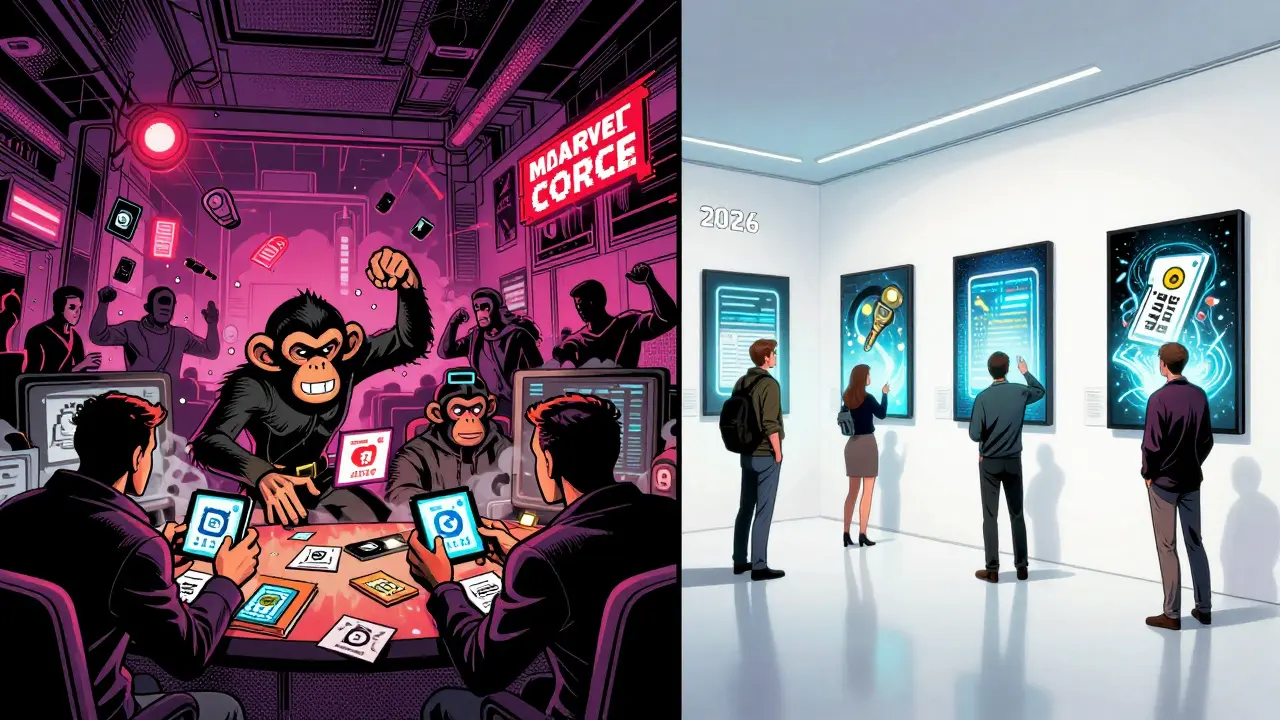
Remember the chaos of 2021? That was when everyone seemed to be selling JPEGs of monkeys for millions. It felt like a gold rush gone wrong, fueled by speculation and FOMO. Fast forward to mid-2026, and the dust has settled. The screaming headlines are gone, but the technology didn't disappear. It just got smarter, quieter, and far more useful.
The future of digital art on blockchain isn't about flipping images for quick cash anymore. It is about ownership, automation, and blending artificial intelligence with creative expression. If you are an artist looking to monetize your work or a collector tired of volatile scams, this shift is actually good news. The market is maturing from a casino into a legitimate gallery system.
From Speculation to Utility: What Changed?
In 2025, we saw a clear divergence. While pure speculative trading cooled off, the broader ecosystem exploded. The digital artwork market is projected to grow at a compound annual growth rate (CAGR) of 17.3% through 2032, reaching nearly $18 billion. But here is the catch: revenue from simple NFT flips is dropping. Why? Because buyers want value that lasts.
Today, a digital asset needs to do something. This is called "utility." When you buy a piece of blockchain-based art now, it might grant you access to a private community, tickets to a physical concert, or even fractional ownership in a real-world property. Platforms like OpenSea have pivoted hard toward sustainability and user experience, launching collections that focus on long-term engagement rather than quick resale profits. The question collectors ask is no longer "How much can I sell this for tomorrow?" but "What does this unlock for me today?"
| Feature | 2021 Speculative Model | 2026 Utility Model |
|---|---|---|
| Primary Value Driver | Hype & Scarcity | Access & Functionality |
| Artist Income | One-time sale spike | Recurring royalties & subscriptions |
| Buyer Motivation | Resale profit | Community & Experience |
| Technology Focus | Ethereum Mainnet only | Cross-chain & Layer-2 solutions |
AI and Dynamic Art: The New Creative Frontier
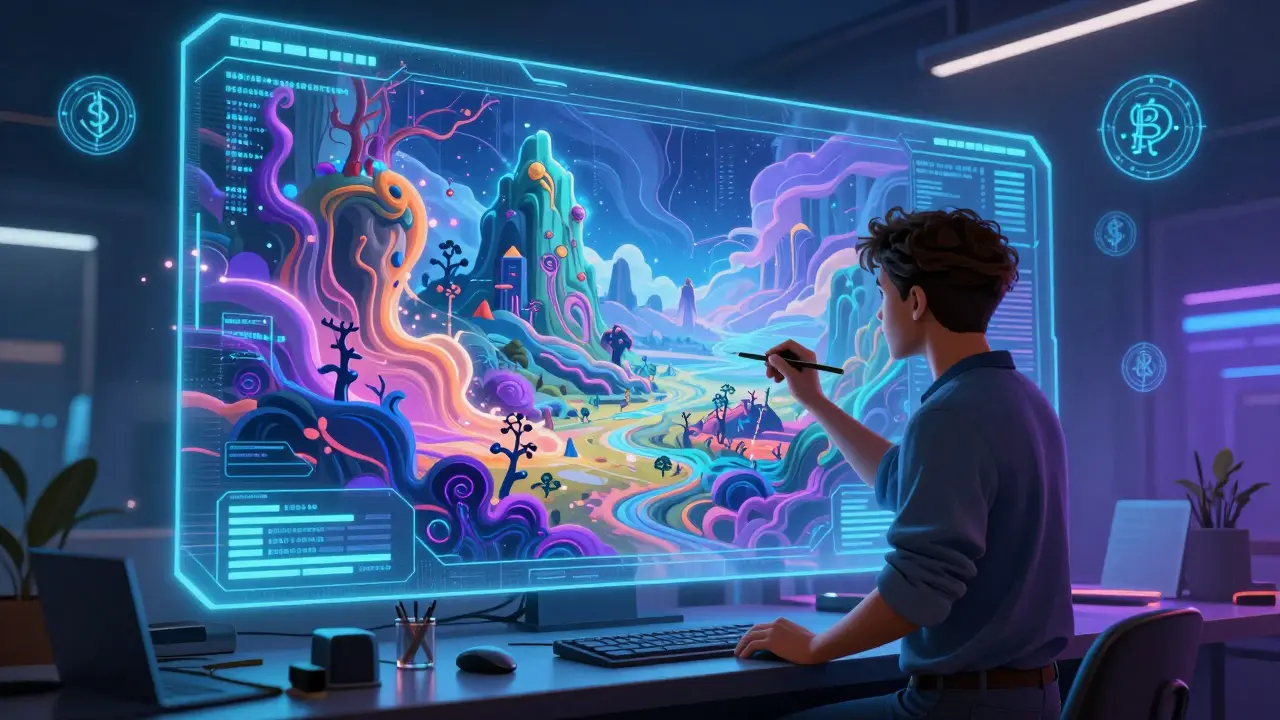
If blockchain is the canvas, Artificial Intelligence is the new paintbrush. In 2026, static images are becoming less interesting compared to dynamic, evolving artworks. Artists like Refik Anadol and Takashi Murakami are leading the charge, using AI tools to create pieces that change based on real-time data, weather patterns, or even viewer interaction.
For the average creator, tools like Adobe's Generative Fill and Photoshop's AI features have lowered the barrier to entry. You can automate layouts, generate procedural textures, and expand compositions in seconds. But the magic happens when you combine this with smart contracts. Imagine buying a portrait that slowly ages over ten years, or a landscape that shifts colors based on the stock market. These aren't just files; they are living experiences stored on the blockchain. This integration creates a new category of "generative NFTs" that appeal to tech-savvy collectors who want art that feels alive.
Smart Contracts: Fair Pay for Creators
Let's talk money. One of the biggest promises of blockchain art was automatic royalties. In the traditional art world, if you sell a painting for $100, the artist gets paid once. If that painting sells again for $1 million five years later, the original artist sees nothing. Blockchain changes this rule entirely.
Through smart contracts-self-executing agreements with the terms directly written into code, artists can program their work to pay them a percentage every time it is resold. While enforcement across different platforms remains a technical challenge, major marketplaces are standardizing these protocols. For independent creators, this means sustainable income streams. Instead of relying on one big viral moment, you build a career supported by the secondary market activity of your own catalog. It turns art from a product into a recurring revenue model.
Solving the Green Problem: Sustainability Matters
You cannot talk about blockchain without addressing energy consumption. Early critics rightly pointed out that proof-of-work blockchains were environmental nightmares. By 2026, this issue has largely been resolved through a shift to proof-of-stake consensus mechanisms. Networks like Ethereum now use 99.9% less energy than they did in 2021.
Newer chains like Solana and Polygon offer near-instant transactions with negligible carbon footprints. This shift wasn't just technical; it was necessary for mainstream adoption. Major brands and institutions, including Sotheby's, would not touch digital assets if they couldn't justify the environmental impact. Today, buying a digital artwork is as green as downloading a song. This sustainability angle has opened doors for corporate partnerships and government-backed cultural initiatives, legitimizing the space beyond crypto-native circles.
The Rise of Real-World Asset Tokenization
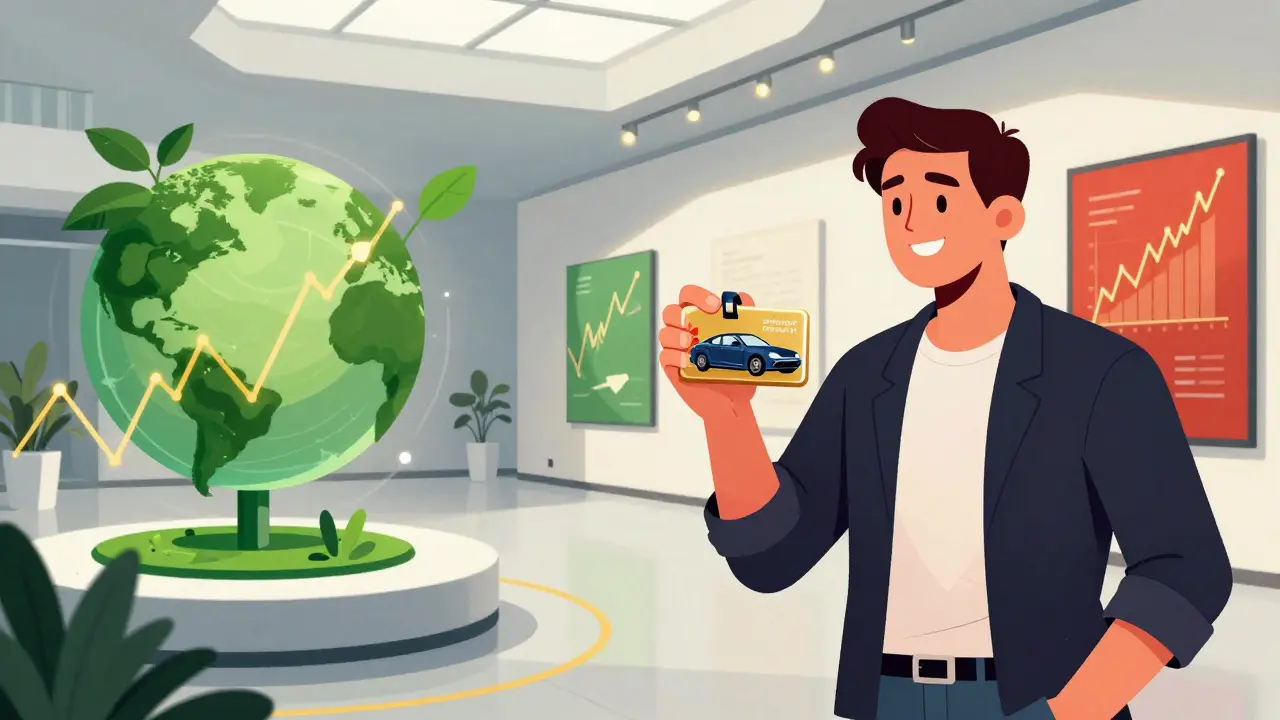
Here is where things get really interesting. Blockchain art is bleeding into finance. We are seeing the rise of real-world asset (RWA) tokenization. This means NFTs are no longer just for digital pictures. They are being used to represent fractions of physical assets like vintage wine, classic cars, or even real estate.
DeFi (Decentralized Finance) integration allows users to lend against their digital collectibles or stake them for yield. Your favorite digital sword from a video game could serve as collateral for a loan. This bridges the gap between the whimsical world of digital art and the serious world of traditional finance. It transforms NFTs from collectibles into financial instruments, creating liquidity where there was none before. For artists, this opens up new sponsorship models where brands invest in your work not just for marketing, but as a tangible asset class.
Challenges That Remain
It is not all smooth sailing. Technical complexity still scares away many potential artists. Setting up a wallet, understanding gas fees, and navigating multi-chain ecosystems can feel overwhelming. While learning curves have shortened to a few weeks for basic tasks, advanced features still require dedicated study.
Volatility is another hurdle. The value of your art is often tied to cryptocurrency prices, which can swing wildly overnight. Plus, while smart contracts promise royalties, cross-platform enforcement is still inconsistent. If you sell on Platform A, but the buyer moves the asset to Platform B, you might miss out on that resale fee. Interoperability standards are improving, but until every marketplace speaks the same language perfectly, friction remains.
Who Is This For? Decision Guide
Should you jump in? It depends on your goals.
- For Artists: If you want direct fan relationships and automated royalties, blockchain is essential. Start with low-fee networks like Polygon to minimize costs for your audience.
- For Collectors: Look for utility. Buy art that gives you access, experiences, or appreciates due to cultural significance, not just hype. Avoid projects with no clear roadmap beyond "hold and hope."
- For Skeptics: Watch the institutional adoption. When museums and banks integrate blockchain verification for provenance, the stigma will vanish completely.
The future of digital art on blockchain is not a fad. It is a fundamental restructuring of how we define ownership, creativity, and value in the digital age. The wild west days are over. Now, the builders are working.
Is investing in blockchain art safe in 2026?
Safety depends on due diligence. While the technology itself is secure, the market is still volatile. Focus on established artists and platforms with strong utility features. Avoid anonymous projects promising unrealistic returns. Treat it like any alternative investment: only spend what you can afford to lose.
Do I need to know coding to sell art on blockchain?
No. Most major marketplaces like OpenSea and Foundation offer "gas-free" minting options and simple interfaces. You upload your file, set your royalty percentage, and list it. However, understanding basic concepts like wallets and network fees will help you manage costs effectively.
How do AI-generated NFTs differ from traditional digital art?
AI-generated NFTs often include dynamic elements that change over time or based on external data. Unlike a static JPEG, an AI-driven piece might evolve its visual style, react to music, or update based on real-world events. This interactivity adds a layer of engagement that static files cannot match.
Are blockchain art sales environmentally friendly now?
Yes. Since Ethereum switched to proof-of-stake, energy usage dropped by 99.9%. Many artists now use eco-friendly sidechains like Solana or Tezos, which have minimal environmental impact. Always check which blockchain a project uses if sustainability is a priority for you.
Can I earn passive income from my digital art?
Yes, through smart contract royalties. Every time your artwork is resold on a compliant marketplace, you receive a predefined percentage (usually 5-10%). Additionally, some artists offer subscription-based NFTs that provide ongoing content, creating recurring revenue similar to a Patreon model.

Oh, please. Spare me the breathless optimism about 'utility' and 'living experiences.' It is still just a digital receipt for a jpeg that someone decided to put on a blockchain because they wanted to feel special. The fact that you are trying to dress up speculation in the language of sustainability and community access is almost insulting to anyone who actually understands art history or economics.
Barclay, you really need to chill out. Not everything has to be a cynical take just so you can feel superior. I am an artist and this shift towards royalties is literally saving my career. I used to make one sale and then get nothing when my work moved around. Now I get paid every time it resells. That is not hype, that is fair pay. So maybe stop judging people who are finally getting compensated correctly for their labor.
Fair pay? Please. You are confusing a technical feature with actual value. Most of these platforms do not even enforce cross-chain royalties consistently as the article admits. You are celebrating a broken system because it gives you a dopamine hit when you see a notification. True artistic value does not require code to validate it.
Hey everyone! 👋 Just wanted to chime in here because I think there is a lot of nuance being missed on both sides. 🎨✨ While the cynicism is understandable given the 2021 crash, the integration of AI for dynamic art is genuinely fascinating. Imagine owning a piece that changes based on the weather in your city or the stock market trends. That is not just a jpeg, that is a living interaction. Plus, the move to proof-of-stake means we aren't destroying the planet anymore, which is huge! 🌍💚 Let's keep the conversation constructive!
i mean bill makes a good point but i still think the whole thing feels kinda scammy if u dont know what ur doing. like sure the tech is cool but how many regular joes are gonna understand gas fees and wallets? its too complicated for most people. but yeah the ai stuff is neat i guess
@stalin brian Totally agree on the complexity barrier! 🤔 That is why I love seeing platforms simplify the minting process. If we can make it as easy as uploading a photo to Instagram, adoption will skyrocket. The tech needs to become invisible for the average user. Keep an eye on Layer-2 solutions, they are making transactions super cheap and fast! ⚡️
Oh my goodness, this is such a dramatic shift! I remember when everyone was screaming about monkeys and I thought it was all madness. But now? It feels like a real gallery opening in my phone. The idea that my art could age over ten years or change colors based on the news is absolutely thrilling! It is like the canvas is breathing. I am so excited to try this new utility model because it feels personal and alive. Thank you for explaining this so clearly!
Saradee, you are being naive. The 'thrill' you describe is manufactured by marketing teams designed to exploit FOMO. The CAGR of 17.3% is irrelevant if the underlying asset class is fundamentally unstable. You are buying into a narrative, not value. The 'living experience' is just a script running on a server that could cease to exist tomorrow if the developer abandons the project. Do your due diligence before you get emotionally invested in a speculative bubble dressed up as culture.
Crystal, you are so negative! Why do you have to ruin the fun? Art is supposed to be emotional and exciting. If I want to buy something that makes me happy and connects me to a community, who are you to tell me it is a bubble? I am going to enjoy my little digital garden regardless of what you think. Go touch grass instead of analyzing everything to death.
I have been following this space since the early days and while I appreciate the enthusiasm from some and the caution from others, it is important to recognize that the maturation of any technology involves a period of consolidation where the noise settles down and the actual utility begins to shine through, which is exactly what we are witnessing now with the pivot towards real-world asset tokenization and sustainable energy consumption models that allow for broader institutional participation without the environmental baggage that previously plagued the industry, creating a more robust foundation for future growth.
Hadleigh, buddy, you might wanna break that sentence up a bit. Hard to follow. But yeah, I get what you mean. The green angle is what sold me. I couldn't justify buying anything when it was burning coal equivalent energy. Now that it is mostly proof-of-stake, I feel better about collecting. Still weird paying crypto for a picture though.
As someone who has worked in traditional art logistics for over fifteen years, I find the concept of fractional ownership of physical assets through NFTs to be particularly intriguing because it democratizes access to high-value items that were previously reserved for the ultra-wealthy, allowing individuals from diverse cultural and economic backgrounds to participate in markets that were historically exclusionary, thereby fostering a more inclusive global art economy that transcends geographical boundaries and traditional gatekeeping mechanisms.