
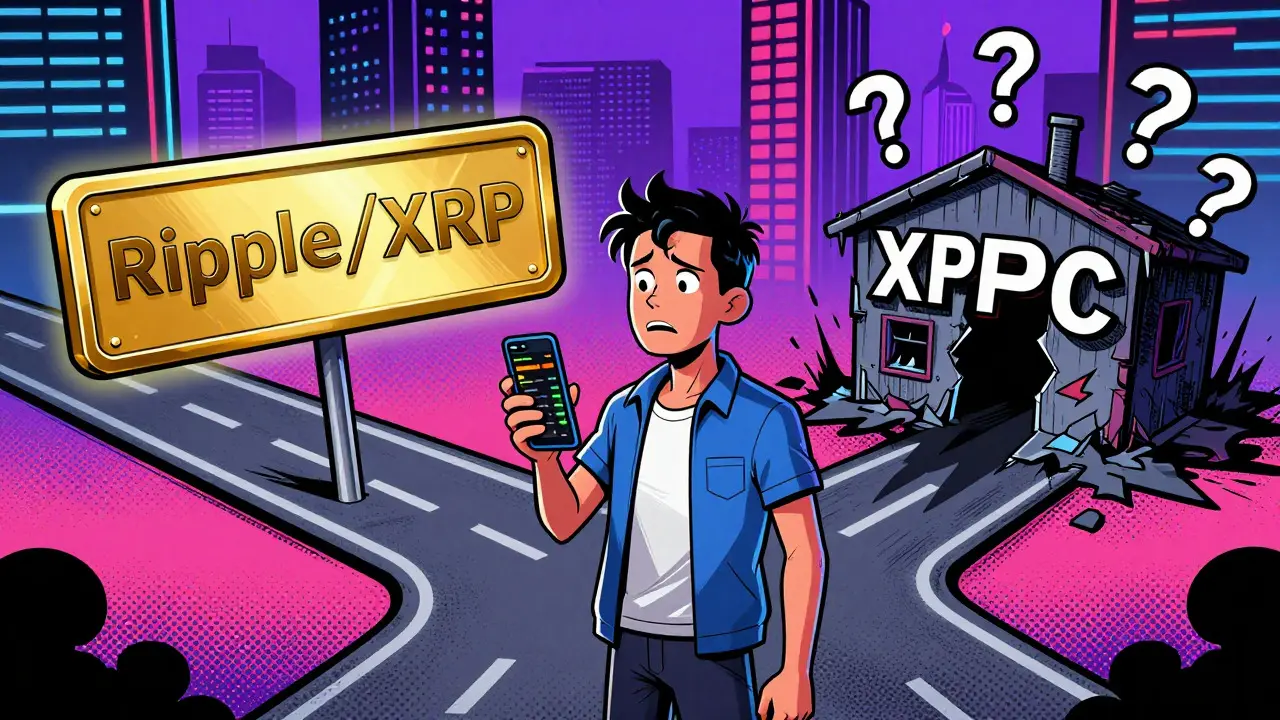
What Is XRP Classic (XRPC)? A Deep Dive Into the Token, Risks, and Confusion
Have you ever seen a cryptocurrency with a name that sounds familiar but feels slightly off? You are not alone. XRP Classic (new) is a hyper-deflationary ERC-20 token operating on the Ethereum blockchain with the ticker symbol XRPC. It sits at rank #5268 among cryptocurrencies, boasting a market capitalization of roughly $498,460 and a fixed supply of 666.66 million tokens. At first glance, it might look like a spin-off from Ripple or a new ETF product. In reality, it is an anonymous, community-driven project with significant red flags that every investor needs to understand before clicking "swap."
The confusion starts with the name. Many users assume this token has some connection to Ripple Labs, the company behind the major cryptocurrency XRP. There is none. The ticker symbol XRPC also collides with the Canary XRP ETF, a completely different financial instrument launched in late 2025. This article cuts through the noise to explain what XRP Classic actually is, how its mechanics work, and why experts view it with extreme caution.
Understanding the Core Identity of XRP Classic
To evaluate any asset, you must first define what it is. XRP Classic (new) positions itself as a regenerative finance (ReFi) initiative. Its stated vision is to build a sustainable, multi-platform ecosystem where users can earn rewards while using the platform. However, the execution details are sparse. The project operates without a publicly disclosed team, no corporate entity, and minimal technical documentation beyond basic listings on aggregators like CoinMarketCap.
Technically, it is an ERC-20 token built on the Ethereum blockchain. This means it relies on Ethereum’s infrastructure for security and transaction processing rather than having its own dedicated ledger. The total supply is capped at 666.66 million tokens, all of which are currently in circulation. There are no hidden reserves waiting to be dumped on the market, which is a common trait in many low-cap projects, but it does not solve the liquidity problem.
The project claims to feature a "Smart Exchange System" that automatically transfers XRP rewards from each transaction to the user's wallet. While this sounds beneficial, the mechanism lacks transparency. There is no open-source code repository on GitHub for public verification, nor are there third-party audits confirming that these rewards are distributed fairly or accurately. Without verifiable code, these promises remain just words on a website.
Market Metrics and Liquidity Reality Check
Numbers do not lie, even when they are small. As of mid-2026, XRP Classic trades with a daily volume of approximately $3,490. Compare this to its market cap of nearly half a million dollars. The volume-to-market-cap ratio is a mere 0.7%. In healthy markets, you expect ratios closer to 10% or higher. This indicates that very few people are actually trading this token.
| Metric | XRP Classic (XRPC) | Healthy Micro-Cap Benchmark |
|---|---|---|
| Market Cap | $498,460 | $1M - $10M |
| 24h Volume | $3,490 | $50k+ |
| Volume/Cap Ratio | 0.7% | >5% |
| Supply Status | Fully Circulating | Varies |
| Audits | None Publicly Verified | Required for Trust |
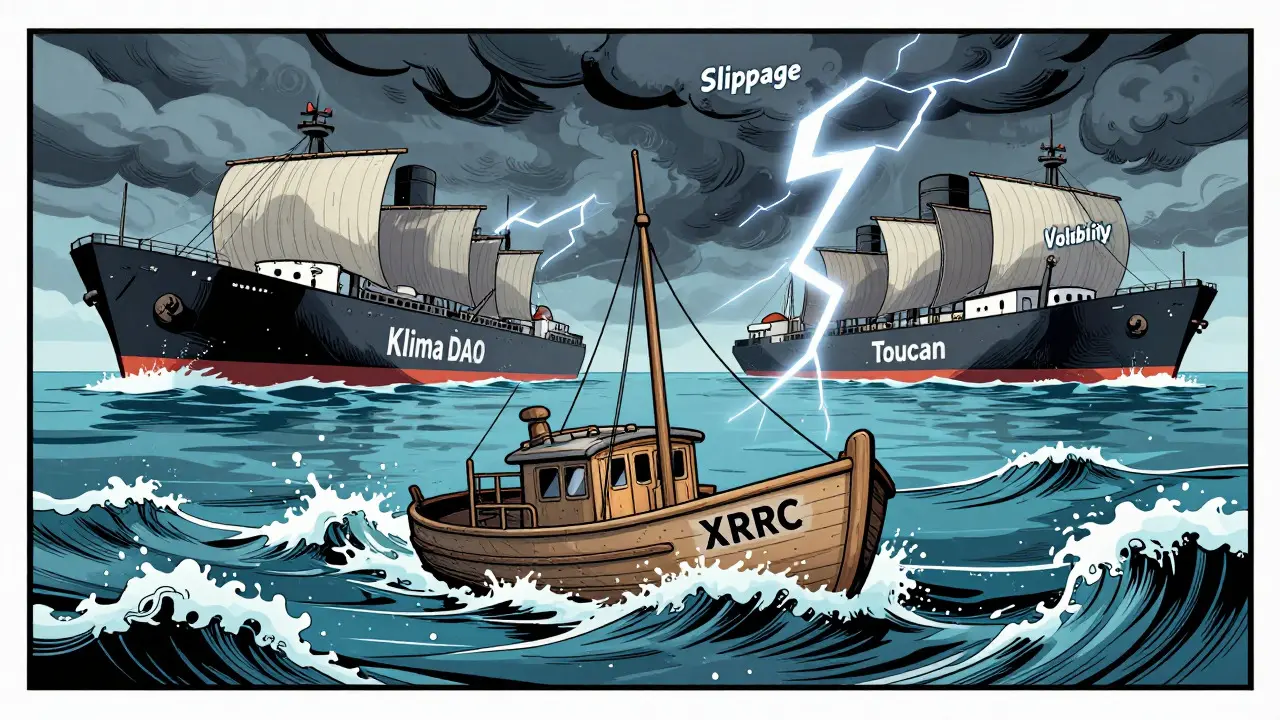
This lack of liquidity creates a dangerous environment for traders. If you buy $1,000 worth of XRPC, you might instantly push the price up by several percent because there are so few sellers. Conversely, if you try to sell, you may find no buyers, forcing you to accept a massive discount just to exit your position. This is known as high slippage. For a retail investor, this means your entry and exit prices will likely be far worse than the displayed market price.
The Ticker Symbol Trap: XRPC vs. Canary ETF
One of the most critical aspects of XRP Classic is its naming strategy. The ticker symbol XRPC was chosen deliberately to create overlap with two major entities: the established XRP cryptocurrency and the Canary XRP ETF.
The Canary XRP ETF, launched in November 2025, allows traditional investors to gain exposure to XRP through regulated stock exchanges. It uses the same ticker, XRPC, on certain platforms. When a casual investor sees "XRPC," they often assume it is related to this ETF or Ripple itself. XRP Classic exploits this cognitive bias. It is a classic example of "name squatting," where a project adopts a similar identity to ride the coattails of a more famous brand.
Regulatory bodies like the SEC have taken notice of such tactics. In 2024, enforcement actions were taken against projects like Bitcoin Satoshi Vision for creating brand confusion. While XRP Classic has not yet been targeted, the precedent exists. Investors should ask themselves: why would a legitimate ReFi project choose a confusing ticker instead of a unique one? The answer usually points to marketing over substance.

Security Risks and Smart Contract Vulnerabilities
Beyond market dynamics, the technical structure of XRP Classic poses direct risks to your funds. Security analysis firm Gopluslabs flagged a critical issue: the contract owner retains the authority to modify transaction taxes.
In a decentralized token, you want rules that cannot be changed by a single person. If the developer decides tomorrow that every trade incurs a 50% tax, they can do so. They could also pause trading entirely or blacklist specific wallets. This centralization contradicts the ethos of cryptocurrency, which is supposed to be trustless and permissionless.
Furthermore, the token operates on decentralized exchanges like PancakeSwap V3 and Uniswap V2. These platforms do not vet tokens before listing them; anyone can create a pair. This means you are trusting the code entirely. With no audit from firms like CertiK or OpenZeppelin, the risk of hidden backdoors-such as functions that allow the creator to drain liquidity-is non-zero.
Community Sentiment and Expert Opinion
When you dig into the social proof, the picture becomes clearer. Major crypto analysis platforms like Messari, Delphi Digital, and CoinDesk have virtually no coverage of XRP Classic. This absence is telling. Professional analysts ignore tokens that lack fundamental utility or credible teams.
User sentiment is overwhelmingly skeptical. On Reddit, discussions around XRPC often label it as a "pump-and-dump" scheme. One user noted, "Saw this on CoinMarketCap ranked #5268... classic example of someone trying to ride the XRP ETF hype." Twitter activity is minimal, with only a handful of low-engagement posts. There is no active Discord server, Telegram group, or verified social media presence that suggests a growing community.
Industry experts warn that 92% of micro-cap tokens fail within six months. Fundstrat’s David Puell has noted that tokens under $1 million in market cap with no verifiable team have a 99.7% failure rate within 18 months. XRP Classic fits this profile perfectly. Without a roadmap, updates, or partnerships, it drifts in the shadows of the broader crypto market.
How to Trade XRPC Safely (If You Must)
If you decide to proceed despite the risks, preparation is key. You cannot buy XRPC on centralized exchanges like Binance or Coinbase. You must use a decentralized exchange (DEX). Here is the step-by-step process:
- Set Up a Wallet: Install MetaMask or Trust Wallet. Ensure you have ETH for gas fees.
- Find the Contract Address: Copy the exact ERC-20 contract address from a reliable source like CoinMarketCap. Never paste addresses from random tweets.
- Connect to a DEX: Go to Uniswap or PancakeSwap. Connect your wallet.
- Paste the Token: Paste the contract address into the search bar. Verify the symbol matches XRPC.
- Adjust Slippage: Due to low liquidity, set slippage tolerance to 10-15% to prevent failed transactions.
- Execute with Caution: Start with a tiny amount. Monitor the transaction on Etherscan to ensure it completes.
Remember, buying here is speculative gambling, not investing. You are betting on short-term volatility rather than long-term value.
Comparison: XRP Classic vs. Legitimate ReFi Projects
To understand the gap between XRP Classic and established projects, compare it to Klima DAO or Toucan Protocol. These legitimate ReFi initiatives have transparent teams, audited smart contracts, and verifiable carbon offset mechanisms. They publish regular reports and engage with regulators. XRP Classic offers none of this. It claims to be ReFi but provides no evidence of environmental impact or sustainability efforts. It is a label without the substance.
| Feature | XRP Classic (XRPC) | Klima DAO / Toucan |
|---|---|---|
| Team Transparency | Anonymous | Public & Doxxed |
| Smart Contract Audit | None | Multiple Audits |
| Utility | Speculative Rewards | Carbon Credit Trading |
| Liquidity | Very Low ($3.5k/day) | High (Millions) |
| Regulatory Compliance | Unclear | Active Engagement |
Future Outlook and Viability
What lies ahead for XRP Classic? The outlook is bleak. With no development activity, no community growth, and increasing regulatory scrutiny on misleading names, the token is likely to fade into obscurity. Short-term pumps may occur if XRP news breaks, drawing in confused retail investors, but these are temporary spikes. Long-term viability requires utility, trust, and liquidity-three things XRPC currently lacks.
Investors should treat XRP Classic as a cautionary tale. It highlights the importance of due diligence in the crypto space. Always verify the team, check the audits, and question why a project chooses a confusing name. In a market flooded with thousands of tokens, standing out for the right reasons matters more than mimicking the big players.
Is XRP Classic the same as Ripple XRP?
No, they are completely separate. XRP Classic (XRPC) is an ERC-20 token on Ethereum with no technical or organizational link to Ripple Labs or the XRP Ledger. The similar name is likely a marketing tactic to confuse investors.
Can I buy XRPC on Coinbase or Binance?
Currently, no. XRPC is only available on decentralized exchanges like Uniswap or PancakeSwap. You need a Web3 wallet like MetaMask to trade it, and you must pay Ethereum gas fees.
Why is the ticker symbol XRPC confusing?
The ticker XRPC is also used by the Canary XRP ETF, a regulated financial product. This overlap causes retail investors to mistakenly believe XRP Classic is associated with the ETF or Ripple, leading to potential misallocation of funds.
Are there security risks with XRP Classic?
Yes. Security audits reveal that the contract owner can modify transaction taxes, giving them central control over the token. Additionally, the lack of third-party audits increases the risk of hidden vulnerabilities or rug pulls.
What is the total supply of XRPC?
The total supply is fixed at 666.66 million tokens. All of these tokens are currently in circulation, meaning there are no additional tokens being minted or held in reserve by the developers.
Is XRP Classic a good investment?
Most experts consider it high-risk. With extremely low liquidity, an anonymous team, and no verifiable utility, it fits the profile of a speculative micro-cap token with a high probability of failure within 18 months.


Look, I know everyone is screaming 'rug pull' and 'scam' but hear me out for a second because the narrative around these micro-caps is completely oversaturated with fear-mongering that ignores the sheer speculative potential of the early adopter phase. You see this token as a trap, sure, but you also have to consider that the confusion with the ETF ticker is actually a feature, not a bug, in terms of marketing psychology because it forces people to look at the chart even if they are looking for something else entirely. The liquidity might be thin, yes, but that just means the first person to buy gets a massive percentage of the float before anyone else can catch on, which is how legends are made in this space, right? We always talk about utility and audits like they are the only metrics that matter, but half the coins we hold now started as jokes or scams that somehow survived long enough to build a community, so why write off XRPC just because the team is anonymous? It’s almost like we’ve forgotten how wild the early days of crypto were when anything could happen and the only rule was don’t lose your keys. I’m not saying dump your life savings into it, obviously, but treating it with such disdain feels like missing out on the chaos that makes this industry fun in the first place.
i think its really scary how easy it is to get tricked by names like this... i alwys double check the contract address but i know my mom wouldnt bother lol
The ontological status of this token is fundamentally flawed because it relies on a parasitic relationship with the semantic weight of the Canary ETF, creating a cognitive dissonance that most retail investors simply lack the intellectual framework to deconstruct properly. When you strip away the veneer of 'ReFi' which is just buzzword soup for 'we want your money', you are left with a hollow shell that has no soul, no purpose, and no verifiable existence beyond a few lines of code on Ethereum. It is a philosophical void masquerading as an asset class, and those who invest in it are investing in their own ignorance rather than any tangible value proposition. The lack of audits isn't just a security risk; it is a moral failing of the project creators who exploit the trust deficit in our society to line their pockets while the rest of us debate the merits of decentralization. Truly, it is a tragedy of modern finance where branding outweighs substance every single time.
Hey guys! 👋 Just wanted to chime in because this article is super helpful for clearing up the confusion between XRPC and the actual ETF 📈✨ It's crazy how many people mix them up! 😅 Always good to do your homework before buying anything crypto-related 📚💪 Stay safe out there friends! 🙌🔒
Indeed! This is a very important distinction to make! One must always verify the contract addresses! It is crucial for financial safety! The risks are high! But knowledge is power! Keep learning! 📚
This is typical American negligence!! You let these scammers operate freely because your regulations are weak!!! In other countries we would shut this down immediately!!! The SEC is asleep at the wheel!!! Wake up people!!! Protect your assets from foreign manipulation!!! #AmericaFirst #CryptoScams
You got this! Don't let the negativity get you down. Just remember to take small steps and stay informed. Every expert was once a beginner. Keep pushing forward!
It is exhausting how people keep falling for these obvious traps. They deserve what happens to them. No empathy for the lazy investors who don't read whitepapers. It's their own fault.
The audacity of these developers to slap a similar name on a worthless token is absolutely disgusting. It reeks of desperation and greed. Honestly, I am sick of seeing these pump-and-dump schemes ruin the reputation of legitimate projects. It is shameful. Why do we even tolerate this garbage on our blockchains?
the epistemological crisis here is palpable... how do we define value when the signifier (XRPC) is detached from the signified (utility)? it is a simulacrum of investment... pure Baudrillardian nightmare fuel... nobody checks the github repo anymore... we just trade vibes and hope... tragic really...