What Is XRP Classic (XRPC)? A Deep Dive Into the Micro-Cap Token
Have you ever seen a cryptocurrency with a name that sounds almost identical to a giant like Bitcoin or Ethereum, but the market cap is smaller than your annual grocery bill? That’s exactly where XRP Classic (new), trading under the ticker XRPC, sits right now.
If you clicked this article because you saw "XRPC" and thought it was related to Ripple’s massive XRP network or the new Canary XRP ETF, stop for a second. You are likely looking at two completely different things. XRP Classic (new) is a micro-cap token with a market capitalization of roughly $498,000. It has no technical connection to Ripple Labs, no ties to the XRP Ledger, and certainly no institutional backing from major financial firms. In fact, its primary characteristic seems to be confusion-deliberate or otherwise.
The Identity Crisis: XRPC vs. The Real Giants
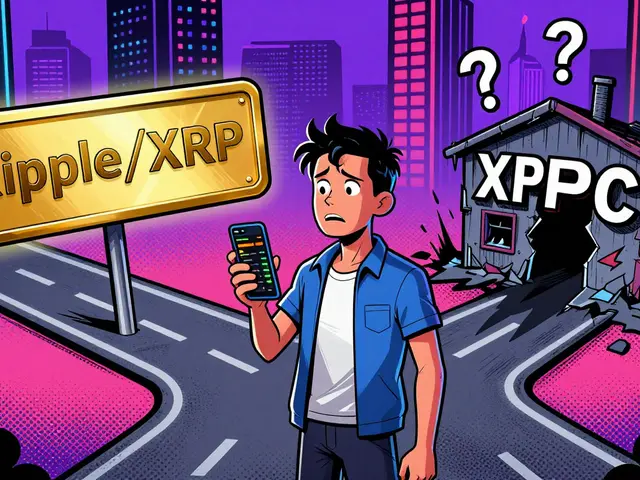
Let’s clear up the biggest misconception first. When you see the ticker XRPC, your brain might jump to the Canary XRP ETF, which launched in late 2025 to allow traditional investors to gain exposure to XRP through regulated exchange-traded funds. That is a legitimate financial instrument backed by real assets and regulatory compliance.
XRP Classic (new), on the other hand, is an ERC-20 token built on the Ethereum blockchain. It operates in the wild west of decentralized finance (DeFi). There is no bridge between them. The similarity in names and tickers is not a coincidence; it’s a common tactic in the crypto space known as "name squatting." Projects often adopt names similar to established brands to catch the eye of retail investors who aren’t paying close attention. This creates a semantic trap where users expect the stability and utility of the original brand but get a highly speculative, low-liquidity token instead.
What Is the Project Actually Trying to Do?
According to its listing on CoinMarketCap, XRP Classic positions itself as a project focused on Regenerative Finance (ReFi). ReFi is a growing sector that aims to use blockchain technology to solve environmental and social problems, such as carbon offsetting or biodiversity credits. Major players in this space include Klima DAO and Toucan Protocol, which have transparent teams, audited code, and verifiable impact metrics.
XRP Classic claims it wants to "develop an innovative, sustainable, multi-platform ecosystem that enables users to earn whilst having a pleasant experience using it." Sounds nice, right? But here’s the catch: there is zero evidence to back this up. Unlike legitimate ReFi projects, XRP Classic lacks:
- A public whitepaper detailing its environmental strategy.
- A GitHub repository showing active code development.
- Any third-party audits verifying its "regenerative" claims.
- A visible community or partnership announcements.
Instead of building infrastructure for sustainability, the project relies on a financial mechanism called a "hyper-deflationary token" model. This means that every time someone buys or sells the token, a small percentage of the transaction is burned (removed from circulation) or redistributed. The goal is to reduce supply over time, theoretically increasing value. However, without real demand or utility, deflation alone doesn’t create value-it just makes the remaining tokens harder to sell.
The Technical Reality: Low Liquidity and High Risk
Let’s look at the hard numbers. As of mid-2026, XRP Classic has a total supply of 666.66 million tokens, all of which are in circulation. Its market cap hovers around half a million dollars, and its 24-hour trading volume is a mere $3,490. What does this mean for you?
It means extreme illiquidity. If you try to buy or sell even a modest amount of XRPC, you will likely cause significant price slippage. For example, buying $1,000 worth of tokens could push the price up by 10% or more because there aren’t enough buyers waiting on the order book. Conversely, selling could crash the price instantly. This is a classic hallmark of micro-cap tokens that lack genuine user adoption.
The token trades only on a few decentralized exchanges (DEXs) like PancakeSwap V3 and Uniswap V2. You won’t find it on major centralized exchanges like Binance, Coinbase, or Kraken. To interact with XRPC, you need to set up a Web3 wallet like MetaMask, pay Ethereum gas fees, and navigate complex swap interfaces. This barrier to entry filters out most casual investors, leaving only those willing to take high risks for potential high rewards-or those who simply didn’t realize what they were buying.
Security Red Flags: Who Controls the Code?
This is perhaps the most critical section. In decentralized finance, trust is supposed to be placed in code, not people. But with XRP Classic, the code holds some worrying secrets. Security analysis firm Gopluslabs flagged a significant centralization risk: the contract owner retains the authority to modify transaction taxes.
In a truly decentralized token, once the smart contract is deployed, no one-not even the creators-should be able to change the rules. If the owner can increase the tax on transactions from 1% to 50%, they can effectively freeze the market or drain liquidity. This feature turns the token into a centralized asset disguised as a decentralized one. For investors, this represents a substantial counterparty risk. You are trusting an anonymous developer to act honestly with your funds, despite having the technical ability to do otherwise.
Market Context: Why Does This Token Exist?
To understand XRP Classic, you have to look at the broader crypto landscape. In late 2025, the launch of the Canary XRP ETF created a wave of interest in XRP-related assets. Retail investors flooded into news feeds searching for ways to profit from the hype. Opportunistic developers noticed this traffic and launched tokens with confusingly similar names and tickers to capture that search volume.
Industry data supports this pattern. According to Chainalysis’ 2024 Micro-Cap Token Study, 92% of similar micro-cap tokens fail within six months. They rely on short-term speculative pumps triggered by news cycles rather than long-term utility. Fundstrat Global Advisors noted that tokens with market caps under $1 million and no verifiable team have a 99.7% failure rate within 18 months. XRP Classic fits this profile perfectly.
| Feature | XRP Classic (XRPC) | Klima DAO (Legit ReFi) | XRP (Ripple) | Canary XRP ETF |
|---|---|---|---|---|
| Market Cap | ~$498K | ~$100M+ | ~$125B+ | Regulated Trust |
| Team Transparency | Anonymous | Public & Verified | Ripple Labs | Canary Capital |
| Blockchain | Ethereum (ERC-20) | Ethereum/Polygon | XRP Ledger | Traditional Markets |
| Liquidity | Very Low ($3.49K/day) | High | Extremely High | High |
| Primary Utility | Speculation / Tax Rewards | Carbon Credits | Cross-border Payments | ETF Exposure |
| Centralization Risk | High (Owner can change tax) | Low (DAO Governance) | Medium (Ripple Influence) | Low (SEC Regulated) |
User Sentiment: Skepticism Dominates
If you dig into online discussions, you’ll find very little noise-and what exists is largely negative. There is no dedicated subreddit for XRP Classic. Twitter activity is minimal, with only a handful of low-engagement tweets in recent months. On CoinMarketCap, user comments express doubt. One user asked, "Is this related to Ripple XRP?" while another warned about the token’s attempt to ride the ETF hype.
A Reddit user named CryptoSkeptic42 summarized the general sentiment: "Saw this on CoinMarketCap ranked #5268 with $500k market cap - classic example of someone trying to ride the XRP ETF hype with a confusingly similar name and ticker. Stay away unless you want to lose money." This skepticism is well-founded. Without organic community growth or developer engagement, the token lacks the social consensus needed to sustain value.
How to Buy (And Why You Might Want to Think Twice)
If you still decide to proceed, here is how the process works. First, you need a Web3 wallet like MetaMask or Trust Wallet. Connect it to a decentralized exchange like Uniswap or PancakeSwap. Paste the official contract address for XRPC (double-check it against multiple sources to avoid phishing scams). Set your slippage tolerance to 10-15% to account for low liquidity. Finally, approve the transaction and pay the Ethereum gas fee.
But before you click confirm, ask yourself: What happens if the price drops 90% tomorrow? Can you afford to lose that money? With no fundamental utility, no team accountability, and high centralization risks, XRP Classic is closer to a lottery ticket than an investment. It may see short-term pumps if XRP news breaks, but long-term viability is highly questionable.
Final Thoughts on XRP Classic
XRP Classic (new) is a cautionary tale of the current crypto market. It exploits name recognition, offers vague promises of regenerative finance, and hides behind anonymous development. While it technically exists and trades on decentralized platforms, it lacks the transparency, liquidity, and security features that define credible digital assets. For most investors, especially beginners, the risks far outweigh any potential rewards. Always verify the source of your information, check the ticker symbol carefully, and remember: if it looks too good to be true-or too similar to something else-it probably is.
Is XRP Classic (XRPC) the same as Ripple's XRP?
No, they are completely different. XRP Classic is an ERC-20 token on the Ethereum blockchain with a tiny market cap. Ripple's XRP is a major cryptocurrency with a market cap over $125 billion, running on its own native ledger. There is no technical or organizational link between them.
Is XRPC related to the Canary XRP ETF?
No. The Canary XRP ETF is a regulated financial product traded on traditional stock markets. XRP Classic is a speculative crypto token. They share the ticker symbol XRPC, which causes confusion, but they are unrelated entities.
Who created XRP Classic?
The team behind XRP Classic is anonymous. There are no publicly disclosed founders or corporate entities associated with the project, which increases the risk for investors.
Is XRP Classic a safe investment?
It carries high risk. Security audits indicate the contract owner can modify transaction taxes, creating centralization risks. Additionally, the token has extremely low liquidity and no verified utility, making it prone to volatility and potential loss of value.
Where can I buy XRPC?
XRPC is available on decentralized exchanges like PancakeSwap V3 and Uniswap V2. It is not listed on major centralized exchanges like Binance or Coinbase. Buying requires a Web3 wallet and knowledge of managing gas fees and slippage.