What is Orchai (OCH)? AI-Powered DeFi Token Explained with Risks and Reality
Imagine a world where you don’t need to be a coding wizard to manage complex decentralized finance strategies. You just tell an AI what you want, and it builds the portfolio for you. That is the promise behind Orchai, an AI-powered low-code DeFi platform designed to simplify asset management across multiple blockchains. But does the reality match the hype? If you are looking at the ticker symbol OCH, you might be wondering if this is the next big thing or a risky gamble. The short answer is that while the technology sounds innovative, the market reality tells a much more cautious story.
The Core Concept: AI Meets Low-Code Finance
Orchai launched in February 2024 with a clear mission: fix the fragmentation in the DeFi space. Most people find DeFi intimidating because it requires jumping between different chains, understanding gas fees, and managing complex smart contracts. Orchai tries to solve this by acting as a cross-chain orchestrator. It uses artificial intelligence to optimize how your assets move and grow.
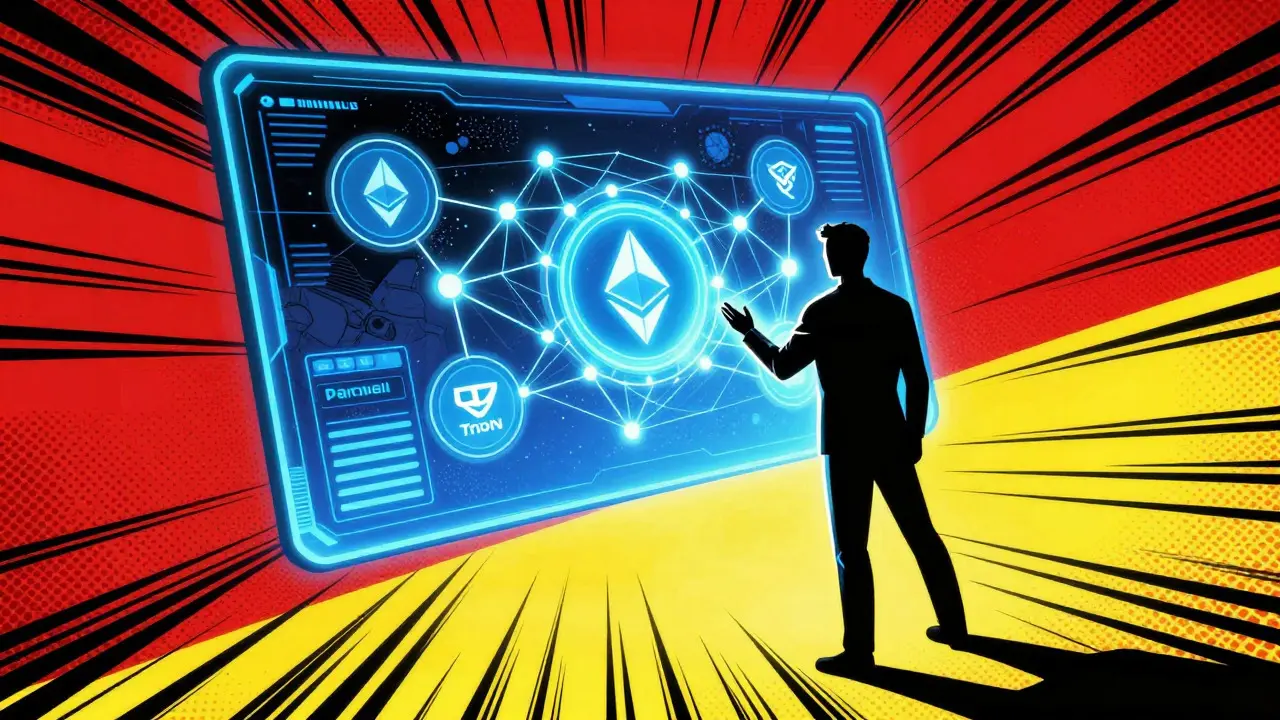
The platform supports six major networks: Ethereum, BNB Chain, Tron Mainnet, Cosmos Hub, Osmosis, and its own Oraichain network. This multi-chain approach means you aren't locked into one ecosystem. The core value proposition rests on two pillars. First, it aims to improve investment strategies using AI-driven tools. Second, it wants to optimize asset flow through specific protocols like Liquid Staking and Money Markets. Essentially, it tries to bring the ease of traditional banking interfaces to the wild west of blockchain.
How the OCH Token Works
To use the platform, you interact with the OCH utility token. It operates as an ERC-20 token on Ethereum, which means you can hold it in standard wallets like MetaMask. But holding it isn't just about speculation; the token has four defined functions within the ecosystem.
- Co-Harvest: This is an auction mechanism that allows users to buy stablecoins at a discount. It’s a way to generate yield without locking up capital for long periods.
- Rewards (xOCH): Users earn xOCH, which converts to OCH at a 1:1 ratio. This incentivizes active participation in the platform’s protocols.
- Payments: You pay platform fees using OCH. As usage goes up, demand for the token theoretically increases.
- DAO Governance: Holders get voting rights on protocol upgrades and profit-sharing decisions. This gives the community a say in the project's future direction.
The total supply is capped at 20 million tokens. When it first listed, the price was $0.40. However, tokenomics alone don't guarantee success. You have to look at who is actually using these features.
Key Features and Tools
Orchai offers three main tools that set it apart from generic DEXs (Decentralized Exchanges). These are designed for users who want automation without writing code.
- Combinator: This is the AI portfolio manager. It analyzes market conditions and suggests or executes strategies. The platform claims potential APRs up to 900% in optimal scenarios, though real-world results vary significantly.
- Auto Trader: This tool enables automated trading based on market signals. Instead of watching charts all day, the bot executes trades according to pre-set parameters.
- Alert Hub: A notification system that keeps you updated on real-time market changes relevant to your holdings.
Beyond these tools, there are two financial protocols. The Liquid Staking protocol lets you stake assets and receive a tokenized version that you can use as collateral to borrow USDT. The Money Market allows you to deposit stablecoins to earn interest or borrow against your staked assets. These features aim to make idle capital work harder for you.
The Harsh Reality: Liquidity and Market Position
Here is where the story gets complicated. While the tech stack looks solid on paper, the market metrics paint a picture of a struggling project. As of early 2026, Orchai holds a market cap of less than $80,000. To put that in perspective, giants like Uniswap have market caps in the billions. Orchai ranks around #7,800 on CoinMarketCap, placing it firmly in the "micro-cap" category.
The biggest red flag is liquidity. Trading volume is extremely low-often reported as near zero on major aggregators. In November 2025, daily volume was estimated at just $40. What does this mean for you? If you try to sell a large amount of OCH, you will face massive slippage. Selling $50 worth of tokens could result in losing 15-20% of your value due to thin order books. You are essentially stuck with illiquid assets unless you are willing to accept steep discounts.
| Feature | Orchai (OCH) | Uniswap / Aave |
|---|---|---|
| Market Cap | ~$78,000 | $1B - $3B+ |
| Daily Volume | <$50 | $100M+ |
| Exchange Listings | Uniswap v3 only | Major CEXs & DEXs |
| TVL | $720,000 | $10B+ |
| User Base | ~2,400 monthly | Millions |
Price performance also reflects this struggle. After hitting an all-time high of $2.04 in April 2024, the token crashed hard. By early 2026, it was trading around $0.0177. That is a decline of over 95%. Early adopters who bought at launch are down significantly, while those who chased the pump likely lost most of their capital.
Community Sentiment and Expert Opinions
When you dig into Reddit threads and Twitter discussions, the sentiment is largely skeptical. On r/CryptoMoonShots, users frequently point out the lack of exchange listings beyond Uniswap. One user noted that the promised 900% APR felt like marketing hype, with actual yields on stablecoin deposits hovering closer to 5%. Another common complaint is the unfinished feel of the UI and slow customer support, with response times averaging 72 hours.
Experts are equally cautious. Blockchain researcher Mark Mitchell highlighted that while the low-code approach lowers barriers, it lacks the robust security framework of established protocols like Aave. Analyst Sarah Chen pointed out that projects with sub-$100K market caps face existential challenges amid increasing regulatory scrutiny. The SEC’s guidance on utility tokens could potentially classify OCH as a security, adding another layer of risk.
However, it’s not all doom and gloom. Some consultants acknowledge the innovation in combining AI with low-code interfaces. If Orchai can execute its roadmap and improve liquidity, it could appeal to retail investors tired of complex DeFi setups. But right now, the execution hasn't matched the vision.
How to Get Started (If You Dare)
If you still want to explore Orchai, here is the practical path. Keep in mind that this involves significant risk.
- Set Up a Wallet: You’ll need a Web3 wallet like MetaMask or Trust Wallet. Fund it with ETH for gas fees since OCH is an ERC-20 token.
- Connect to Uniswap: Since OCH isn’t on centralized exchanges like Binance or Coinbase, you must swap ETH for OCH on Uniswap v3. Use the official contract address:
0x19373ecbb4b8cc2253d70f2a246fa299303227ba. Always double-check this to avoid scams. - Expect Slippage: Set your slippage tolerance higher than usual (maybe 15-20%) because of the low liquidity. Be prepared to lose some value on the trade.
- Use Small Amounts: Given the volatility, only invest what you can afford to lose completely. Treat it as venture capital, not savings.
Once you have OCH, you can bridge it to other supported chains or use it directly in the Combinator or Auto Trader tools. Monitor your positions closely, as the AI strategies may not always align with sudden market shifts.
Future Outlook and Roadmap
Orchai’s team is still active. Their 2026 roadmap promises integration with Polygon, Avalanche, and Solana, along with a complete UI overhaul in Q2 2026. They also published a "2025 Wrapped" report detailing yearly metrics, though specific improvements were vague. With 12 active contributors on GitHub, development continues, but market traction remains elusive.
Industry data suggests that micro-cap DeFi projects have an 82% failure rate within 24 months. Orchai falls into this high-risk category. Regulatory pressures, competition from giants, and low liquidity create a tough environment. Unless they secure major partnerships or achieve viral adoption, the token may continue to struggle for relevance.
Is Orchai (OCH) a good investment?
Orchai is considered a high-risk, speculative asset. With a market cap under $80,000 and near-zero daily volume, it faces significant liquidity risks. While the AI-low-code concept is innovative, the token has dropped over 95% from its peak. Only invest small amounts you can afford to lose entirely.
Where can I buy OCH tokens?
You can currently buy OCH exclusively on Uniswap v3, a decentralized exchange. It is not listed on major centralized exchanges like Binance or Coinbase. You will need ETH to pay for gas fees when swapping on Ethereum.
What is the purpose of the OCH token?
OCH is a utility token used for paying platform fees, participating in Co-Harvest auctions, earning rewards via xOCH, and voting in DAO governance. It powers the Orchai ecosystem’s AI-driven DeFi tools.
How does Orchai use AI?
Orchai integrates AI into its "Combinator" tool for automated portfolio management and its "Auto Trader" for executing market-aware trading strategies. The goal is to simplify DeFi for non-technical users by automating complex decisions.
What are the risks of using Orchai?
Key risks include extreme price volatility, very low liquidity leading to high slippage, centralization concerns (top 10 wallets hold 47% of supply), and potential regulatory issues. The platform also has limited security audits compared to larger competitors.