

Colombia Crypto Access: Navigating Regulations and Restrictions
You might think that if you live in Bogotá or Medellín, getting into the crypto market involves jumping through hoops, using obscure VPNs, or trading on shady peer-to-peer apps because banks block you. That used to be the story. But here is the twist: as of late 2026, the idea that Colombians face hard "restrictions" on accessing crypto exchanges is largely a myth. The reality is far more nuanced-and frankly, more interesting.
Colombia isn’t China. It’s not banning mining or shutting down exchanges. In fact, over 5 million Colombians actively trade digital assets, moving nearly US$6.7 billion in volume in 2024 alone. So why do people still talk about "restrictions"? Because there are rules. And where there are rules, there is friction. This article breaks down exactly how Colombians access crypto today, what the actual legal barriers are (hint: they aren’t total bans), and how the new regulatory landscape is changing the game for everyone from casual traders to institutional players.
The Myth of the Ban vs. The Reality of Regulation
Let’s clear up the confusion first. There is no law in Colombia saying "You cannot buy Bitcoin." What exists is a complex web of guidance from the Financial Superintendency of Colombia (SFC) and the Central Bank. For years, this was a grey area. Banks were told they couldn’t hold crypto or facilitate direct transactions easily, which made traditional banking channels feel restrictive. If you tried to wire money directly from your bank account to an international exchange like Coinbase, it might get flagged or rejected. That felt like a restriction. It wasn’t a ban; it was a compliance wall.
This distinction matters. A ban stops activity. Regulation channels it. Today, Colombians don’t need to hide their crypto holdings. They just need to use the right rails. The government has shifted from "wait and see" to "let’s build a framework." Bill 510 of 2025, which passed its first legislative debate, is the biggest signal of this shift. It aims to formalize Virtual Asset Service Providers (VASPs). This means local exchanges will operate under clear licenses, giving users legal certainty rather than fear of sudden shutdowns.
How Colombians Actually Buy Crypto Today
If you ask a typical user in Cali how they bought Ethereum last month, they won’t mention a workaround. They’ll likely name a local platform or a specific P2P method. Here is the practical breakdown of the current access methods:
- Local Exchanges: Platforms like LuloX and Wenia have become go-to options. Why? Because they integrate with local payment methods. You can pay via Nequi, Daviplata, or direct bank transfer without the friction of international wires.
- Institutional Backing: Bancolombia, the country’s largest bank, launched Wenia. This isn’t just a side project; it’s a strategic move. When a major bank offers a crypto interface, it normalizes access. Users trust the brand, and the KYC (Know Your Customer) process is already familiar.
- P2P Markets: Despite better local options, Peer-to-Peer trading remains huge. Apps like Binance P2P allow users to match with other Colombians. One person sends COP (Colombian Pesos) via a local app, and the other releases USDT. This bypasses the need for instant fiat off-ramps on global exchanges, solving the liquidity issue many faced before.
- Crypto ATMs: Physical kiosks in shopping malls in Bogotá and Medellín allow cash-to-crypto swaps. These are popular among those who prefer anonymity at the point of sale, though they come with higher fees.
The key takeaway? Access is easy if you stick to platforms that speak the local language-literally and financially. Trying to force a USD-based international exchange to accept a small local bank transfer often fails. Using a platform built for COP transactions works instantly.
The Real Restrictions: Who Is Actually Blocked?
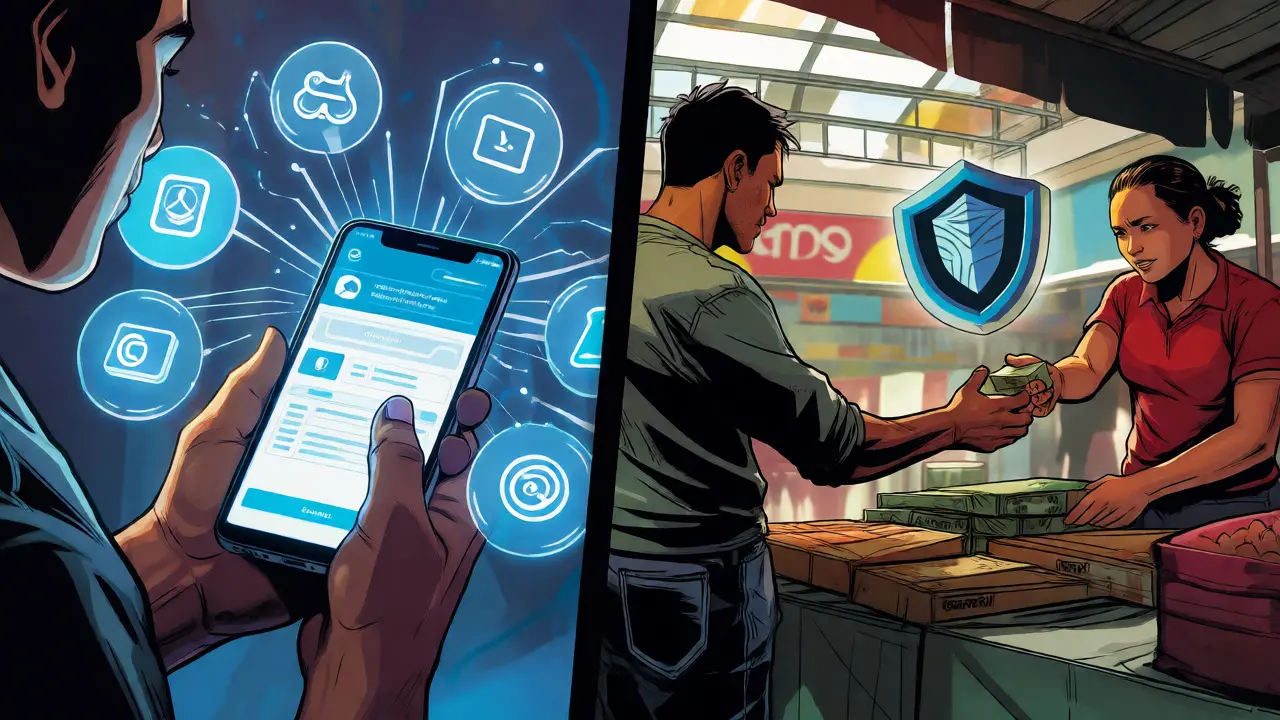
So, where does the "restriction" narrative come from? It comes from specific limitations placed on traditional financial institutions. The SFC has reminded supervised entities-like traditional banks and insurance companies-that they are not authorized to hold custody of crypto, invest in it, or facilitate transactions involving digital assets directly on their balance sheets.
This creates a two-tier system. Traditional banks can’t offer crypto services directly (unless through subsidiaries like Wenia). This restricts the *banks*, not the *people*. For the average citizen, this actually helps. It forces innovation outside the rigid banking sector, leading to specialized fintechs that are faster and more user-friendly. However, it does mean you can’t just walk into a branch and ask your teller to buy Bitcoin for you using your savings account directly without some intermediate steps.
Another layer of "restriction" is tax compliance. The National Directorate of Taxes and Customs (DIAN) treats crypto gains as taxable income. If you sell crypto for a profit, you owe capital gains tax. This isn’t a barrier to entry, but it is a barrier to ignorance. Many early adopters ignored taxes. Now, with stricter reporting thresholds, failing to declare holdings can lead to fines. The restriction here is administrative: you must keep records. No record, no proof, potential trouble.
Regulatory Sandbox and Compliance Hurdles
For businesses, the environment is tighter. The SFC ran a regulatory sandbox starting in 2021, which expired in December 2023. During this period, companies could test innovative models under supervision. While this sounds helpful, it also meant strict oversight. Any new stablecoin business model now needs to navigate these expectations carefully.
Compliance costs money. Fines for Anti-Money Laundering (AML) violations exceeded USD 1.5 million in recent years. This scares off smaller, less capitalized exchanges. As a result, the market is consolidating. Only well-funded players can afford the robust KYC workflows required to stay compliant. For the user, this means fewer scammy platforms but also fewer niche altcoins available on regulated local sites compared to global giants.
Here is a quick look at the compliance landscape affecting access:
| Method | Speed | Fees | Regulatory Risk | Best For |
|---|---|---|---|---|
| Local Exchange (e.g., Wenia) | Instant | Low-Medium | Low (Licensed) | Beginners & Daily Traders |
| P2P (Binance/Luno) | Fast | Variable | Medium (Self-managed) | Liquidity & Specific Coins |
| International Wire | Slow (1-3 days) | High | Medium (Bank flags) | Large Institutional Transfers |
| Crypto ATM | Instant | High | Low | Cash Users / Anonymity |

Mining: Legal but Not Free-for-All
You might hear rumors that mining is banned. False. Mining is explicitly legal. But it is regulated. The 2023 framework outlines registration processes, environmental compliance, and taxation. This ended the wild west era where anyone could plug in rigs without permission.
Why does this matter for access? Because legitimate mining operations stabilize the network and attract investment. Regions with mining facilities report increased employment and infrastructure development. A startup in Bogotá leveraging low electricity costs operates openly. This legitimacy reassures retail investors that the underlying technology is supported by the state, not fought against it. If you want to mine, you register. You pay taxes. You follow environmental rules. Done.
The Future: Formalization Over Friction
Looking ahead to 2026 and beyond, the trend is clear: formalization. The approval of Bill 510 aims to create a safe harbor for VASPs. This will likely lead to more integration between traditional finance and crypto. Imagine being able to take out a loan against your Bitcoin collateral from a Colombian bank within the next two years. That is the direction we are heading.
However, challenges remain. The Central Bank maintains that crypto is not money. This definitional stance prevents crypto from being used for everyday settlements at the national level. You can buy coffee with Bitcoin if the merchant accepts it, but the merchant converts it to COP immediately due to volatility and accounting rules. This limits the utility of holding crypto as a daily currency, pushing most users to treat it as an investment asset instead.
For Colombians, the "restriction" isn’t about being locked out. It’s about adapting to a maturing market. The days of anonymous, unregulated freedom are fading. In their place is a structured, taxed, and monitored ecosystem. It’s less exciting, maybe, but it’s safer. And for a country where inflation has historically eroded savings, safety is worth paying for.
Is Bitcoin legal in Colombia?
Yes, buying, selling, and holding Bitcoin is completely legal. However, it is not considered legal tender, meaning you cannot demand merchants accept it as payment for goods and services.
Do I have to pay taxes on crypto profits in Colombia?
Yes. Gains from cryptocurrency trading are subject to income tax and capital gains tax depending on whether the activity is classified as personal or corporate. You must report these gains to the DIAN.
Can Colombian banks block my crypto transfers?
Banks may flag or reject large or frequent transfers related to crypto due to internal compliance policies, even if not legally prohibited. Using local exchanges that support local payment apps like Nequi reduces this risk significantly.
What is the minimum amount for crypto tax reporting?
While specific thresholds can change, transactions above USD 150 generally trigger suspicious transaction reporting requirements for service providers. Individual taxpayers should consult a local accountant for precise filing thresholds based on annual income levels.
Are there local Colombian crypto exchanges?
Yes, notable local platforms include Wenia (backed by Bancolombia) and LuloX. These platforms offer direct integration with Colombian bank accounts and digital wallets, simplifying the on-ramp process.






This is a very well-structured analysis, and I appreciate the clarity regarding Bill 510. It is crucial to distinguish between regulatory friction and outright prohibition, as many people conflate the two concepts frequently. The integration of local payment methods like Nequi is indeed a game-changer for accessibility.
Oh please, spare me the corporate sanitized narrative! You act as if "regulation" isn't just another word for government overreach creeping into every corner of our financial lives. They say it's not a ban, but when your bank flags a simple transfer because a bureaucrat in Bogotá decided so, that feels like a soft ban to me. This whole "formalization" thing is just a way to track every single satoshi you hold until they can tax it into oblivion. Don't believe the hype about safety; safety is what they tell you while they strip away your anonymity!
Actually, if you read the fine print of the SFC guidelines from 2023, you'll see that the distinction between custody and facilitation is legally massive. Most people miss this nuance because they are too busy complaining about fees. The fact that Bancolombia launched Wenia proves that traditional finance is capitulating to crypto demand, not fighting it. It’s literally the smartest move they could make to retain capital flight.
Is it though? Or is it just... performance art? We regulate to feel safe, yet we trade volatile assets to feel alive. It’s a paradox wrapped in a blockchain. But sure, let's pretend that "legal certainty" actually exists in a market driven by pure speculation. ;)
this is super helpful info!! i had no idea wenia was backed by bancolombia lol. makes way more sense now why my friend in medellin uses it instead of binance p2p all the time
I found this article to be remarkably balanced and informative. It respectfully addresses the common misconceptions without being dismissive of the user experience challenges. The explanation of the two-tier system is particularly insightful for those new to the region's financial landscape.
Hey everyone! 👋 I really enjoyed reading this. It’s cool to see how Colombia is handling things differently than other places. Do any of you have experience with LuloX? I’ve heard mixed reviews on their customer support, but maybe that’s just old news now? 😊
You’re missing the bigger picture here!!! The consolidation of exchanges isn't accidental-it's engineered!!! When compliance costs hit $1.5 million in fines, who benefits? The big players who can absorb that cost while killing off the little guys!!! This isn't regulation; it's an oligopoly forming right before our eyes!!! And don't get me started on the Central Bank's stance on money definition-it's a control mechanism, plain and simple!!! Wake up!!!
The epistemological shift from viewing crypto as a speculative asset to a regulated commodity is fascinating. One must consider the ontological status of digital assets within a sovereign framework. If the state defines the rules of engagement, does the decentralization inherent in blockchain technology survive the imposition of centralized licensing? It seems we are witnessing the colonization of the digital frontier by bureaucratic imperatives.
It is high time we acknowledge the moral responsibility here. People need to stop treating crypto like a lottery ticket and start treating it like an investment that requires due diligence. 🙏 If you aren't keeping records, you are basically stealing from the public trust. We should be ashamed of the early adopters who ignored taxes while regular folks paid theirs. 📉
Oh, look at Mr. Know-It-All over here quoting 2023 guidelines like he wrote them himself. You're just parroting the propaganda. The "nuance" you talk about is just lawyers making sure the banks get their cut while pretending to protect the little guy. Typical.
Parroting? I'm citing facts. You're just emotional. The legal distinction matters because it dictates liability. If you don't understand that, you shouldn't be trading. Simple as that.
Wow, Andy, calm down. Not everything is a conspiracy. Sometimes a rule is just a rule. Though I will admit, the fee structure on some of these "regulated" platforms is... generous to the operators. But hey, at least you won't lose your life savings to a rug pull, right?
teh complince costs r killin small exchagnes. its sad but real. if u cant afford teh legal team u dont exist. simple biz model.
One must maintain a certain standard of discourse. While the sentiment regarding consolidation is valid, the tone used by some respondents lacks professional decorum. The transition to formalized VASPs is a necessary evolution for institutional adoption, regardless of personal feelings toward bureaucracy.
It is truly profound to observe how the metaphysical concept of value is being anchored by terrestrial laws. The drama of the debate pales in comparison to the quiet, inexorable march of regulatory capture. We are watching the death of wild west idealism in real-time, and it is both tragic and inevitable.
To add to the point about P2P markets: while they offer flexibility, users must be extremely careful with counterparty risk. Since the platform doesn't always escrow fiat payments in the same way it does crypto, disputes can be messy. It’s worth noting that local consumer protection laws might not cover P2P transactions the same way they do licensed exchange transactions. Always verify the reputation score thoroughly.