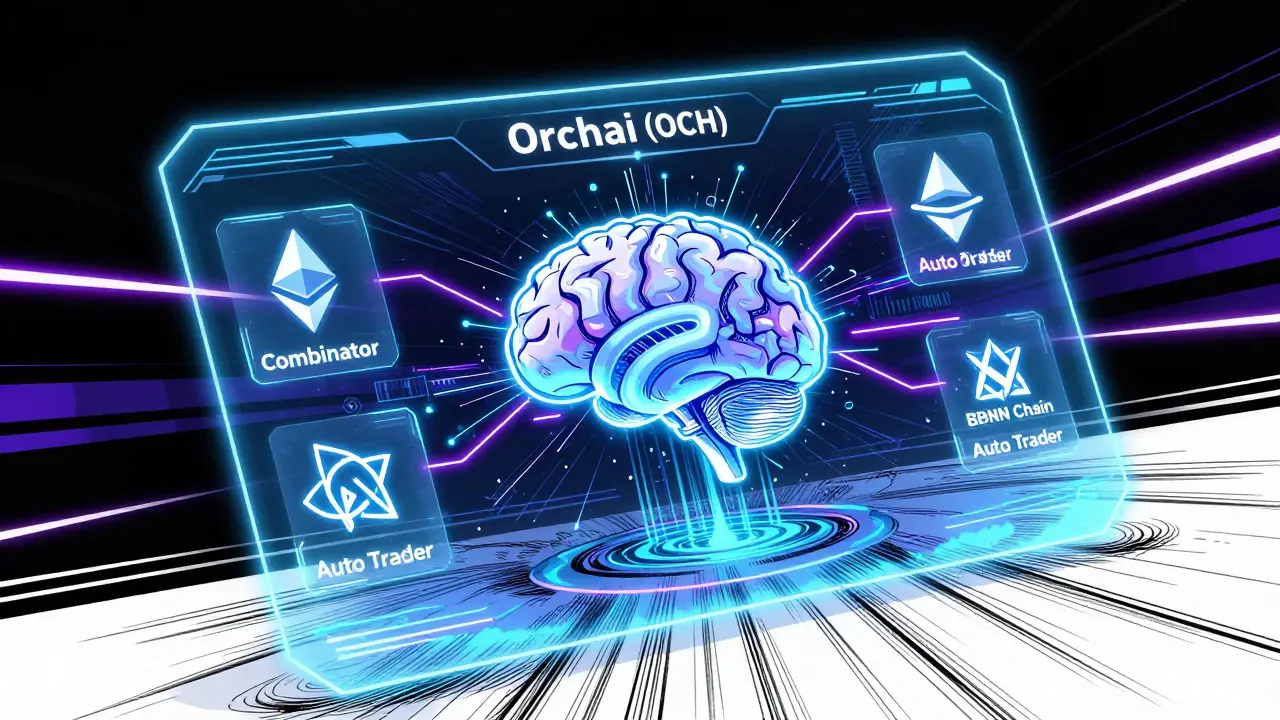
What is Orchai (OCH) Crypto Coin? A 2026 Reality Check
Remember when every new crypto project promised to change the world with artificial intelligence? If you’ve been in the space for a few years, you’ve seen that cycle repeat. Now, let’s talk about Orchai (OCH), a project that fits right into that narrative. Launched in February 2024, Orchai positioned itself as an AI-powered, low-code decentralized finance (DeFi) platform. The pitch was simple: use AI to make complex DeFi strategies accessible to everyone without needing to write code.
But here we are in mid-2026, and the reality on the ground looks very different from the initial hype. You might be wondering if OCH is still worth your attention or if it’s just another ghost town in the crypto graveyard. This article breaks down exactly what Orchai is, how its technology actually works, and-more importantly-the hard truths about its market performance, liquidity issues, and future viability based on data available through July 2026.
The Core Concept: What Exactly Is Orchai?
To understand Orchai, you have to look past the buzzwords. At its heart, Orchai is a cross-chain DeFi orchestrator designed to simplify asset management using artificial intelligence. It wasn’t built to be a general-purpose blockchain like Ethereum or Solana. Instead, it acts as a layer on top of existing networks to help users move money and manage investments more efficiently.
The team behind Orchai identified a major pain point in DeFi: fragmentation. Your assets might be stuck on one chain while better yields exist on another. Moving them manually is slow, expensive, and risky for beginners. Orchai aims to solve this by providing a "low-code" interface. Think of it like a drag-and-drop builder for financial strategies. You don’t need to know Solidity or Rust; you just tell the AI what you want to achieve, and it executes the strategy across multiple chains.
The platform supports six major networks: Oraichain, Ethereum, BNB Chain, Osmosis, Tron Mainnet, and Cosmos Hub. This multi-chain approach is crucial because it allows the AI to scan these different ecosystems for the best opportunities. However, supporting multiple chains also introduces complexity, which brings us to the specific tools Orchai offers.
Key Features and Tools
Orchai isn’t just a wallet; it’s a suite of tools designed to automate parts of your DeFi experience. Here are the three main pillars of their offering:
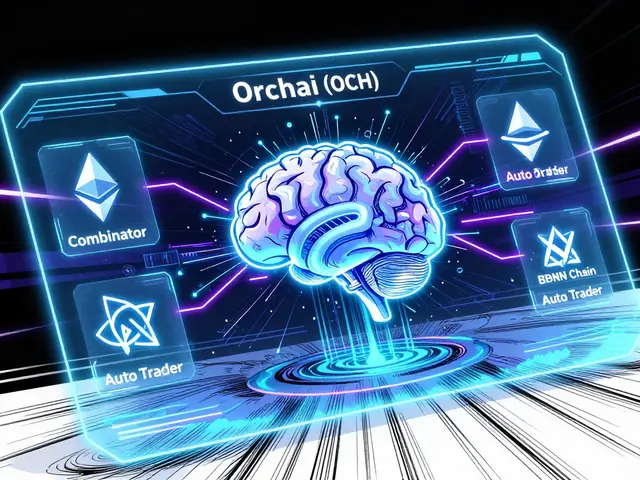
- Combinator: This is the flagship AI tool. It analyzes market conditions and suggests portfolio adjustments. The marketing materials claimed potential APRs up to 900%, but as we’ll see later, real-world results were far more modest. It essentially acts as an automated portfolio manager.
- Auto Trader: For those who want hands-off trading, this feature uses market-aware algorithms to execute trades automatically. It’s designed to react faster than a human could, capitalizing on small price discrepancies across exchanges.
- Alert Hub: DeFi moves fast. Missing a flash loan opportunity or a sudden price drop can cost you dearly. Alert Hub provides real-time notifications so you stay informed without staring at charts all day.
Beyond these tools, Orchai operates two core protocols: Liquid Staking and Money Market. Liquid Staking allows you to stake assets and receive a tokenized version (sAssets) that you can use as collateral to borrow USDT. The Money Market lets you deposit stablecoins to earn interest or borrow against your holdings. These features mimic traditional banking services but in a decentralized environment.
Tokenomics: How Does OCH Work?
The OCH token is the fuel that powers the Orchai ecosystem. Understanding its utility is key to evaluating its value. Unlike meme coins that rely solely on speculation, OCH has defined functional roles within the platform.
| Function | Description | User Benefit |
|---|---|---|
| Co-Harvest | An auction mechanism for discounted stablecoins. | Users can buy stablecoins below market rate, reducing entry costs. |
| Reward (xOCH) | A reward token convertible 1:1 with OCH. | Incentivizes participation in protocols and governance. |
| Payment | Used to pay for platform fees. | Holding OCH reduces transaction costs on the platform. |
| DAO Governance | Voting rights on protocol upgrades and profit sharing. | Gives holders a say in the project's direction. |
The total supply of OCH is capped at 20,000,000 tokens. When it launched on February 22, 2024, the initial listing price was $0.40. Technically, it operates as an ERC-20 token on Ethereum, which means you can hold it in standard wallets like MetaMask or Trust Wallet. However, scarcity doesn't guarantee value if there’s no demand-and that’s where things get tricky for Orchai.
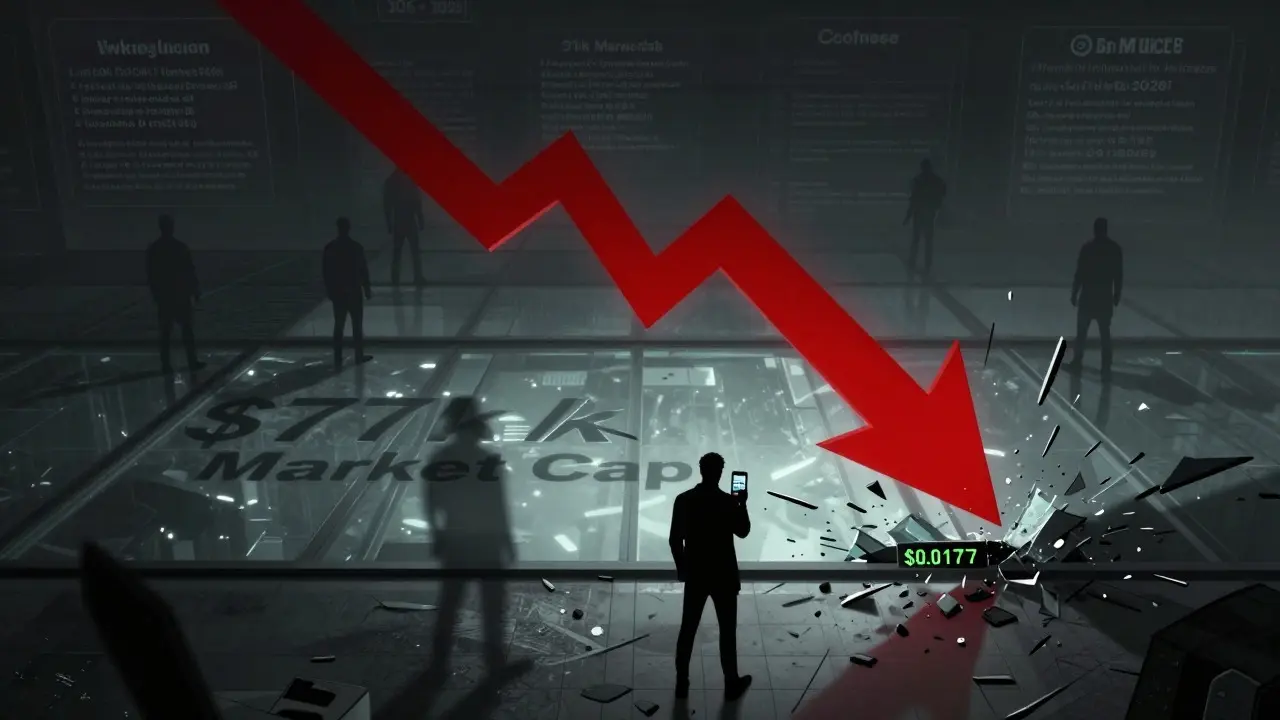
Market Reality: The 2026 Performance Check
This is the part most promotional articles skip. Let’s look at the numbers. As of early 2026, Orchai’s market position is precarious. According to data from CoinMarketCap and holder.io, OCH ranks around #7868 globally. Its market capitalization hovers near $77,000-a fraction of major competitors like Uniswap ($3.2 billion) or Aave ($1.1 billion).
The price action tells a sobering story. After reaching an all-time high of $2.04 in April 2024, driven by initial hype and limited liquidity, the token crashed. By January 2026, it was trading around $0.0177, representing a decline of over 95% from its peak. In July 2026, the situation remains similar, with prices fluctuating between $0.01 and $0.03 depending on minor trade spikes.
Why such a drop? Several factors contribute:
- Extreme Low Liquidity: Trading volume is often reported as near zero. On some days, total volume across all exchanges is less than $50. This makes buying or selling significant amounts nearly impossible without causing massive slippage (price impact).
- Limited Exchange Presence: OCH is primarily traded on Uniswap v3. It lacks listings on major centralized exchanges like Binance, Coinbase, or Kraken, which limits accessibility for retail investors.
- Centralization Risks: Etherscan analysis shows that the top 10 wallets control roughly 47.3% of the circulating supply. This concentration gives a small group disproportionate power over the token’s price.
For context, industry analysts note that projects with sub-$100K market caps face an 82% failure rate within 24 months of launch. Orchai has survived past that mark, but its survival doesn’t equate to success-it often means stagnation.
User Experience and Community Feedback
If you’re considering using Orchai, you need to know what actual users are saying. Reviews are scarce, but the ones that exist paint a mixed picture. On Reddit’s r/CryptoMoonShots, discussions from late 2025 revealed frustration. One user noted, "Tried using their platform but the UI felt unfinished." Another pointed out that the promised 900% APR was marketing hype, with actual stablecoin yields closer to 5%.
Customer support is another pain point. Users report average response times of 72 hours via Discord, and many technical questions go unanswered. For a platform promising ease of use, this lack of support is a red flag. Additionally, the documentation, while comprehensive in theory, lacks detailed troubleshooting guides for common issues like failed transactions or wallet connection errors.
Positive feedback comes mostly from early adopters who bought near the $0.40 launch price and sold during the April 2024 pump. Most current holders describe themselves as "stuck," unable to sell due to illiquidity without taking a significant loss.

How to Buy Orchai (OCH) in 2026
If you decide to take the risk, here’s how you can acquire OCH. Remember, this process involves interacting with a decentralized exchange (DEX), which carries higher risks than using a centralized broker.
- Set Up a Web3 Wallet: Download MetaMask or Trust Wallet. Ensure you have some ETH in your wallet to pay for gas fees on the Ethereum network.
- Add OCH Token Contract: Since OCH isn’t listed on major exchanges, you may need to manually add it to your wallet. Use the official contract address:
0x19373ecbb4b8cc2253d70f2a246fa299303227ba. Double-check this on CoinGecko or CoinMarketCap to avoid scams. - Connect to Uniswap: Go to app.uniswap.org and connect your wallet. Switch to Ethereum Mainnet.
- Swap ETH for OCH: Paste the OCH contract address into the swap field. Enter the amount of ETH you wish to spend. Be aware of slippage settings-you may need to increase them to 5-10% due to low liquidity.
- Confirm Transaction: Review the details carefully. High slippage means you might get fewer tokens than expected. Confirm the transaction in your wallet.
Warning: Due to low liquidity, even small trades can move the price significantly. Always check the pool depth before swapping.
Future Outlook: Roadmap and Challenges
Is Orchai dead? Not technically. The team continues development, with 12 active contributors on GitHub as of early 2026. Their roadmap for 2026 includes integrating Polygon, Avalanche, and Solana, plus a complete UI overhaul scheduled for Q2. They also published a "2025 Wrapped" report detailing yearly metrics, though specific improvements weren’t quantified.
However, the broader market context is challenging. The AI-DeFi sector represented only 3.2% of the $55 billion DeFi market in Q4 2025. Institutional capital is flowing toward established platforms with robust security audits and high Total Value Locked (TVL). Orchai’s TVL sits at approximately $720,000, which is 0.0013% of the total DeFi TVL. Regulatory scrutiny is also increasing, with the SEC’s 2025 guidance potentially classifying tokens with governance functions like OCH as securities.
Experts remain skeptical. Blockchain researcher Mark Mitchell noted that Orchai "lacks the robust security framework of established protocols." Analyst Sarah Chen warned that sub-$100K market cap projects face existential challenges amid regulatory tightening. While the concept of AI-assisted low-code DeFi is innovative, execution and adoption have lagged far behind expectations.
Is Orchai (OCH) a good investment in 2026?
Investing in OCH carries extremely high risk. With a market cap under $100k, minimal liquidity, and a 95% price drop from its peak, it is considered a speculative asset rather than a stable investment. Only allocate funds you can afford to lose entirely.
Where can I buy Orchai tokens?
OCH is primarily available on Uniswap v3 via decentralized exchange swaps. It is not listed on major centralized exchanges like Binance or Coinbase. You will need an Ethereum wallet and ETH for gas fees.
What is the maximum supply of OCH?
The total supply of Orchai (OCH) is capped at 20,000,000 tokens. This fixed supply is designed to create scarcity, but demand remains low as of 2026.
Does Orchai really offer 900% APR?
The 900% APR figure refers to optimal scenarios in their Smart Liquidity feature, not guaranteed returns. Real-world user reports indicate actual yields on stablecoin deposits are closer to 5%. Always verify current rates on the platform before depositing.
Is Orchai safe to use?
Safety depends on your definition. While the smart contracts are live, experts note a lack of robust security audits compared to giants like Aave. Additionally, low liquidity poses a risk of being unable to withdraw funds easily. Exercise caution.