

What is INVITE Token (INVITE)? A Deep Dive into the TON Social Coin
Have you heard whispers about INVITE, a new cryptocurrency popping up in your feed? It’s easy to get swept up in the hype of new tokens, especially when they promise something as simple as getting paid for talking to friends. But before you throw money at it, you need to know what you’re actually holding. The short answer? INVITE is a micro-cap utility token built on The Open Network (TON). It’s designed to reward users for growing communities within the Telegram messaging app.
But here is the catch: it is not Bitcoin. It is not even Toncoin. It is a highly speculative, low-liquidity asset with conflicting data across exchanges. If you are looking for a stable investment, this isn’t it. If you are curious about how social tokens work on TON, keep reading. We will break down exactly what INVITE is, how it works, and why the numbers look so messy right now.
The Core Concept: Social Growth on TON
To understand INVITE, you first have to understand its home. The Open Network (TON) is a blockchain that was originally developed by the team behind Telegram. It is fast, cheap, and integrated directly into the Telegram app through mini-apps and bots. This integration makes it incredibly easy for non-crypto users to interact with blockchain technology without ever leaving their chat interface.
INVITE Token (a fungible jetton on the TON blockchain) was launched on August 6, 2024, specifically to leverage this ease of use. Its stated purpose is to act as a "social growth engine." In plain English, this means INVITE rewards you for bringing other people into specific Telegram groups or TON-based applications.
Think of it like an affiliate marketing program, but instead of cash commissions, you earn crypto tokens. The project claims to serve a Web3 community of over 9 million users. While that number sounds impressive, remember that "community" can mean anything from active daily traders to people who just clicked a link once. There is no independent verification of these user numbers, so take them with a grain of salt.
How Does INVITE Actually Work?
You don’t mine INVITE. You don’t stake it in a traditional sense to secure the network. Instead, you earn it through participation. Here is the typical flow:
- Social Incentives: Users earn INVITE by engaging in community activities. This might include posting in designated channels, sharing content, or participating in events hosted by partner apps.
- Referral Rewards: This is the big one. When you invite a new member to a supported Telegram group or help onboard a user to a TON dApp, you receive INVITE tokens as a reward.
- Utility: Currently, INVITE acts primarily as a medium of exchange within these specific ecosystems. It is used to incentivize behavior rather than governing a protocol or securing a network.
Technically, INVITE is a "jetton." On the TON blockchain, a jetton is the standard format for fungible tokens. Just like ERC-20 tokens live on Ethereum, jettons live on TON. They are smart contracts that track balances and handle transfers. This means INVITE inherits the security and speed of the TON mainnet, which is generally considered robust.
The Data Problem: Why Numbers Don’t Match
If you try to research INVITE, you will hit a wall immediately. The data is inconsistent. This is common for micro-cap coins, but it is worth highlighting because it affects your ability to make informed decisions.
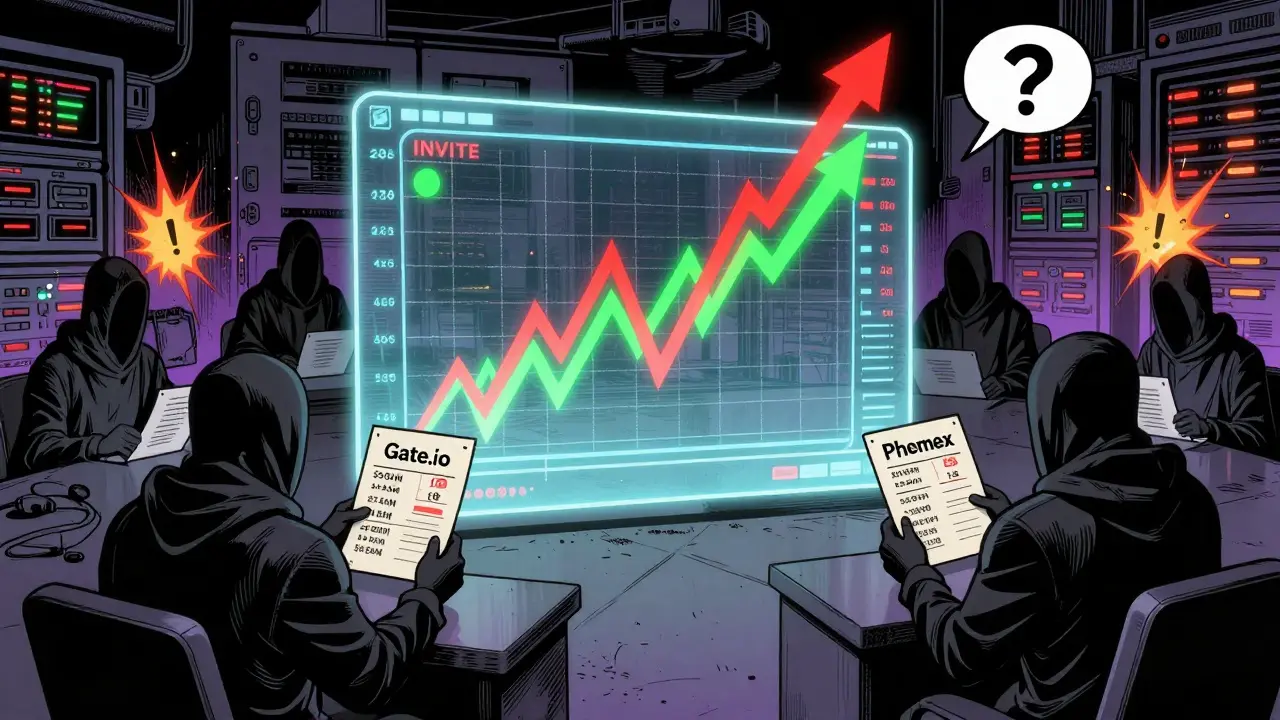
Let’s look at the supply. One major exchange, Gate.com, lists a circulating supply of 50 million INVITE and a maximum supply of 1 billion. Another platform, Phemex, agrees on the 50 million circulating figure but claims the total supply is only 500 million. Other aggregators show zero circulating supply or conflicting all-time highs. This discrepancy suggests that either the tokenomics are poorly documented, or different exchanges are tracking different versions of the token.
Then there is the price history. Most sources agree that INVITE had an all-time high (ATH) around $0.0138 in late August 2024. However, some trackers list an ATH closer to $0.0767. Why the difference? Likely due to outlier trades on thin order books. When liquidity is low, a single large buy or sell order can spike the price dramatically, creating a false high that never reflects real market value.
| Metric | Gate.com | Phemex | Coinbase |
|---|---|---|---|
| Circulating Supply | 50,000,000 | 50,000,000 | Varies / Unlisted |
| Max Supply | 1,000,000,000 | 500,000,000 | N/A |
| All-Time High | $0.0138 | $0.0155 | $0.0138 |
| Market Cap Estimate | ~$91,000 | ~$100,000 | Low / Volatile |
This table shows you exactly why due diligence is hard. With a market cap hovering around $100,000, INVITE is a micro-cap asset. To put that in perspective, top cryptocurrencies have market caps in the billions. At this size, a trade of just $1,000 can move the price significantly. This creates extreme volatility.
Risks You Need to Know Before Buying
I am not giving financial advice, but I am telling you what the data says. Investing in INVITE carries significant risks that you should not ignore.
Liquidity Risk: Because the trading volume is low (often under $70,000 per day across all platforms), selling your INVITE could be difficult. If you try to sell a large amount, you might crash the price yourself. This is called slippage, and it can eat up your profits instantly.
Regulatory Uncertainty: INVITE is an unregulated digital asset. It is not registered with any securities commission. In countries like the US or EU, regulations around crypto are tightening. Tokens that rely heavily on referral incentives could potentially face scrutiny if regulators decide they resemble unregistered securities or pyramid schemes. Always check your local laws.
Team Anonymity: Unlike established projects with public teams and audited code, INVITE lacks clear attribution. No major exchange listing page names the founders or the development company. This anonymity is common in early-stage crypto but increases the risk of rug pulls or abandoned projects. If the developers disappear, your tokens become worthless.
Data Reliability: As we saw above, the basic stats are wrong on many sites. If you cannot trust the supply count or the historical price, how can you trust the future projections? Treat any claim of guaranteed returns with extreme skepticism.

How to Buy INVITE Token
If you still want to proceed after understanding the risks, here is how you typically acquire INVITE. Since it is not listed on tier-1 exchanges like Binance for direct spot trading, you have limited options.
- Choose a Supported Exchange: Currently, Gate.io and Phemex are among the few centralized exchanges that list INVITE. Create an account and complete identity verification (KYC).
- Deposit Funds: Deposit fiat currency (like USD or EUR) or another cryptocurrency (like USDT or TON) into your exchange wallet.
- Place an Order: Find the INVITE trading pair. Because liquidity is low, use limit orders rather than market orders to avoid bad slippage. Set the price you are willing to pay.
- Withdraw to a Wallet: For better security, withdraw your INVITE to a personal TON wallet that supports jettons, such as Tonkeeper or Wallet by Tonkeeper. Never leave large amounts on an exchange.
Note that you can also find INVITE on decentralized exchanges (DEXs) within the TON ecosystem, but these require more technical knowledge and carry higher risks of interacting with malicious contracts.
Is INVITE Worth Your Attention?
So, where does this leave us? INVITE is a fascinating experiment in social tokenomics. It tries to solve the cold-start problem for new communities by rewarding early adopters. In theory, this creates a virtuous cycle of growth. In practice, it is a high-risk gamble.
Compared to giants like Notcoin or Toncoin, INVITE has negligible market presence. It lacks institutional backing, clear team leadership, and verified user metrics. However, if you believe in the long-term growth of the Telegram/TON ecosystem and want to bet on early-stage social tools, INVITE offers exposure to that niche.
Just remember: this is not investing; this is speculation. Only spend what you are comfortable losing entirely. Do not chase green candles based on FOMO (Fear Of Missing Out). Look at the fundamentals, check the liquidity, and stay safe.
What is the contract address for INVITE Token?
The contract address for INVITE on the TON blockchain is EQArj5fhHcPz-ljkMBNcduQhiO8Wl4JmFX_9a-25DfUMQhxK. Always double-check this address against multiple reliable sources before sending funds to avoid scams.
Can I buy INVITE on Binance?
Binance tracks the price of INVITE but does not currently list it for direct spot trading. You will need to use other exchanges like Gate.io or Phemex to buy and sell the token.
Why is the INVITE price so volatile?
INVITE is a micro-cap token with low liquidity. This means there are fewer buyers and sellers in the market. Small trades can cause large percentage swings in price, leading to high volatility.
Who created the INVITE Token?
The specific founders or development team behind INVITE are not publicly named on major exchange listings. This lack of transparency is a common risk factor for early-stage crypto projects.
Is INVITE a meme coin?
No, INVITE is classified as a utility token focused on social growth and community engagement within the TON ecosystem. It is not a meme coin driven purely by internet humor or viral trends.
What is the maximum supply of INVITE?
There is conflicting data. Gate.com lists a max supply of 1 billion tokens, while Phemex lists 500 million. Investors should monitor official announcements for clarification on the final supply cap.
How do I earn INVITE tokens?
You can earn INVITE by participating in community activities, inviting new users to supported Telegram groups, and engaging with partner TON-based applications. Check the official INVITE channels for current campaigns.
Is INVITE safe to store?
As a jetton on the TON blockchain, INVITE is secured by TON's consensus mechanism. However, you must store it in a compatible wallet like Tonkeeper. Ensure you back up your seed phrase securely to prevent loss.




Hey everyone, just wanted to drop a quick tip for anyone looking into this 🚀 The liquidity situation is real though so make sure you use limit orders on Gate.io or Phemex if you decide to buy. Don't let slippage eat your gains! 💸
Oh great another social token promising the moon while hiding behind 'community growth' metrics that are basically made up. I've seen this movie before and it always ends with a rug pull. The anonymity of the team is the biggest red flag here, really.
look at the bigger picture here we are not just talking about a coin but about the evolution of social interaction in the digital age where every click and share has potential value if we can trust the underlying infrastructure which is TON and that is solid technology wise even if the tokenomics are messy right now we need to support innovation rather than dismiss it outright because progress requires risk and understanding the mechanics of jettons is key to unlocking the future of decentralized social networks
the fact that it integrates with Telegram is huge for adoption since billions of people already use it daily so the barrier to entry is low which is good for users who might be intimidated by traditional crypto interfaces
we should focus on how this changes the paradigm of affiliate marketing from cash commissions to crypto tokens which creates a new economy of attention and engagement that could potentially reward creators more fairly than current platforms do
it is important to remember that early stage projects always have data discrepancies and volatility as they find their footing in the market so patience and due diligence are essential virtues for any investor looking to participate in this space
i believe that the long term vision of rewarding community building is sound even if the execution needs refinement and transparency improvements from the development team to ensure trust and sustainability for all participants involved
I actually think this is a cool experiment honestly. People always complain about Web3 being too technical but if you can just earn tokens by inviting friends to a Telegram group that sounds pretty accessible to me. Not saying it's safe but it's interesting.
you idiots are falling for the same scam again. look at the supply discrepancy one site says 1 billion another says 500 million. this is classic rug pull behavior where they manipulate the circulating supply to artificially inflate the price. don't be sheep
Just keep it simple folks. If you can't verify the team or the numbers stay away. It's that easy.
The silence from the developers is deafening isn't it? They hide behind the veil of 'decentralization' while hoarding the keys to the kingdom. I suspect this whole thing is a front for money laundering within the Telegram ecosystem using the cover of 'social incentives'. Watch out for the quiet exit.
one must consider the profound implications of such unregulated entities operating within the digital sphere without oversight or accountability mechanisms in place to protect the innocent investors who are lured in by false promises of wealth through mere social interaction which is fundamentally flawed logic
the lack of punctuation in my previous sentence was intentional to show how chaotic the market is right now with no rules or structure guiding these so called innovations that promise nothing but chaos and loss for those who dare to engage with them
it is imperative that we demand higher standards from these projects before we allow them to proliferate and cause harm to the broader cryptocurrency ecosystem which has suffered enough from reckless actors seeking quick profits at the expense of others
lol nobody cares about this microcap trash. the price action is garbage and the volume is non existent. stop wasting time on this shit coin and go trade something real like BTC or ETH. ur losing money by reading this
I appreciate the detailed breakdown here. It's helpful to see the risks laid out clearly before making any decisions. I'm definitely going to stick to major exchanges for now until there's more clarity on the team behind INVITE.
Let's bring everyone together on this topic because understanding how these social tokens work is crucial for our collective financial literacy in the crypto space. We should all take the time to read the whitepaper and check the official channels for verified information instead of relying on rumors.
i feel like the regulatory uncertainty mentioned here is the most significant factor to consider moving forward especially with the SEC cracking down on similar projects that resemble securities. it would be wise to consult legal counsel before investing any meaningful amount
It is important to maintain respectful discourse when discussing high-risk assets like this. While the skepticism is warranted given the anonymous team and data inconsistencies, we should also acknowledge the innovative approach to integrating blockchain with social media platforms. Let us continue to monitor the project developments closely and share verified information to help the community make informed decisions.