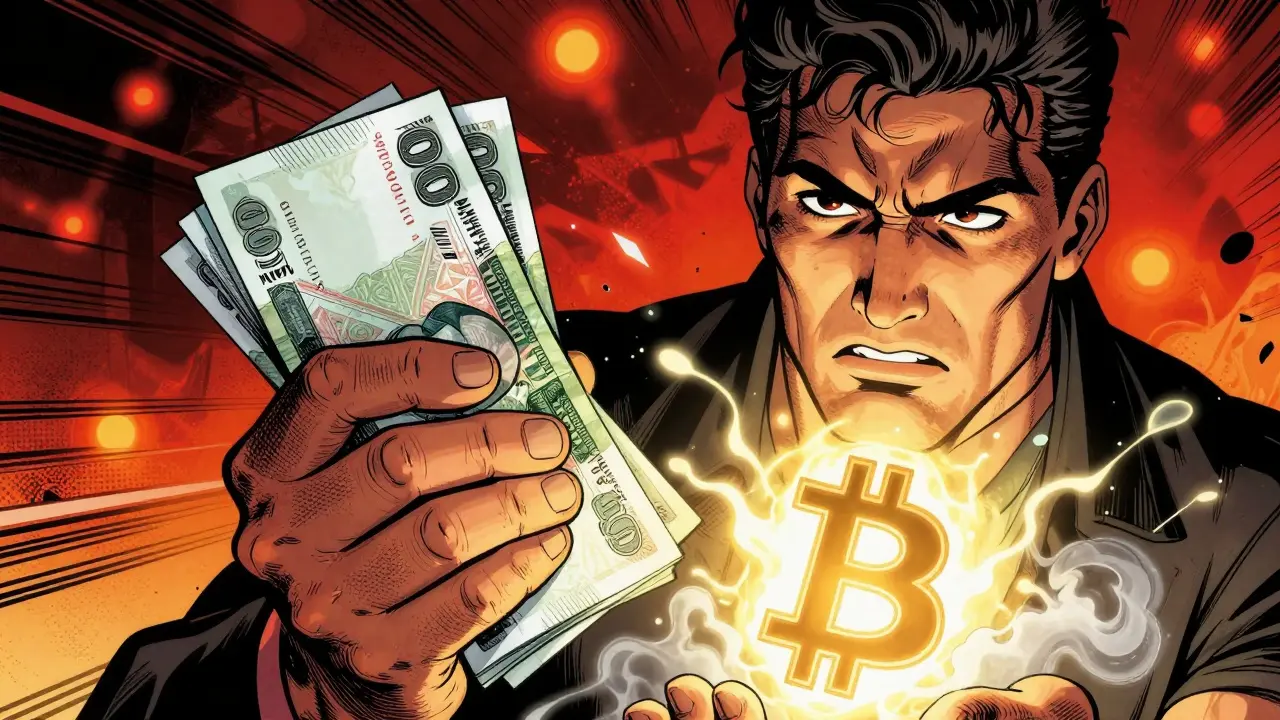
$4.18 Billion Crypto Outflows from Iran in 2024: Why Citizens Fled to Bitcoin
Imagine losing nearly 90% of your life savings because the currency in your pocket stopped holding value. For millions of Iranians in 2024, this wasn’t a hypothetical nightmare-it was daily reality. As inflation skyrocketed and geopolitical tensions flared, ordinary citizens didn’t just watch their wealth vanish; they moved it. And they did so at record-breaking speeds. According to a comprehensive report by Chainalysis, a leading blockchain analytics firm based in New York, Iranian residents sent $4.18 billion worth of cryptocurrency out of the country in 2024 alone. That’s a staggering 70% increase compared to the previous year.
This isn’t just about tech-savvy traders making quick profits. It’s about survival. This massive capital flight represents what experts call an "alternative financial system" built not by governments or criminal syndicates, but by everyday people desperate to preserve their purchasing power against a collapsing economy and intensifying international sanctions.
The Human Story Behind the Numbers
When we look at the $4.18 billion figure, it’s easy to get lost in the macroeconomics. But strip away the charts, and you find individual stories of resilience and fear. The Iranian rial had been on a downward spiral since U.S. sanctions intensified in 2018, but by 2024, the situation became untenable for the average household. With inflation rates hovering between 40% and 50%, keeping money in local banks meant watching it evaporate.
Citizens turned to Bitcoin, the world's largest cryptocurrency by market cap as a lifeline. Unlike traditional banking channels, which were heavily restricted or monitored, crypto offered a way to move value across borders without permission. Reddit forums in Persian and Telegram groups with over 100,000 members became informal support networks. Users shared tips on how to convert rials to stablecoins or Bitcoin, often describing these digital assets as "digital gold" or "escape money." For students abroad, crypto became the only reliable way to pay tuition when wire transfers were blocked. For small business owners, it was the key to importing goods through intermediary countries. This wasn't ideological adoption; it was economic necessity.
Geopolitics and Market Spikes
If you think crypto markets are purely driven by speculation, look closer at Iran’s timeline in 2024. The data reveals a direct link between real-world conflict and digital asset movement. Chainalysis identified specific dates where outflows spiked dramatically, mirroring major geopolitical events.
- April 9-14, 2024: Following the Israeli bombing of the Iranian Embassy in Damascus and subsequent retaliatory strikes, there was a sharp surge in crypto transactions.
- Late September to Early October 2024: Escalated tensions between Iran and Israel triggered another wave of capital flight.
Google Trends data confirmed this pattern. Global searches for "Iran Israel" peaked on April 14 and October 1, aligning perfectly with blockchain-recorded spikes in capital movement. When the news broke that war might be imminent, Iranians rushed to convert their local currency into Bitcoin. It wasn’t about betting on price appreciation; it was about hedging against total economic collapse. Smaller transactions under $1,000 saw the steepest decline in platform access during these periods, indicating that retail investors-regular families-were fleeing faster than large institutional players.

How Different Is Iran From Other Sanctioned Nations?
You might wonder if this is unique to Iran. While other sanctioned nations like Russia, North Korea, and Venezuela have also turned to crypto, Iran’s story has distinct characteristics. Let’s break down the differences.
| Country | Primary Driver | Nature of Activity | Key Difference |
|---|---|---|---|
| Iran | Wealth Preservation | Retail-driven capital flight | Highest proportion relative to GDP; citizen-led |
| Russia | Sanctions Circumvention | Mixed retail and corporate | More state-backed trade facilitation |
| North Korea | Revenue Generation | State-sponsored hacking/theft | Illicit operations rather than voluntary investment |
| Venezuela | Hyperinflation Hedge | Retail survival strategy | Similar motive, but lower absolute volume than Iran |
Iran’s approach is particularly notable because it was largely organic. While North Korea uses crypto for cyber-heists and Russia leverages it for state trade, Iran’s ecosystem developed around domestic exchanges like Nobitex, Wallex, and Ramzinex. These platforms facilitated massive trading volumes until government crackdowns in late 2024 forced them to submit detailed user data to the Central Bank. Even then, the demand remained so high that users found workarounds using VPNs and decentralized platforms.
The Government’s Contradictory Stance
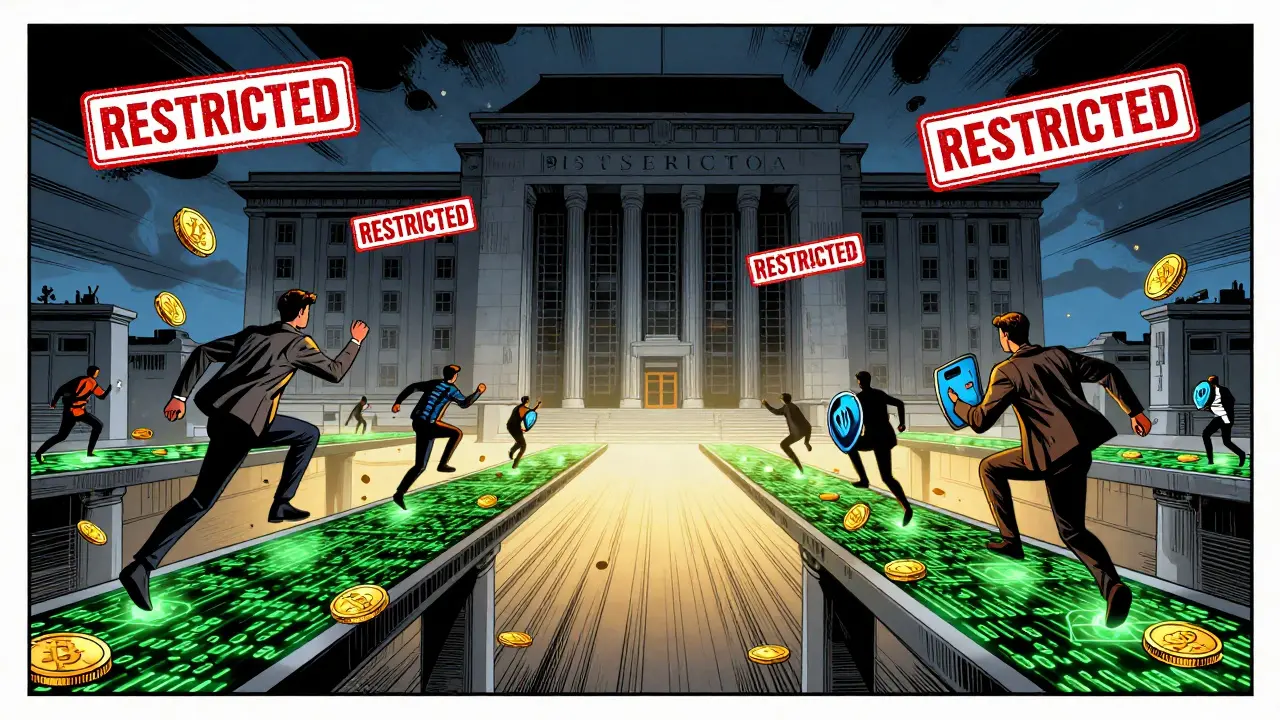
Here’s the twist: the Iranian government hates and loves crypto at the same time. On one hand, they view uncontrolled capital flight as a threat to national stability. In November and December 2024, authorities imposed strict licensing requirements on all cryptocurrency platforms, demanding full transparency of user orders and trade data. This created a chilling effect on privacy-conscious users who feared surveillance.
On the other hand, the state sees opportunity. Iran has invested heavily in Cryptocurrency Mining, the process of validating transactions and securing the blockchain network to generate revenue in hard currencies like USD or EUR. By leveraging cheap energy resources, the government aims to earn foreign income despite sanctions. However, frequent power outages and restrictions on importing mining hardware limit scalability. So while citizens use crypto to escape the system, the state tries to harness it for profit. This dual-use policy creates constant uncertainty for anyone trying to navigate the market.
Challenges and Risks for Users
It’s not all smooth sailing. Using crypto in Iran comes with significant hurdles. First, there’s the issue of access. International exchanges have tightened compliance measures, reducing exposure to Iranian services by 23% between 2022 and 2024. Many users now rely on Virtual Private Networks (VPNs) and proxy connections to bypass internet restrictions. This adds cost and complexity, especially for those less technologically inclined.
Second, security remains a concern. With domestic exchanges forced to share user data, the risk of account freezes or targeted attacks increases. Users often turn to peer-to-peer (P2P) platforms or decentralized finance (DeFi) protocols to minimize exposure, but these require a higher level of technical knowledge. The learning curve can take anywhere from two weeks for basic transactions to several months for advanced strategies. Mistakes here aren’t just inconvenient-they can mean permanent loss of funds.
What Does This Mean for Global Sanctions?
The sheer scale of Iran’s crypto outflows challenges traditional notions of how sanctions work. Historically, cutting off a country from the SWIFT banking system was supposed to isolate its economy. But blockchain technology operates outside that framework. As Kim Grauer, Director of Research at Chainalysis, noted, these outflows reflect "deepening distrust in government" rather than coordinated evasion efforts. The more pressure applied, the more innovative citizens become in finding alternatives.
In response, global regulators are stepping up. The U.S. Treasury Department’s Office of Foreign Assets Control (OFAC) issued new enforcement actions in 2025 targeting Iranian-linked financial networks. Compliance costs for crypto exchanges rose by 40-60% specifically to monitor Iranian and Russian transactions. Yet, despite these efforts, enforcement remains limited by the decentralized nature of blockchain. Privacy-enhancing technologies continue to evolve, making exact tracking increasingly difficult.
Looking ahead, the trend shows no signs of slowing. With economic instability persisting and ties deepening between Iran, Russia, and China through alternative financial systems, crypto will likely remain a critical tool for circumventing restrictions. Chainalysis predicts continued growth in outflows through 2025-2026. For ordinary Iranians, this isn’t just a financial strategy-it’s a testament to human adaptability in the face of systemic failure.
Why did Iran see such a huge increase in crypto outflows in 2024?
The 70% year-over-year increase was driven by severe economic conditions, including 40-50% inflation and the Iranian rial losing nearly 90% of its value since 2018. Citizens used cryptocurrency to preserve wealth and bypass international sanctions that restricted traditional banking channels.
Is this crypto activity mostly done by criminals or regular people?
According to Chainalysis, the majority of these outflows are driven by ordinary Iranian citizens seeking financial security, not state-sponsored illicit activities. It represents a grassroots effort to protect savings from hyperinflation and geopolitical instability.
Which cryptocurrencies are most popular in Iran?
Bitcoin dominates the outflow composition due to its status as a store of value. Stablecoins are also widely used for smaller transactions and remittances because they offer price stability compared to volatile assets.
How do Iranians access international crypto exchanges?
Many users rely on VPN services and proxy connections to bypass internet restrictions. Domestic exchanges like Nobitex and Wallex also facilitate trading, though they face increasing regulatory pressure to share user data with authorities.
What is the Iranian government’s stance on cryptocurrency?
The government has a contradictory approach. They restrict citizen access to prevent capital flight and enforce strict licensing on exchanges, yet simultaneously invest in cryptocurrency mining to generate foreign revenue despite sanctions.
Will crypto outflows from Iran continue to grow?
Yes, analysts predict continued growth through 2025-2026. Persistent economic instability, ongoing sanctions, and improving privacy technologies make cryptocurrency an increasingly attractive option for wealth preservation and cross-border transactions.