What is Inferium (IFR) Crypto? AI Model Verification & Proof of Inference
You’ve probably heard the hype about Inferium (IFR). It’s one of those new tokens that promises to fix a massive headache in the tech world: how do you know if an AI model actually works before you buy it or use it? If you’re confused by the jargon or wondering if this tiny market cap coin has any real legs, you’re in the right place. We’re going to break down exactly what Inferium does, why its "Proof of Inference" mechanism matters, and whether this project is worth your attention in late 2026.
Quick Summary / Key Takeaways
- The Core Problem: Developers struggle to verify AI models, and users can’t easily find the best tools for specific jobs like medical diagnosis or robotics.
- The Solution: Inferium acts as an AI store and aggregator, using Proof of Inference to create verifiable records of how well AI models perform.
- Token Utility: The IFR token powers the ecosystem, enabling access to premium features, staking, and governance within the platform.
- Market Status: As of November 2026, Inferium remains a micro-cap asset with low liquidity but high potential if it captures the enterprise AI verification niche.
The Gap in the AI Market That Inferium Fills
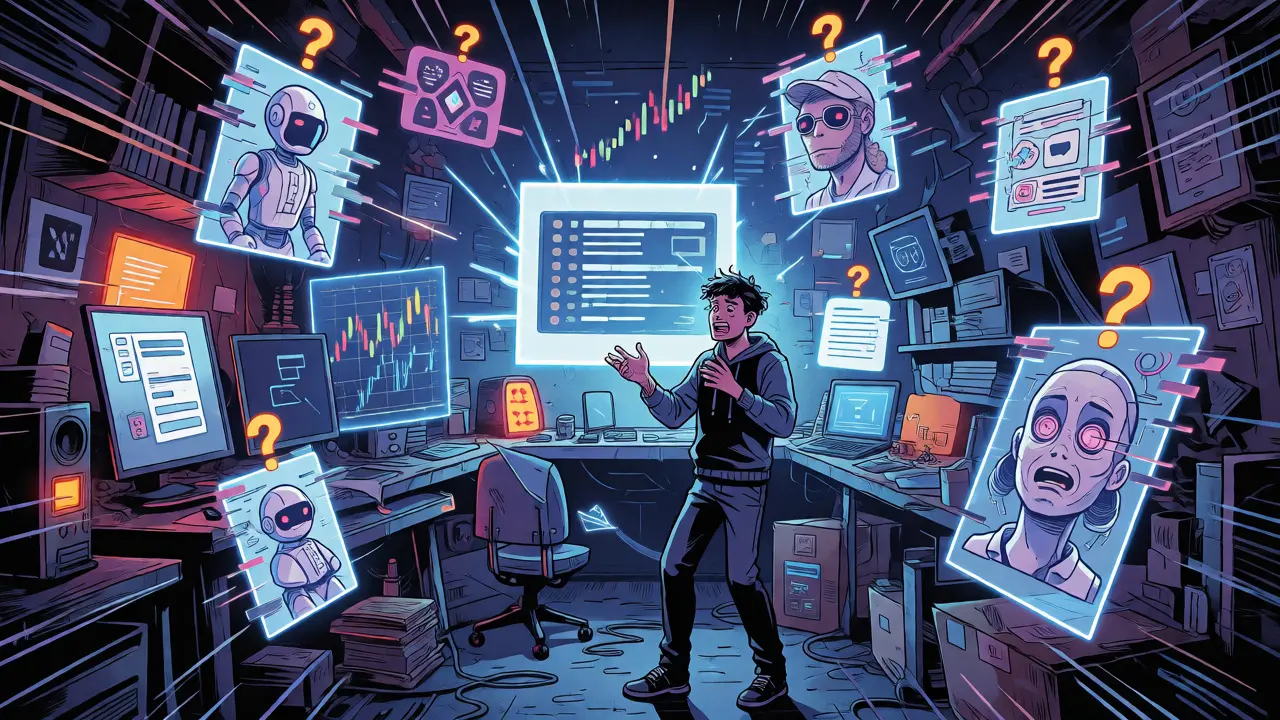
Think about the last time you tried to pick a software tool for your business. Was it easy? Probably not. Now imagine doing that for Artificial Intelligence. There are thousands of AI models out there-some for trading stocks, some for diagnosing diseases, others for controlling robots. But here’s the catch: there’s no standard way to prove these models actually work as advertised. Most platforms just take the developer’s word for it.
This is where Inferium comes in. It functions as a machine-learning-driven intelligent store. Instead of just listing models, it filters them across general and niche categories. You want a model for customer service? Done. Need one for specialized medical symptom diagnosis? They have pre-tested options ready. The platform allows you to compare up to three models side-by-side, giving you hard data on performance rather than vague marketing claims.
For developers, this solves a huge pain point. They get a clear path to list, verify, and deploy their models. For enterprises, it reduces risk. You aren’t gambling on unproven tech; you’re buying into verified performance. This dual-sided utility is the foundation of the project’s value proposition.
Understanding 'Proof of Inference': The Tech Behind IFR
If you only remember one thing about Inferium, let it be this term: Proof of Inference. This isn’t just buzzword soup. It’s the first implementation of a consensus mechanism specifically designed for AI operations.
Here’s how it works in plain English. When an AI model makes a prediction (an inference), Inferium creates a verifiable audit trail. This record proves that the computation happened correctly and transparently. Why does this matter? Because in industries like healthcare or finance, you need accountability. If an AI recommends a treatment plan, you need proof that the underlying logic was sound and tamper-proof.
This mechanism adds a layer of trust that traditional blockchains don’t offer for AI tasks. While Bitcoin secures transactions and Ethereum secures smart contracts, Inferium secures the *results* of artificial intelligence computations. It transforms AI from a "black box" into something auditable and trustworthy.

Tokenomics: Supply, Price, and Where to Buy
Let’s talk numbers, because crypto investors care about supply dynamics. IFR has a fixed total supply of 250,000,000 tokens. No more will ever be created. This scarcity is meant to protect value over time, assuming demand grows.
However, the circulating supply is much lower, hovering around 35 million tokens depending on which tracker you check. This means most tokens are still locked or held by early backers. A low circulating supply relative to total supply can lead to volatility-prices swing wildly when small amounts of volume hit the order books.
| Metric | Value / Status | Notes |
|---|---|---|
| Total Supply | 250,000,000 IFR | Fixed cap, no inflation. |
| Circulating Supply | ~35,000,000 IFR | Varies slightly by exchange reporting. |
| All-Time High | $0.06025 | Reached in June 2025. |
| All-Time Low | $0.005531 | Reached in August 2025. |
| Primary Exchanges | MEXC, Bybit, Binance, Uniswap v3 | Liquidity is concentrated on MEXC. |
Price history shows classic micro-cap behavior. After launching in May 2025, it spiked to $0.06025 in June, then crashed to lows near $0.0055 by August. As of late 2026, it trades in fractions of a cent. Don’t expect stability yet. This is a speculative asset tied closely to the broader AI narrative.
How to Get Involved: Airdrops and Staking
Inferium didn’t start with a traditional presale. Instead, they distributed 100% of the early supply through an airdrop program. This strategy aligned with the launch of their Layer 1 testnet. To qualify, users had to connect Web3 wallets, complete social tasks, and pass identity checks. This approach helped build a community of actual users rather than just speculators.
Now that the token is live, utility is expanding. Early predictions suggested staking would come online around the six-month mark post-listing. If you hold IFR, you might soon earn rewards for securing the network or participating in governance. Keep an eye on the official documentation for staking mechanics, as these details often change rapidly in early-stage projects.
Risks and Reality Check
Is Inferium a safe bet? Let’s be honest: it’s risky. Here’s why:
- Low Liquidity: Trading volumes are thin. On some days, volume drops below $1,000 on certain exchanges. Selling large positions could crash the price temporarily.
- Competition: Big players like Fetch.ai and SingularityNET dominate the AI crypto space. Inferium is a minnow trying to swim with whales.
- Niche Focus: By focusing strictly on verification, it might miss out on broader adoption trends that favor all-in-one AI platforms.
On the flip side, the specialization is also its strength. If enterprises start demanding audited AI results, Inferium could become the go-to standard for compliance. It’s a high-risk, high-reward play on the maturation of the AI industry.

Related Concepts and Future Outlook
To understand where Inferium fits, look at the broader landscape. It sits at the intersection of Blockchain, Artificial Intelligence, and DeFi. Unlike pure DeFi protocols that focus on lending or swapping, Inferium focuses on data integrity and computational proof.
Future developments likely include more enterprise partnerships. Imagine a hospital using Inferium-verified AI for diagnostics. The token facilitates the payment and verification process. If they pull off even a few major B2B deals, the current market cap could look quaint in hindsight.
Frequently Asked Questions
What is the main purpose of the Inferium (IFR) token?
The IFR token serves as the economic backbone of the Inferium ecosystem. It is used to pay for services on the platform, such as accessing premium AI model verification features, staking for network security, and participating in governance decisions regarding the protocol's development.
How does Proof of Inference differ from Proof of Work?
Proof of Work (PoW) validates cryptocurrency transactions by solving complex mathematical puzzles, requiring significant energy. Proof of Inference, unique to Inferium, validates the accuracy and transparency of AI model computations. It creates an audit trail for AI outputs rather than just verifying ledger entries, making it suitable for AI-specific applications.
Where can I buy Inferium (IFR)?
As of late 2026, Inferium is primarily traded on MEXC, which holds the highest volume. It is also listed on Bybit, Binance, and decentralized exchanges like Uniswap v3. Due to low liquidity, it is advisable to check order book depth before executing large trades.
Is Inferium a good investment for beginners?
Generally, no. Inferium is a micro-cap cryptocurrency with high volatility and limited trading volume. Beginners might find it difficult to enter and exit positions without affecting the price. It is better suited for experienced investors who understand the risks associated with early-stage AI blockchain projects.
What sectors benefit most from Inferium's technology?
Sectors requiring high accountability and verified AI performance benefit most. These include healthcare (for diagnostic accuracy), finance (for algorithmic trading verification), and robotics (for safety-critical decision making). Enterprises in these fields need proof that their AI tools operate reliably under scrutiny.
Next Steps for Investors
If you’re considering adding IFR to your portfolio, keep it small. Monitor the development team’s progress on the roadmap, especially regarding enterprise partnerships and staking implementation. Watch for increases in trading volume on MEXC, as this signals growing interest. And always remember: in crypto, narratives drive prices, but utility sustains them. Inferium has a compelling narrative, but it needs to prove its utility in the real world to survive long-term.