Seed Phrase vs Private Key: What's the Difference and Why It Matters
You have your crypto. You know how to buy it. But do you actually own it? If you’ve ever stared at a jumble of random letters and numbers or written down twelve seemingly unrelated words on a piece of paper, you’ve encountered the two pillars of digital ownership: the private key and the seed phrase.
Confusing these two is one of the most common-and dangerous-mistakes in crypto. One controls a single address; the other unlocks your entire financial universe. Getting this wrong doesn’t just mean trouble logging in. It can mean permanent loss of funds or handing your life savings to a hacker with a single click.
Let’s cut through the technical noise. I’m going to explain exactly what each one is, how they work together, and why treating them differently is the only way to keep your assets safe in 2026.
The Core Distinction: Master Key vs. House Key
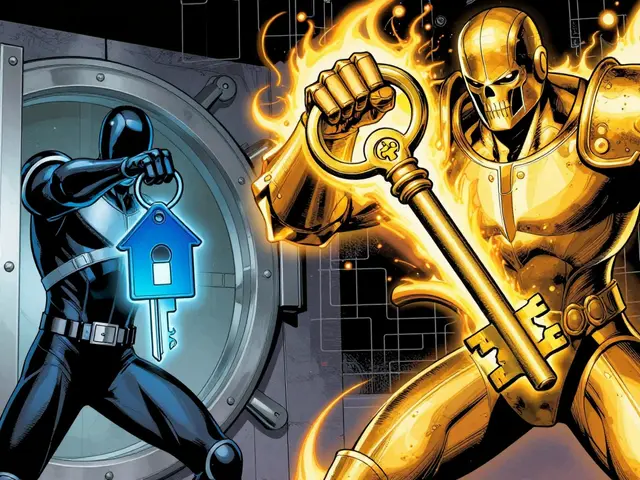
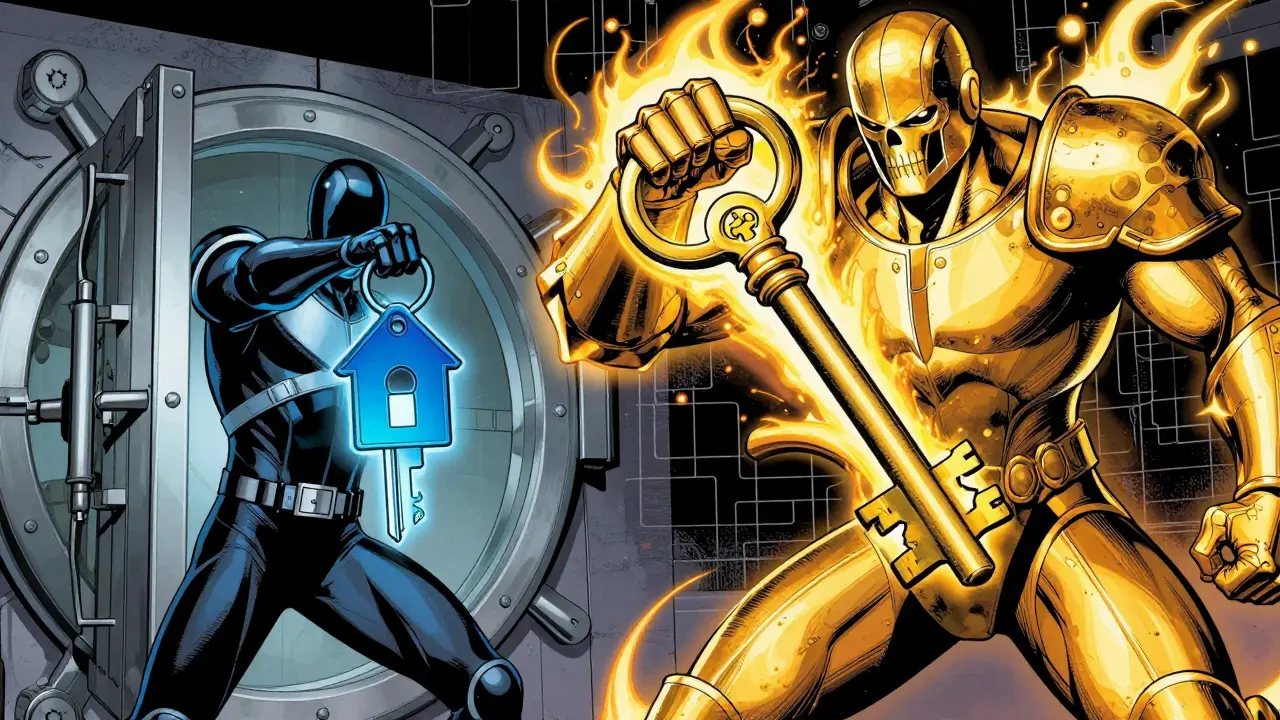
To understand the difference, think about physical security. A private key is like the key to your front door. It opens one specific place. If you lose it, you’re locked out of that house. But if you have a master key (your seed phrase), it opens every lock in your building, including the basement, the garage, and the storage unit.
In the world of blockchain technology, this analogy holds up perfectly. The private key is a unique, randomly generated string of characters that grants access to a single cryptocurrency address. The seed phrase (also known as a recovery phrase or mnemonic phrase) is a human-readable backup that can regenerate not just one, but billions of private keys.
This distinction matters because of scope. Compromising a private key puts one account at risk. Compromising a seed phrase puts every asset in your wallet ecosystem at immediate risk. Understanding this hierarchy is the first step toward real security.
Anatomy of a Private Key
A private key is essentially a large number. Specifically, it’s a 256-bit number, usually represented as a 64-character hexadecimal string. It looks something like this:
B0183D69E6D87DC0FB6A5778633389F4453213303DA61F20BD67FC233AA33262
This string isn’t arbitrary. It’s generated using complex cryptographic algorithms designed to ensure mathematical uniqueness. The odds of two people generating the same private key are approximately 1 in 2^256-a number so vast it’s effectively impossible.
Here’s what makes private keys tricky for humans:
- Non-human readable: You cannot memorize a private key. It’s too long and lacks pattern.
- Singular purpose: Each private key corresponds to exactly one public address on the blockchain.
- Direct control: This key is what signs transactions. When you send Bitcoin or Ethereum, your wallet uses the private key to prove you own the funds being moved.
If you lose this string, the funds associated with that specific address are gone forever. There is no “forgot password” button on the blockchain. However, if you have your seed phrase, you don’t need to worry about losing individual private keys-we’ll get to that shortly.
Anatomy of a Seed Phrase
The seed phrase, introduced via the BIP39 standard (Bitcoin Improvement Proposal 39), was created to solve the problem of storing those unreadable private keys. Instead of remembering a 64-character hex string, you remember 12 to 24 common English words.
These words aren’t chosen randomly from the dictionary. They come from a standardized list of 2,048 words defined by BIP39. Your wallet generates these words based on entropy (randomness). A 12-word phrase provides 128 bits of entropy, while a 24-word phrase provides 256 bits-the same security level as a private key.
Why does this matter? Because of Hierarchical Deterministic (HD) wallets. Modern wallets use HD technology to derive multiple private keys from a single seed phrase. This means:
- Your seed phrase acts as the root.
- From that root, your wallet generates a tree of private keys.
- Each branch of that tree is a different address for a different coin (Bitcoin, Ethereum, Solana, etc.).
If you write down your 12 words today, you can restore access to thousands of future addresses you haven’t even created yet. That is the power of the seed phrase.

Security Risks: What Happens When Things Go Wrong?
The stakes couldn’t be higher. Let’s look at the damage control scenarios for both entities.
| Scenario | Private Key Loss/Leak | Seed Phrase Loss/Leak |
|---|---|---|
| If Lost | Funds in that single address are permanently inaccessible. | All funds across all addresses derived from that wallet are permanently inaccessible. |
| If Stolen | Hacker drains the balance of that one address. | Hacker drains every asset in your wallet ecosystem instantly. |
| Recovery Option | None. Unless you have the seed phrase, it’s gone. | Can restore entire wallet on any compatible device (Ledger, MetaMask, Trezor). |
| Storage Difficulty | High. Hard to write down accurately; easy to mistype. | Medium. Easier to read, but requires secure physical storage. |
The critical takeaway here is exposure surface area. A leaked private key is bad. A leaked seed phrase is catastrophic. Many beginners treat their seed phrase like a password they might share with support staff. Never do this. No legitimate company will ever ask for your seed phrase.
Best Practices for Storage in 2026
How you store these keys defines your security posture. Digital storage is the enemy of crypto security. Screenshots, cloud notes, email drafts, and text files are all vulnerable to malware, phishing, and server breaches.
For private keys: Most users shouldn’t handle raw private keys directly anymore. Modern HD wallets abstract this away. If you are an advanced user managing legacy wallets, store private keys offline on encrypted hardware drives that are never connected to the internet (air-gapped).
For seed phrases: Physical storage is non-negotiable.
- Paper backups: Simple, but flammable and degradable. Good for short-term testing, risky for long-term holding.
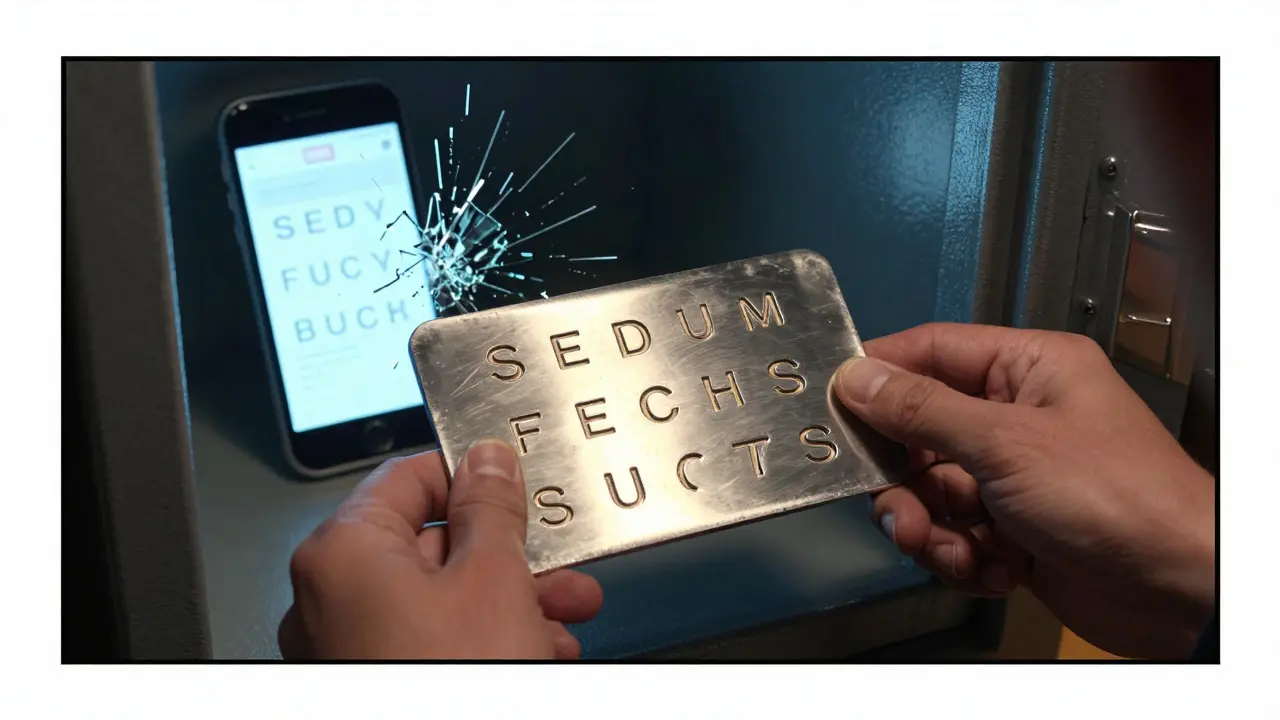
- Metal plates: In 2026, stainless steel or titanium seed plate backups are the industry standard for serious holders. They resist fire, water, and corrosion. Brands like Billfodl or Cryptotag have become household names among institutional investors.
- Location diversity: Don’t keep your only copy in your home safe. Consider a bank deposit box or a trusted family member’s secure location.
Avoid digital backups entirely. If a hacker gets into your Google Drive, they don’t need to guess your password-they just scan for images containing "word1 word2 word3" patterns.
Common Myths and Misconceptions
Misinformation spreads faster than code in the crypto space. Let’s bust three persistent myths.
Myth 1: "I can change my seed phrase if I feel it’s compromised."
False. A seed phrase is static. It is mathematically tied to your existing assets. If you suspect compromise, you must move your funds to a new wallet with a new seed phrase immediately. You cannot “reset” the old one.
Myth 2: "Private keys and seed phrases are interchangeable."
Technically, yes, but practically, no. You can import a private key into a wallet, but you cannot import a seed phrase to recover a single lost private key without restoring the whole wallet structure. Conversely, you can’t use a private key to back up your entire multi-coin portfolio.
Myth 3: "Online wallets are safe because they auto-save my keys."
Web-based wallets often hold your private keys in their database. This is convenient, but it violates the core principle of self-custody. If the exchange or service goes bankrupt or gets hacked, your keys are exposed. Always prefer non-custodial wallets where you hold the seed phrase.
Next Steps for Your Wallet Setup
If you’re setting up a new wallet today, follow this checklist to ensure maximum security:
- Choose a reputable non-custodial wallet. Look for providers that explicitly state they never store your private keys or seed phrases (e.g., Ledger, Trezor, MetaMask).
- Generate the seed phrase offline. Ensure your device is free of malware before generating the phrase. Hardware wallets do this internally, which is safer than software wallets on a potentially infected laptop.
- Write it down physically. Use pen and paper first to verify accuracy. Then transfer to a metal backup solution if the value warrants it.
- Verify the backup. Delete the wallet from your device and try to restore it using only the written words. If it works, you’re safe. If not, start over.
- Never digitize the phrase. No photos, no scans, no cloud sync.
Understanding the difference between a seed phrase and a private key isn’t just academic-it’s the difference between owning your digital assets and renting them from a third party. Treat your seed phrase with the same reverence you’d treat the deed to your house. Keep it hidden, keep it physical, and never share it.
Can I recover my crypto if I lose my private key but have my seed phrase?
Yes. Because modern wallets use Hierarchical Deterministic (HD) technology, your seed phrase can regenerate all private keys associated with your wallet. Simply restore your wallet on a new device using the seed phrase, and all your addresses and balances will reappear.
Is it safer to use a 12-word or 24-word seed phrase?
Both are extremely secure against brute-force attacks. A 12-word phrase offers 128 bits of entropy, while 24 words offer 256 bits. For most users, 12 words are sufficient. However, 24 words provide a larger margin of safety against potential future cryptographic weaknesses and are recommended for high-value holdings.
What should I do if I suspect my seed phrase has been stolen?
Act immediately. Create a brand new wallet with a new seed phrase on a clean device. Transfer all your assets from the compromised wallet to the new one as fast as possible. Once moved, the old seed phrase becomes useless to the thief, but you must act before they drain your funds.
Can I split my seed phrase among multiple people for extra security?
This is known as Shamir's Secret Sharing, and some advanced hardware wallets support it. However, doing this manually with a standard BIP39 seed phrase is dangerous and often fails. If you want multi-party security, use a wallet that natively supports Multi-Signature (Multi-Sig) setups rather than splitting a single seed phrase.
Do exchanges like Coinbase or Binance give me a seed phrase?
No. Centralized exchanges manage the private keys for you. You rely on their security and customer support. This is custodial storage. If you want true ownership and control, you must withdraw your crypto to a personal wallet where you generate and hold your own seed phrase.