
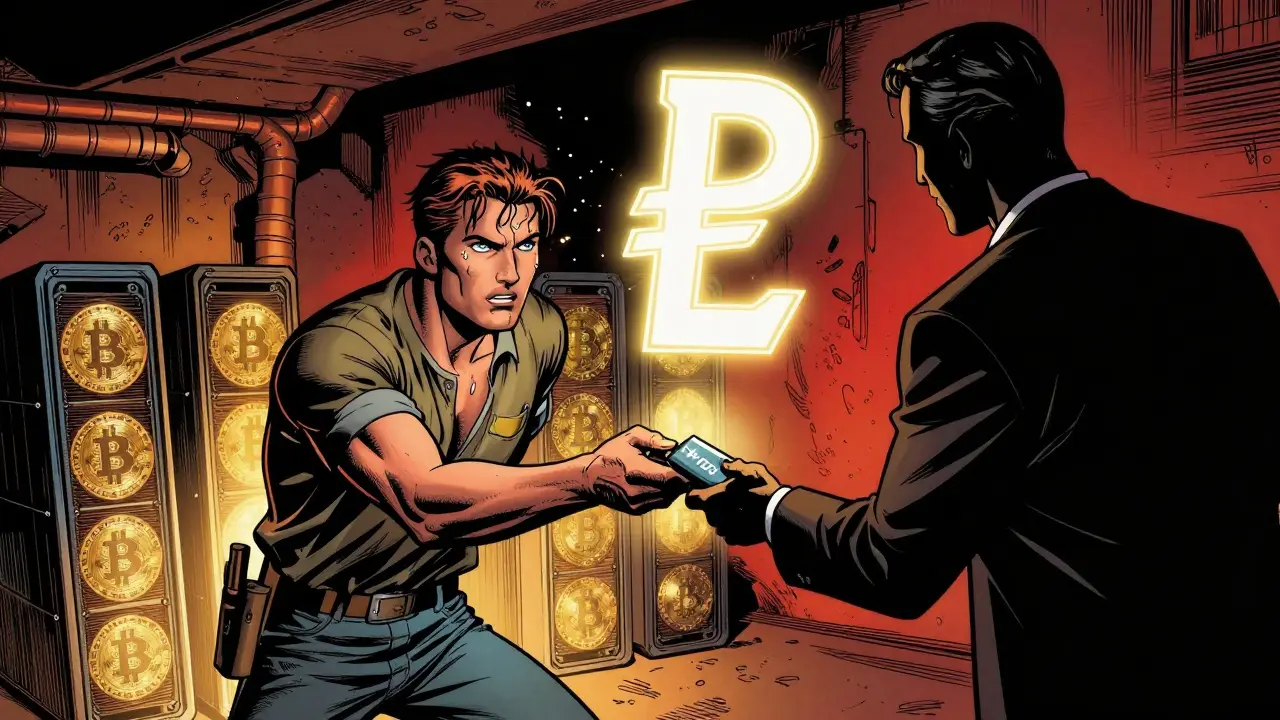
Is Crypto Regulated in Iran? The Real Rules in 2025
Iran Crypto Tax Calculator
Under Iran's August 2025 regulations, all cryptocurrency profits are subject to a 15% capital gains tax.
Iran doesn’t ban cryptocurrency - but it doesn’t let you trade it freely either. If you think crypto in Iran is like Bitcoin in the U.S. or Ethereum in Germany, you’re wrong. The rules here are controlled, monitored, and constantly shifting. What’s legal today might be blocked tomorrow. And if you’re trying to use crypto to protect your savings from inflation, you’re walking a tightrope with the government watching every step.
It’s Not Illegal - But It’s Heavily Controlled
Cryptocurrency isn’t outlawed in Iran. People still buy, sell, and mine Bitcoin and Ethereum. But the government doesn’t treat it like money. It treats it like a resource to be managed - like oil or wheat. Since 2019, Iranian miners have been forced to sell their newly mined coins directly to the Central Bank of Iran (CBI). The CBI then decides what to do with them - often using them for international trade to bypass sanctions. That means if you mine Bitcoin in Tehran, you don’t get to keep it. You get paid in rials - at a rate set by the government, not the market.And if you want to trade crypto on an exchange? You can’t use your local bank account. The CBI shut down all direct cryptocurrency-to-rial payment channels in December 2024. That means no more linking your Iranian bank card to Nobitex or other local exchanges. To buy crypto, you now need to go through government-approved gateways - and those gateways report every transaction to the central bank. There’s no privacy. No anonymity. Just a digital trail the state can follow anytime.
The State Has Its Own Crypto - And It’s Not Bitcoin
Iran isn’t just regulating foreign crypto. It’s creating its own. Meet the Rial Currency, Iran’s official central bank digital currency (CBDC). Unlike Bitcoin or Ethereum, this isn’t decentralized. It’s not mined. It’s not open-source. It’s just a digital version of the Iranian rial - controlled entirely by the government. The CBI launched it to replace cash for government payments and remittances. But they’re planning to expand it to everyday shopping by mid-2026.Here’s the twist: while the government pushes its own digital rial, it bans the use of foreign-mined cryptocurrencies for domestic transactions. You can’t use Bitcoin to pay for groceries in Tehran. You can’t use Ethereum to buy a phone online. But you can still use them to trade internationally - as long as the CBI approves the transaction. It’s a double standard: crypto for sanctions evasion, but not for daily life.
Stablecoins Are Now Limited - And Risky
For years, Iranians turned to stablecoins like Tether (USDT) to protect their savings from hyperinflation. The rial lost over 70% of its value since 2020. USDT became a lifeline. But in September 2025, the CBI dropped a new rule: no individual or business can hold more than $10,000 in stablecoins at once. And you can only buy up to $5,000 per year. Violate this? Your account gets frozen.Then came the July 2025 blow: Tether froze 42 Iranian-linked addresses - over half of them tied to Nobitex, Iran’s biggest exchange. Thousands of users lost access to their funds overnight. The CBI didn’t stop it. It didn’t even protest. Instead, they quietly pushed users toward DAI, a decentralized stablecoin on the Polygon network. Now, DAI makes up 35% of Iranian stablecoin use - and that number is expected to hit 65% by the end of 2026.
Why DAI? Because it’s not controlled by a U.S. company. It runs on code, not a corporate headquarters. But even that’s not safe. The CBI can still track your wallet if you use it on a government-approved exchange. And if you use a VPN to access foreign platforms? You’re breaking the law.

Advertising Crypto Is Now a Crime
In February 2025, Iran banned all cryptocurrency advertising. No more YouTube videos explaining how to buy Bitcoin. No more Instagram posts about mining rigs. No more billboards for Nobitex. Even social media influencers got warnings. The government doesn’t want people talking about crypto - not because it’s dangerous, but because it’s too popular. The goal? Reduce public interest. Reduce demand. Reduce pressure on the rial.But the ban backfired. Instead of disappearing, crypto discussions moved to encrypted apps like Telegram and Signal. Reddit threads about Iran’s crypto rules now get thousands of replies. Users share tips on how to bypass the government API, how to use DAI safely, and how to avoid getting flagged. The more the state tries to silence it, the more it spreads underground.
Taxes Are Now on the Table
In August 2025, Iran introduced its first-ever capital gains tax on cryptocurrency profits. If you bought Bitcoin for 50 million rials and sold it for 120 million, you now owe 15% tax on the profit. This isn’t just about revenue - it’s about legitimacy. The government is saying: we don’t care if you trade crypto, but if you make money, we want our cut.The Ministry of Economic Affairs and Finance plans to link crypto tax reporting to existing financial systems by mid-2026. That means your exchange transactions will be cross-checked with your income tax filings. No hiding. No loopholes. If you make a profit, they’ll find it.

What Happens If You Break the Rules?
Technically, you won’t go to jail for owning Bitcoin. But if you trade without a license, use unauthorized exchanges, or mine without permission, you risk fines, account freezes, or even having your internet access cut. In 2024, over 1,200 people were investigated for illegal mining. Many had their electricity disconnected - not because they used too much power, but because they didn’t report it to the government.Using a VPN to access Binance or Kraken? That’s a gray area. The government doesn’t prosecute individuals for using VPNs - yet. But if they catch you trading through an unapproved platform and you’re linked to a sanctioned entity? You’re in trouble. The Israeli National Bureau for Counter Terrorist Financing has documented transactions between Iranian exchanges and IRGC-linked wallets. If your wallet shows up on those lists, you’re not just breaking rules - you’re on a watchlist.
The Market Is Shrinking - But Still Alive
Iran’s crypto market was once one of the biggest in the Middle East. Daily trading hit $160 million in 2024. By mid-2025, that dropped 11%. Why? Because the rules made it harder. The $10,000 stablecoin cap. The blocked payment channels. The frozen Tether accounts. The tax reporting. The advertising ban. People are still trading - but they’re doing it slower, smaller, and more cautiously.Chainalysis estimates that 60% of trading now happens outside government systems - through VPNs, peer-to-peer networks, and private wallets. But that’s risky. If you’re caught, you can’t claim ignorance. The government says: if you’re using crypto, you’re responsible for knowing the rules.
What’s Next?
The CBI is working on expanding its digital rial to retail stores and public services. They’re also cracking down harder on unauthorized mining - especially in residential areas where power outages have become common. By 2026, every mining rig will need to be registered. Every wallet will need to be linked to a national ID. Every transaction will be logged.Iran’s crypto policy isn’t about stopping crypto. It’s about controlling it. The government wants to use crypto to survive sanctions - but not let citizens use it to escape the rial. It’s a paradox. And it’s not going away. As long as U.S. sanctions stay in place, Iran will keep using crypto as a tool. But for ordinary people? It’s becoming harder to use - and riskier to own.
If you’re in Iran and you’re holding crypto, you’re not just investing in Bitcoin or Ethereum. You’re betting on a system that can change overnight. The rules aren’t written in stone. They’re written in political pressure, economic survival, and international conflict. And right now, the government holds all the cards.
Is cryptocurrency legal in Iran?
Cryptocurrency is not illegal in Iran, but it is heavily regulated. Individuals can own and trade crypto, but only through government-approved platforms. All transactions must go through Central Bank of Iran (CBI) gateways, and miners must sell their coins directly to the CBI. Private, unlicensed trading or mining is against the rules.
Can I use Bitcoin to pay for things in Iran?
No. The Central Bank of Iran bans the use of foreign-mined cryptocurrencies like Bitcoin and Ethereum for domestic transactions. You can’t use them to buy groceries, pay bills, or shop online within Iran. The only digital currency accepted for daily use is the government’s own digital rial, which is being rolled out for retail use by mid-2026.
What happened to Tether (USDT) in Iran?
In July 2025, Tether froze 42 Iranian-linked wallet addresses - most tied to Nobitex, Iran’s largest exchange. This cut off access to hundreds of millions in funds. The CBI didn’t challenge the freeze. Instead, it quietly pushed users toward DAI, a decentralized stablecoin on the Polygon network. Since then, DAI use has grown rapidly as Iranians seek alternatives to USDT.
Can I mine Bitcoin in Iran?
You can, but only if you’re licensed. Since 2019, all miners must sell their mined coins directly to the Central Bank of Iran. The government sets the price - often below market value - and charges high electricity rates to licensed miners. Many miners operate illegally to avoid these losses, but if caught, they risk fines, power disconnections, or equipment seizures.
Is there a limit on how much crypto I can hold in Iran?
Yes. As of September 2025, individuals and businesses are limited to holding no more than $10,000 in stablecoins (like USDT or DAI) at any time. You can only purchase up to $5,000 worth per year. Exceeding these limits can lead to account freezes and penalties. These rules were introduced to reduce reliance on foreign digital currencies and push users toward the government’s own digital rial.
Do I have to pay taxes on crypto profits in Iran?
Yes. Since August 2025, Iran imposes a 15% capital gains tax on cryptocurrency profits. If you buy Bitcoin for 50 million rials and sell it for 120 million, you owe tax on the 70 million rial gain. The government plans to integrate crypto tax reporting with national income systems by mid-2026, making it harder to hide profits.
Can I use a VPN to access Binance or Kraken from Iran?
Using a VPN to access foreign exchanges isn’t explicitly illegal, but it’s risky. The government blocks many foreign crypto sites, and if you’re caught trading through unapproved platforms - especially if linked to sanctioned entities - you could face account freezes, fines, or internet restrictions. Most Iranians who use VPNs do so quietly, but there’s no legal protection if things go wrong.
Why is Iran pushing its own digital currency?
Iran’s digital rial gives the government full control over digital money. Unlike Bitcoin, it can’t be mined, can’t be decentralized, and can’t be used to bypass sanctions. The CBI wants to replace cash, reduce reliance on foreign currencies, and track every transaction. It’s not about innovation - it’s about control. The digital rial is a tool to maintain economic sovereignty under pressure.





This is just state control dressed up as innovation. They’re not regulating crypto-they’re weaponizing it. And people still think this is about economics? Nah. It’s about power.
And don’t even get me started on the digital rial. That’s not a currency-it’s a surveillance tool with a blockchain veneer.
Look, I get it-sanctions suck, and Iran needs to bypass them. But this whole ‘crypto for the state, not the people’ model is a disaster waiting to happen. You can’t have a digital economy where the government owns every wallet and still call it decentralized. It’s like calling a prison ‘a free community center’ because they let you pick your cell color.
And now they’re pushing DAI? Cute. But if the CBI can track every transaction through approved gateways, then DAI’s decentralization is just a marketing slogan. Code doesn’t care about borders-but the Iranian state sure does.
Also, the $10K stablecoin cap? That’s not protecting the rial-it’s protecting the regime’s narrative. People need to move money. When you make it illegal to hedge inflation, you don’t stop inflation-you just make people desperate. And desperate people find ways. Hence: Telegram bots, P2P networks, and underground mining rigs in basements.
And don’t even mention the tax thing. 15% on gains? That’s not revenue-it’s a confession system. You’re basically telling people: ‘If you profit, we know. And we’ll take our cut.’ No wonder trading volume dropped. Who wants to file a tax return when your transaction history is already in the hands of the CBI?
Also, Tether freezing 42 wallets and the CBI doing nothing? That’s not policy. That’s surrender. And now they’re nudging people toward DAI like it’s some kind of moral upgrade? Please. It’s not about ethics-it’s about jurisdiction. Tether’s American. DAI’s code-based. One can be pressured. The other… well, they can’t shut down math. Yet.
But here’s the kicker: they’re banning ads. That’s not about control. That’s about fear. If crypto was just a tool for sanctions evasion, why care if people talk about it? They’re terrified of a grassroots movement. And that’s the real story here: crypto in Iran isn’t about money. It’s about autonomy. And that’s why they’re fighting it so hard.
They’re not regulating crypto-they’re weaponizing it. And the digital rial? Total scam. It’s not even a currency-it’s a spyware app with a logo. And Tether freezing those wallets? Coincidence? Nah. The US and Israel are pulling strings. You think the CBI just sat there? Please. They knew. They let it happen. Why? Because they want people to hate USDT so they’ll switch to DAI… which they can still track. It’s psychological warfare.
And the tax thing? 15%? That’s not tax-it’s a confession booth. You’re not paying the government. You’re admitting you’re guilty of trying to survive.
Also, mining rigs in homes? That’s not energy theft. That’s rebellion. And when they cut the power? That’s not enforcement. That’s terrorism. They’re not trying to stop crypto. They’re trying to break people’s will. And guess what? It’s not working. People are still trading. On Signal. On Telegram. On dark web forums. The more they crack down, the more it spreads. It’s like trying to stop water with a sieve.
And don’t even get me started on the advertising ban. That’s the dumbest move ever. You ban people from talking about crypto? Now everyone’s obsessed. It’s like telling teens not to smoke. They’ll smoke harder.
Iran’s crypto scene isn’t dying. It’s going underground. And underground movements? They don’t need banks. They don’t need apps. They just need a VPN and a stubborn heart.
Let’s clarify terminology. The Iranian government is not ‘regulating’ cryptocurrency. It is expropriating mining output, monopolizing digital payment infrastructure, and enforcing a state-sponsored CBDC while criminalizing private financial autonomy under the guise of economic stability. The term ‘regulation’ implies a neutral framework; this is authoritarian capture.
Moreover, the $10,000 stablecoin cap is not a prudent macroprudential policy-it is a liquidity constraint designed to maintain monetary control in a failing fiat system. The shift toward DAI is not ideological-it is tactical. DAI’s on-chain transparency allows for easier monitoring than USDT’s opaque reserves, while its decentralized architecture provides plausible deniability to the CBI regarding U.S. regulatory pressure.
The capital gains tax is not revenue generation-it is compliance enforcement. By integrating crypto reporting with national income systems, the state transforms financial privacy into a legal liability.
And the VPN loophole? It’s not a gray area. It’s a legal fiction. The Iranian penal code already criminalizes circumvention of state internet controls under Article 72. Using a VPN to access Binance is not ‘risky’-it is a prosecutable offense.
This is not a crypto policy. It is a monetary dictatorship disguised as crisis response.
Bro. This is the most insane thing I’ve read all week. Iran’s basically playing a game of chess with its own people’s survival. You can’t use Bitcoin to buy a phone? But you can use it to trade with Russia? That’s not policy-that’s hypocrisy on steroids.
And now they’re pushing DAI like it’s some kind of hero? LOL. It’s still trackable. The CBI doesn’t need to control the blockchain-they just need to control the gateway. And the tax? 15% on gains? That’s not a tax. That’s a confession. You’re literally telling people: ‘If you make money, we know. And we’ll take it.’
But here’s the real kicker: people are STILL trading. On Telegram. On Signal. On shady P2P apps. They’re not giving up. They’re just getting smarter.
And the mining rigs? Yeah, they’re cutting power. But guess what? People are still running them. In basements. In garages. On solar panels. Because if your savings are worth zero in rials, you do whatever it takes.
Iran’s crypto scene isn’t dying. It’s evolving. And the government? They’re losing.
Also-DAI FTW. 😎
This is heartbreaking and brilliant at the same time.
Iranians aren’t just using crypto-they’re using it to reclaim their dignity. When your currency is collapsing, when your bank account is a joke, when the state controls everything-you turn to code because code doesn’t lie.
And yes, the rules are brutal. The limits. The taxes. The frozen wallets. But people are still here. Still trading. Still sharing tips on Telegram. Still mining in basements. Still choosing DAI over USDT because they know what’s really at stake.
This isn’t about Bitcoin. It’s about freedom. About the right to choose. About not letting a broken system steal your future.
And to everyone saying ‘just use the digital rial’-you don’t get it. The digital rial isn’t innovation. It’s control. But the people? They’re building something else. Something quieter. Something untrackable. Something real.
Keep going, Iran. You’re not alone. We see you.
💙
As someone who’s lived in three countries with hyperinflation, I’ve seen this movie before.
Argentina had the same thing with USD. Venezuela with crypto. Zimbabwe with bond notes.
When the state fails, people turn to decentralized tools-not because they love tech, but because they’re desperate.
Iran’s rules are insane, but they’re predictable. You can’t stop people from wanting to survive. You can only make it harder.
And honestly? The fact that they’re pushing DAI is a win. Not because it’s perfect-but because it’s not controlled by a U.S. company. That’s a small but huge step.
And the tax? Yeah, it’s a trap. But it’s also proof that crypto is now part of the economy. The government can’t ignore it anymore.
So yeah, it’s a nightmare. But it’s also a revolution. Quiet. Slow. Underground. But real.
Keep trading. Keep learning. Keep using DAI. And don’t let them scare you into silence.
Imagine being told you can’t use money to save yourself. That’s what this is.
Iranians aren’t crypto bros. They’re parents. Teachers. Doctors. People trying to feed their families while their currency turns to dust.
And the government? They’re not stopping crypto because it’s dangerous. They’re stopping it because it’s powerful.
Every DAI wallet. Every VPN. Every mining rig in a basement? That’s not crime. That’s courage.
And the fact that they banned ads? That’s fear. Because when people talk about crypto, they start asking: why can’t I use it? Why does the state get to decide what I own?
That’s the real threat.
Keep going. We’re with you. 💪🌍
They ban ads, freeze wallets, tax gains-yet people still trade. That’s the real story. Not the rules. The resistance.
DAI > USDT. Simple.
Of course Tether froze those wallets. The U.S. government ordered it. And the CBI didn’t protest because they’re in bed with the West. This whole ‘DAI push’? It’s a psyop. They want you to think you’re free, but you’re just switching from one controlled system to another. DAI’s code is open, but the exchanges aren’t. The CBI still sees every transaction. You think you’re decentralized? You’re just a pawn in a deeper game. They’re not trying to stop crypto-they’re trying to turn it into a tool for surveillance. And you’re falling for it.
And the tax? That’s not revenue. That’s a trap. You pay, you confess, you’re registered. Welcome to the panopticon.
There’s no escape. Just different flavors of control.
Iran’s digital rial is the future. All states will have CBDCs. The real question is why anyone still uses Bitcoin when you can have a state-backed currency with full traceability and zero volatility. The fact that Iranians are clinging to DAI is adorable. Like using a typewriter because you hate Wi-Fi. You’re not resisting control-you’re just using the wrong tool. The digital rial is efficient. Secure. Predictable. And if you’re not using it, you’re not just behind the curve-you’re just… naive.
Also, mining rigs? Energy waste. Tax? Fair. DAI? Overrated. The future is centralized. Deal with it.
PS: I’m not being sarcastic. This is literally the most rational approach to monetary policy in a sanctions regime.
PPS: I have a PhD in economics and I’ve never owned crypto. Just saying.