SaitaSwap Review: Is This Tiny DEX Safe or Just Dead?
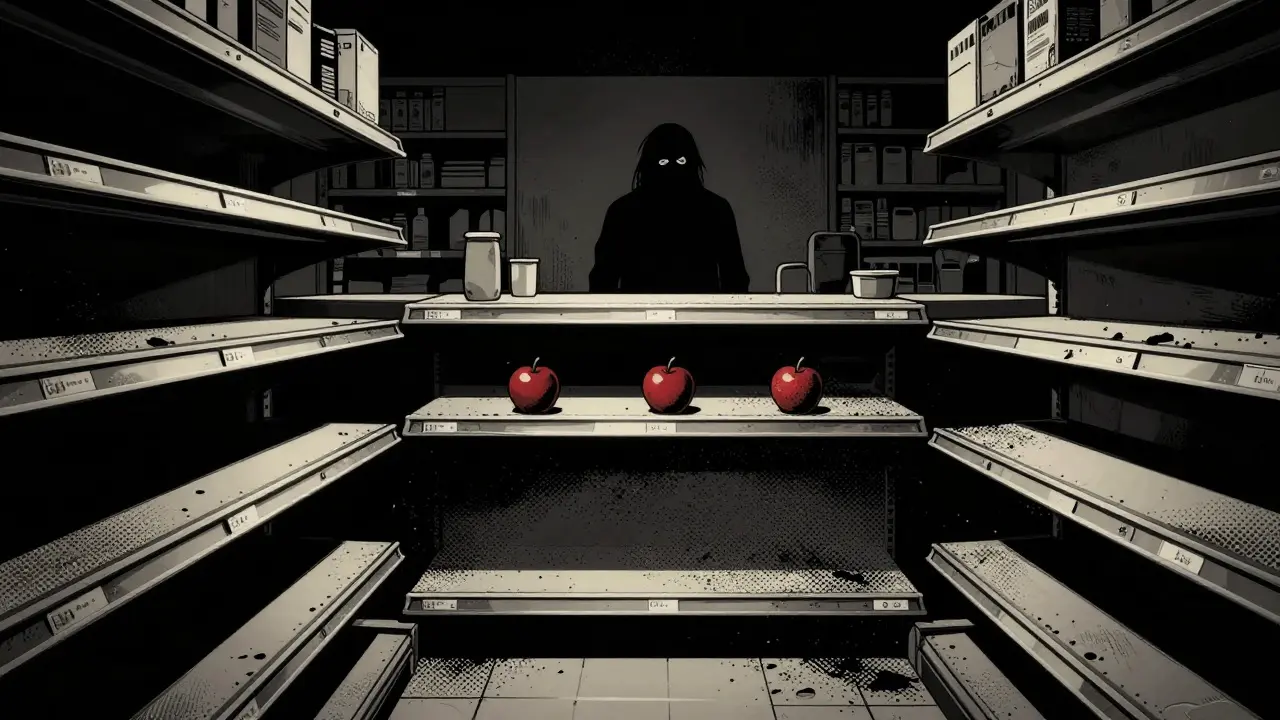
Imagine walking into a grocery store that only sells three types of apples. No bread, no milk, just apples. And if you want to buy one, you have to pay a high fee because there’s barely any stock on the shelves. That is essentially what SaitaSwap is a decentralized cryptocurrency exchange operating on the Ethereum blockchain with extremely limited asset selection and low trading volume. looks like in 2026.
You might have stumbled upon SaitaSwap while searching for a no-KYC (Know Your Customer) swap option on Ethereum. It promises privacy and decentralization. But does it deliver? Or is it a ghost town?
I’ve dug through the data from CoinGecko, Koinly, and various DeFi tracking tools to give you the straight facts. The short answer? Unless you are swapping a very specific, obscure token pair that exists nowhere else, you should probably keep scrolling. Here is why.
The Bare Bones: What Actually Is SaitaSwap?
SaitaSwap launched in 2022 as an automated market maker (AMM). If you are new to this, an AMM means there is no human broker matching your buy order with someone else's sell order. Instead, you trade against a pool of funds provided by other users. This is standard for decentralized exchanges (DEXs).
However, SaitaSwap is not like the big players. It operates strictly on the Ethereumthe primary blockchain network where SaitaSwap smart contracts reside network. There are no cross-chain bridges, no Layer-2 scaling solutions like Arbitrum or Optimism, and no multi-chain support. You connect your wallet, you pay Ethereum gas fees, and you hope the transaction goes through.
Here is the kicker regarding its size:
- Cryptocurrencies Supported: Only 3 coins.
- Trading Pairs: Only 4 pairs.
- Volume Percentile: It sits in the 21st percentile globally among DEXs. In plain English, 79% of decentralized exchanges are bigger and more active than SaitaSwap.
Compare this to Uniswapthe leading decentralized exchange with billions in total value locked and thousands of supported tokens, which handles over $1.2 billion in daily volume across hundreds of chains. SaitaSwap is a puddle next to an ocean.
The Liquidity Trap: Why Low Volume Hurts You
Liquidity is the lifeblood of any exchange. It represents how easily you can buy or sell an asset without moving its price drastically. When liquidity is low, two bad things happen: slippage and failed transactions.
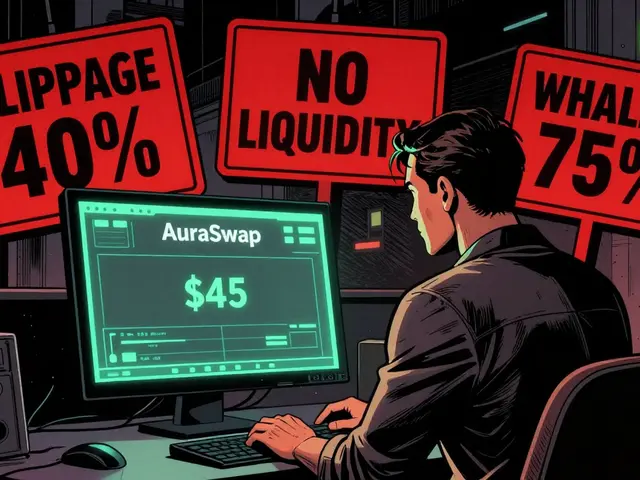
Slippage is the difference between the expected price of a trade and the price at which the trade is executed. On a deep platform like Uniswap, if you swap $1,000 worth of ETH for USDC, you get roughly $1,000 worth of USDC. On a thin platform like SaitaSwap, that same $1,000 swap might only net you $950 because the pool doesn't have enough depth to absorb your trade. You lose money instantly.
Since SaitaSwap has no specific bid-ask spread metrics published and ranks so low in volume, the risk of high slippage is significant. For large trades, it is practically unusable. Even for small trades, you are paying premium Ethereum gas fees (which can range from $2 to $50+ depending on network congestion) for a service that offers zero advantage over larger competitors.
Security: Invisible Doesn't Mean Safe
One of the biggest selling points of DEXs is security. Since you hold your own keys via wallets like MetaMaska popular browser extension wallet used to interact with Ethereum dApps, no central company can freeze your funds. SaitaSwap follows this model. There is no KYC, no account to hack, and no customer support to call.
But here is the danger zone: Smart Contract Security.
Every DEX relies on code called smart contracts. If that code has a bug, hackers can drain the liquidity pools. Major platforms like Uniswap and PancakeSwapa major DEX on BNB Chain with extensive audit history and high TVL undergo rigorous, public audits by firms like CertiK or Trail of Bits. Their code is scrutinized by thousands of developers.
SaitaSwap? I found zero evidence of public security audits, GitHub repositories, or developer documentation. There are no ISO certifications (unlike centralized exchanges such as Kraken which holds ISO/IEC 27001). There is no team behind it that you can verify. In the world of crypto, "unknown" usually equals "high risk." If the contract is exploited, there is no insurance fund and no recourse. Your funds are gone.

How SaitaSwap Compares to the Giants
To understand why SaitaSwap struggles, let's look at what users actually get when they choose established alternatives. The table below breaks down the key differences.
| Feature | SaitaSwap | Uniswap (DEX) | Kraken (CEX) |
|---|---|---|---|
| Type | Decentralized (DEX) | Decentralized (DEX) | Centralized (CEX) |
| Supported Assets | 3 Coins | 10,000+ Tokens | 200+ Coins |
| KYC Required? | No | No | Yes |
| Liquidity Depth | Very Low (High Slippage Risk) | Extremely High ($4B+ TVL) | High |
| Fees | ETH Gas Fees + Protocol Fee | ETH Gas Fees + Protocol Fee | 0.16% - 0.26% Trading Fee |
| Security Audits | None Publicly Available | Multiple Independent Audits | ISO 27001 Certified |
| User Support | None | Community/Discord | 24/7 Live Chat & Email |
Notice the gap. If you want privacy and no KYC, Uniswap gives you that *plus* massive liquidity and proven security. If you want ease of use and fiat on-ramps, Kraken or Swyftx are better options. SaitaSwap sits in a void where it offers neither superior privacy nor superior utility.
The Verdict: Who Is This For?
Is SaitaSwap a scam? Not necessarily. It appears to be a legitimate, albeit tiny, protocol. But "legitimate" isn't the same as "good." I see three scenarios where someone might touch SaitaSwap: 1. **You hold a specific micro-cap token** that is only listed on SaitaSwap and nowhere else. In this case, you have no choice but to use it to exit. Be prepared for high slippage. 2. **You are a developer** testing smart contract interactions on Ethereum mainnet with negligible amounts. 3. **You are unaware of better options.** For everyone else, SaitaSwap is a trap. It charges you full Ethereum gas fees for a fraction of the service. It lacks the community trust, security audits, and liquidity depth required for safe trading. With 40% of smaller DEXs predicted to shut down or consolidate by 2026 due to liquidity fragmentation, SaitaSwap is highly vulnerable. If the few remaining liquidity providers pull their funds, the exchange becomes completely useless overnight.
Stick to the giants. Use Uniswap for Ethereum swaps. Use PancakeSwap for BNB Chain. Use aggregators like 1incha DEX aggregator that finds the best prices across multiple exchanges to ensure you aren't getting ripped off by slippage. Leave SaitaSwap alone unless you absolutely have to.
Is SaitaSwap safe to use?
Safety is questionable. While SaitaSwap is non-custodial (you hold your keys), it lacks public security audits for its smart contracts. Without verified audits, there is a higher risk of hidden vulnerabilities that could lead to fund loss. Additionally, its low liquidity makes it susceptible to manipulation.
Why are there so few coins on SaitaSwap?
SaitaSwap suffers from low adoption and liquidity. Most traders prefer platforms with deeper pools like Uniswap to avoid slippage. As a result, liquidity providers have likely moved their capital elsewhere, leaving only a handful of trading pairs active.
Does SaitaSwap require KYC?
No. As a decentralized exchange (DEX) on Ethereum, SaitaSwap does not require identity verification. You connect directly via a Web3 wallet like MetaMask. However, this also means there is no customer support if something goes wrong.
What is the best alternative to SaitaSwap?
For Ethereum-based swaps, Uniswap is the industry standard due to its high liquidity and security. If you want to compare prices across multiple DEXs automatically, use 1inch or Matcha. These aggregators will often find better rates than SaitaSwap anyway.
Will SaitaSwap shut down?
It is possible. Industry trends show that smaller DEXs with low volume often become inactive as liquidity drains away. With no recent development updates or community growth reported for SaitaSwap, it faces significant risks of becoming obsolete in 2026.