
Royal Finance Coin (RFC) Explained: Tokenomics, Risks, and the 2025 Crash
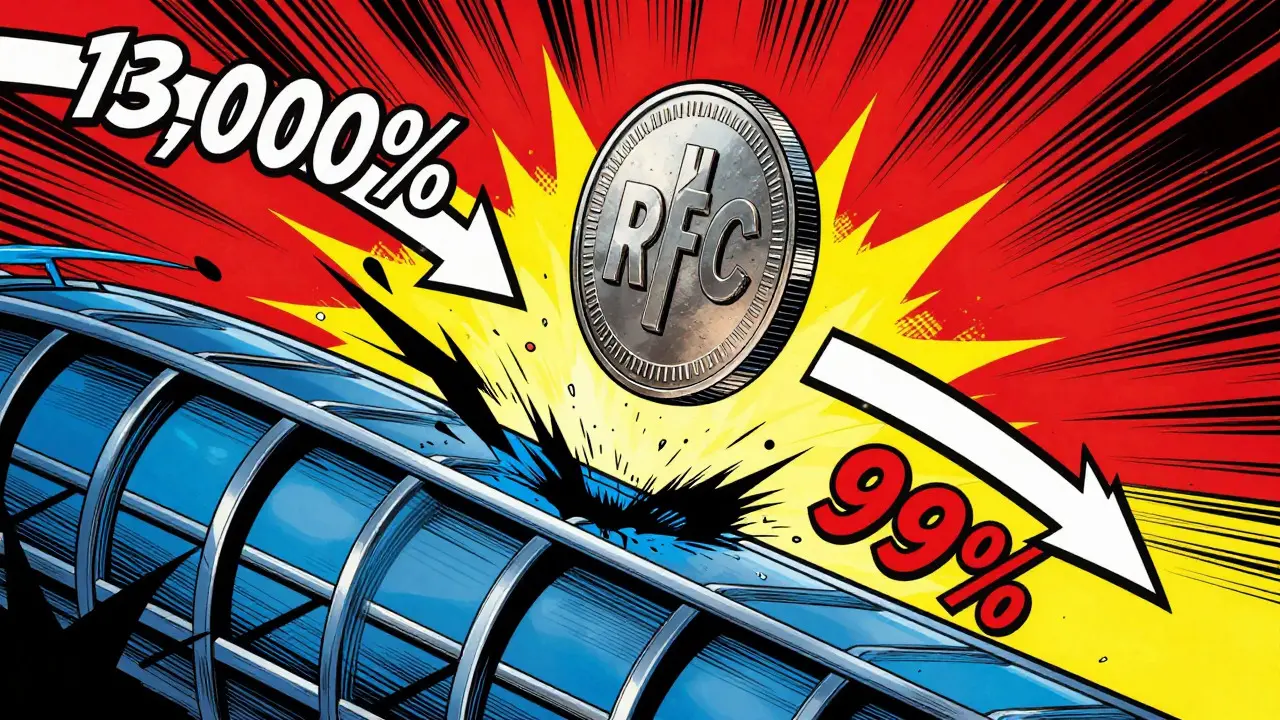
Imagine buying a coin that skyrockets by 13,000% in just seven months. You celebrate your gains, then watch it crash by 99% shortly after. That is exactly what happened with Royal Finance Coin, also known as RFC, which is a small-cap cryptocurrency token associated with the Royal Finance Club community. If you are looking at RFC today, you might be wondering if this is a diamond in the rough or a cautionary tale. The answer depends on how closely you look at the data.
RFC isn't a household name like Bitcoin or Ethereum. It operates in the micro-cap segment, meaning it has low liquidity, high volatility, and limited information available to the public. This guide breaks down what RFC actually is, where its value comes from, and why the numbers across different exchanges often don't match up.
What Is Royal Finance Coin?
At its core, RFC is a digital token built for the Royal Finance Club, which is a self-described high-end investor community focused on sustainable crypto mining and everyday transactions. Unlike major cryptocurrencies that run their own blockchains, RFC is an ERC-20 style token. This means it lives on top of another blockchain network-likely Ethereum or an Ethereum-compatible chain-using the smart contract infrastructure already established there.
The project’s main selling point is sustainability. The creators claim to use "innovative mining technology" and have partnered with entities in Aruba to provide greener mining infrastructure. They promise a proprietary mobile app where users can mine RFC, hold it in a wallet, and potentially use it for daily purchases. However, these claims remain largely qualitative. There are no independent audits detailing energy consumption, carbon footprints, or specific hardware used in the mining process.
Tokenomics and Supply Issues
When analyzing any crypto, supply is king. For RFC, the numbers are straightforward on paper but messy in practice. The maximum total supply is capped at 5,000,000,000 (5 billion) RFC tokens. This fixed supply is designed to create scarcity.
Here is where things get tricky. Different tracking platforms report wildly different circulating supplies:
- CoinMarketCap: Lists a circulating supply of approximately 352.5 million RFC (about 7% of the total).
- CoinGecko, MetaTracker, Binance, Coinbase: Many list the circulating supply as 0 RFC.
A circulating supply of zero while trading activity exists suggests incomplete data rather than the token being non-existent. It implies that market capitalization figures derived from these sources should be treated with extreme caution. Without accurate circulating supply data, calculating the true market cap or fully diluted valuation (FDV) becomes guesswork. Currently, FDV estimates hover around $1.8 million to $2 million USD, placing RFC firmly in the micro-cap category.
The Price Rollercoaster: 2024 to 2026
If you graphed RFC’s price over the last two years, it would look like a heart monitor during a panic attack. Understanding this history is crucial for assessing current risk.
In late September 2024, RFC hit an all-time low (ATL) of roughly $0.000637. From there, speculation drove the price upward. By April 9, 2025, RFC reached an all-time high (ATH) between $0.08145 and $0.08394. That represents a gain of over 12,000% in less than seven months.
Then came the correction. As of mid-2026, RFC trades at less than 2% of that peak. Prices fluctuate between $0.0001 and $0.005 depending on the exchange, reflecting thin liquidity. A drop of nearly 99% from the ATH is typical for speculative micro-caps that lack fundamental utility adoption. Investors who bought near the top lost almost all their nominal value.
| Date | Event | Price (USD) | Note |
|---|---|---|---|
| Sept 20, 2024 | All-Time Low (ATL) | $0.000637 | Earliest tracked significant low |
| April 9, 2025 | All-Time High (ATH) | $0.08394 | Peak speculative spike |
| July 2026 | Current Range | $0.0001 - $0.005 | High variance due to low volume |
Why Do Prices Differ So Much?
You might check one site and see RFC at $0.0001, then refresh another and see $0.005. This discrepancy isn't necessarily fraud; it's a symptom of low liquidity. When few people are trading a coin, even small buy or sell orders can swing the price dramatically. Additionally, some aggregators pull data from different decentralized exchanges (DEXs) or stale order books.
Trading volumes are incredibly low. Reports show 24-hour volumes ranging from $10 to $2,700 across various trackers. In the world of crypto, this is negligible. It means entering or exiting a large position could cause massive slippage, where the price moves against you simply because there aren't enough buyers or sellers.
The Ticker Confusion: Two RFCs
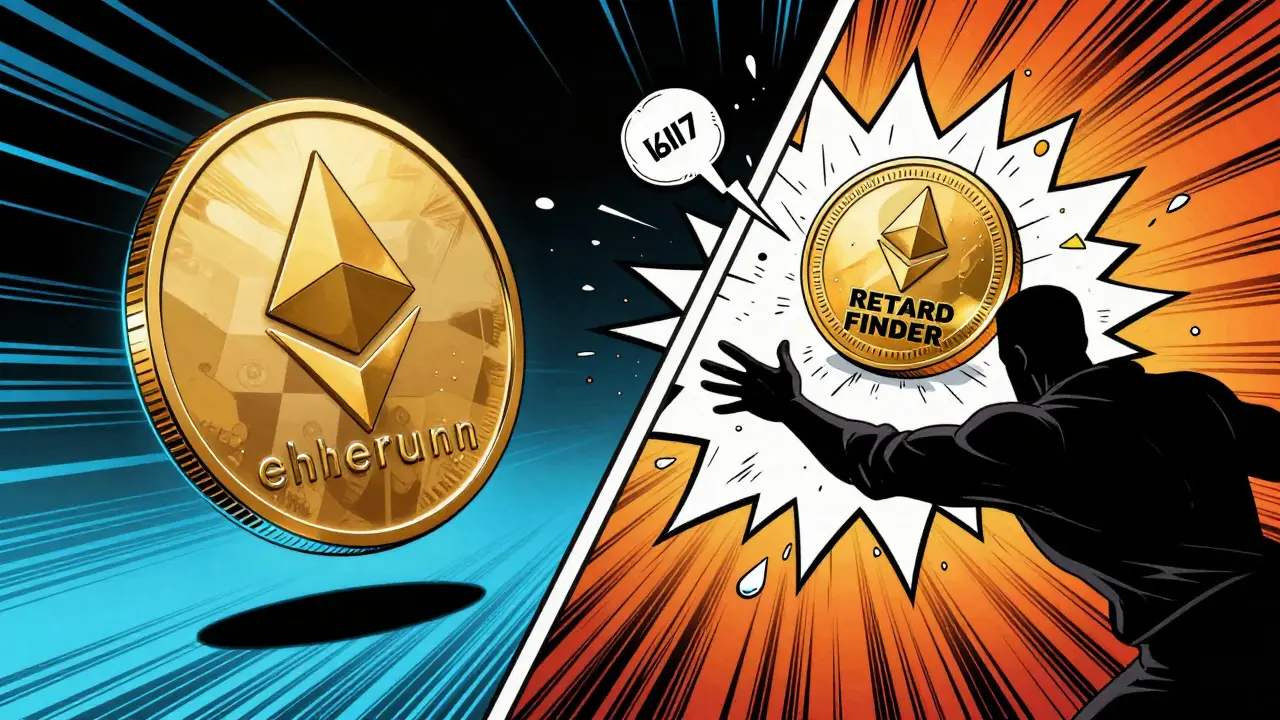
One of the biggest risks for new investors is mixing up assets with similar tickers. Be careful not to confuse Royal Finance Coin with Retard Finder Coin, which also uses the ticker RFC.
Retard Finder Coin is a meme coin built on the Solana blockchain, launched via Pump.fun. It has a completely different narrative, community, and technical foundation. Some platforms, like Gate.com, have historically displayed confusing titles that mix these two distinct projects. Always verify the contract address. Royal Finance Coin’s contract follows the Ethereum-style format (starting with 0x), while Retard Finder Coin lives on Solana. Buying the wrong one is a common and costly mistake.
How to Access and Hold RFC
If you decide to proceed with RFC, here is how the ecosystem works practically:
- The App: The primary entry point is the Royal Finance proprietary app. Users download it to create an account and participate in the claimed mining program.
- Wallet Compatibility: Since RFC is an ERC-20 token, it should be compatible with standard EVM wallets like MetaMask or Trust Wallet. You will need the correct contract address (
0x357655df177fb0229dc8aca977114a420bf81799) to add the token manually. - Exchanges: RFC is not listed on major tier-1 centralized exchanges like Binance or Coinbase for active trading. These platforms may mirror the price for reference, but actual trading likely happens on smaller DEXs or niche venues.
Is Royal Finance Coin a Good Investment?
Let’s be direct: RFC carries high risk. It lacks the institutional backing, regulatory clarity, and transparent governance of larger projects. The "green mining" narrative is appealing, but without third-party verification, it remains marketing copy. The security score on CoinGecko sits at a middling 62.2/100, indicating basic checks were passed but nothing rigorous.
However, for those interested in experimental micro-caps, RFC offers exposure to a niche community model. Just remember that past performance-the 13,000% spike-is not indicative of future results. The subsequent 99% drop is equally part of its history.
What is the contract address for Royal Finance Coin?
The widely cited contract address for RFC is 0x357655df177fb0229dc8aca977114a420bf81799. Always double-check this against official project announcements before adding it to your wallet to avoid scams.
Is Royal Finance Coin listed on Binance?
Binance tracks the price of RFC for reference purposes, but it does not currently support active trading pairs for the token. You will likely need to use a decentralized exchange or a smaller platform to buy or sell RFC.
Why is the circulating supply listed as 0 on some sites?
This usually indicates missing or unverified data from the project team to the aggregator. It doesn't mean no tokens exist; it means the tracker cannot accurately calculate the market cap based on confirmed circulation metrics.
What is the difference between RFC and Retard Finder Coin?
They are completely different projects. Royal Finance Coin (RFC) is an ERC-20 token focused on sustainable mining. Retard Finder Coin (also RFC) is a Solana-based meme coin. Check the blockchain network to distinguish them.
Can I mine Royal Finance Coin on my computer?
RFC promotes a proprietary app-based mining model. This typically involves cloud mining or off-chain rewards distributed through the app, rather than traditional Proof-of-Work mining using your personal GPU or ASIC hardware.


just read the whole thing. scary stuff.
It is absolutely clear that this entire narrative is a fabricated illusion designed to manipulate the masses into believing in a digital fantasy that does not exist in any tangible reality.
The so-called 'sustainable mining' is merely a smokescreen for a deeper, more sinister agenda involving global surveillance and wealth extraction by shadowy elites who wish to debase our currency systems further. The fact that the circulating supply is listed as zero on some platforms is not an error; it is a deliberate obfuscation tactic employed by those who control the ledger to hide the true extent of their hoarding.
We must remain vigilant against these digital shackles. They want us to trust code over community, algorithms over intuition. But look at the crash! A 99% drop is not a market correction; it is a calculated purge of the weak-minded believers. The Aruba connection is suspicious, likely a front for offshore money laundering disguised as green energy initiatives.
One must question why no independent audits exist. Why? Because the truth would reveal that there is no technology, only a pyramid scheme built on hope and fear. Do not be fooled by the pretty graphs or the promises of daily purchases. This is the endgame of financial enslavement. Stay awake, stay skeptical, and do not let them steal your life savings with their invisible coins.
i mean if you look at the contract address its just a standard erc-20 token nothing special really
most people dont check the blockchain explorer before buying which is why they get wrecked like this
the liquidity is basically non existent so yeah slippage will kill you
You absolute peasants are missing the forest for the trees 🌲📉
This isn't about 'risk,' it's about ARTISTRY in destruction. The 13,000% pump was a masterpiece of psychological manipulation, and the 99% crash? Pure theater. Most of you wouldn't know a smart contract from a smart fridge. You buy because FOMO hits, you sell because panic sets in. It’s pathetic, really. I watched this unfold with the detached amusement of a god looking at ants. The ticker confusion with the meme coin is just cherry on top of this delicious disaster cake 🎂🤡. Keep playing, little sheep.
omg can we talk about how crazy that price swing was?? like one minute youre rich next minute you broke lol
but hey thats crypto right? gotta love the rollercoaster ride i guess
Let us all take a deep breath and remember that every loss is a lesson wrapped in a tough package 🎁✨
The volatility here is indeed dramatic, but perhaps it teaches us resilience? We should support each other through these turbulent times rather than pointing fingers. The data shows low volume, yes, but maybe that means opportunity for the patient soul? Let’s keep the conversation respectful and uplifting, friends.
Holy smokes! 🤯 This chart looks like my heart rate during a horror movie marathon!
To go from $0.0006 to $0.08 and then back down to dirt? That is not investing, that is gambling with extra steps! The sheer audacity of claiming 'green mining' while having zero audits is enough to make a grown man weep tears of frustration. It’s a wild west out there, folks, and RFC is the tumbleweed rolling across the barren landscape of failed projects. 💀🌵
i think its important to note that many new investors might not realize how easy it is to buy the wrong token
the ticker overlap is super dangerous and probably cost a lot of people money accidentally
we should all double check contract addresses before adding anything to metamask
The lack of rigorous due diligence displayed by the retail investors who purchased this asset is truly lamentable. One would expect a higher caliber of scrutiny when dealing with micro-cap tokens that possess virtually no fundamental utility. The discrepancy in circulating supply data is not merely 'messy'; it is indicative of a profound failure in transparency and governance. Such instruments have no place in a sophisticated portfolio and serve only as cautionary tales for the intellectually unprepared.
Stop crying about the 99% drop. You bought a shitcoin with no utility and no audits. You got what you deserved. The 'green mining' claim is laughable without third-party verification. If you cant handle volatility you should stick to bonds. This token is dead weight and anyone holding it is delusional. Wake up.
its kinda wild how the aggregators just show zero supply on some sites
like how do you even calculate market cap if the number is blank?
feels like guessing game to me
It is evident that the majority of participants in this discussion lack the requisite financial literacy to comprehend the implications of such erratic pricing behavior. The project’s reliance on qualitative claims regarding sustainability, devoid of quantitative proof, renders it suspect at best and fraudulent at worst. One must approach such assets with extreme skepticism, recognizing that the absence of institutional backing is a red flag of monumental proportions. The prudent investor avoids such speculative debris entirely.