
The Future of NFT Data Storage: From Static Files to AI-Driven Assets
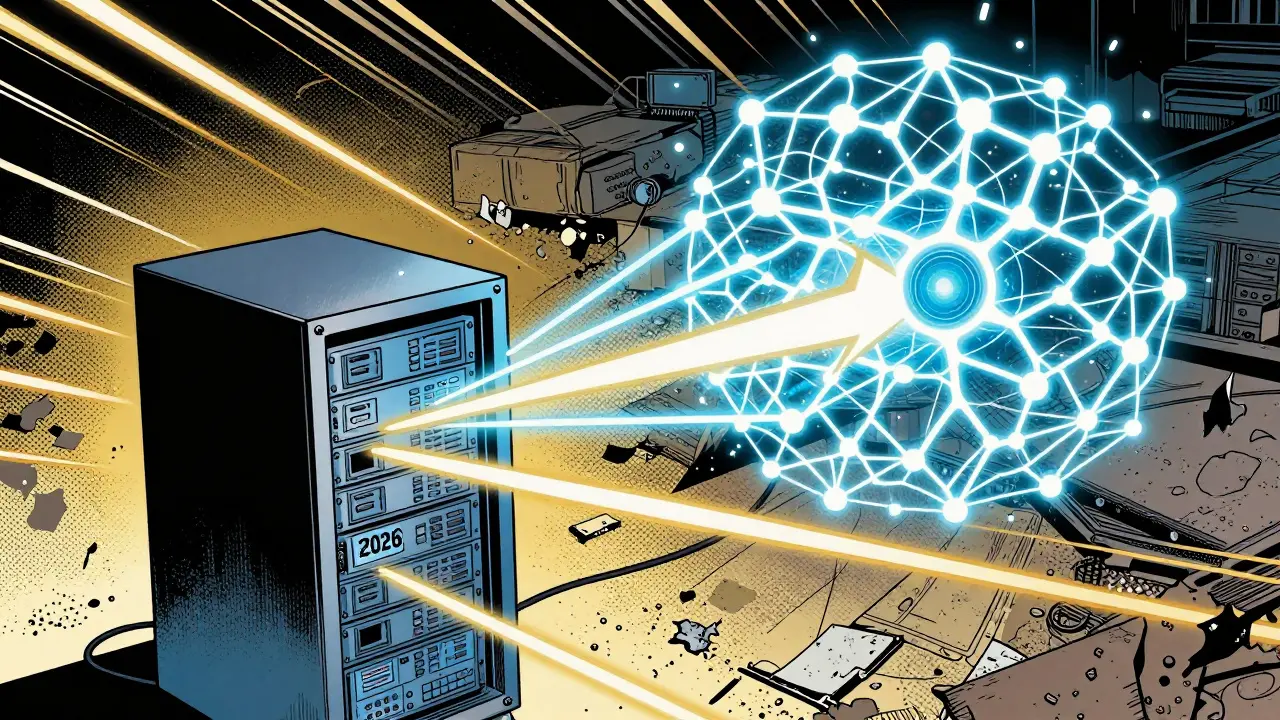
Remember when buying an NFT felt like clicking a link that might break in five years? That era is over. By mid-2026, the way we store and manage non-fungible tokens has shifted from simple file hosting to complex, intelligent infrastructure. We aren't just storing JPEGs anymore; we are storing living assets, AI agents, and cross-platform gaming items. The question isn't "where does the image live?" but rather "how does this asset evolve while remaining verifiable?"
The market has stabilized significantly. Trading volumes hit $2.82 billion in the first half of 2025, showing only a slight dip from late 2024, but transaction counts jumped nearly 80%. This tells us something important: speculation is cooling, and utility is heating up. People are using NFTs for real things-gaming, identity, and enterprise applications-and that changes everything about how we need to store their data.
Why On-Chain Storage Is No Longer Enough
You’ve probably heard the phrase "blockchain is immutable." It’s true, but it’s also expensive. Storing large files directly on a blockchain network is like trying to fit an entire library into a single tweet. The costs scale poorly. As data volume grows, transaction fees skyrocket, making direct on-chain storage impractical for anything beyond tiny metadata snippets.
This limitation forced the industry toward hybrid models. Today, most NFTs use a split approach:
- On-chain: Critical metadata (like ownership history, token ID, and smart contract logic) lives on the blockchain. This ensures provenance and trust.
- Off-chain: The actual content (images, videos, audio, or code) lives in decentralized storage systems. This keeps costs down and speeds up transactions.
This hybrid model isn’t a compromise; it’s a necessity. It allows businesses to handle massive datasets without clogging the network. But as NFTs become more dynamic, off-chain storage needs to get smarter, not just bigger.
| Platform | Type | Key Feature | Best For |
|---|---|---|---|
| IPFS | Peer-to-Peer Decentralized | Content-addressable hashing | General-purpose static files |
| Arweave | Permanent Storage | One-time payment for indefinite access | Long-term archival and historical records |
| Filecoin | Decentralized Rental Network | Market-driven pricing for unused space | Cost-effective business solutions with variable demand |
Each platform serves a different purpose. IPFS remains the standard for quick, peer-to-peer sharing. Arweave is the go-to for permanence-if you want your data to last forever without paying recurring fees, this is your choice. Filecoin offers flexibility, letting users rent storage space based on current market rates. For most projects in 2026, the decision comes down to whether you need permanence, speed, or cost efficiency.
The Rise of Intelligent NFTs (iNFTs)
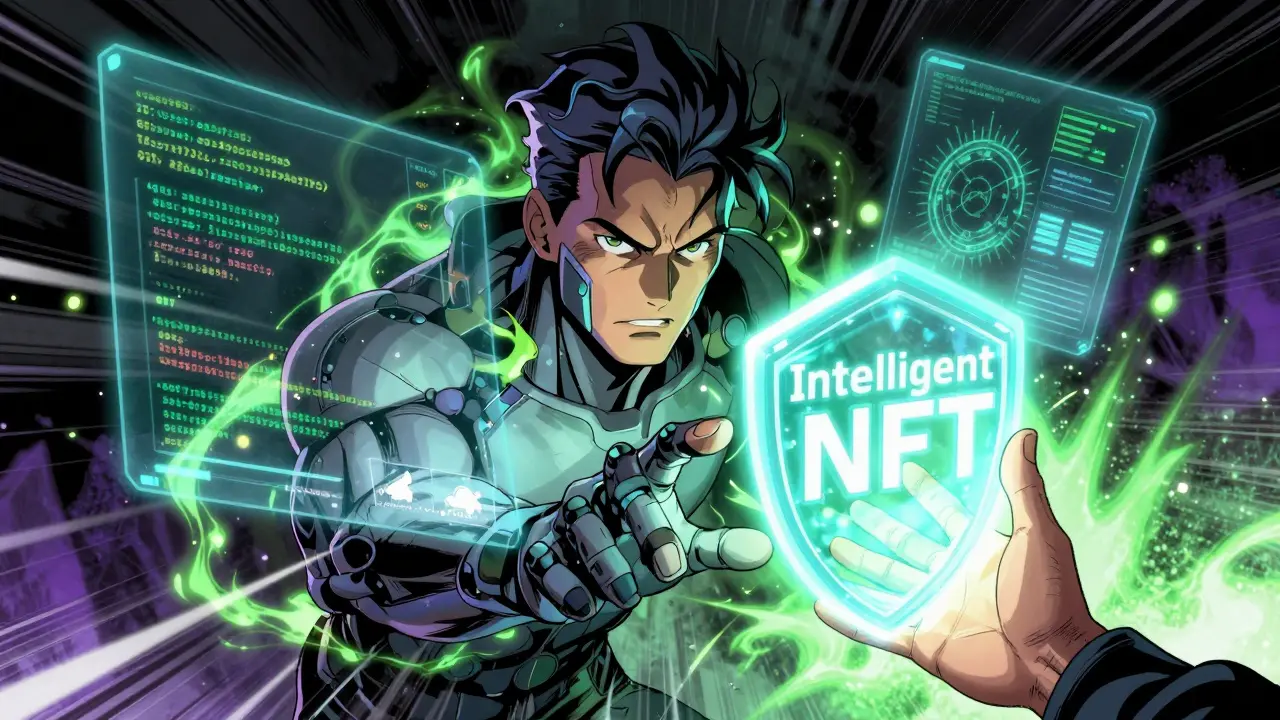
The biggest shift in 2025 wasn’t just better storage-it was smarter assets. Enter ERC-7857, a new standard announced by 0G Labs in January 2025. This standard enables "Intelligent NFTs" or iNFTs. Unlike traditional NFTs that are static files, iNFTs can behave like software agents.
Think about what this means for storage. An iNFT might contain AI code, sensitive user data, or dynamic behaviors. When you transfer an iNFT, the system doesn’t just move a file pointer; it re-encrypts sensitive data for the new owner. This requires storage systems that can handle mutable data structures while maintaining strict integrity checks.
Approximately 30% of new NFT projects in 2025 incorporated AI elements. These range from generative art that changes based on weather patterns to autonomous in-game characters that learn from player interactions. Traditional storage couldn’t support this. You need systems that allow versioning, state management, and real-time updates-all while keeping the blockchain record honest.
Gaming and Cross-Platform Interoperability
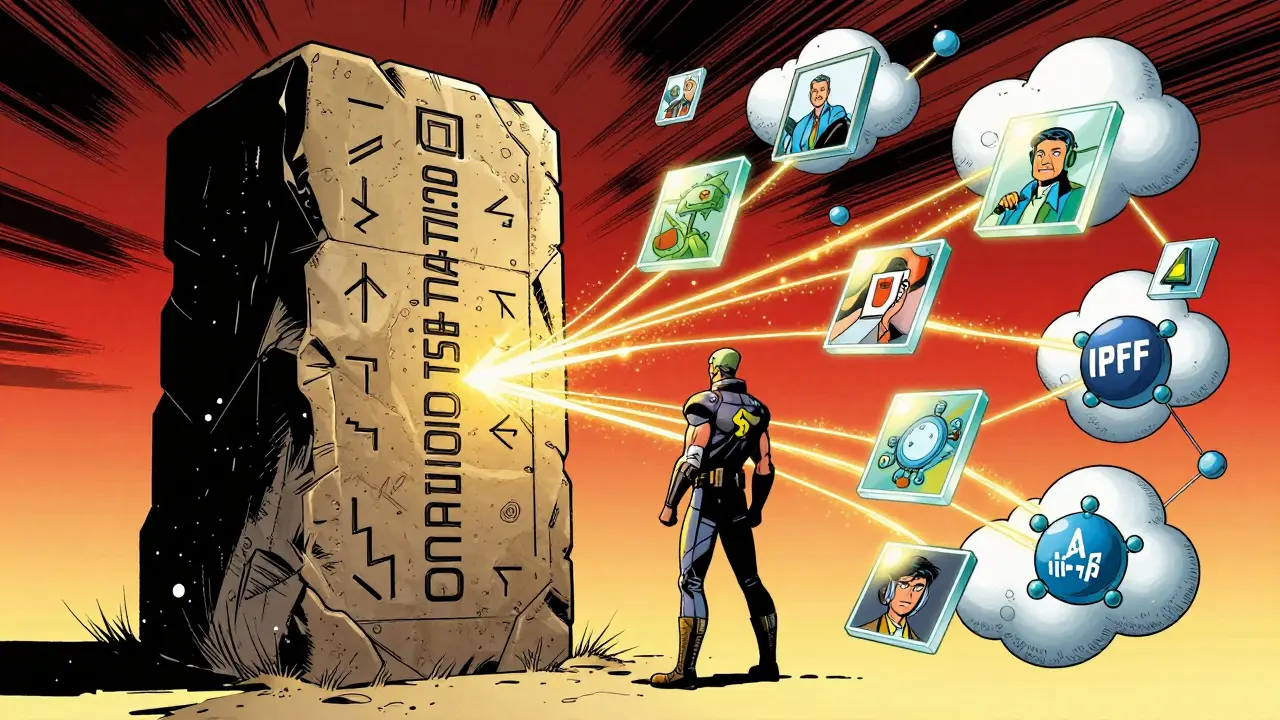
If there’s one sector driving storage innovation right now, it’s gaming. The NFT gaming market was valued at roughly $471.90 billion in 2025 and is projected to double to $942.58 billion by 2029. In these environments, NFTs aren’t just collectibles; they are functional assets. A sword in one game might be usable in another. A virtual land parcel might generate income across multiple platforms.
This creates a massive challenge for storage. Around 70% of users demand cross-platform functionality. They want to take their assets from Game A to Game B without losing data or value. To make this work, storage standards must support seamless interoperability. Protocols like ERC-721 and ERC-1155 laid the groundwork, but next-gen systems need to bridge different blockchains and ecosystems entirely.
Imagine logging into three different metaverses and seeing your avatar, inventory, and reputation score everywhere. That level of integration requires unified storage layers that can translate data formats between platforms instantly. Without robust off-chain storage acting as the backbone, this dream stays just that-a dream.
Privacy and Security in Public Ledgers
Blockchains are public by design. Anyone can view transaction histories and metadata. For simple art drops, that’s fine. For enterprise applications or personal identity tokens, it’s a problem. Off-chain storage solves this by keeping sensitive data off the public ledger.
Here’s how it works: The blockchain holds a cryptographic hash-a unique fingerprint of the data. The actual data lives in a private or encrypted off-chain container. Only authorized parties have the key to decrypt it. This setup ensures compliance with data protection regulations like GDPR while still leveraging blockchain for verification. It’s a win-win for privacy and transparency.
What Comes Next: Living Digital Assets
By 2026, the line between static collectibles and programmable digital life is blurring. Storage infrastructure is evolving to support assets that grow in cultural and financial value over time. Think of brand avatars that update their appearance based on social media trends, or educational tools that adapt to a student’s learning pace.
These "living assets" require real-time content modification and user interaction processing. Storage providers focusing on enterprise-grade reliability, security, and scalability are winning market share. Solutions optimized solely for simple JPEG storage are becoming obsolete. The future belongs to platforms that can handle complexity, change, and connection.
Is storing NFTs on-chain really too expensive?
Yes, for large files. Storing even a small image directly on major blockchains like Ethereum can cost hundreds of dollars in gas fees during peak times. Hybrid models use on-chain storage only for critical metadata (ownership, ID) and off-chain solutions for the actual content, reducing costs by over 90%.
What is the difference between IPFS and Arweave?
IPFS is a peer-to-peer protocol where files are stored across a network of nodes, but you may need to pay incentives to keep them available long-term. Arweave charges a one-time fee for permanent storage, guaranteeing your data remains accessible indefinitely without recurring payments.
How do Intelligent NFTs (iNFTs) change storage requirements?
iNFTs contain executable code and dynamic data that can change over time. Unlike static files, they require storage systems capable of handling versioning, state updates, and secure re-encryption during transfers. Standards like ERC-7857 enable these complex interactions.
Can I use my NFT across different gaming platforms?
Increasingly yes. With the rise of interoperability standards and unified storage layers, developers are building systems that allow assets to move between games. However, full cross-platform compatibility depends on both the storage infrastructure and the specific agreements between game developers.
Is off-chain storage less secure than on-chain?
Not necessarily. While on-chain data is immutable, off-chain storage uses cryptographic hashes linked to the blockchain for verification. If the off-chain data is altered, the hash won’t match, revealing tampering. Additionally, off-chain solutions often offer encryption options that public blockchains cannot provide.

lol another tech bro trying to sell us on the next big thing. NFTs are dead, just like your chances of ever getting a refund on that rug pull you bought into last year.
I find it fascinating how we’ve moved from 'is this real?' to 'how do we store the AI agent's soul?'. It’s almost poetic in its absurdity. The market stabilization is nice, but I still wonder if we’re building a library or just a very expensive digital landfill. At least the garbage is organized now.
You are missing the fundamental point here. The issue isn't storage cost, it's the philosophical implication of mutable data on an immutable ledger. If the asset changes, is it the same asset? No. You are conflating utility with identity crisis. Arweave is the only logical choice because permanence is the only truth in a chaotic universe. Everything else is just temporary noise designed to confuse the uninitiated masses who don't understand cryptographic determinism.
teh whole concept of iNFTs is bs. why would i want my nft to change? i paid for the static image not some evolving ai mess that might decide to look ugly tomorrow. also arweave is overrated and ipfs is slow as hell. typical tech hype cycle nonsense.
The article presents a rather pedestrian view of the technological landscape. To suggest that Filecoin is merely 'cost-effective' ignores the nuanced economic incentives required to maintain network integrity. One must appreciate the elegance of permanent storage solutions before resorting to rental models. It is quite evident that those who fail to grasp the importance of immutability are doomed to repeat the mistakes of the early web era.
It is important to consider the privacy implications mentioned in the post. Keeping sensitive data off-chain while maintaining verification through hashes is a balanced approach. We should encourage developers to prioritize user security over flashy features. A respectful dialogue about these standards helps everyone understand the value of proper infrastructure.
I honestly don't care about your storage protocols. What I care about is whether I can use my sword in every game without dealing with your stupid interoperability issues. If you can't solve that, your entire argument is worthless. Stop hiding behind technical jargon and fix the user experience. It's pathetic how much effort you put into backend stuff while the frontend remains a disaster.
it feels like we are losing the magic of ownership. when everything is dynamic and changing what does it even mean to own something anymore? maybe the problem isnt the storage but our desire to control digital things. lets embrace the chaos instead of trying to organize it with fancy tables and acronyms
Look! The gaming sector is finally growing up! This is fantastic news for all of us! Interoperability is key! And the privacy aspects are crucial! We must support these developments! Let's celebrate the progress! Keep up the great work everyone!
i think the hybrid model makes sense. storing everything on chain is too expensive and inefficient. but we need to be careful about who controls the off-chain servers. trust is hard to build once it is broken. hope the new standards help with that.
so basically we are paying more to store less? that sounds like a bad deal to me. but maybe im just not smart enough to get it. the ai part sounds cool though. maybe my nft will learn to love me someday. thats the dream right?
Let me tell you something about IPFS vs Arweave. People keep confusing them. IPFS is not storage, it's a protocol. You need pinning services. Arweave is actual storage. If you don't know the difference, stop buying NFTs. The ERC-7857 standard is the future and anyone ignoring it is living in the past. Wake up people.
Great insights on the shift towards utility. Focus on value creation.