
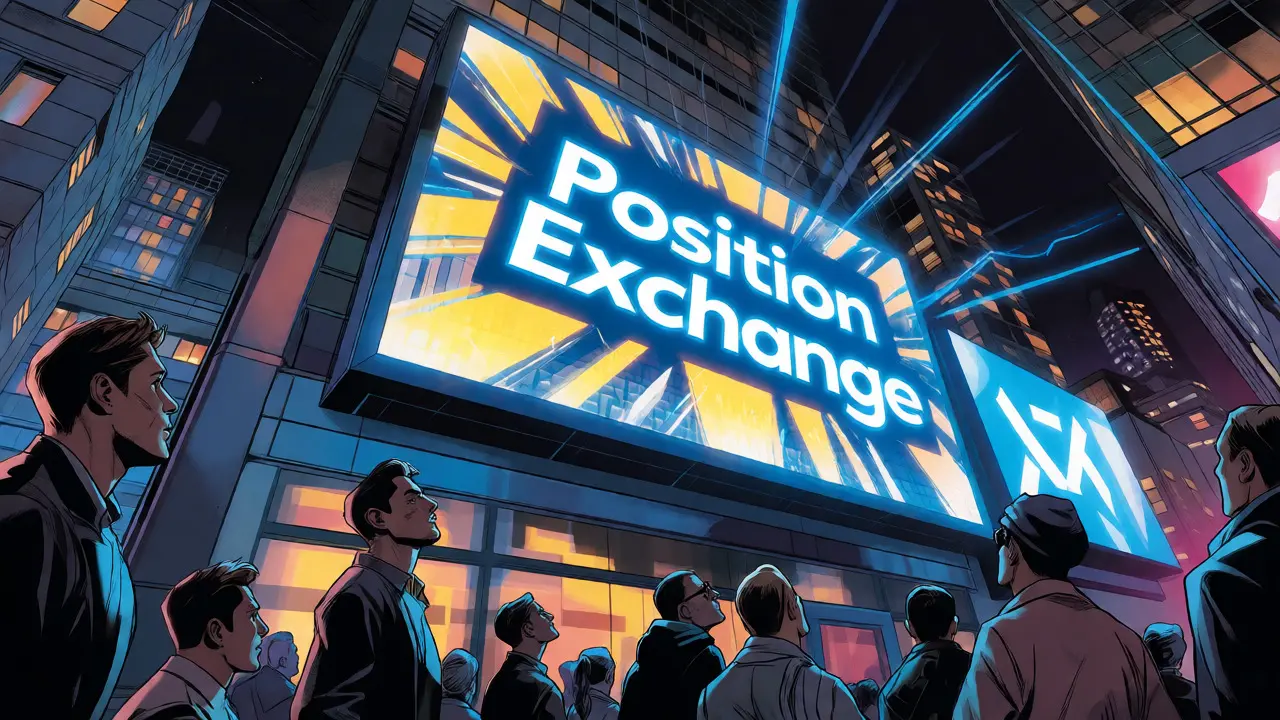
Position Exchange Times Square Billboard Airdrop: Scam or Real?
You saw the tweet. A flashy image of a massive Times Square billboard displaying "Position Exchange" with a promise of free tokens. It looked official. The lights were bright, the location was iconic, and the message screamed legitimacy. You clicked the link, ready to claim your slice of the pie. But before you connect your wallet or type in that precious seed phrase, stop. There is a high probability you are staring at one of the most sophisticated marketing traps in modern crypto history.
The idea that a physical billboard in New York can directly distribute digital assets sounds plausible if you don't understand how blockchain technology actually works. It doesn't. In fact, experts suggest that this specific campaign, known as the Position Exchange airdrop event, fits the profile of a coordinated scam rather than a legitimate promotional stunt. Let's break down why this "event" raises more red flags than a black-and-white taxi on Fifth Avenue.
The Technical Impossibility of Billboard Airdrops
Here is the core problem: billboards do not talk to wallets. They are passive displays. Whether it is the famous Nasdaq Tower or a digital screen on Broadway, these structures use standard signage hardware like Daktronics or Watchfire systems. These screens display pixels; they do not have NFC chips, Bluetooth transmitters, or any mechanism to read a user's public key or initiate a smart contract transaction.
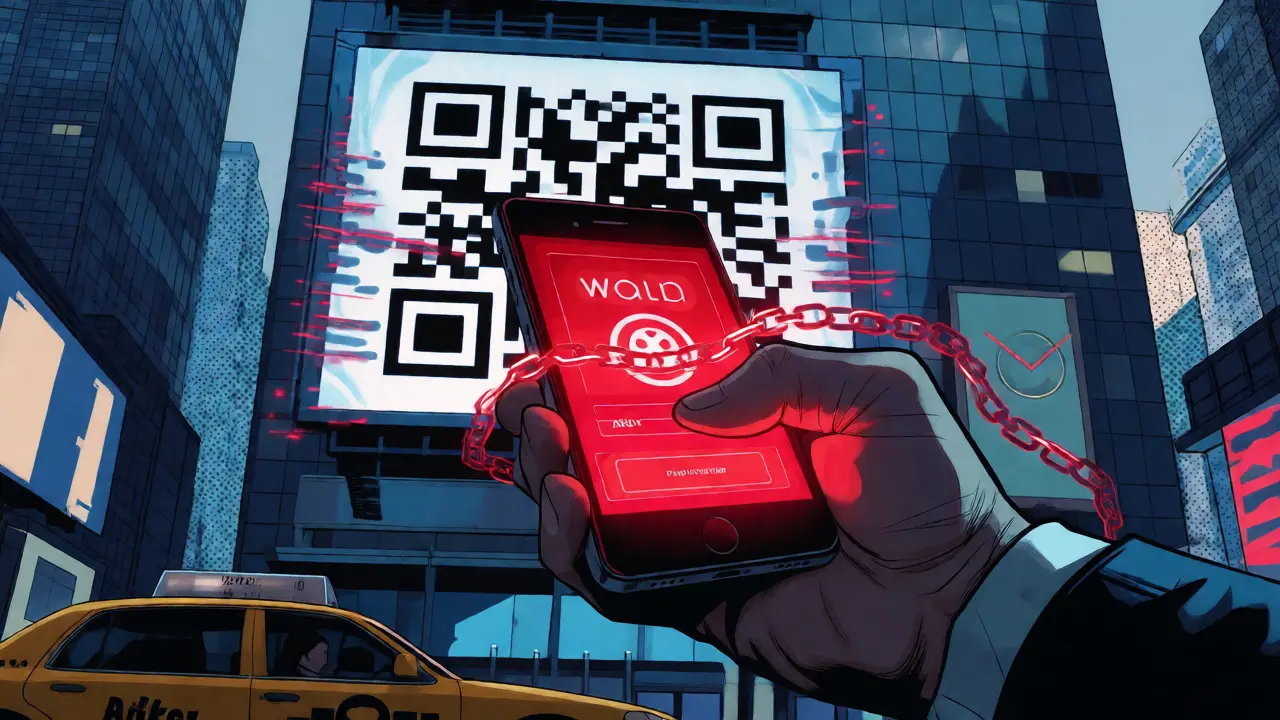
To receive an airdrop, you typically need to perform an action on-chain. This might involve interacting with a smart contract, holding a specific token balance, or registering an email address linked to a wallet. A billboard cannot verify if you hold ETH or SOL. It cannot check your transaction history. If you see a QR code on a billboard claiming to give you tokens instantly, it is almost certainly directing you to a phishing site designed to mimic a legitimate claim portal. The billboard is just the bait; the website is the trap.
| Feature | Physical Billboard | Crypto Airdrop Requirement |
|---|---|---|
| Interaction Method | Visual (Light/Pixels) | Digital (Smart Contract/API) |
| Data Collection | None (Passive Display) | Wallet Address/Email |
| Token Distribution | Impossible Directly | On-Chain Transaction |
| Verification | N/A | Blockchain Explorer Check |
Red Flags in the Position Exchange Campaign
If we look closely at the Position Exchange claims, several details stand out as inconsistent with established industry practices. First, there is no verifiable footprint for this entity in major financial or regulatory databases. As of late 2025, searches through the SEC and CFTC filings reveal no active registrations for a company operating under this name with significant capital backing. Legitimate exchanges aiming for brand awareness in Times Square usually have substantial venture capital funding and clear leadership teams listed publicly.
Furthermore, blockchain explorers like Etherscan and BscScan show zero transactions referencing a "Position Exchange Times Square Airdrop." In the crypto world, everything leaves a trace. If thousands of users claimed tokens, there would be a surge in gas fees and visible wallet activity. Instead, the silence on-chain is deafening. This suggests that either the event never happened technically, or the "tokens" being promised are not yet minted, meaning the project has no actual asset to distribute.
The domain itself offers another clue. While domains change hands quickly, reports indicate that position.exchange has shown signs of being a parked page or lacking deep content infrastructure typical of a live exchange. Compare this to giants like Binance or Coinbase, whose websites host extensive documentation, API endpoints, and regulatory disclosures. A simple landing page with a countdown timer and a "Claim Now" button is often the hallmark of a hype-driven scheme rather than a functional platform.
The Anatomy of the "Billboard Scam"
This isn't just about Position Exchange; it's part of a broader trend known as the "Billboard Airdrop Scam." Fraudsters exploit the prestige of Times Square to create an illusion of trust. By paying for a short-term slot on a secondary screen-or even using Photoshop to mock up a primary billboard-they generate social media buzz. Users share the images, assuming that "if it's in Times Square, it must be legit."
The Federal Trade Commission has warned about this specific tactic. The pattern is consistent: a viral post features a manipulated or real-but-misleading photo of a billboard. The caption promises free tokens for early adopters. The link leads to a dApp (decentralized application) that asks you to "connect wallet." Once connected, the interface prompts you to sign a transaction that looks like a claim but is actually an approval for unlimited token spending. Your funds are then drained by automated bots.
Data from security firms like Chainalysis highlights the scale of this issue. Since November 2025 alone, millions in ETH have been lost to variants of this scam. Wallets associated with these campaigns often funnel stolen assets into mixers like Tornado Cash within minutes, making recovery nearly impossible for victims.
How to Verify a Crypto Event Before Clicking
Don't rely on visuals. Rely on data. Here is a quick checklist to determine if a crypto promotion is worth your time:
- Check the On-Chain Activity: Go to Etherscan or Solscan. Search for the project's token contract. Is there actual trading volume? Are there verified holders?
- Verify the Domain Age: Use WHOIS tools to see when the website was registered. A domain created last week promising a massive global rollout is suspicious.
- Look for Regulatory Filings: Does the company appear in US or EU financial registries? Legitimate exchanges comply with KYC (Know Your Customer) laws.
- Analyze the Social Sentiment: Check independent forums like Reddit or Twitter/X. Are real people discussing the product, or is it just bot-like praise?
- Never Share Seed Phrases: No legitimate airdrop ever requires your private key or seed phrase. Only your public address should be shared.
In the case of Position Exchange, the lack of third-party audits and the absence of credible news coverage from outlets like CoinDesk or Cointelegraph further weaken its case. When a project bypasses traditional journalism and relies solely on paid influencers and visual stunts, proceed with extreme caution.
What Should You Do If You Already Connected Your Wallet?
If you interacted with the Position Exchange site, act fast. Revoke permissions immediately. Tools like Revoke.cash allow you to disconnect contracts that have access to your tokens. This won't recover already stolen funds, but it prevents future drains from recurring approvals.
Also, monitor your wallet addresses. If you notice unfamiliar transactions, consider moving remaining assets to a fresh, untouched wallet address. Treat the old address as compromised. For those who haven't clicked yet, the safest move is to ignore the hype. The cost of missing a potential small gain is far lower than the risk of losing significant holdings to a phishing attack.
While Times Square remains a powerful symbol of success, it is no longer a guarantee of integrity in the crypto space. Anyone with a few thousand dollars can rent a screen for 24 hours. That accessibility makes it easy for scammers to borrow credibility from the location. Always dig deeper than the surface-level glamour.
Can a billboard physically send me crypto?
No. Billboards are passive visual displays without internet connectivity or wallet integration capabilities. They cannot execute smart contracts or detect your presence digitally.
Is Position Exchange a legitimate company?
As of current records, there is little evidence supporting Position Exchange as a major licensed entity. Lack of regulatory filings and on-chain activity suggests it may be a new or unverified project, potentially a scam.
Why do scams use Times Square billboards?
Scammers leverage the prestige of Times Square to create false credibility. A billboard there signals wealth and success to consumers who assume only established companies advertise in such premium locations.
What happens if I enter my seed phrase?
You will likely lose all assets in that wallet. Never enter a seed phrase into a website claiming to offer an airdrop. Only your public address is safe to share.
How can I revoke wallet permissions?
Use tools like Revoke.cash or Etherscan's Token Approval tool to find and disconnect contracts that have permission to spend your tokens.


Great breakdown. I've been telling people for years that billboards are just pixels, not smart contracts! If you see a QR code promising free tokens from a billboard, run! Check Etherscan first, always check the contract address before signing anything. Stay safe out there!
I completely agree with the previous comment regarding the necessity of on-chain verification.
It is imperative that we educate our communities about the technical limitations of physical advertising mediums. The assumption that visibility equals legitimacy is a dangerous cognitive bias in the cryptocurrency space. We must remain vigilant and prioritize due diligence over hype.
ugh i hate this stuff!! so many ppl getting scammed... its like they dont even read?? just click click click and boom wallet empty!!! super frustrating to watch happen again and again... need more education honestly...
yep seen it happen too. sad but true
Oh, the sheer audacity of these charlatans! It is absolutely devastating to witness the erosion of trust in such a vital sector. One feels a profound sense of sorrow for those who have entrusted their hard-earned capital to entities that lack even the most basic regulatory frameworks. It is a tragedy of epic proportions, really, when one considers the human cost behind every drained wallet.
Ah, the classic "if it's in Times Square, it must be real" fallacy. How delightfully naive we all can be sometimes. But let's play devil's advocate for a second: what if the billboard isn't trying to send crypto directly? What if it's just a marketing funnel? Sure, the article says it's a scam, but isn't all marketing a bit of a lie? Or am I being too cynical here?
Love this perspective! :D Totally agree that checking the smart contract address is key. We gotta protect our seed phrases at all costs! Let's keep supporting each other in navigating these tricky DeFi waters. You got this! :)
This is a well-articulated analysis. I appreciate the distinction made between passive displays and active blockchain interactions. It serves as a gentle reminder to maintain healthy boundaries when interacting with new platforms. Thank you for sharing this insight.
wait wait wait... does anyone else think the domain age check is the most important part??? seriously... if domain is new... red flag big time!!! also why do ppl ignore revoke.cash?? its so easy to use!!! should be mandatory step after connecting wallet imo!!!
My heart goes out to everyone who has lost funds to these schemes. It is often the most vulnerable members of our community who are targeted by these sophisticated traps. We must approach these opportunities with empathy and caution, ensuring that no one is left behind in the rush for digital assets.
Listen up folks because I'm tired of seeing idiots lose money!! This ain't rocket science!! If it looks too good to be true it IS!! Stop clicking random links from twitter bots!! Do your own research or stay home!! Simple as that!! Don't come crying to me when your ETH is gone!!
hey hey... maybe u r all overreacting?? some projects are legit just new?? how do u know for sure without investing?? seems like fear mongering to me... anyway i tried it once... lost only 50 bucks... no biggie right?? lol
agreed with sean above check the contract first saves so much hassle