What Happens If You Lose Your Private Key? The Permanent Reality of Crypto Loss
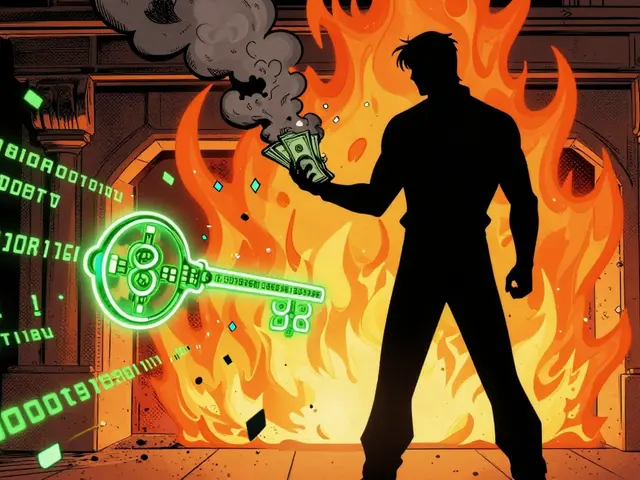
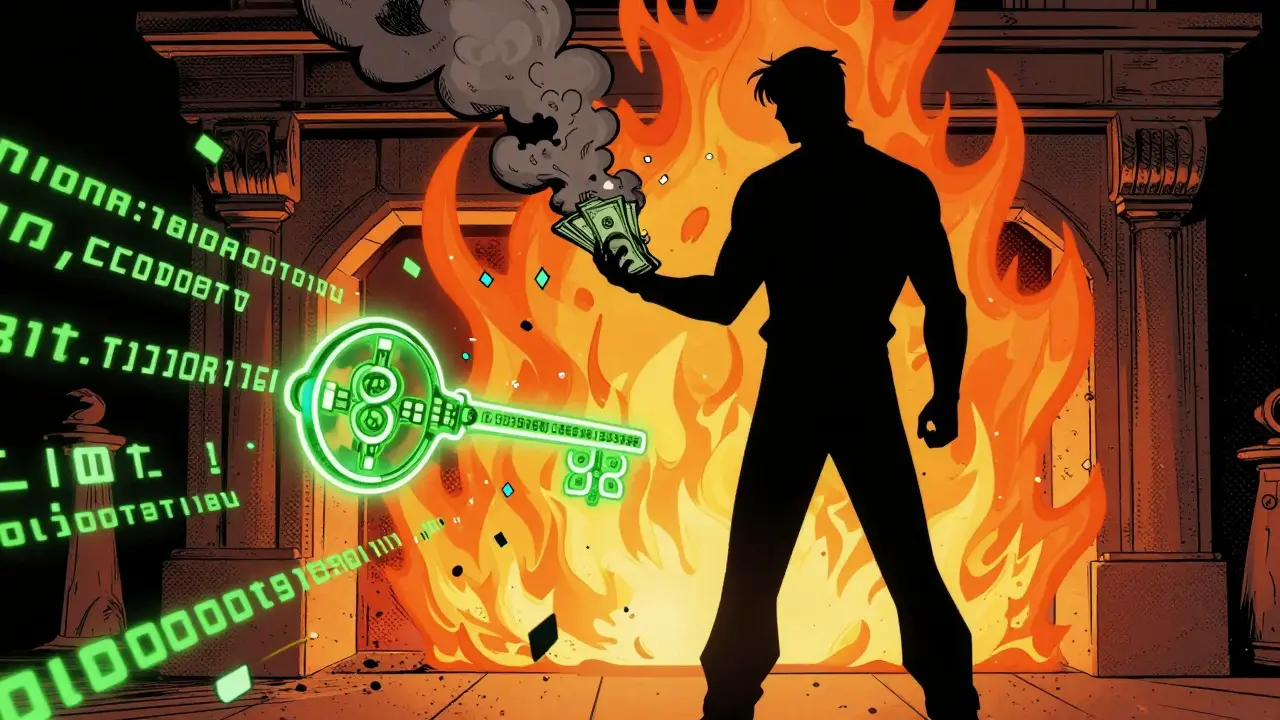
Imagine burning a stack of cash in your fireplace. You can’t un-burn it. You can’t call the bank to reprint those specific bills. Now, imagine that stack of cash is worth millions and exists only as a string of code on a digital ledger. This is exactly what happens when you lose your private key. It is not a forgotten password you can reset with an email link. It is a permanent severance from your assets.
In the world of traditional banking, losing your debit card is an inconvenience. You call the number on the back, verify your identity, and get a new one. In the decentralized world of cryptocurrency, digital currency secured by cryptography that operates independently of a central bank, there is no customer service line. There is no central authority. If you lose the key, you lose the asset. Period.
The Technical Reality: Why Recovery Is Impossible
To understand why you can't just "reset" your access, you have to look at how the technology works under the hood. A private key is a cryptographic code, typically a 256-bit number, that proves ownership of digital assets and allows users to sign transactions on a blockchain. Think of it as the ultimate signature. It is mathematically linked to your public address-the account number where people send you money-but the link is one-way. You can derive the public address from the private key, but you cannot reverse-engineer the private key from the public address.
This design relies on elliptic curve cryptography, specifically the secp256k1 algorithm used by Bitcoin and Ethereum. The security comes from sheer mathematical complexity. There are approximately $1.15 \times 10^{77}$ possible combinations for a single private key. To put that in perspective, that number is larger than the estimated number of atoms in the observable universe ($10^{80}$). Guessing someone’s private key is statistically impossible. But this same impenetrable wall that protects you from hackers also locks you out if you misplace the key yourself.
When Satoshi Nakamoto launched Bitcoin in 2009, this was a feature, not a bug. The goal was to create a system where trust was placed in code, not in banks or governments. As Vitalik Buterin, co-founder of Ethereum, noted in early design documentation, the system must remain secure even if a user loses every device except their private key. That means no backdoors. No emergency overrides. No "forgot password" buttons.
Lost vs. Stolen: A Critical Distinction
It is crucial to distinguish between losing a key and having funds stolen. These are two completely different scenarios with vastly different outcomes.
If your funds are stolen, the transaction still happens on the blockchain. Blockchain analysis firms like Elliptic can trace these movements with high accuracy-reporting 92.7% accuracy in their 2025 Transparency Report. While you can’t force the blockchain to reverse the transaction, you might be able to work with exchanges to freeze assets if they land in a regulated account. There is a paper trail.
But if you lose your private key, the coins don’t move. They sit in your wallet address, perfectly safe, perfectly visible on the blockchain explorer. Andreas Antonopoulos, author of *Mastering Bitcoin*, famously said, "There is no such thing as a lost bitcoin, only lost private keys." The asset exists, but the ability to spend it is gone forever. It becomes part of the "dead capital" of the network.
| Scenario | Asset Status | Recovery Possibility | Traceability |
|---|---|---|---|
| Stolen Funds | Moved to attacker's wallet | Low (requires law enforcement/exchange cooperation) | High (on-chain tracking possible) |
| Lost Private Key | Remains in original wallet | Zero (mathematically impossible without key) | N/A (assets are static) |
| Hacked Exchange | Moved by attacker | Variable (depends on insurance/funds location) | Medium (mixers may obscure path) |
The Scale of the Problem: Dead Coins
You might think this is a rare edge case, but the data suggests otherwise. According to Chainalysis’ 2024 Cryptocurrency Crime Report, approximately 3.7 million BTC remains permanently inaccessible due to lost private keys. As of January 2026, that amount is valued at roughly $248 billion. That is nearly half of all bitcoins ever created, sitting idle because their owners misplaced a piece of paper, deleted a file, or died without leaving instructions.
This isn't just about wealthy early adopters. Consumer protection advocates highlight that 38% of cryptocurrency-related complaints filed with the CFPB in 2023 involved access issues. For many users, the barrier isn't hacking; it's human error. A Reddit user known as 'CryptoWidow2024' shared a heartbreaking story in March 2025 about losing $1.2 million after her husband passed away without disclosing his wallet recovery phrase. The exchange could do nothing. The money didn't vanish; it just became unreachable.

Common Causes of Key Loss
How does this happen? It rarely involves sophisticated cyberattacks against the individual. Most losses stem from simple failures in backup hygiene. An OSL Academy report from April 2025 found that 68.7% of users who lost access did so by forgetting passwords or recovery phrases. Another 22.4% experienced hardware wallet failures where the device broke and no backup existed.
Here are the most common ways people lose their keys:
- Physical Destruction: Writing a seed phrase on paper and storing it in a drawer that floods, burns, or gets thrown away during a move.
- Digital Deletion: Accidentally deleting the wallet file (like an Electrum wallet file) without exporting the seed phrase first.
- Hardware Failure: Relying solely on a hardware wallet like a Ledger or Trezor without writing down the recovery phrase, then breaking the device.
- Memory Decay: Trying to memorize a 24-word mnemonic phrase and getting one word wrong over time.
- Death Without Disclosure: Passing away without telling heirs where the keys are or how to access them.
Prevention Strategies: The 3-2-1 Backup Rule
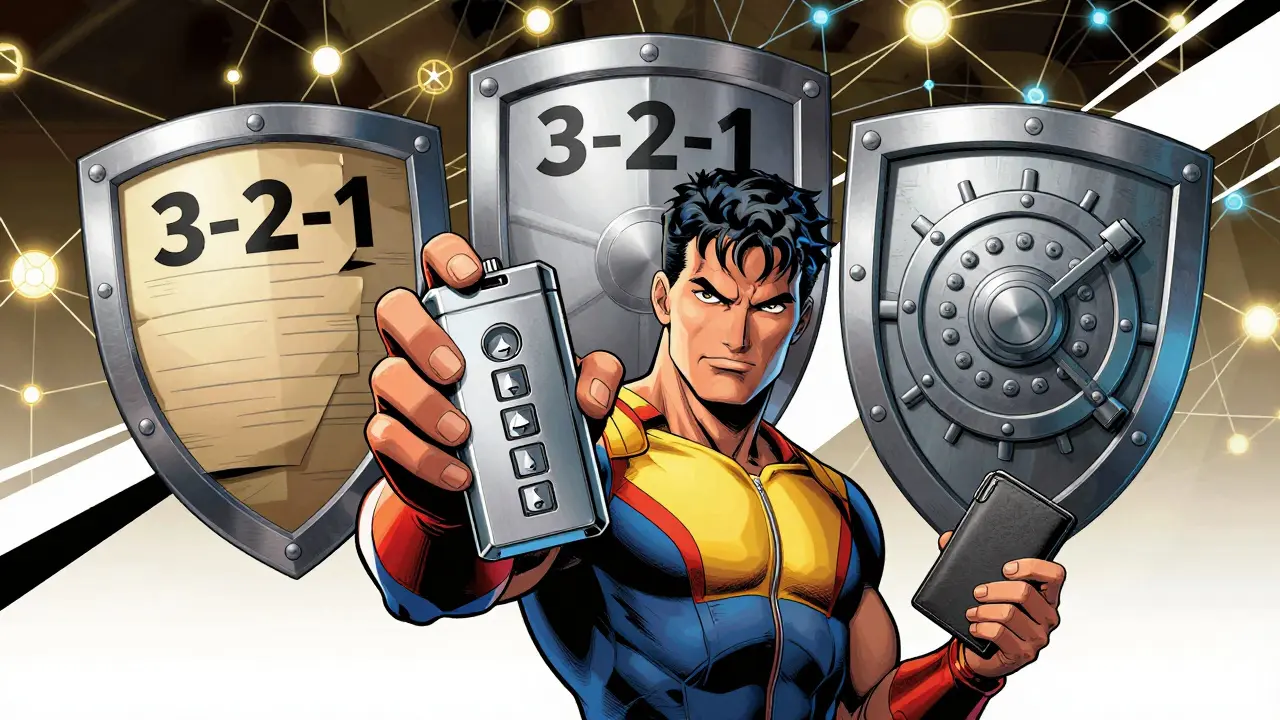
Since recovery is impossible, prevention is your only job. The gold standard in the industry is the 3-2-1 Backup Rule, a data backup strategy advocating for three copies of data, on two different media types, with one copy stored offsite. Here is how you apply it to crypto:
- Three Copies: Create at least three physical copies of your seed phrase (the 12-24 words generated when you set up your wallet).
- Two Media Types: Don’t just use paper. Consider metal backups (like Cryptosteel or Billfodl) which are fireproof and waterproof. Paper rots; metal lasts centuries.
- One Offsite: Keep one copy in a secure location separate from your home. A safety deposit box at a bank is ideal. Do not store a digital photo of your seed phrase in the cloud-this defeats the purpose of self-custody.
Also, consider using a hardware wallet, a physical device designed to store cryptocurrency private keys offline, protecting them from online hacks. Devices like the Ledger Nano X or Trezor Model T keep your keys isolated from internet-connected computers. Even if your laptop is infected with malware, the private key never leaves the device.
Emerging Solutions: Social Recovery and MPC
The industry knows this problem is unsustainable for mass adoption. New technologies are emerging to mitigate risk without compromising decentralization.
Social Recovery Wallets: Platforms like Argent allow you to appoint "guardians"-trusted friends, family, or services-who can help you recover access if you lose your device. If you lose your phone, you ask three guardians to approve a recovery request. This adds a layer of social verification to the cryptographic process.
Multi-Party Computation (MPC): Used heavily by institutions via providers like Fireblocks, MPC splits the private key into multiple shards. No single person holds the full key. Transactions require multiple parties to collaborate cryptographically. This prevents any single point of failure while maintaining security.
Custodial Services: For those unwilling to manage keys themselves, custodial wallets (held by exchanges like Coinbase) offer a "forgot password" option. However, this shifts control to the company. If the exchange goes bankrupt or freezes your account, you lose access. This is the trade-off: convenience vs. sovereignty.
Legal and Estate Planning Implications
Losing a key isn't just a technical issue; it's a legal nightmare. Professor Aaron Wright of Cardozo Law School noted in Harvard Business Review that cryptographic certainty creates legal uncertainty when keys disappear. Courts struggle to enforce orders against assets that are technically present but inaccessible.
If you hold significant crypto assets, you must include them in your estate plan. Write clear instructions on how to access your wallets and store them with your will or in a safe deposit box accessible to your executor. Without this, your heirs may inherit a digital ghost town.
Can I recover my Bitcoin if I lost my private key?
No. Once a private key is lost, the associated Bitcoin is permanently inaccessible. There is no central authority, backdoor, or technical method to recover it. The coins remain on the blockchain but cannot be moved or spent.
What is the difference between a private key and a seed phrase?
A seed phrase (or recovery phrase) is a human-readable list of 12-24 words that generates your private keys. The private key is the actual cryptographic code used to sign transactions. Losing the seed phrase means you lose the ability to regenerate your private keys, resulting in the same outcome as losing the key itself.
Is it safer to use an exchange or a self-custody wallet?
It depends on your priorities. Exchanges offer easier recovery options (like password resets) but carry counterparty risk-if the exchange fails, you lose your funds. Self-custody wallets give you full control and eliminate counterparty risk, but place the entire burden of security and backup on you. There is no "safe" option, only different risk profiles.
How much Bitcoin has been lost forever?
Estimates suggest that approximately 3.7 million BTC, or nearly 18% of all existing Bitcoin, is permanently lost due to lost keys or forgotten passwords. This represents hundreds of billions of dollars in dead capital.
Can hackers steal my private key if I use a hardware wallet?
Hardware wallets are designed to keep private keys offline, making them highly resistant to remote hacking. However, they are not immune to physical theft, phishing attacks during setup, or supply chain compromises. Always buy devices directly from manufacturers and never share your seed phrase.