
German Crypto Exchange Regulations and Licensing: The 2026 Guide
If you are running a crypto exchange in Europe, you know the regulatory landscape is shifting under your feet. But in Germany, the ground has already settled into one of the most rigorous, clear, and demanding frameworks on the continent. As of September 2026, operating a crypto exchange in Germany requires navigating a complex intersection of national BaFin licensing and EU-wide MiCAR compliance. It’s not just about ticking boxes; it’s about surviving active enforcement.
Why does this matter? Because Germany isn’t just another market. With over 82 million people and a robust financial sector, it’s a gateway to the entire EU. But getting through the door means satisfying the Federal Financial Supervisory Authority (BaFin) and adhering to the Markets in Crypto-Assets Regulation (MiCAR). If you’re planning to launch or expand here, you need to understand exactly what keeps regulators up at night-and what keeps them happy.
The Dual-Layer Regulatory Framework
Germany doesn’t rely on a single law. Instead, it uses a layered approach that combines domestic legislation with European directives. Since December 30, 2024, the EU’s MiCAR has been fully applicable, creating a unified rulebook for crypto assets across the bloc. However, national rules still apply where MiCAR leaves gaps or allows member states discretion.
Two major German acts passed in early 2025 set the stage:
- FinmadiG (Financial Market Digitalization Act): This updated the German Banking Act (KWG) and Securities Trading Act (WpHG) to include crypto services explicitly.
- KMAG (Crypto Asset Market Supervision Act): This established the specific supervisory powers of BaFin over crypto service providers.
This structure means an exchange must satisfy both the broad EU standards and the specific operational requirements set by BaFin. Ignoring either layer can result in immediate shutdowns, as seen in recent enforcement actions.
BaFin Licensing: The Gatekeeper Role
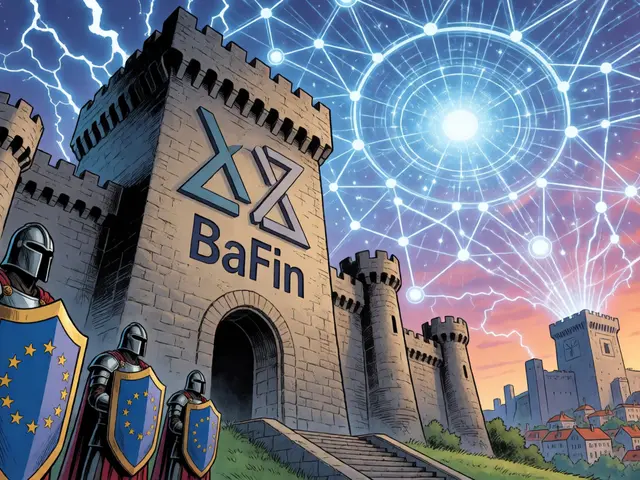
You cannot legally offer crypto services in Germany without authorization from BaFin the German Federal Financial Supervisory Authority responsible for regulating banks, insurers, and now crypto firms. Unlike some jurisdictions where registration is enough, Germany demands a full license for activities like custody, trading, and exchange services.
The application process is thorough. You must demonstrate:
- Reliability: Key personnel must have clean records and proven expertise in finance or tech.
- Capital Adequacy: You need sufficient initial capital, which varies based on the services offered. For example, holding client funds requires higher reserves than simple brokerage.
- IT Infrastructure: Your systems must meet strict cybersecurity standards. BaFin expects robust disaster recovery plans and real-time monitoring capabilities.
It’s worth noting that existing license holders, such as traditional banks or investment firms, don’t necessarily need a new license to start offering crypto services. They often only need to notify BaFin, provided their existing license covers the new activity. This "grandfathering" provision helped many established players transition smoothly during the 2025 implementation phase.
Token Classification Matters
Not all tokens are treated equally. BaFin classifies crypto assets based on their economic function, and this classification dictates which laws apply. Misclassifying a token can lead to severe penalties.
| Token Type | Characteristics | Applicable Regulation |
|---|---|---|
| Payment Tokens | Used primarily for payments (e.g., Bitcoin) | Money Laundering Act (GwG), KryptoWTransferV |
| E-Money Tokens | Represent a claim against the issuer, pegged to fiat | E-Money Directive (EMD2), E-Money Act |
| Utility Tokens | Provide access to a digital service | General contract law, Consumer Protection laws |
| Security-like Tokens | Resemble shares or bonds, entitle to profits | Securities Prospectus Act (WpPG), MiFID II |
| Asset-Referenced Tokens | Backed by multiple assets or commodities | MiCAR Title III |
For instance, if your exchange lists a token that pays dividends, BaFin will likely treat it as a security. That triggers prospectus requirements and stricter disclosure obligations. Always consult legal counsel before listing new assets.

AML and KYC: The Travel Rule in Practice
Anti-money laundering (AML) compliance is non-negotiable. Germany implements the FATF “Travel Rule” through the KryptoWTransferV Crypto Asset Transfer Regulation requiring exchanges to collect and transmit sender and receiver data.
What does this mean for your operations?
- Data Collection: For every transfer above €1,000, you must record the originator’s name, account number, and address, plus the beneficiary’s details.
- Real-Time Transmission: This data must travel with the transaction to the receiving provider.
- Sanctions Screening: You must check participants against international sanctions lists before executing trades.
BaFin President Mark Branson has repeatedly emphasized that AML failures are among the top reasons for regulatory intervention. In 2025 alone, several exchanges faced fines for inadequate customer due diligence. Don’t let poor KYC processes kill your business.
Tax Reporting and Documentation
Germany treats crypto assets as private property for tax purposes, but exchanges play a crucial role in reporting. The Federal Ministry of Finance updated its guidance in March 2025, clarifying how to value transactions using daily market rates.
Key points for exchanges:
- Transaction Overviews: You must provide users with detailed statements showing purchase price, sale price, and fees.
- Staking Rewards: Differentiate between active staking (taxable as income) and passive rewards (potentially exempt after one year).
- DeFi Complexity: The 2025 circular was the first to address decentralized finance, noting that yield farming rewards may be taxable upon receipt.
Poor documentation leads to audits. And German tax authorities are known for being meticulous. Ensure your platform generates compliant reports automatically.
Enforcement: BaFin Doesn’t Play Games
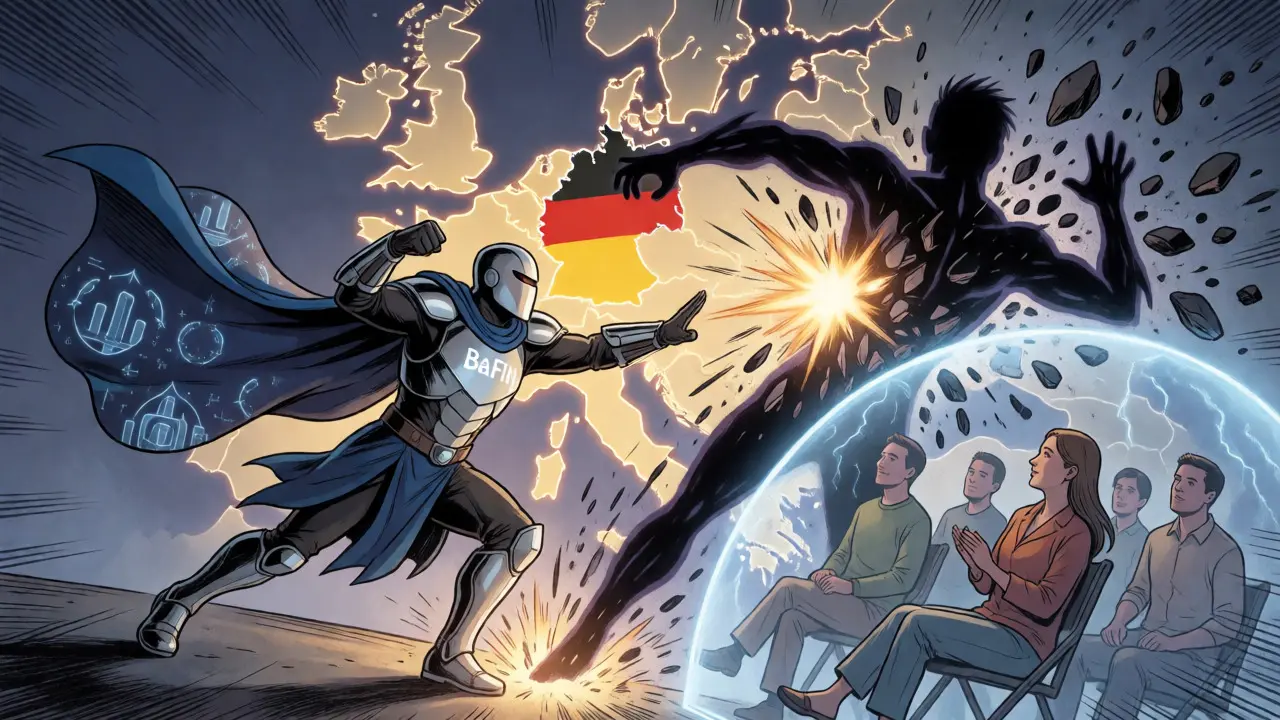
Regulations are only as good as their enforcement. BaFin has shown it’s willing to act swiftly. In June 2025, they ordered Ethena GmbH to wind down its USDe stablecoin operations in Germany due to regulatory concerns. Holders had until August 6, 2025, to redeem their tokens via a special representative appointed by BaFin.
This case highlights two things:
- Consumer Protection First: If a product poses risks to consumers, BaFin will intervene, even if the firm is technically licensed.
- Active Supervision: Regulators monitor ongoing operations, not just initial applications.
Don’t assume your license guarantees safety. Continuous compliance is required.
Strategic Advantages of Operating in Germany
Despite the hurdles, why do companies choose Germany? Three reasons stand out:
- Market Access: A BaFin license grants passporting rights across the EU under MiCAR. One license, 27 markets.
- Credibility: Being regulated by BaFin signals stability to institutional investors and partners.
- Innovation Support: Germany offers R&D grants and tax incentives for fintech innovation, helping offset compliance costs.
Moreover, Germany’s double taxation treaties with over 90 countries reduce cross-border friction for international crypto businesses.
Checklist for Compliance Readiness
Before applying for a license, ensure you have these elements in place:
- [ ] Legal entity registered in Germany with adequate capital.
- [ ] Business plan detailing target customers and revenue models.
- [ ] IT security audit report confirming ISO 27001 compliance.
- [ ] AML officer appointed with relevant experience.
- [ ] White paper prepared for any new token offerings.
- [ ] Customer support system capable of handling complaints within 15 days.
Do I need a separate license for each crypto service?
No, a single BaFin license can cover multiple services like custody, trading, and advisory, provided you meet the requirements for each. However, adding new services later requires notifying BaFin and potentially undergoing additional checks.
How long does the BaFin licensing process take?
Typically, it takes six to nine months. Delays often occur due to incomplete documentation or requests for additional information regarding IT infrastructure or shareholder structures.
Can foreign exchanges operate in Germany without a local license?
Generally, no. Under MiCAR, third-country firms need a branch or subsidiary authorized in an EU member state. Serving German clients directly without EU authorization is risky and often prohibited for regulated activities.
What happens if I fail an AML audit?
Consequences range from heavy fines to suspension of operations. In severe cases, BaFin can revoke your license entirely. Repeated violations may lead to criminal charges for management.
Are DeFi platforms subject to the same regulations?
Currently, pure DeFi protocols face less direct oversight, but centralized interfaces (like DEX aggregators) acting as custodians fall under MiCAR. If you control user keys, you’re likely regulated.