Dinosaur Eggs (DSG) Crypto Exchange Review: Is This DEX Worth Your Time?
Imagine putting your hard-earned crypto into a platform where the last code update happened over two years ago. That is the reality for Dinosaur Eggs, a decentralized exchange that feels like it’s been frozen in amber since mid-2023. If you are hunting for high-yield farming or obscure tokens on the Binance Smart Chain, you might have stumbled upon this project and wondered if it’s still alive or just a ghost town.
This review cuts through the hype to look at the cold, hard data. We are talking about trading volumes, developer activity, and security risks. You need to know if your funds are safe here or if you are better off sticking with established platforms like PancakeSwap. Let’s break down what Dinosaur Eggs actually offers and why its current status demands caution.
What Exactly Is Dinosaur Eggs?
Dinosaur Eggs is a decentralized exchange (DEX) and metaverse project built on the Binance Smart Chain network. It positions itself as "the dinosaur world," combining standard DeFi trading features with an NFT marketplace and plans for social networking integration. Unlike centralized exchanges where you trust a company with your keys, Dinosaur Eggs uses smart contracts to facilitate peer-to-peer trades directly from your wallet.
The native asset driving this ecosystem is the DSG token. As of late August 2026, this token trades at approximately $0.0002. The project aims to create a self-sustaining economy where users can trade assets, mint NFTs, and potentially interact within a virtual environment. However, the gap between the ambitious "metaverse" branding and the actual technical execution is wide.
Technically, the platform operates via a specific smart contract address ending in 4abd35, verifiable on BscScan. This transparency is standard for blockchain projects, allowing anyone to audit transactions. But while the code is public, the lack of recent updates suggests the development team has moved on or stalled entirely.
Liquidity and Trading Volume Analysis
If you plan to trade large amounts, liquidity is king. Dinosaur Eggs currently holds a Total Value Locked (TVL) of roughly $926,834. For context, major DEXes lock billions. A TVL under $1 million indicates limited adoption. When pools are shallow, even modest buy or sell orders can cause significant price slippage. You might end up paying more than expected when entering a position.
The daily trading volume tells a similar story. Recent data shows a 24-hour volume of around $50,000. Compare this to PancakeSwap, which routinely handles hundreds of millions daily, and the difference is stark. Low volume means fewer active traders and less efficient price discovery. If you are looking to flip tokens quickly, you might find yourself stuck waiting for a counterparty.
| Metric | Dinosaur Eggs (DSG) | PancakeSwap (CAKE) |
|---|---|---|
| Network | Binance Smart Chain | Binance Smart Chain & Others |
| Total Value Locked (TVL) | ~$926k | ~$1.5 Billion+ |
| 24h Trading Volume | ~$50k | ~$200 Million+ |
| Token Price (Approx.) | $0.0002 | $2.50 - $3.00 |
| Development Activity | Dormant (Last commit June 2023) | Highly Active |
The Developer Activity Red Flag
Here is the most critical piece of information for any investor: development stagnation. Code repositories tell the true story of a project’s health. Data from April 2023 showed only five weekly commits and twelve monthly commits. More alarmingly, the last recorded commit to the main codebase occurred on June 2, 2023.
We are now in August 2026. That means there has been no visible maintenance, bug fixing, or feature addition for over three years. In the fast-moving crypto world, three years is an eternity. Protocols usually require regular updates to patch security vulnerabilities, adapt to new blockchain standards, or fix user interface bugs. The absence of these updates raises serious questions about whether the team is still working on the project or if it has been abandoned.
With only one developer showing activity prior to the halt, the project lacked redundancy. If that single key developer left, the entire project likely stalled. This single-point-of-failure risk is common in small-cap altcoins but dangerous for long-term holders.
Security Risks and Fund Safety
Security audits are essential for any DeFi protocol. They provide independent verification that the smart contracts function as intended and aren’t vulnerable to exploits. Unfortunately, comprehensive, recent security audits for Dinosaur Eggs are not readily available in public databases. Without fresh audits, you are relying on the original code’s integrity, which hasn’t been stress-tested against modern attack vectors in years.
Consider the risks involved in using a dormant DEX:
- Smart Contract Vulnerabilities: New exploit methods emerge constantly. Unpatched code is a target.
- Liquidity Provider Risk: With low TVL, impermanent loss calculations can be skewed by volatile, illiquid pairs.
- Rug Pull Potential: While the project isn’t brand new, abandoned projects can sometimes see their remaining liquidity drained by insiders if governance fails.
- Support Void: If you encounter a transaction error, who do you ask? There is no active customer support team listed.
You should treat your capital here as high-risk speculative play money. Never invest more than you are willing to lose completely, especially given the lack of ongoing maintenance.
User Experience and Features
The user interface of Dinosaur Eggs follows the standard decentralized exchange layout. You connect your wallet (like MetaMask), select your trading pair, and approve the transaction. Because it is on the Binance Smart Chain, gas fees are generally lower than Ethereum, often costing just a few cents per transaction. This is a plus for micro-transactions, but does little to offset the low liquidity issues.
The platform claims to offer an NFT marketplace and future social networking features. However, without active development, these features may remain largely theoretical or buggy. Users report minimal engagement on the NFT side, suggesting the community aspect hasn’t taken off. The "metaverse" angle appears to be marketing fluff rather than a functional product right now.
Trading pairs are limited compared to larger exchanges. You won’t find every obscure token here. If the token you want to trade isn’t paired with BNB or USDT in a sufficiently deep pool, you simply cannot trade it efficiently.
Who Should Use Dinosaur Eggs?
Given the data, who actually benefits from using this exchange? It is not for beginners. Novices need reliability, clear support, and high liquidity to avoid confusion and losses. Dinosaur Eggs lacks all three.
It might appeal to very specific niche traders:
- Early Adopters of Niche Tokens: If a specific small-cap token launches exclusively on DSG, you have no choice but to use it initially.
- Speculators: Traders betting on a sudden revival or acquisition of the project might hold DSG tokens hoping for a pump.
- Privacy Advocates: Those who prefer non-KYC environments and don’t mind lower liquidity for anonymity.
For the average crypto user, established alternatives like Uniswap (on Ethereum/Polygon) or SushiSwap offer better security, higher liquidity, and active communities.
Final Verdict: Proceed with Extreme Caution
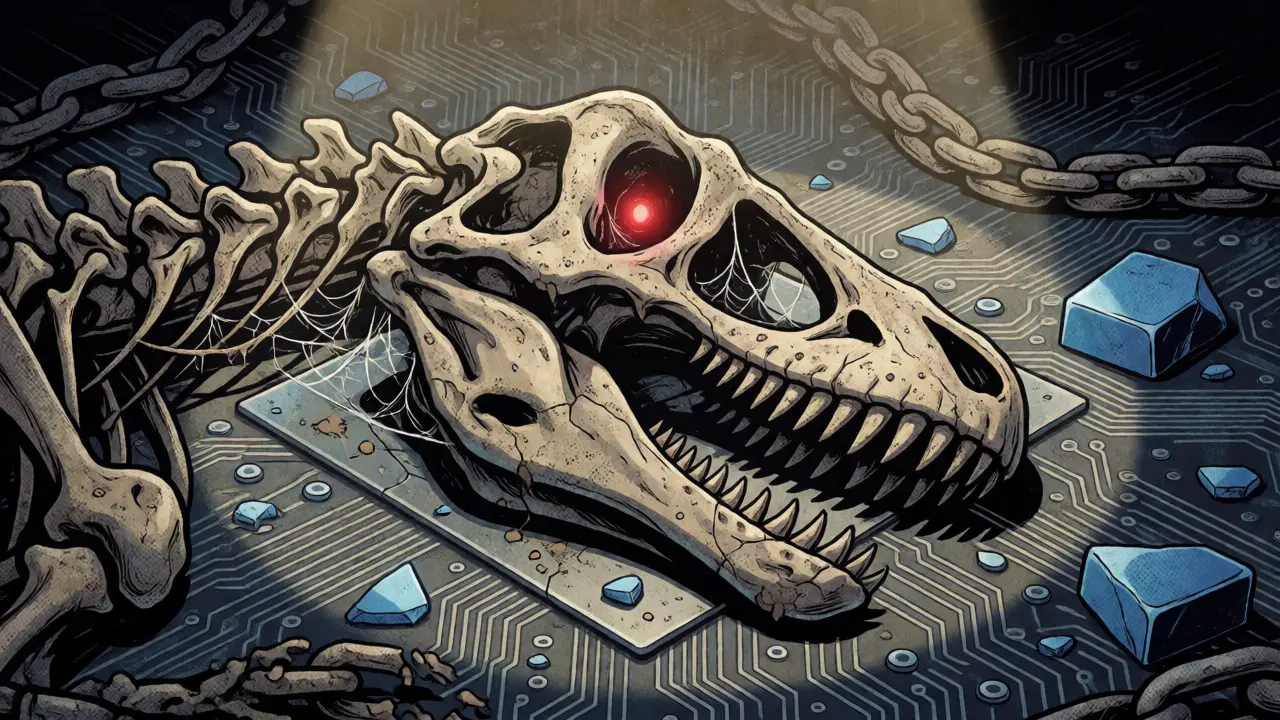
Dinosaur Eggs is a classic example of a "zombie" project in the crypto space. It technically exists and processes trades, but it lacks the heartbeat of active development. The combination of sub-$1M TVL, negligible daily volume, and a complete halt in coding activity since 2023 makes it a precarious place to store value.
If you are holding DSG tokens, keep an eye on the governance forums or social media channels for any sign of life. If you are considering buying, ask yourself: am I getting unique access to something valuable, or am I just buying into a graveyard? For most investors, the answer leans toward the latter. Stick to platforms with proven track records and active teams unless you have a specific, compelling reason to venture into the dinosaur world.
Is Dinosaur Eggs a scam?
There is no evidence to suggest Dinosaur Eggs is an outright scam, meaning it doesn't appear to be a deliberate theft of funds. However, it exhibits signs of abandonment. The lack of development since June 2023 and low trading volume classify it as a high-risk, potentially dead project rather than a fraudulent one.
Can I withdraw my funds from Dinosaur Eggs?
Yes, because it is a decentralized exchange on the Binance Smart Chain, you retain custody of your assets in your own wallet. You can withdraw funds at any time, provided the smart contract functions correctly and there is sufficient liquidity to execute the swap.
Why is the DSG token price so low?
The low price of $0.0002 reflects low demand and utility. With minimal trading volume and no new features being added, there is little incentive for users to buy or hold the token. Additionally, the total supply of the token plays a role; a massive circulating supply dilutes the value per unit.
Does Dinosaur Eggs have a mobile app?
No official dedicated mobile application is widely recognized or maintained. Users typically access the DEX through a mobile web browser using a Web3 wallet extension like MetaMask or Trust Wallet. Given the lack of development, a native app is unlikely to be released soon.
What are the fees on Dinosaur Eggs?
Standard decentralized exchange fees apply, typically around 0.2% to 0.3% per trade, paid in the traded tokens or BNB. Network gas fees on the Binance Smart Chain are separate and vary based on network congestion, usually costing less than $0.50 per transaction.