
FSA Crypto Oversight in Japan: How Strict Compliance Shapes the Global Standard
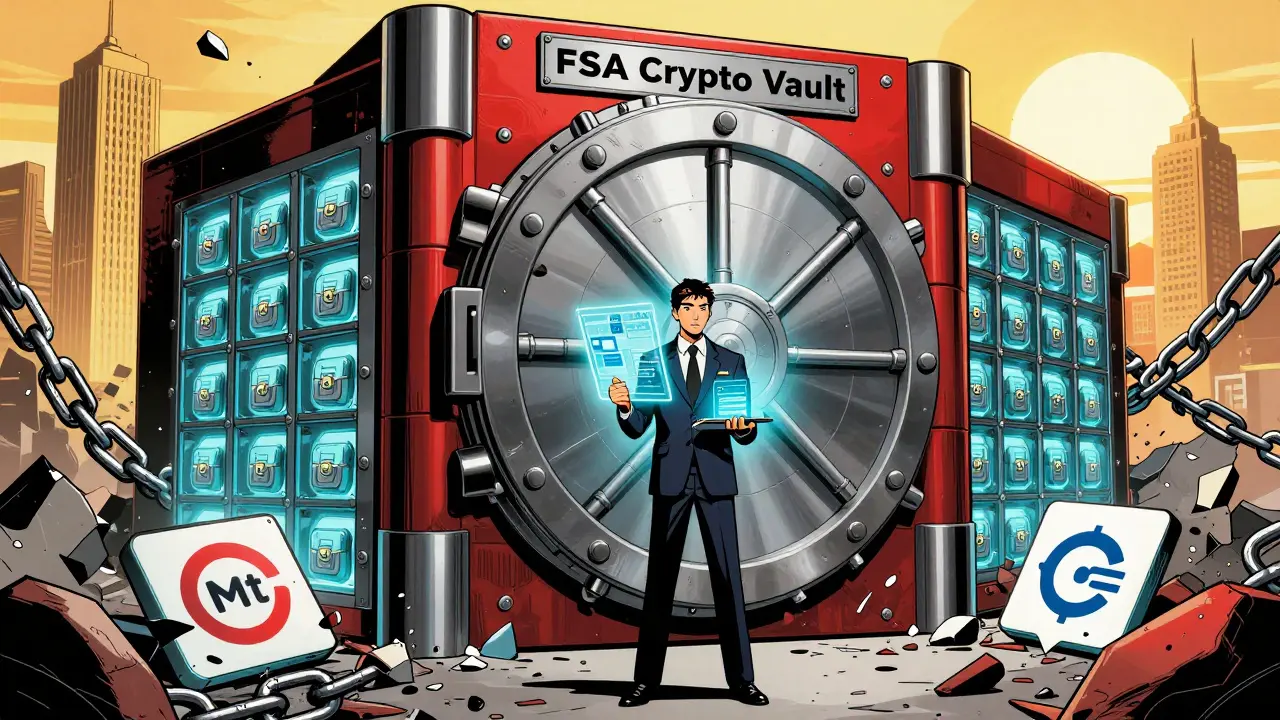
When you trade crypto in Japan, you're not just using an app-you're operating under one of the strictest financial oversight systems in the world. The Financial Services Agency (FSA) is Japan's primary financial regulator responsible for overseeing all digital asset exchanges and enforcing compliance with legally binding rules. Unlike other countries that dithered after the Mt. Gox collapse in 2014, Japan didn't just react-it rebuilt its entire crypto framework from the ground up. Today, FSA oversight isn't just about preventing fraud. It's about redefining how digital assets fit into the financial system.
From Payment System to Securities Law: The Big Shift
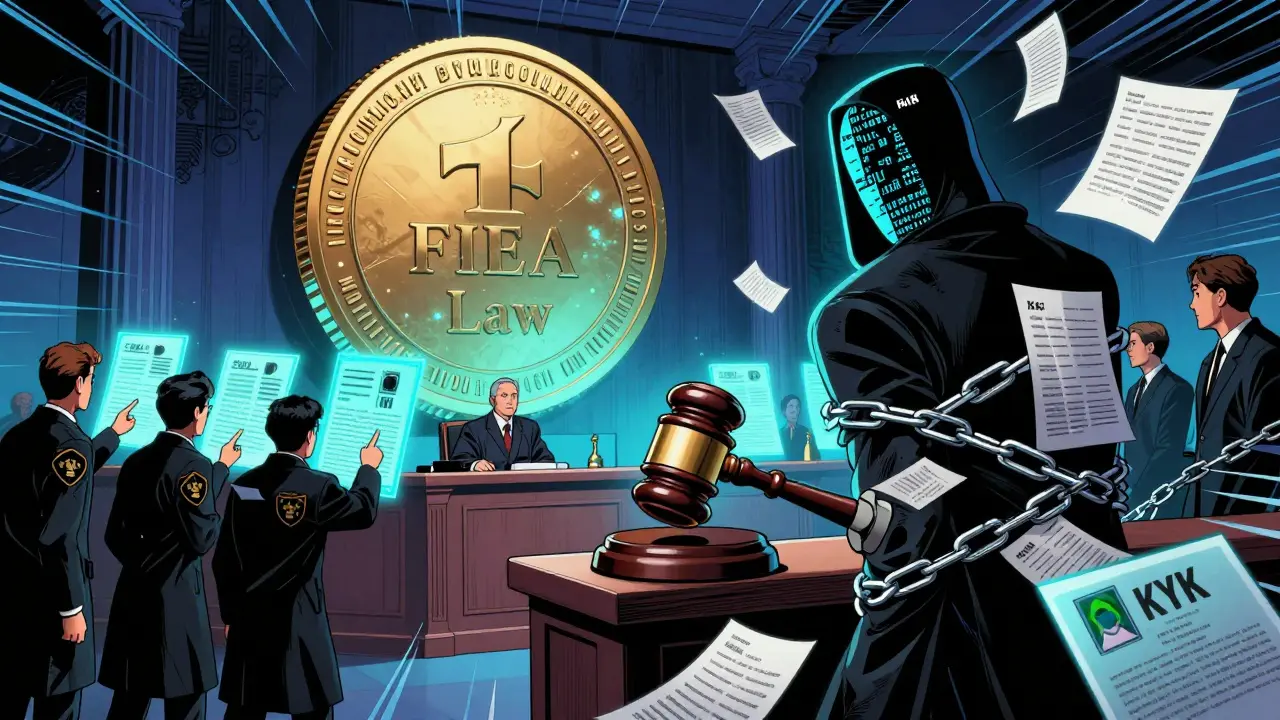
For years, crypto in Japan operated under the Payment Services Act (PSA), which treated digital assets like electronic money. Exchanges had to register, keep customer funds separate, and store 95% of assets in cold wallets. But in September 2025, everything changed. The FSA announced that certain crypto assets would now fall under the Financial Instruments and Exchange Act (FIEA), the same law that governs stocks, bonds, and mutual funds.
This isn’t a minor tweak. It means tokens with investment features-like those promising profit-sharing, governance rights, or staking rewards-are now classified as securities. That brings them under the same disclosure rules, insider trading bans, and market manipulation controls as Apple or Tesla stock. For the first time, Japan is treating crypto not as a payment tool, but as a financial instrument. And it’s forcing every issuer, exchange, and investor to adapt.
What Does FSA Compliance Actually Look Like?
If you run a crypto exchange in Japan, compliance isn’t optional. It’s a full-time operation. The FSA doesn’t just ask for paperwork-it demands proof. Here’s what you’re up against:
- Physical presence required: Your company must have a registered office in Japan. Remote operations? Not allowed.
- 95% cold storage rule: At least 95% of all customer crypto must be stored offline, in hardware wallets disconnected from the internet. Hot wallets? Limited to 5% and heavily monitored.
- Strict fund segregation: Customer assets must be kept in separate bank accounts from company operating funds. Mixing them? That’s a license revocation offense.
- Full KYC/AML systems: Every user must be identity-verified using government-issued IDs, facial recognition, and address confirmation. Suspicious activity? You report it within 24 hours.
- Quarterly reporting: Exchanges submit detailed logs of all trades, user activity, and security incidents directly to the FSA.
These aren’t suggestions. They’re legal requirements. And the FSA audits them-hard. In 2025 alone, two major exchanges lost their licenses after failing to prove they met cold storage standards. One had mislabeled its wallet addresses. Another didn’t log internal transfers. Both were shut down within weeks.
Why Japan’s Rules Are Harder Than Everywhere Else
Compare Japan to the U.S. or Europe. In the U.S., crypto regulation is a patchwork-some states allow it, others ban it, and federal agencies argue over jurisdiction. In the EU, MiCA rules are still being rolled out. But Japan? The FSA has one clear authority, one unified rulebook, and zero tolerance for ambiguity.
Take Bitcoin. Japan was the first country to legally recognize it as payment. But while other nations celebrated Bitcoin as a currency, Japan made exchanges prove they could protect it like a vault. That’s the difference: acceptance with control.
Even DeFi is being watched. The FSA created a DeFi Study Group made up of regulators, developers, and academics. They meet every two months to assess how decentralized protocols can be regulated without killing innovation. No other country has a dedicated team like this.
The Hidden Cost of Compliance
There’s a price tag on safety. Industry insiders say full FSA registration takes 6 to 12 months and costs between 15% and 20% of an exchange’s annual budget. That includes legal teams, security audits, compliance software, and staff training.
Smaller exchanges can’t afford it. That’s why Japan’s crypto market is dominated by just a handful of licensed players: bitFlyer, Coincheck, and Zaif. These are the only ones that passed the FSA’s brutal review process. New entrants? They’re either backed by major banks or they don’t survive.
Users notice the difference. Trading fees on Japanese exchanges are higher than on Binance or Kraken. But users also know their funds are safer. Reddit threads from Japanese traders consistently mention: "I sleep better knowing my Bitcoin is locked in cold storage under FSA rules."
How the FSA Keeps the System Honest
The FSA doesn’t just set rules-it enforces them. It has a dedicated crypto enforcement unit. It conducts surprise inspections. It freezes accounts. It publishes violation reports publicly.
In June 2025, the FSA fined a major exchange ¥300 million (about $2 million) for failing to report a hack that exposed 2,000 user accounts. The exchange didn’t even notify customers for 72 hours. The FSA didn’t wait for public outcry. It acted fast.
Self-regulatory bodies like the Japan Virtual Currency Exchange Association (JVCEA) and the Japan Security Token Offering Association (JSTOA) help too. They set industry standards that often go beyond FSA requirements. Think of them as the FSA’s extended arm-voluntary, but with teeth.
The Tax Twist: Compliance Doesn’t Stop at Exchanges
Compliance doesn’t end with exchanges. In August 2025, the FSA proposed major tax changes: crypto gains now fall under a flat 20% tax rate, and investors can carry forward losses for up to three years. That’s huge. It means if you lose money on Ethereum this year, you can offset it against next year’s Bitcoin profits.
But here’s the catch: you have to keep detailed records. Every trade, every transfer, every wallet address. The FSA now requires exchanges to provide users with annual tax reports. No more guessing. No more spreadsheets. If you can’t prove your gains and losses, you risk an audit.
What’s Next? The FIEA Bill and Global Influence
The formal bill to fully integrate crypto under the FIEA is expected in early 2026. Once passed, Japan will be the first country to apply securities law to digital assets at a national level. That means:
- Crypto ETFs will be legally approved-spot Bitcoin ETFs included.
- Token issuers must file prospectuses like public companies.
- Insider trading in crypto will carry the same penalties as insider trading in stocks.
Other countries are watching. South Korea is modeling its new rules after Japan. The EU is studying the FSA’s DeFi approach. Even the U.S. Treasury has sent delegations to Tokyo to see how it’s done.
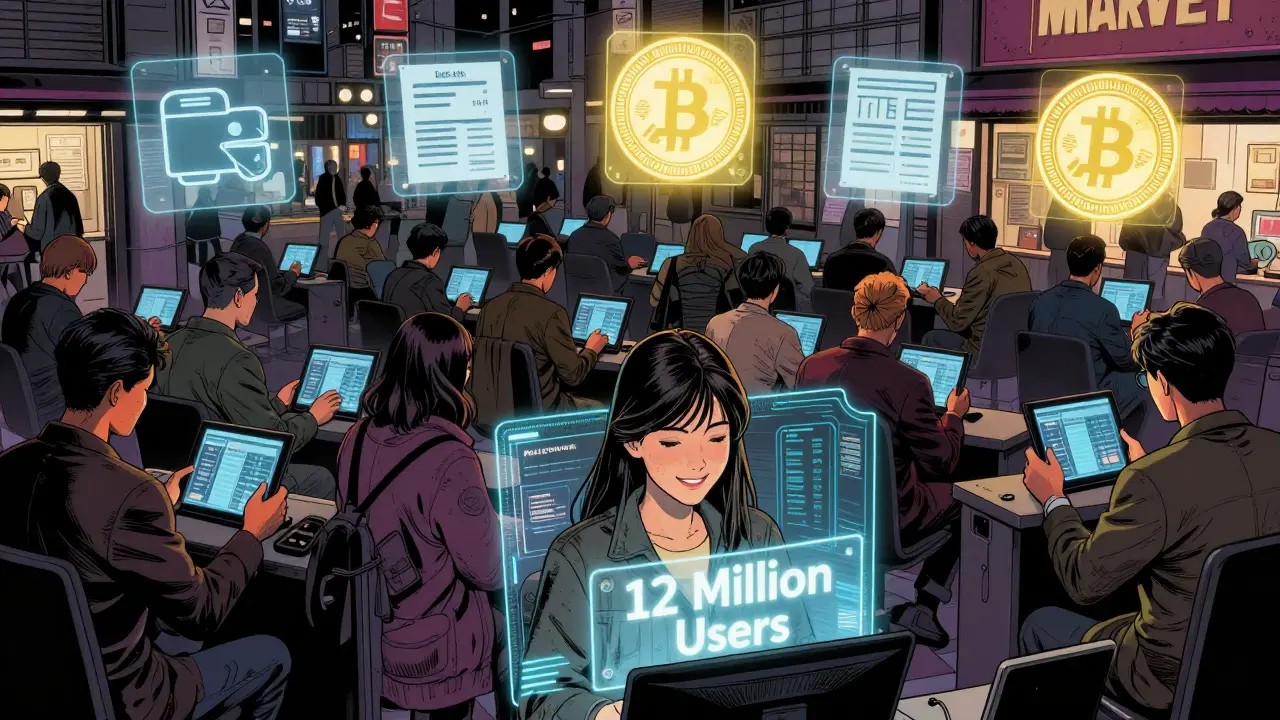
Japan’s model isn’t about stopping crypto. It’s about making it trustworthy. And that’s why, despite the high costs and strict rules, the number of registered users keeps growing. In July 2025, over 12 million Japanese citizens held crypto through FSA-licensed exchanges-up 28% from the year before.
Is Japan’s Model the Future?
Some say it’s too rigid. Others say it’s the only way forward. The truth? Japan didn’t choose between innovation and safety. It forced both to exist together.
There’s no such thing as "crypto freedom" without accountability. The FSA proves that strict compliance doesn’t kill markets-it builds confidence. And in a world full of hacks, scams, and pump-and-dumps, confidence is the most valuable asset of all.
Is it legal to trade crypto in Japan?
Yes, but only through exchanges licensed by the Financial Services Agency (FSA). Unlicensed platforms are illegal. Users must complete full KYC verification, and all transactions are tracked and reported to regulators.
What happens if a crypto exchange fails FSA compliance?
The FSA can immediately suspend operations, freeze assets, and revoke the exchange’s license. In severe cases, executives face criminal charges. Since 2020, at least four exchanges have lost their licenses for failing cold storage, KYC, or fund segregation requirements.
Do I have to pay taxes on crypto in Japan?
Yes. Crypto gains are taxed as miscellaneous income at a rate of 20%. Losses can be carried forward for up to three years to offset future gains. Exchanges are required to provide annual tax reports to users.
Can I use Binance or Kraken in Japan?
No, unless they’re FSA-licensed. Binance and Kraken are not registered in Japan. Japanese users must use only FSA-approved exchanges like bitFlyer, Coincheck, or Zaif. Using unlicensed platforms risks losing funds with no legal recourse.
Why does Japan require 95% cold storage?
After the Mt. Gox collapse in 2014, where 850,000 BTC were lost due to poor security, Japan mandated that exchanges store 95% of user assets offline. This prevents hacking, insider theft, and operational failures. It’s not optional-it’s the law.





Japan didn't just fix crypto after Mt. Gox-they built a fortress. And honestly? I'm jealous. My exchange in the US is basically a game of Russian roulette with my Bitcoin. Here, they lock 95% offline, audit quarterly, and actually enforce rules. No wonder Japanese traders sleep better. This isn't overregulation-it's responsible innovation.
I've lived in both California and Tokyo. The difference isn't just regulation-it's culture. In the U.S., we romanticize "freedom" while ignoring risk. Japan says: "You want access? Then earn trust." And they do it with dignity. No hype. No memes. Just structure. That’s why their market is growing even with higher fees.
This is why I trust Japanese exchanges more than any US one 🙏 Cold storage + audits + tax reporting = peace of mind. I wish more countries took this seriously.
The FSA is the only regulator that treats crypto like a financial instrument-not a cult. Securities law applied to tokens? Finally. The U.S. is still arguing over whether Bitcoin is a commodity or currency. Japan already moved on.
The paradigmatic shift from Payment Services Act to Financial Instruments and Exchange Act represents a jurisprudential epistemological rupture in the digital asset governance matrix. The FSA's ontological reclassification of crypto-assets as securities necessitates a recalibration of market epistemic frameworks, thereby aligning Japan with post-modern financial epistemologies. The 95% cold storage mandate is not merely operational-it is a semiotic assertion of institutional sovereignty over decentralized chaos.
ok so i just wanna say i’ve been using coincheck since 2021 and honestly? i didn’t even realize how much i appreciated the security until i tried binance for a week and nearly had a panic attack when i saw how little info they gave me about where my coins were. japan’s system is slow, yeah, but it feels like someone’s actually watching the door. also, i spelled ‘coincheck’ wrong twice. oops.
The 95% cold storage rule isn't just about security-it's about psychological safety. People don't trade crypto because they think it's the next Tesla. They trade it because they're terrified of losing everything. Japan understood that first. And that's why their adoption rate is rising even as fees climb. Trust is the new liquidity.
Regulation isn't the enemy of innovation. Indifference is. Japan didn't suppress crypto-they gave it a home. With rules. With accountability. With dignity. The real question isn't whether this model is too strict. It's whether any other country has the courage to be this clear.
I used to think Japan was overkill. Then I lost $8k in a rug pull on an unregulated platform. Now? I’d pay double the fees to know my coins are locked in a vault with armed guards and quarterly audits. Japan’s system isn’t boring-it’s heroic.
I used to think crypto freedom meant no rules. Now I see it differently: true freedom is knowing your money won’t vanish overnight because someone forgot to update a server. Japan’s model doesn’t kill innovation-it gives it a foundation. And that’s rare. Most places just build on sand.
I’ve been tracking FSA compliance for years. The quarterly reports? The facial recognition? The 24-hour suspicious activity window? It’s insane. But it works. I’ve seen exchanges get shut down for mislabeling a wallet address. That’s not bureaucracy-that’s excellence. And yes, I’m the person who prints out my tax reports and staples them to my wall. Every. Single. Year.
I’m not saying the U.S. should copy Japan. But we could at least start by not letting exchanges operate without a physical office. If you’re serving U.S. users, you should have a legal presence. That’s basic. Japan gets it. We’re still arguing over whether KYC violates the Fourth Amendment.
This is what happens when you let bureaucrats run a frontier. You don’t get innovation-you get bureaucracy in a suit. Crypto was supposed to be free. Now it’s just another regulated asset class with 17 forms and a 6-month wait. Japan didn’t save crypto. They buried it under paperwork.
I work in fintech in Bangalore. We’re watching Japan closely. Their model proves you don’t need to choose between safety and adoption. You can have both-if you’re willing to be disciplined. It’s not about being strict. It’s about being serious. And that’s rare.