How to Set Up a Multi-Signature Wallet: Step-by-Step Guide for 2026
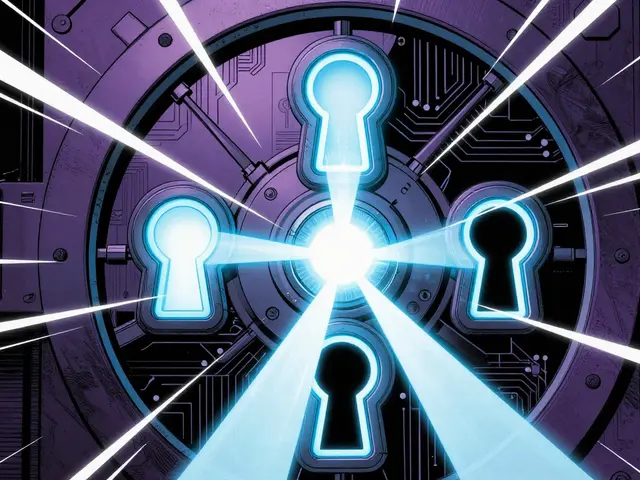
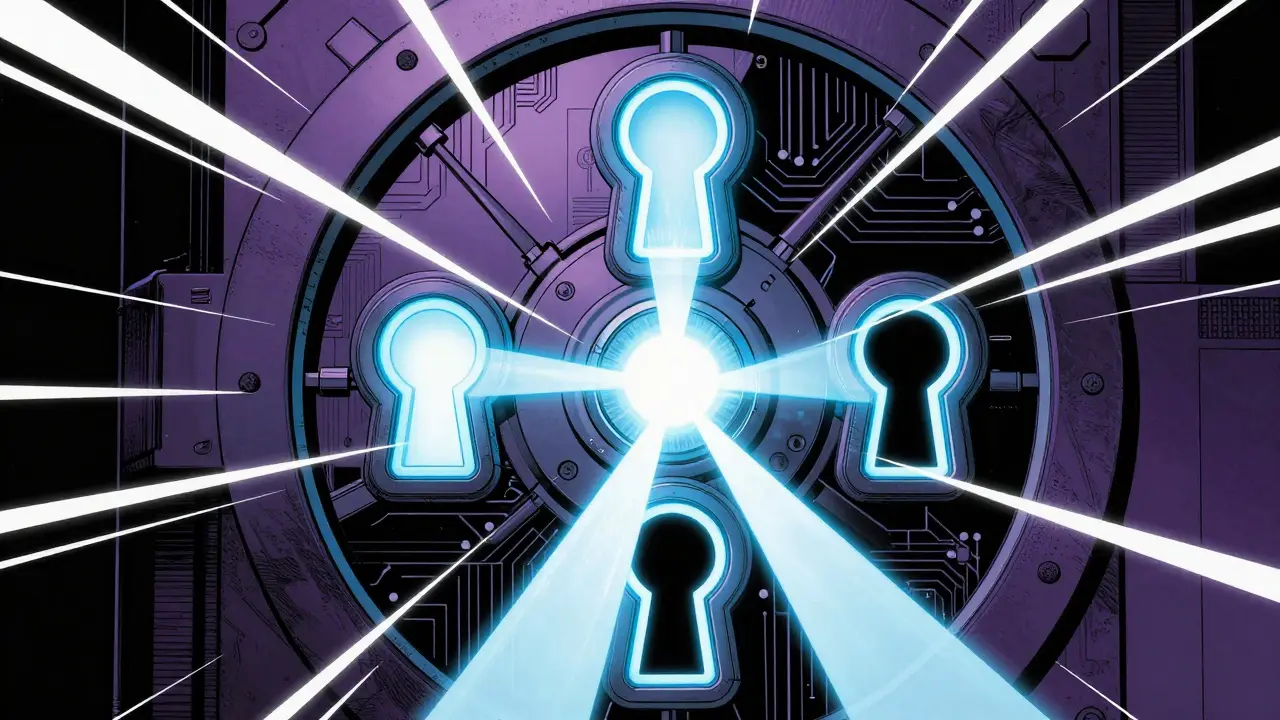
Imagine you have a safe with three keys. To open it, you need at least two of those keys turned simultaneously. That is the core concept behind a multi-signature wallet, commonly known as a multi-sig wallet. It is a cryptocurrency storage solution that requires multiple cryptographic signatures to authorize transactions, rather than relying on a single private key. This setup eliminates the single point of failure that plagues traditional wallets. If one key is stolen or lost, your funds remain secure. For anyone holding significant digital assets in 2026, this technology is not just an option; it is a necessity for serious security.
The idea isn't new. It originated with Bitcoin's protocol development in 2012 when the CHECKMULTISIG opcode was implemented. However, user experience has improved dramatically since then. Today, setting up a multi-sig wallet is more accessible than ever, thanks to better software and hardware integrations. But does it make sense for you? Let’s break down how it works, why you might need it, and exactly how to set one up without losing your mind-or your money.
What Is a Multi-Signature Wallet?
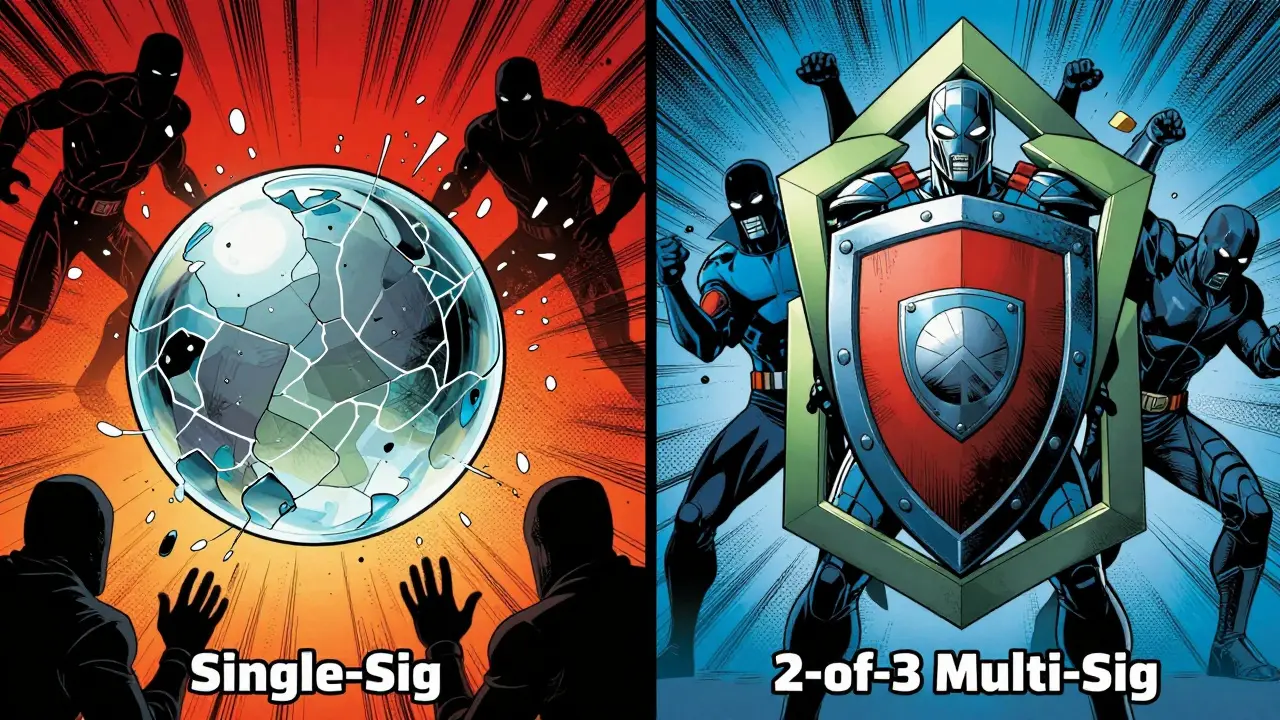
A multi-signature wallet operates on a specific mathematical threshold. We call this an M-of-N configuration. Here, 'N' is the total number of keys created, and 'M' is the minimum number of signatures required to approve a transaction. The most common setup is 2-of-3. This means you generate three unique private keys. To send Bitcoin or Ethereum from this wallet, you must sign the transaction with at least two of those three keys.
Why use 2-of-3 instead of 1-of-1? Consider the risks. With a standard single-signature wallet, if someone steals your device or guesses your password, they take everything. With a 2-of-3 multi-sig, a thief needs to compromise two separate devices or custodians. The probability of that happening drops significantly. According to Ledger’s 2024 analysis, a properly configured 2-of-3 wallet reduces the risk of total loss due to key compromise from 97% down to approximately 19%. That is a massive difference in security posture.
| Feature | Single-Signature Wallet | Multi-Signature Wallet (2-of-3) |
|---|---|---|
| Security Model | Single point of failure | Distributed authorization |
| Risk of Theft | High if key is compromised | Low (requires multiple compromises) |
| Recovery Difficulty | Easy (one seed phrase) | Complex (requires backup coordination) |
| Transaction Speed | Fast | Slower (coordination required) |
| Best For | Small daily holdings | Institutional custody, large savings |
Who Should Use a Multi-Sig Wallet?
Not everyone needs a multi-sig wallet. If you are trading small amounts of crypto for coffee money, the complexity might outweigh the benefits. Multi-sig shines when the stakes are high. Institutional investors, DAO treasuries, and individuals with substantial long-term holdings rely on them. In fact, Chainalysis reported that 29% of all Bitcoin held by institutions uses multi-sig custody as of Q2 2024. That number is growing because regulations now often require "distributed control mechanisms" for client assets.
For individual users, the decision comes down to value versus convenience. If you hold over $10,000 in assets, the peace of mind is worth the extra steps. Messari’s June 2024 analysis found that users managing over $100,000 are 8.3 times more likely to implement multi-sig than average users. They understand that while a single-sig wallet is faster, it is also fragile. A multi-sig wallet is slower but resilient.
Consider your lifestyle. Do you travel frequently? Do you share finances with a partner or business partners? A multi-sig can act as a shared vault. For example, a startup might use a 3-of-5 setup where the CEO, CFO, and CTO each hold a key, plus two backups. No single person can drain the treasury alone. This prevents internal fraud and external theft.
Choosing Your M-of-N Configuration
Before you download any software, you need to decide on your structure. The choice depends on your threat model. Are you worried about hackers? Or are you worried about losing your own keys?
- 2-of-3: The sweet spot for most individuals. You keep one key on your phone, one on a hardware wallet, and one in a fireproof safe. If your phone is stolen, you are still safe. If you lose the safe, you still have two keys.
- 3-of-5: Ideal for businesses or families. It allows for redundancy. You can lose two keys and still access funds. It also requires consensus among multiple people, preventing unilateral decisions.
- 1-of-2: Rarely recommended. It offers no security advantage over a single-sig wallet if both keys are stored by the same person. It only makes sense if two different people must agree to spend funds, but either can do so independently.
Avoid overly complex setups like 15-of-15 unless you are a government entity. The more keys involved, the higher the chance of human error during recovery. Simplicity wins in security. Stick to 2-of-3 or 3-of-5 for almost all personal and small business use cases.
Step-by-Step: Setting Up Your Multi-Sig Wallet
Setting up a multi-sig wallet feels like assembling IKEA furniture without instructions. But if you follow these steps, it becomes manageable. We will focus on a 2-of-3 Bitcoin setup using popular tools like Electrum (software) and Trezor or Ledger (hardware), as this is the most robust combination for 2026.
- Gather Your Devices: You need at least two devices. Ideally, use two hardware wallets (like a Trezor Model T and a Ledger Nano X) and one computer running trusted software (like Electrum). Ensure all devices are updated to the latest firmware.
- Install Compatible Software: Download Electrum from its official website. Verify the signature. Install it on your computer. If you are using Casa or BitPay, install their apps on your mobile devices. These platforms simplify the QR code exchange process.
- Generate Individual Keys: On each device, create a new wallet. Write down the 24-word recovery phrase for each device separately. Store these phrases in physically distinct locations. Never digitize them. This step creates your N keys (in our case, 3).
- Create the Multi-Sig Structure: Open your primary software (e.g., Electrum). Select "Create a New Wallet" and choose "Standard Wallet." Then select "Multi-signature wallet." Enter your M-of-N parameters (2-of-3). The software will ask for the public keys of all participants.
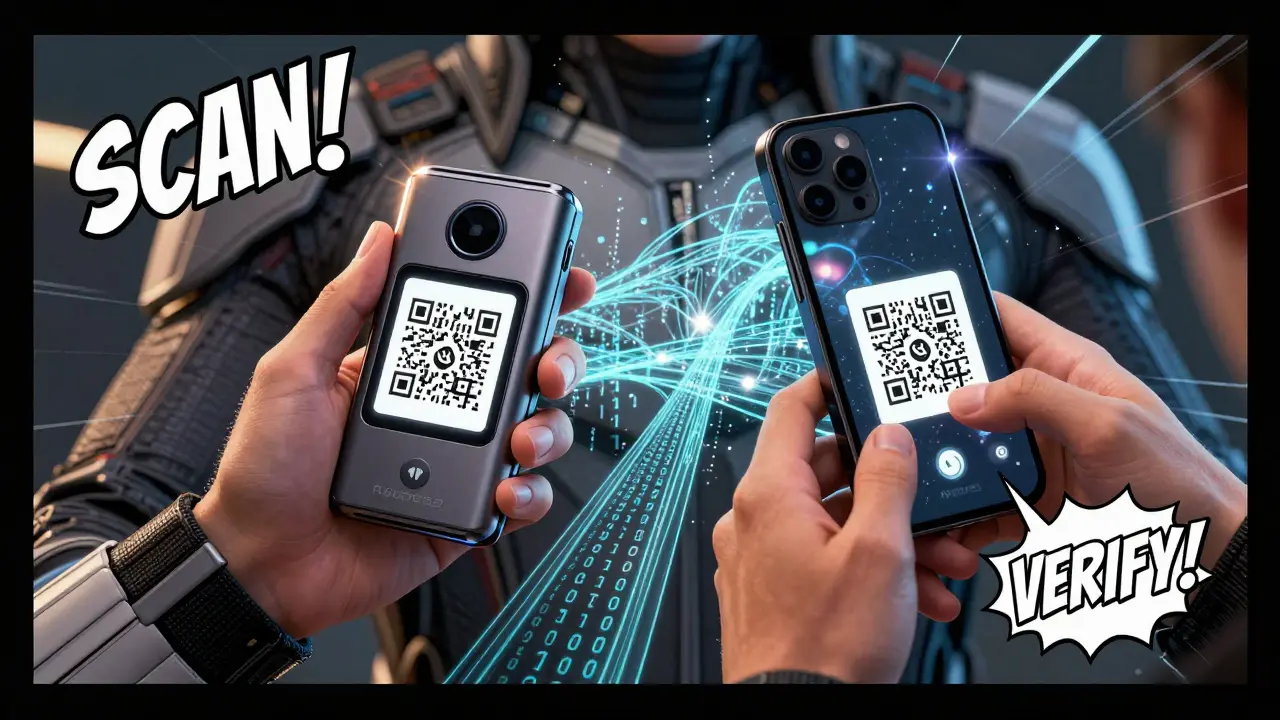
- Exchange Public Keys: This is the critical part. You will scan QR codes from each device into the others. For example, scan Device A’s public key into Device B and Device C. Repeat until all devices know about each other. Do not share private keys-only public keys.
- Verify the Setup: Once all keys are exchanged, the wallet address will appear on all devices. Send a tiny amount of Bitcoin (e.g., $1) to this address from an external source. Wait for confirmation. Then, try to send it back. You will need to sign the transaction on two of your devices. If it goes through, you are live.
Expect this process to take about 63 minutes, according to Coinbase’s 2024 user study. Take your time. Rushing leads to mistakes, and mistakes in crypto are expensive.
Common Pitfalls and How to Avoid Them
Even experienced users stumble here. What are the biggest risks?
Losing Recovery Phrases: This is the #1 cause of fund loss. In a 2-of-3 setup, if you lose two phrases, your money is gone forever. Chainalysis CTO Jonathan Levin noted that 37% of multi-sig failures result from lost recovery phrases. Solution: Use metal backup plates for your seed phrases. Store them in separate bank safety deposit boxes or fireproof safes. Test your backups annually.
QR Code Scanning Errors: BitPay support tickets show that 31% of issues stem from bad QR scans. Poor lighting or camera angles can corrupt data. Solution: Use a dedicated QR scanner app on your phone rather than the native camera. Double-check the hex strings if possible.
Software Compatibility: Not all wallets talk to each other. Electrum supports Bitcoin natively. For Ethereum, you might need Gnosis Safe or similar smart contract wallets. Mixing protocols can lead to confusion. Solution: Stick to one ecosystem at first. Master Bitcoin multi-sig before moving to Ethereum or Solana.
UX Friction: Vitalik Buterin pointed out that multi-sig causes 32% of failed testnet transactions due to coordination issues. Solution: Schedule regular "wallet health checks." Every quarter, send a small transaction to verify all devices work and all signers are available.
Multi-Sig vs. MPC: What’s the Difference?
You might hear about MPC (Multi-Party Computation) wallets. They sound similar but work differently. In a multi-sig wallet, each signer holds a complete private key. In an MPC wallet, the private key is split into shards. No single shard can reconstruct the key. MPC generates a single signature on-chain, which looks like a normal transaction. Multi-sig leaves a traceable multi-sig script on the blockchain.
Which is better? For Bitcoin, multi-sig is king because it is native to the protocol. It doesn’t rely on third-party servers to combine shards. For Ethereum, MPC is gaining traction because it integrates smoothly with smart contracts. If you prioritize privacy and decentralization, stick with traditional multi-sig. If you want ease of use and integration with DeFi, consider MPC. However, remember that MPC relies on the integrity of the computation service. Multi-sig relies only on math and your own devices.
Future-Proofing Your Setup
The landscape is evolving. Bitcoin’s Taproot upgrade introduced Schnorr signatures, which make multi-sig transactions cheaper and more private. They look like single-sig transactions on the blockchain, hiding the fact that multiple parties were involved. As of 2026, ensure your wallet software supports Taproot-enabled multi-sig (often called P2TR multi-sig). This will save you fees and protect your privacy.
Also, watch for hybrid solutions. Companies like Fireblocks are combining multi-sig with MPC for enterprise clients. For individuals, mobile-first solutions like Casa’s biometric coordination are making setup easier. Stay updated on your wallet’s changelog. Security is not a one-time setup; it is an ongoing practice.
Is a multi-signature wallet safer than a hardware wallet?
Yes, in terms of resistance to theft. A standard hardware wallet uses a single private key. If that key is exposed via malware or physical coercion, funds are lost. A multi-sig wallet requires compromising multiple independent keys, which is statistically much harder. However, multi-sig is less convenient and harder to recover if backups are lost.
Can I use a multi-sig wallet for Ethereum?
Yes, but it works differently than Bitcoin. Ethereum multi-sigs are usually implemented as smart contracts (like Gnosis Safe) rather than native protocol features. This allows for advanced features like timelocks and daily spending limits, but it introduces smart contract risk. Always audit the contract code or use reputable providers.
What happens if I lose one key in a 2-of-3 setup?
You are still safe. You can continue to send and receive transactions using the remaining two keys. However, your security margin is reduced. You should immediately generate a new key and rotate it into the wallet to restore your 2-of-3 redundancy. Do not ignore a lost key.
Do multi-sig wallets cost more to use?
Historically, yes, because multi-sig transactions were larger in size. However, with Bitcoin’s Taproot upgrade, multi-sig transactions can be optimized to look like single-sig transactions, reducing fees by up to 25%. On Ethereum, gas costs depend on the smart contract complexity, but they are generally comparable to standard transfers.
Is it legal to use a multi-signature wallet?
Yes, multi-sig wallets are fully legal in most jurisdictions, including New Zealand, the US, and the EU. In fact, regulators often encourage them for institutional custody. They provide a clear audit trail and distributed control, which aligns with compliance requirements for financial institutions.