
Cryptocurrency Mining Ban in Algeria Due to Energy Concerns
Algeria didn’t just restrict cryptocurrency mining-it erased it entirely. On July 24, 2025, Law No. 25-10 came into force, making every form of crypto activity illegal: buying, selling, holding, promoting, and especially mining. The government didn’t just cite financial risks. It pointed straight at the power grid.
Why Algeria Banned Crypto Mining
Algeria’s electricity system is stretched thin. During summer, when temperatures climb past 40°C and air conditioners run nonstop, the national grid hits 95-100% capacity. That’s not a glitch-it’s the norm. And in 2024, authorities discovered unauthorized mining rigs siphoning off 15-20 megawatts of power during peak hours. That’s roughly 1.5% of the entire grid’s output, just from crypto operations. The math is brutal. One Bitcoin mined consumes about 1,500 kWh of electricity. That’s the same amount three Algerian households use in a month. With residential electricity priced at just $0.035 per kWh-far below the global average of $0.14-mining became a cheap, high-reward activity for anyone with a GPU or a warehouse full of rigs. The government saw it as theft of public resources. Unlike other countries that ban trading but allow mining under license, Algeria went all-in. The law doesn’t care if you’re running one rig in your bedroom or a warehouse full of ASICs. If you’re using electricity to mine, you’re breaking the law.What the Ban Actually Covers
This isn’t a gray-area policy. Law No. 25-10 is blunt:- Any activity that creates, transfers, or stores cryptocurrency is illegal
- Holding Bitcoin, Ethereum, or any other digital asset is a criminal offense
- Promoting crypto on social media, blogs, or YouTube can land you in court
- Using a VPN to access exchanges or wallets is also banned
How Enforcement Works
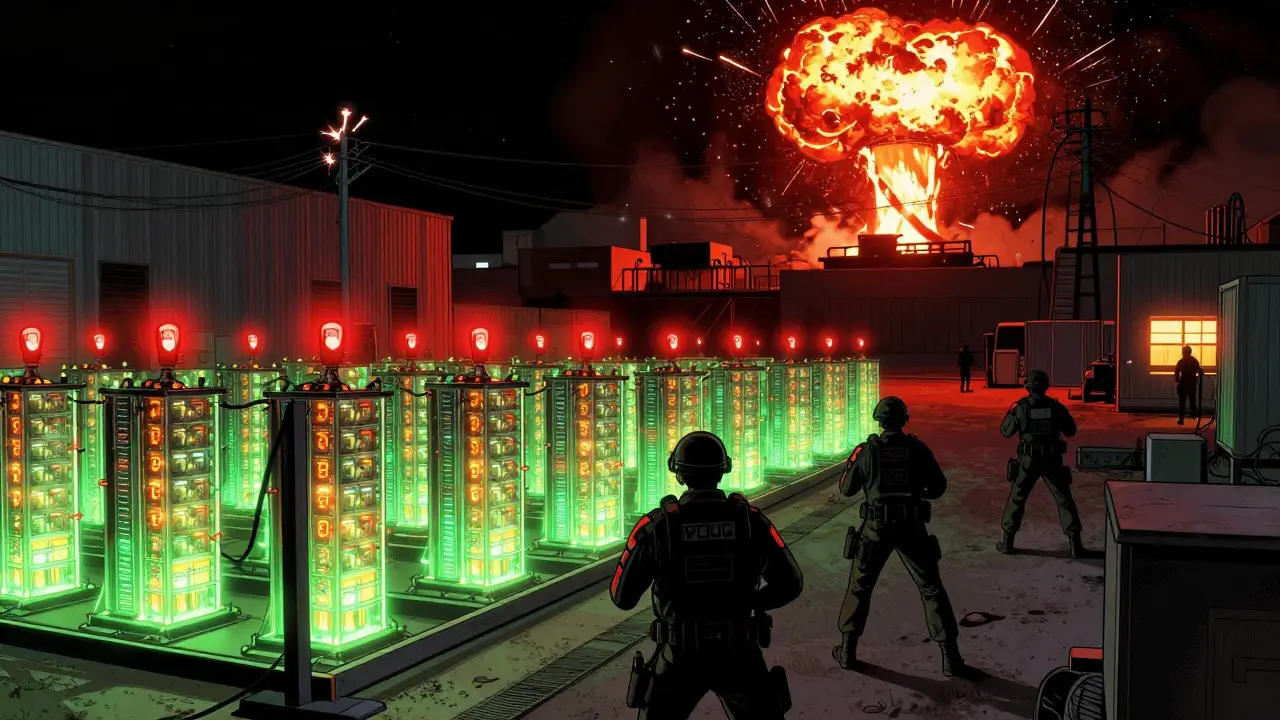
The government didn’t just pass a law-it built a system to enforce it. In 2025, Algeria allocated 1.2 billion DZD ($9.2 million) to train cyber units within the National Gendarmerie. Their job? Find miners. They don’t need a tip-off. SONELGAZ, the national power company, now monitors electricity usage patterns across industrial zones. If a facility draws 30-50% more power than similar buildings, it’s flagged. Inspectors show up with thermal cameras, network analyzers, and warrants. Mining rigs heat up. They draw constant power. They don’t turn off at night. That’s a red flag. The ban on VPNs was a tactical move. Before, users could mask their activity by routing traffic through servers abroad. Now, even that’s illegal. The government is cutting off every possible escape route.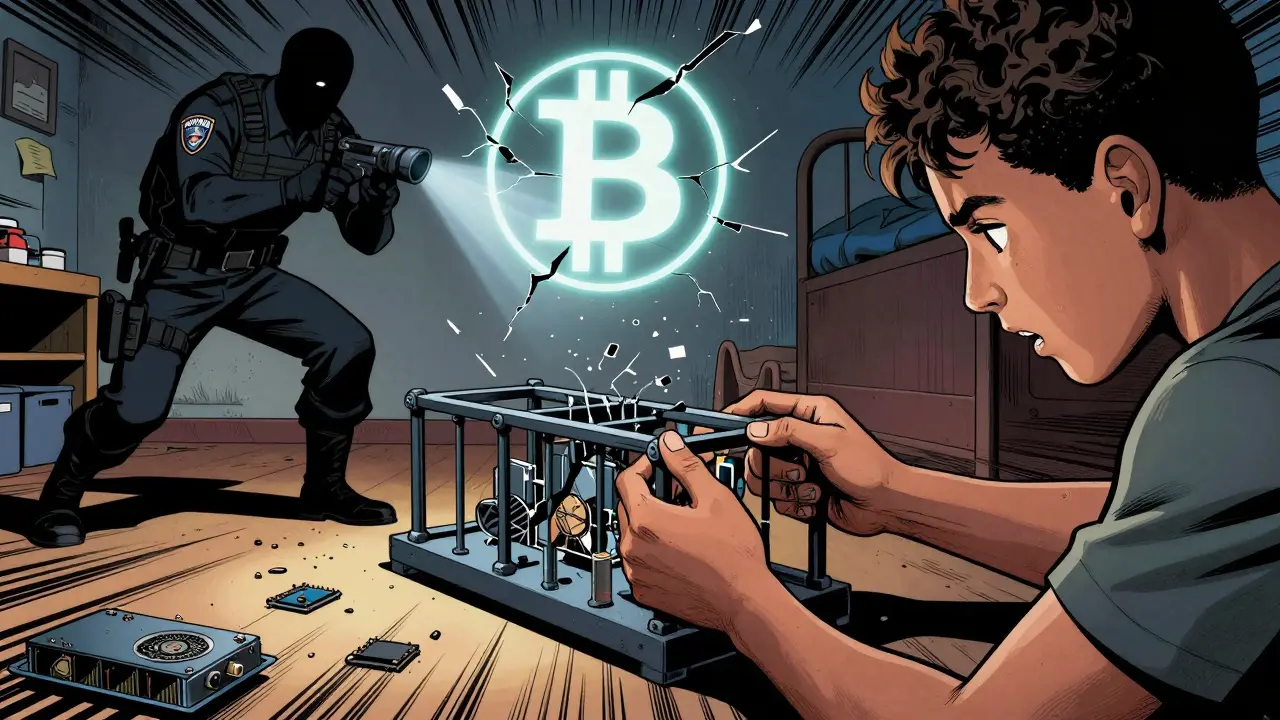
How Algeria Compares to the Region
Algeria’s approach is extreme-even for North Africa. - Egypt bans crypto trading but lets people hold coins. - Tunisia licenses mining under strict rules. - Morocco jailed a French citizen for using Bitcoin to buy a car. - The UAE, Saudi Arabia, and Bahrain actively court crypto firms with full regulatory frameworks. Algeria stands alone. It’s one of only two countries in the MENA region with a total ban. The other? Egypt. But Egypt doesn’t jail people for holding Bitcoin. Algeria does. The contrast is stark. While Dubai processed $2.1 billion in crypto transactions in Q2 2025 alone, Algeria’s crypto adoption rank dropped from 87th to 112th globally in just two years. The African Blockchain Association reports that 37% of Algerian blockchain developers have left the country since 2023-mostly for Tunisia and Morocco, where they can work legally.The Energy Argument vs. the Innovation Argument
The government says it’s protecting the grid. Experts say it’s throwing out the baby with the bathwater. Dr. Leila Bencharif, a fintech professor at Algiers University, points out that Algeria has over 22 gigawatts of solar potential-enough to power a mining industry without touching the main grid. She argues that instead of banning mining, the government could have created solar-powered mining zones in the Sahara, turning a problem into a revenue stream. The International Monetary Fund echoed that concern. In its July 2025 report, the IMF said Algeria’s energy worries are valid-but a total ban isn’t the smartest solution. Targeted rules-limiting mining to off-peak hours, requiring renewable energy use, or capping facility sizes-could have protected the grid without killing innovation. Instead, the ban has created a chilling effect. Educators now avoid teaching blockchain in classrooms. Startups with legitimate use cases for distributed ledgers are shelving projects. Developers are quitting. The country is losing its tech talent.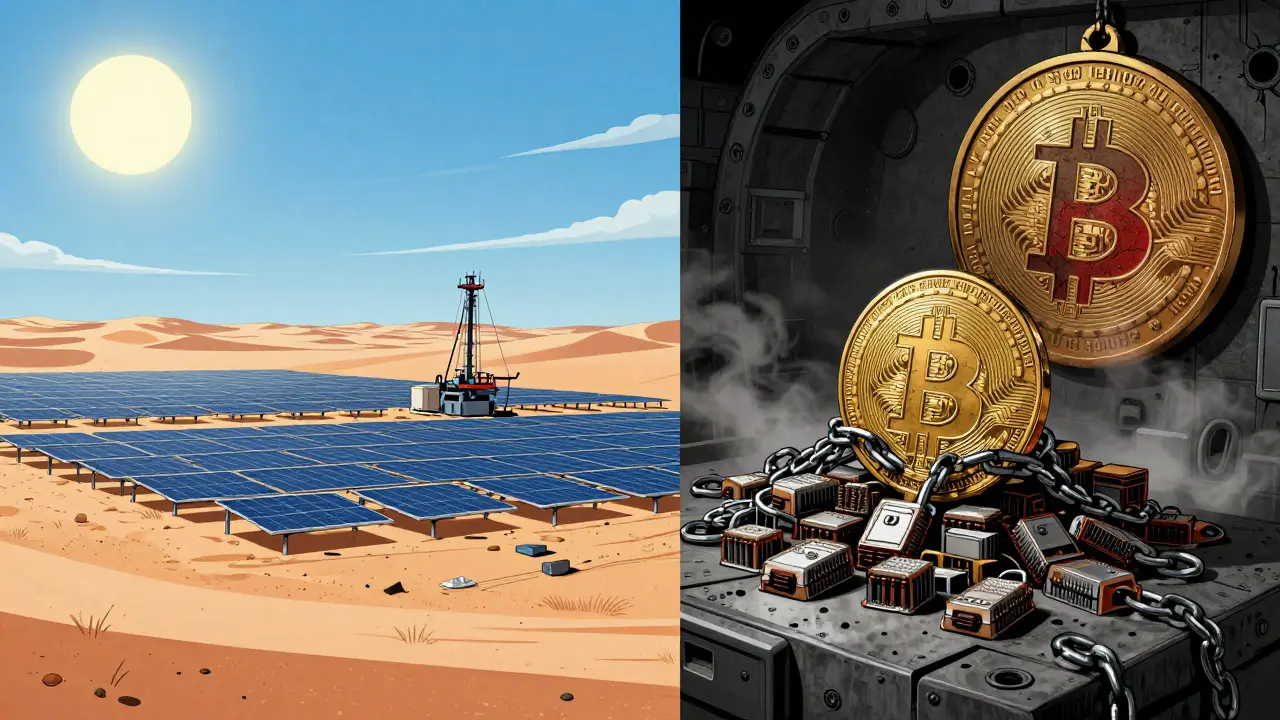
What People Are Saying
On Reddit’s r/Algeria, a user named DZCryptoMiner wrote: “I shut down my 12-rig setup. It was making $350 a month. Now I’m paying $700 in fines and losing $20,000 in equipment. The risk isn’t worth it.” Facebook group “Crypto Algeria,” with over 18,500 members, is filled with stories of raids. One user posted a photo of their confiscated Antminer S19s with the caption: “They took my income. They didn’t ask why.” Supporters of the ban, mostly traditional banking employees, argue it shields ordinary people from fraud and volatility. But a Socialbakers analysis of 1,200 social media posts found only 28% of Algerians agree. The other 72% say the law is too broad, too punitive, and ignores the difference between energy-hungry proof-of-work mining and low-consumption proof-of-stake systems like Ethereum after its 2022 upgrade.What Happens Now?
There’s no sign the ban will be lifted. Law No. 25-10 is written to last. But Algeria isn’t ignoring innovation entirely. In August 2025, it passed Law No. 25-12-regulating traditional mining of lithium, copper, and rare earths. The message is clear: we want technology, just not the kind that uses our electricity. Dr. Bencharif’s team is drafting a white paper proposing a legal mining framework using excess solar energy. If it gains traction, the government might reconsider. But for now, mining in Algeria is a crime. For anyone living there: if you still have crypto, delete it. If you still have rigs, sell them. If you talk about blockchain in public, be careful. The law doesn’t care about your intentions. It only cares about what you do.Is it illegal to hold Bitcoin in Algeria?
Yes. Law No. 25-10 criminalizes the mere possession of any cryptocurrency, regardless of whether you bought it, mined it, or received it as a gift. Holding Bitcoin, Ethereum, or any other digital asset is treated the same as mining or trading-it’s a punishable offense with fines and possible jail time.
Can I use a VPN to access crypto exchanges in Algeria?
No. The use of virtual private networks (VPNs) to bypass restrictions on cryptocurrency platforms is explicitly banned under Law No. 25-10. Authorities have the power to monitor internet traffic and seize devices suspected of facilitating crypto access, even if no actual transaction occurred.
What happens if I get caught mining crypto in Algeria?
If caught, your mining equipment will be seized immediately. You may face criminal charges, including a prison sentence of 2 to 12 months and fines between 200,000 and 1,000,000 Algerian dinars ($1,540-$7,700). Repeat offenders face doubled penalties. There is no warning or first-time exception.
Why did Algeria ban crypto mining but allow traditional mining?
Algeria sees traditional mining-like extracting lithium or copper-as a state-controlled economic activity that generates revenue and creates jobs. Cryptocurrency mining, by contrast, is seen as a private, unregulated energy drain with no national benefit. The government wants to control resource use, not let individuals exploit subsidized electricity for profit.
Are there any legal ways to use blockchain technology in Algeria?
There are no legal avenues to use blockchain for cryptocurrency-related purposes. However, the law doesn’t explicitly ban blockchain as a technology. Some businesses are exploring non-crypto applications-like supply chain tracking or document verification-but they operate in legal gray areas and must avoid any association with digital assets or tokens.
How has the ban affected Algeria’s tech industry?
The ban has triggered a “crypto brain drain.” Around 37% of Algerian blockchain developers have relocated to neighboring countries like Tunisia and Morocco since 2023. Startups have stalled, academic programs have been scaled back, and foreign investors have avoided Algeria entirely. The country’s ranking in global crypto adoption dropped from 87th to 112th in just two years.




This is such a brutal move. I get the energy concerns, but banning possession? That's not policy-that's tyranny. People aren't criminals for holding digital assets. This isn't about theft; it's about control. And now devs are fleeing? Brilliant. Algeria just shot itself in the foot while pretending it's saving the grid.
The math doesn't lie. 15-20 MW during peak? That's not a side hustle-that's infrastructure sabotage. If you're using subsidized public power to mine Bitcoin while families can't run their AC, you're not an innovator. You're a parasite. This ban is the only rational response.
Hey, I know it’s harsh, but imagine being a kid in Oran trying to study with the lights flickering because someone’s rig is hogging the grid. I’ve seen this in rural Canada too-people running illegal mining in barns. It’s not about Bitcoin. It’s about fairness. Maybe the solution isn’t banning tech, but redirecting it-like solar-powered zones. But right now? This is damage control.
I mean, if you’re mining crypto on a national grid that’s already at 100% capacity, you’re not being entrepreneurial-you’re being reckless. I get the innovation angle, but you can’t just ignore the real people suffering from blackouts. Maybe they should’ve licensed it, sure. But they didn’t. And now? It’s too late. This is the price of ignoring the problem until it explodes.
They didn't ban crypto because of energy. They banned it because they're scared of decentralized systems. This is a power grab disguised as infrastructure protection. The real target? Anyone with access to the internet who doesn't answer to the state. The solar argument? That's a distraction. They don't want innovation-they want obedience.
I lived in Algiers for a year. The power cuts during summer? Brutal. I saw families huddling in the dark while a neighbor’s warehouse hummed with ASICs all night. This isn't about Bitcoin. It's about survival. The government didn't act out of greed. They acted because they had no other choice. I'm not happy about the ban, but I get it.
Look, I get why people are upset. But if you're using public electricity that costs $0.035/kWh to mine Bitcoin, you're basically stealing from every parent trying to cool their kid's room. That's not innovation. That's exploitation. The law is harsh, yeah-but it's also honest. No one’s saying ‘don’t mine.’ They’re saying ‘don’t mine on our grid.’ There’s a difference.
The irony is thick enough to spread on toast. They ban crypto mining because it's 'energy intensive'... while actively expanding oil extraction and subsidizing fossil-fueled air conditioning. The real crime? Hypocrisy. This isn't about sustainability-it's about control. And if you think banning Bitcoin will stop people from using tech? You're living in 2008.
The enforcement mechanism is chilling. Thermal imaging. Network analyzers. VPN bans. This is not a regulatory policy. This is a surveillance state operation disguised as energy management. The moment a government begins monitoring household electricity usage patterns to criminalize private tech use, we have entered a new phase of authoritarianism. This is not a law. This is a warning.
I work in energy policy. The 1.5% figure is real. And it’s not just about the number-it’s about timing. Mining rigs run 24/7, peaking exactly when demand is highest. That’s not coincidence. That’s exploitation. A smarter approach? Tax it. Regulate it. But banning everything? That just pushes it underground. And now, the tech talent is gone. That’s the real loss.
You think they banned crypto because of energy? Nah. They banned it because they couldn’t tax it. If you can’t track it, you can’t control it, you can’t profit from it. This isn’t about the grid. It’s about revenue. They’re fine with lithium mining because they can tax it. Bitcoin? No receipts. No paperwork. No bribes. So it gets erased.
Let’s be clear: Algeria is not unique in this. Many nations fear decentralized finance. But what sets this apart is the sheer brutality of the enforcement. No warnings. No appeals. Seizure of property without due process. This isn’t policy-it’s performance. And the global tech community is watching. This is a red flag for innovation everywhere.
The solar potential argument is valid but irrelevant. You can’t build solar farms overnight. The grid is failing now. People are suffering now. Waiting for a perfect solution while the system burns? That’s not leadership. That’s negligence. They made a hard call. Maybe it’s wrong. But it was necessary.
I’m tired of people romanticizing crypto miners as some kind of digital pioneers. They’re not. They’re just people gaming a system designed for the poor. If you’re using subsidized electricity to make money off volatility while others can’t afford to charge their phones? You’re not a visionary. You’re a scammer. And this ban? Long overdue.