
Mining Crypto in Nigeria: Legal Rules and Restrictions in 2025
Bitcoin Mining Profitability Calculator for Nigeria (2025)
Calculate Your Mining Profitability
Input your mining details to see if it's financially viable in Nigeria with current regulations.
Mining Setup
Nigeria-Specific Costs
Results
Monthly Profit
NGN 0.00
Tax Liability
NGN 0.00
Total Profit (12mo)
NGN 0.00
Nigeria-Specific Considerations
According to Nigeria's 2025 regulations, mining in Nigeria is not illegal but comes with significant financial and legal requirements.
- Unlicensed mining may result in fines up to ₦10 million ($6,693) in the first month, plus ₦1 million per month after
- Electricity costs are high - expect ₦40,000+ monthly for a single Antminer S19 Pro
- SEC licensing requires ₦50 million capital and physical office
Legal Risk Warning
Based on your selected license type, you are operating unlicensed. According to Nigeria's 2025 regulations, unlicensed VASP activities may result in:
- Asset seizure by EFCC
- Bank account freezes
- Fines up to ₦10 million ($6,693) in first month
- Blacklisting from financial services
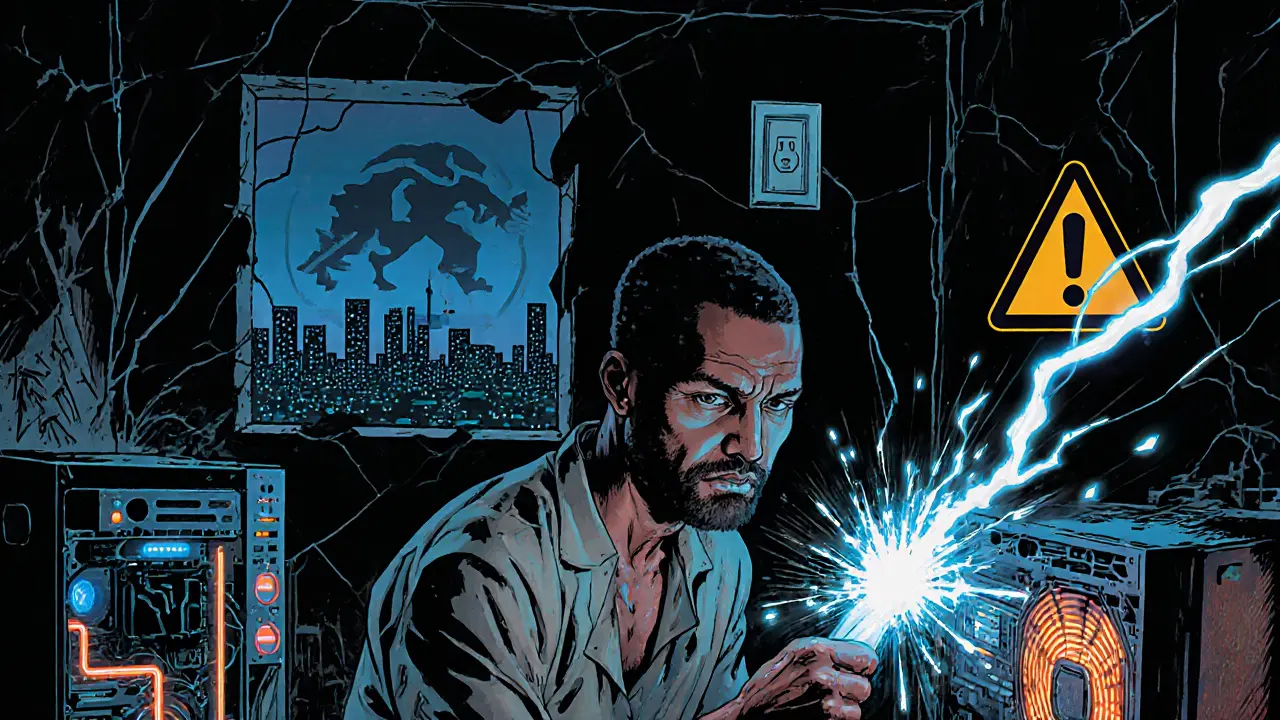
Can you legally mine cryptocurrency in Nigeria? The answer isn’t simple. It’s not banned - but it’s not exactly legal either. As of 2025, mining crypto in Nigeria exists in a tight space between permission and prohibition. If you’re running rigs in your garage or setting up a small farm in Lagos, you’re not breaking the law by turning on your machines. But if you try to deposit earnings into a Nigerian bank account, cash out through a local exchange, or even pay your electricity bill with crypto, you’re walking into a minefield of rules, fines, and hidden traps.
What’s Actually Allowed?
The Nigerian government doesn’t have a law that says, “Mining Bitcoin is illegal.” That’s important. But it also doesn’t say, “You’re free to mine.” Instead, it’s built a system where you can operate - if you jump through enough hoops. The key change came in 2025 with the Investments and Securities Act (ISA 2025). This law reclassified all virtual assets, including mined coins, as securities. That means if your mining operation connects to an exchange, offers mining-as-a-service, or sells tokens to Nigerian users, you’re now a Virtual Asset Service Provider (VASP). And VASPs must be licensed by the Securities and Exchange Commission (SEC).So if you’re just solo mining and holding your Bitcoin or Ethereum in a wallet, no one’s coming to shut you down. But if you start selling that crypto to others, or even just converting it to naira through a P2P platform, you’re now in the SEC’s scope. And the SEC doesn’t play around. They’ve already licensed Quidax and Busha. Dozens more are waiting. If you’re not registered, you’re operating illegally - even if you didn’t mean to break the rules.
Banking Restrictions Still Hold
You might have heard the Central Bank of Nigeria (CBN) lifted its 2021 ban on banks servicing crypto firms. That’s true - but only for licensed ones. The CBN still refuses to let unlicensed businesses open bank accounts. And here’s the catch: the SEC only licenses companies that meet strict requirements. You need a Nigerian corporate registration, a physical office, paid-up capital of at least ₦50 million ($33,465), a fidelity bond, and full AML/KYC compliance. Most individual miners can’t meet that. So even though the ban is technically lifted, the door is still locked for anyone without a license.This forces miners to use peer-to-peer (P2P) platforms like Paxful, Binance P2P, or local apps to sell their crypto. It works - Nigeria moved $92.1 billion in crypto between July 2024 and June 2025, making it the second-largest crypto market in Africa. But P2P comes with risks: scams, chargebacks, and no buyer protection. You’re on your own. And if you get caught laundering money through these platforms, the Economic and Financial Crimes Commission (EFCC) can track your phone number, IP address, and transaction history. They’ve been granted access to telecom records under ISA 2025. You won’t get a warning. You’ll get an investigation.
Taxes Are Now a Real Threat
In June 2025, Nigeria passed the Nigeria Tax Administration Act (NTAA 2025). It doesn’t just say you owe taxes on mining profits - it says you’ll pay heavily if you don’t report. Starting in 2026, any unlicensed VASP that fails to file tax returns or pay owed taxes will face a ₦10 million ($6,693) fine in the first month. That’s not a small penalty. Then, every month after that, you pay an extra ₦1 million ($669) - until you comply. There’s no grace period. No first-time warning. Just fines that stack up fast.And it’s not just about income. If you sell mined crypto and make a profit, that’s a capital gain. If you use Bitcoin to buy a laptop, that’s a taxable event. The tax authority doesn’t care if you didn’t convert to naira. The value at the time of the transaction is what matters. Most miners don’t track this. They assume, “I didn’t cash out, so I’m fine.” That’s a dangerous assumption. The NTAA 2025 gives the Federal Inland Revenue Service (FIRS) direct access to blockchain data and exchange records. They’re not guessing - they’re auditing.
Infrastructure Is a Silent Killer
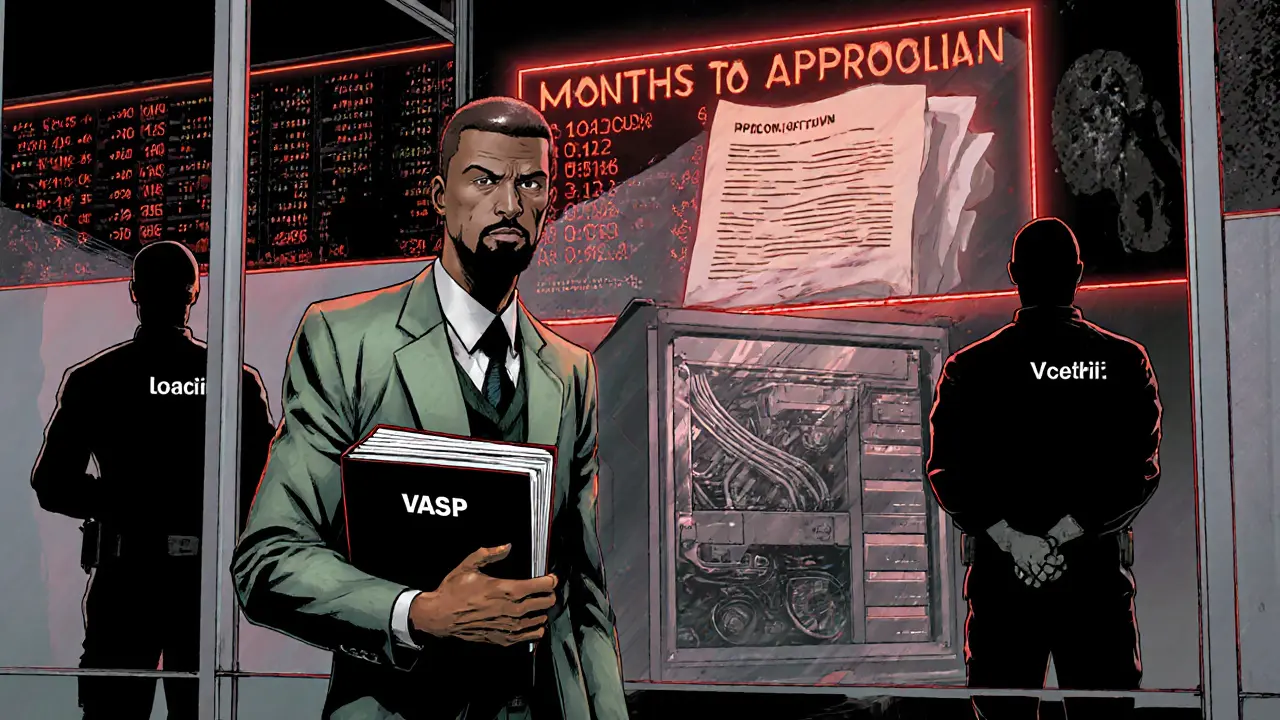
Even if you clear every legal hurdle, you still have to deal with Nigeria’s power grid. Electricity is unreliable. Many areas get only 4-6 hours of power a day. The rest? Generators. And diesel isn’t cheap. A single ASIC miner like the Antminer S19 Pro uses 3,250 watts. Running it 24/7 on a generator in Lagos could cost you over ₦40,000 ($267) a month in fuel alone. That’s more than the average monthly salary in many parts of the country.Some miners have tried solar solutions. But high-quality solar setups with battery storage cost upwards of ₦1.5 million ($1,000). Most don’t have that kind of upfront cash. And even if they do, the system needs constant maintenance. Dust, heat, and humidity eat through equipment fast. In the end, many miners find it cheaper - and safer - to move their rigs to countries like Canada or Kazakhstan, where electricity is cheap, stable, and legal.
Who’s Getting Licensed - And Who Isn’t
By late 2024, only two Nigerian crypto exchanges - Quidax and Busha - received provisional licenses from the SEC. That’s it. Not because they’re the only ones trying, but because the bar is high. You need a legal team, auditors, compliance officers, and a physical office with CCTV and security. Most small-time miners don’t have any of that. And the SEC isn’t rushing approvals. They’re vetting every applicant. Background checks. Financial audits. Source-of-funds verification. It’s a marathon, not a sprint.Meanwhile, thousands of unlicensed miners keep running rigs. They call themselves “HODLers,” not businesses. They don’t advertise. They don’t accept customers. They just mine and hold. That’s the grey zone. The SEC doesn’t go after individuals who aren’t offering services. But if your wallet suddenly starts sending large sums to an unlicensed exchange? That’s a red flag. And once flagged, your identity can be traced - even if you used a VPN or fake ID.
What Happens If You Get Caught?
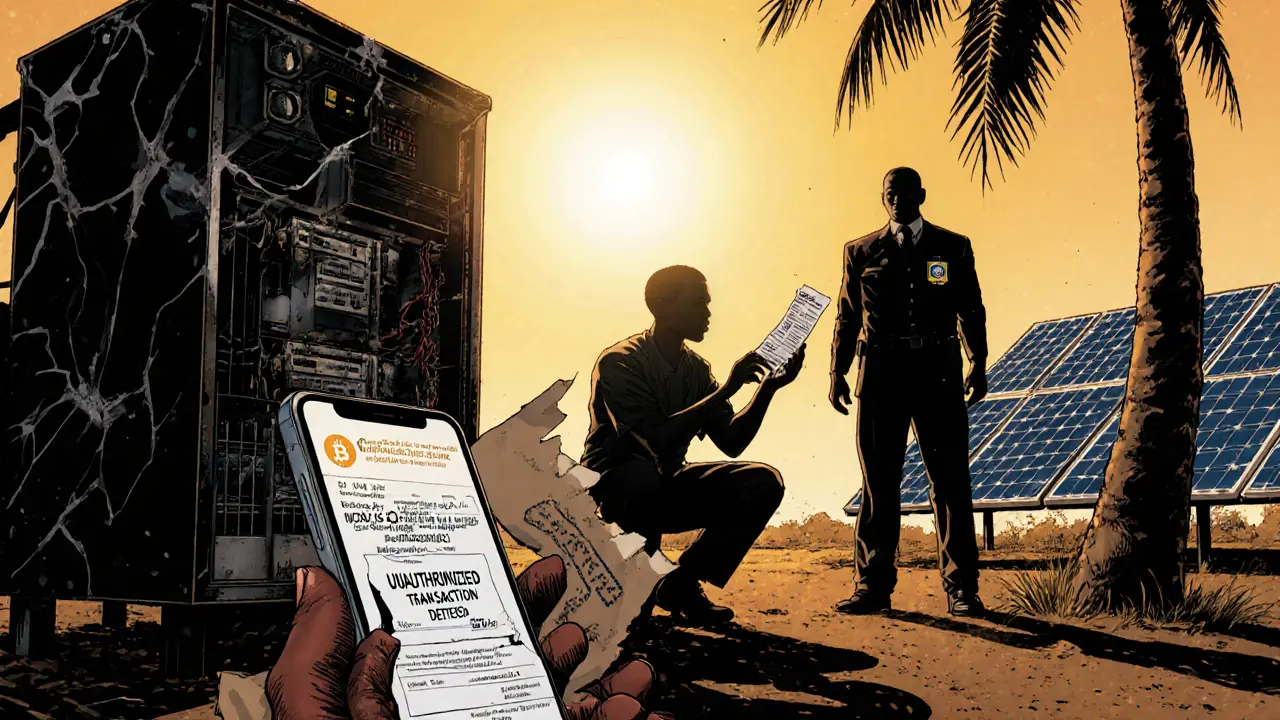
There’s no public record of anyone being jailed for mining crypto in Nigeria. But there are plenty of cases where people lost everything. In 2024, the EFCC seized over ₦2.3 billion ($1.5 million) in crypto assets linked to unlicensed trading platforms. One man in Abuja lost his entire mining farm - 27 ASICs worth ₦8 million - after a customer reported him for “fraudulent transactions.” He hadn’t stolen anything. He just didn’t have a license. The EFCC seized the equipment, froze his bank accounts (even though he didn’t use them), and fined him ₦5 million. He still owes that.And it’s not just about equipment. If you’re using borrowed money to buy miners - say, from a friend or a loan app - and you can’t pay back because the price dropped? That’s fraud. The law now treats unlicensed crypto trading as financial misconduct. You can be blacklisted from future loans, barred from government contracts, and even denied travel visas.
What’s the Real Way Forward?
If you want to mine crypto legally in Nigeria, here’s the only path:- Register your business with the Corporate Affairs Commission (CAC) as a company - not a personal venture.
- Apply for a VASP license from the SEC. Prepare for a 6-12 month wait.
- Set up a local office with staff, security, and compliance systems.
- Use licensed exchanges only - Quidax, Busha, or others on the SEC’s approved list.
- Track every transaction. Keep receipts. Record wallet addresses. Report gains.
- Pay taxes. Even if you think you won’t get caught - you will.
That’s it. No shortcuts. No hacks. No “just this once.” The government isn’t trying to kill crypto. It’s trying to control it. And if you want to play, you have to play by their rules.
Is It Worth It?
Some say yes. Nigeria’s crypto market is huge. The talent is growing. The blockchain policy is pushing innovation. And with global crypto prices rising in 2025, mining could still be profitable - if you can handle the costs.Others say no. The risks outweigh the rewards. The electricity is too expensive. The rules change too fast. The penalties are too steep. And if you’re not a corporation with legal backing, you’re just a target.
The truth? Mining crypto in Nigeria isn’t dead. But it’s no longer a wild west. It’s a courtroom with a power outage. You can do it - but only if you’re ready to treat it like a real business. Not a side hustle. Not a gamble. A regulated, taxed, audited, licensed enterprise. Anything less? You’re not mining crypto. You’re just waiting to be found.
Is crypto mining illegal in Nigeria?
No, mining crypto is not explicitly illegal in Nigeria. However, if your mining operation connects to exchanges, sells crypto to others, or offers mining-as-a-service, you must be licensed by the SEC under the ISA 2025. Unlicensed commercial activity is illegal.
Can I use a Nigerian bank to cash out my crypto earnings?
Only if you’re licensed by the SEC. Banks are allowed to serve licensed Virtual Asset Service Providers (VASPs), but they are still prohibited from dealing with unlicensed individuals or businesses. Most miners use P2P platforms instead.
Do I have to pay taxes on mined cryptocurrency in Nigeria?
Yes. Under the Nigeria Tax Administration Act (NTAA 2025), mining profits are taxable income. Selling, trading, or spending mined crypto is a taxable event. Failure to report can result in fines of ₦10 million ($6,693) in the first month, plus ₦1 million ($669) per month after that.
What happens if I get caught mining without a license?
You won’t be arrested for mining alone. But if you’re selling crypto, moving large sums, or using unlicensed platforms, you risk asset seizure, fines, bank account freezes, and blacklisting by the EFCC or SEC. Your equipment can be confiscated, and you may face criminal charges for financial misconduct.
Are there any licensed crypto mining companies in Nigeria?
There are no companies licensed specifically as “miners.” But exchanges like Quidax and Busha are licensed VASPs and may offer mining services. Any business that interacts with users - including mining-as-a-service - must be licensed by the SEC.
Can I use solar power to make crypto mining more viable in Nigeria?
Yes, solar power reduces reliance on expensive diesel generators. However, a full solar setup with battery storage costs over ₦1.5 million ($1,000). Maintenance in Nigeria’s dusty, humid climate is challenging, and most small miners can’t afford the upfront cost or ongoing repairs.
Why does Nigeria allow crypto mining but make it so hard?
Nigeria wants to benefit from crypto’s economic potential - job creation, tech innovation, foreign investment - but without the risks of fraud, money laundering, or capital flight. The government is trying to control the industry by making it expensive and complex to operate legally, filtering out casual or criminal actors while attracting serious, compliant businesses.




Bro, Nigeria’s crypto scene is wild 😅 They’re not banning mining, just making it so expensive and bureaucratic that only corporations can survive. It’s like saying "you can drive" but then charging $10k for a license and requiring a private runway. 🤡
Oh wow, another ‘crypto is legal but only if you’re rich’ fairy tale. How original. The SEC isn’t regulating-they’re performing a slow-motion extortion. Meanwhile, the average Nigerian miner is just trying to eat. This isn’t policy. It’s performance art for the IMF.
You’re all missing the point. The real issue isn’t the law-it’s the infrastructure. Running an ASIC on a generator in Lagos costs more than your rent. Solar? Sure, if you’ve got $1,500 to burn on batteries that’ll corrode in 6 months. This isn’t a legal problem. It’s a survival problem. And the government knows it.
I get why people are frustrated, but let’s not forget the upside-Nigeria’s crypto market is HUGE. $92B in a year?! That’s innovation in motion. Yeah, the rules are brutal, but look at how many people are still doing it anyway. That’s resilience. Maybe the system’s broken, but the people? They’re not giving up. 💪🔥
Let’s be real: anyone mining crypto in Nigeria without a license is either delusional or a money launderer. The SEC isn’t being harsh-they’re being HONEST. You think you’re ‘just holding’? Your wallet’s being tracked. Your phone’s being logged. Your neighbor’s reporting you because you’re running a generator 24/7. You’re not a pioneer. You’re a liability.
I’ve seen this play out in other countries-China, Russia, even the U.S. early days. Governments panic, then regulate, then tax, then monetize. Nigeria’s just early in the cycle. The miners who survive? They’ll be the ones who treat this like a business-not a hobby. And honestly? That’s a good thing. 🙌
So mining isn’t illegal but everything you do with it is? That’s not a legal gray zone. That’s a legal black hole. And the fact that they’re using blockchain data to audit people? That’s dystopian. Not because it’s techy. Because it’s personal. You’re being watched by the state for how you spend your digital coins. Like… what even is this anymore?
I don’t get why people are shocked. Nigeria’s always been like this. You want to make money? Pay a bribe. You want to mine crypto? Pay $50 million. It’s not about crypto. It’s about control. And the people who say ‘it’s worth it’? They’ve never had to pay their electricity bill in Lagos.
The real tragedy isn’t the fines or the power cuts. It’s that Nigeria has the brains, the youth, the hunger for tech-but the system chokes it with red tape. They could be leading Africa’s blockchain revolution. Instead, they’re turning it into a bureaucratic obstacle course. And the worst part? The people who suffer? They’re not the criminals. They’re the dreamers.
The legal framework outlined in the ISA 2025 and NTAA 2025 is, in fact, remarkably comprehensive. While the regulatory burden is substantial, it aligns with international standards for AML/CFT compliance. The government is attempting to formalize a decentralized ecosystem-a noble, if difficult, endeavor. The cost of compliance should not be mistaken for oppression.
I’m from India, but I’ve watched Nigeria’s crypto scene for years. You guys are doing something incredible. Even with the power issues, even with the rules-people are still mining. Still trading. Still building. That’s not luck. That’s grit. The system wants you to quit. Don’t. Just be smart. Track everything. Use licensed exchanges. Pay your taxes. You’ll be fine.
I just want to say-this whole situation makes me so sad. Imagine being someone who just wants to earn some extra money by running a few rigs in your room, and then suddenly you’re being hunted by the EFCC because you sold 0.2 BTC on P2P? You didn’t steal anything. You didn’t lie. You just needed rent money. And now you’re a criminal? The system doesn’t see you as a person. It sees you as a transaction. And that’s the real loss here.
There’s something poetic about Nigeria’s crypto paradox. You can mine-but not cash out. You can hold-but not sell. You can exist-but not thrive. It’s like the country is holding up a mirror to the world: ‘Look how we’re trying to control the uncontrollable.’ Maybe the real revolution isn’t in the blockchain. It’s in the people who keep mining anyway, despite everything.