
Airdrop Eligibility Requirements: How to Qualify for Crypto Tokens in 2026
You probably remember the buzz when Uniswap dropped its UNI tokens. Thousands of users who had simply swapped tokens months earlier suddenly found themselves holding assets worth thousands of dollars. They didn’t sign up for a contest or tweet about it. They just used the platform. That’s the dream scenario for most people chasing crypto airdrops. But here’s the hard truth: those days of easy money are mostly gone. In 2026, qualifying for an airdrop is less about luck and more about strategic participation.
If you’re wondering why your wallet didn’t light up with new tokens after using a popular protocol, you likely missed the specific airdrop eligibility requirements. Projects aren’t just handing out free cash anymore. They’re filtering for genuine users, loyal holders, and active community members. This guide breaks down exactly how these filters work, what metrics projects track, and how you can position yourself to actually qualify next time.
The Snapshot: When Your Activity Gets Recorded
Everything starts with the snapshot. Think of this as a high-stakes photo taken by the blockchain project. On a specific date and block height, the protocol records every wallet address that interacted with it. If you weren’t there at that exact moment, you don’t exist in their eyes for that specific reward.
Most projects keep the snapshot date secret until after they’ve captured the data. Why? To stop people from rushing in last minute. If everyone knew the date was October 1st, millions of wallets would wake up on September 30th, do one tiny transaction, and go back to sleep. By hiding the date, projects force users to be consistently active. The snapshot doesn’t just check if you have a balance; it often looks at:
- Transaction Frequency: Did you use the protocol once or ten times?
- Volume Traded: Did you swap $5 or $5,000?
- Holding Duration: Did you buy and sell immediately, or hold for weeks?
- Governance Participation: Did you vote on proposals?
This data creates a permanent record. Once the snapshot is taken, no amount of activity afterward changes your eligibility for that specific round. It’s a freeze-frame of your contribution.
Three Main Types of Airdrop Qualification
Not all airdrops ask for the same things. Understanding the type helps you know where to focus your energy. Generally, they fall into three buckets.
| Airdrop Type | Primary Requirement | Effort Level | Risk Factor |
|---|---|---|---|
| Holder/Retroactive | Holding native tokens or using the protocol before launch. | Low (Passive) | Market volatility; capital locked in asset. |
| Bounty/Social | Completing tasks like following Twitter, joining Discord, or referring friends. | Medium (Active) | Time-consuming; potential for fake engagement checks. |
| Ecosystem/DeFi | Staking, lending, or providing liquidity on-chain. | High (Technical) | Smart contract risk; gas fees; impermanent loss. |
Holder Airdrops are the classic "loyalty reward." You already own the project’s token, so they give you more. For example, if you held Ethereum during a major upgrade, you might get new tokens for free. The catch? You had to buy and hold through market dips. That’s a financial commitment, not just a click.
Bounty Airdrops turn you into a marketer. You follow accounts, join Telegram groups, and maybe write a blog post. These are common for new projects trying to build hype. The barrier to entry is low, but the payout is usually smaller because anyone can do it.
Ecosystem Airdrops are the most lucrative right now. Projects want to see you using their technology. Did you lend USDC on their platform? Did you stake SOL? Did you bridge assets from another chain? These actions prove you’re a real user, not just a speculator waiting for a quick flip.
The Wallet Problem: Custodial vs. Non-Custodial
Here is a mistake that kills more airdrop dreams than any other: keeping your funds on a centralized exchange like Binance or Coinbase. Most serious projects exclude exchange wallets from their snapshots. Why? Because the exchange holds the keys, not you. If the project sends tokens to Binance’s hot wallet, Binance decides whether to pass them to you-and often, they won’t.
To qualify, you almost always need a non-custodial wallet like MetaMask, Phantom, or Rabby. These wallets give you full control over your private keys. When the project runs its script, it sees your unique address interacting directly with the smart contract. It knows it’s you, not a pooled exchange account.
But which wallet should you use? It depends on the network. An Ethereum-based airdrop requires an ERC-20 compatible wallet. A Solana drop needs SPL support. Always check the project’s documentation. Using the wrong wallet type means your transactions won’t even register on the correct ledger.

Beating the Sybil Filter: Quality Over Quantity
In the early days, people created hundreds of empty wallets to farm airdrops. This is called "Sybil attacking." One person acts as many identities to multiply their rewards. Projects got wise to this. Now, sophisticated algorithms analyze wallet behavior to spot bots and farmers.
How do they filter out the noise? They look for organic patterns. A real user has a history. Their wallet has been active for months, not just created yesterday. They interact with various protocols, not just the one offering the airdrop. They pay reasonable gas fees, not the absolute minimum possible.
Some projects implement tiered distributions. If you only did the bare minimum, you get a small slice. If you were an early adopter, provided liquidity, and voted in governance, you get a much larger share. This rewards depth of engagement. Don’t just dip your toe in; dive in. Use the platform naturally. If you’re farming, make it look like you’re living there.
The Claim Process: Don’t Get Scammed
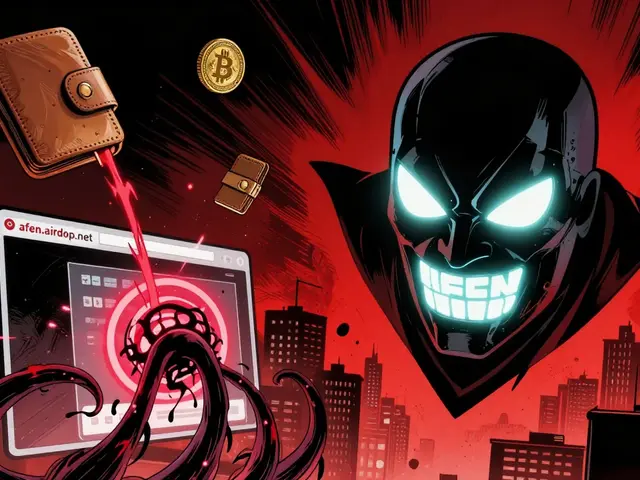
Qualifying is half the battle. Claiming the tokens is the other half, and it’s where scams thrive. Just because you appear eligible doesn’t mean the process is safe. Fake claim websites pop up within minutes of official announcements. They look identical to the real thing but steal your seed phrase or drain your wallet.
Follow these rules to stay safe:
- Verify the URL: Never click links from random DMs or tweets. Go directly to the project’s official website or verified social media channels.
- Check Contract Addresses: Verify the token contract address on a block explorer like Etherscan or Solscan before adding it to your wallet.
- Use a Fresh Wallet: If possible, connect a dedicated wallet for airdrops. Keep your main holdings separate. If a malicious site drains the airdrop wallet, your life savings are safe.
- Watch for Excessive Permissions: If a claim page asks for unlimited approval to spend your tokens, read carefully. Some legitimate claims require approvals, but excessive ones can be risky.
Also, note the claim window. Many projects set a deadline. If you don’t claim within 30 or 90 days, your tokens might return to the treasury. Set a reminder. Missing the deadline is a painful way to lose free money.
Strategic Positioning for Future Drops
So, how do you prepare for the next big opportunity? Stop reacting and start anticipating. Look for projects that haven’t launched a token yet but have strong fundamentals. Are they raising venture capital? Is their testnet active? Do they have a growing user base?
Engage with these protocols early. Testnets are great practice grounds. You’ll learn the interface without risking real money. When the mainnet launches, you’ll already know how to use it. Then, maintain a modest presence. Stake a small amount. Provide some liquidity. Vote on proposals. Even if the airdrop takes two years to materialize, your consistent activity builds a profile that algorithms love.
Remember, diversification is key. Don’t put all your eggs in one basket. Spread your activity across several promising ecosystems-Ethereum L2s, Solana, Cosmos, etc. This increases your surface area for potential hits while managing risk.
Frequently Asked Questions
Do I need to pay taxes on airdropped tokens?
In most jurisdictions, yes. Tax authorities generally treat airdrops as income at the fair market value when received. However, rules vary significantly by country. New Zealand, for instance, may classify them differently depending on intent. Always consult a local tax professional before selling.
Can I use a hardware wallet for airdrops?
Yes, and it’s recommended for security. Hardware wallets like Ledger or Trezor can connect to interfaces like MetaMask. As long as the wallet address interacts with the protocol, it qualifies. Just ensure your firmware is updated to support the specific networks involved.
What happens if I miss the snapshot date?
If you missed the snapshot, you are ineligible for that specific retroactive airdrop. There is no way to add yourself to the list after the fact. However, you remain eligible for future prospective airdrops if you continue engaging with the project.
Are all airdrops free?
Technically, the tokens are free, but claiming them often costs gas fees. Additionally, earning eligibility through staking or trading involves capital risk and transaction costs. So, while you don't pay for the token itself, acquiring it isn't entirely cost-free.
Why did my eligible wallet receive zero tokens?
Projects sometimes apply hidden filters. If your wallet looked like a bot (e.g., automated transactions, low diversity), it might have been excluded. Also, some projects reserve a portion of tokens for team members or investors, reducing the pool for public users.

Everyone is acting like this is some new strategic paradigm, but it's just the same gatekeeping we've seen for years. The "secret snapshot" thing? It's a marketing gimmick to keep you farming gas fees while they decide who gets the crumbs. If you aren't an insider or a whale with massive volume, you're just liquidity for their exit strategy. Stop pretending your $5 swap matters to their algorithm.
The distinction between custodial and non-custodial wallets is not merely technical; it is philosophical. Those who insist on leaving assets on centralized exchanges demonstrate a fundamental misunderstanding of sovereignty. You cannot claim ownership of value you do not control. Therefore, excluding them from airdrops is not a penalty, but a logical consequence of their lack of agency. True participants understand that self-custody is the prerequisite for recognition.
Wait... wait, hold on!!! Did anyone else notice that the "hidden snapshot" date is actually controlled by the team's private RPC nodes??? They can see your mempool activity BEFORE the block is even finalized! It’s not random; it’s targeted harvesting!! They know exactly which wallets are bots and which are whales before they even run the script! We are all just data points in their surveillance capitalism experiment!!! Don’t trust the public node!!!
It is morally bankrupt to treat these tokens as free money when they often come with hidden tax liabilities that people ignore until April. If you haven't set aside 30% of your windfall for the IRS, you didn't earn anything; you just borrowed from your future self. Discipline matters more than luck in this space.
hey guys dont stress too much about the sybil filters just be active and have fun with the tech its worth the effort im sure u will get something eventually!
I appreciate the breakdown of the three qualification types, particularly the emphasis on ecosystem engagement over simple holding. From my experience advising clients, those who participate in governance voting tend to receive significantly higher tier allocations than passive holders. It is crucial to remember that projects are filtering for alignment, not just usage. I would also add that bridging assets across multiple L2s has become a critical signal for many recent drops, such as Arbitrum and Optimism campaigns. Consistency across chains demonstrates a broader commitment to the ecosystem rather than opportunistic behavior.
This is a really balanced take. I think people get too hung up on the "free money" aspect and forget that the real value is in learning the protocols. Even if you don't get a huge drop, understanding how DeFi works is a skill that pays dividends elsewhere. Let's support each other in sharing tips on which testnets are actually useful versus which ones are just busy work.
Great post! Just wanted to add that using hardware wallets is super important for security but make sure to check compatibility with specific networks like Solana or Cosmos first sometimes the firmware needs updating 📝 Also, always verify contract addresses on Etherscan before connecting! Stay safe out there folks 👍
🙏 Amen to the tax warning. People treat these like lottery tickets but forget the government wants its cut. 😤 Be responsible!
The sheer audacity of expecting compensation for mere presence is staggering. One must engage with the protocol’s core utility, providing genuine liquidity or computational resources, to merit such distribution. To assume entitlement without substantial contribution is intellectually lazy. The market corrects for this inefficiency by rewarding only those who demonstrate deep, sustained interaction with the decentralized infrastructure.
Listen up because this is critical: If you are treating this like a casino, you will lose. You need to treat every interaction like a job interview. Show them you belong there. Do not just click buttons; understand what you are signing. If you don't respect the technology, the technology won't reward you. It is that simple.
That makes sense. I guess I’ve been too passive lately. Just swapping occasionally isn't cutting it anymore.
You got this Henry. Just start small. Vote on one proposal today. Stake a tiny bit tomorrow. Build the habit. Respect your time and let the protocol see you consistently showing up. You’re closer than you think.
One must exercise extreme caution regarding the claim process. The proliferation of phishing sites targeting eligible wallets is unprecedented. Verify every URL character-by-character. A single misplaced letter results in total asset loss. This is not a suggestion; it is a mandatory procedural requirement for any competent participant.
There is a beautiful irony in how we chase digital scarcity with such human anxiety. 🌟 We create systems to prove our loyalty to code, yet the code remains indifferent to our efforts. Perhaps the true reward isn't the token, but the community we build while waiting for it. Keep your spirit bright and your keys safe! ✨
Let's not forget the global perspective here. In emerging markets, these airdrops represent significant capital gains that can change livelihoods. However, the barrier to entry-gas fees, technical knowledge, English proficiency-is disproportionately high for non-Western users. We need to acknowledge that "strategic participation" is a privilege for those with disposable income and stable internet access. The playing field is far from level.