
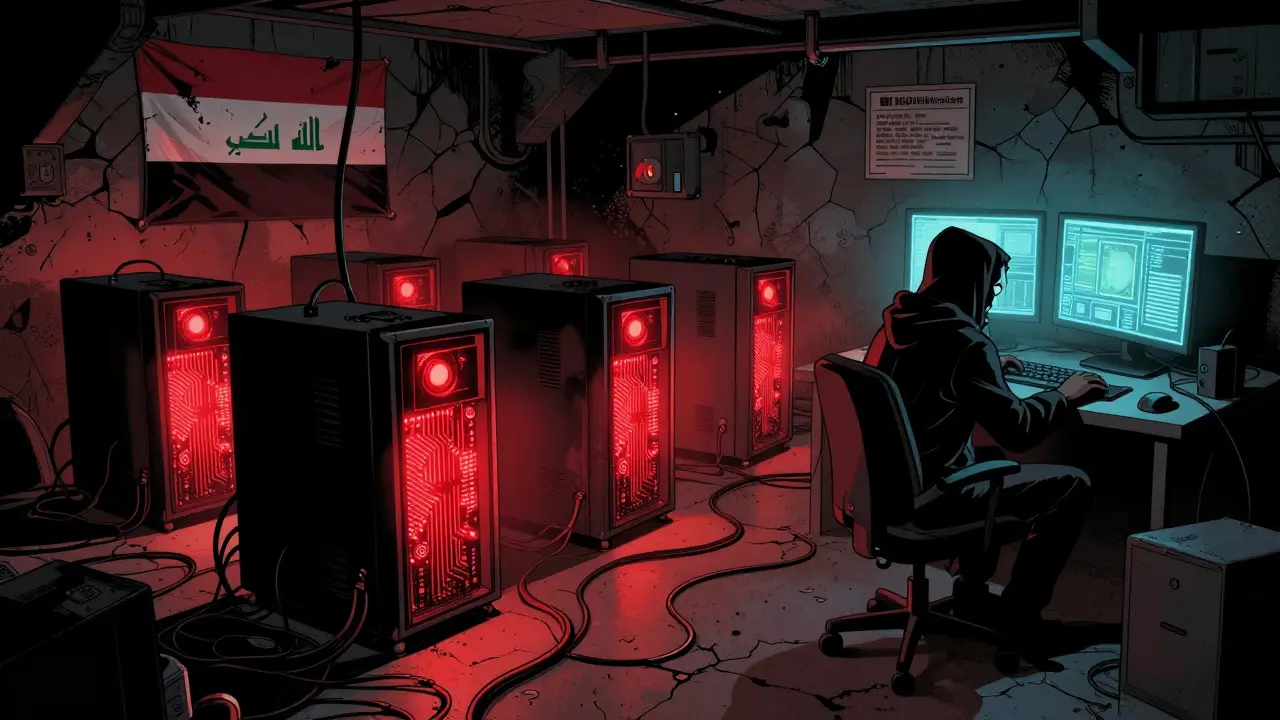
Iraq Crypto Mining Ban Since 2017: Why It Stands and What’s Really Happening Today
Back in 2017, Iraq made one of the strictest moves in the global crypto world: it completely banned cryptocurrency mining and trading. Not just restricted. Not just regulated. Banned. The Central Bank of Iraq (CBI) didn’t just issue a warning - it shut the door hard. No digital wallets. No Bitcoin mining rigs. No peer-to-peer trades. No exceptions. Ten years later, that ban is still in place, even as the rest of the world tries to figure out how to live with crypto, not run from it.
Why Iraq Pulled the Plug in 2017
The Central Bank of Iraq didn’t wake up one day and decide to outlaw Bitcoin because it was trendy. The decision came from deep, real fears. Iraq’s economy was - and still is - fragile. Cash flow was unstable. The banking system was underfunded and slow. And suddenly, untraceable digital money was flooding in from abroad. No central authority. No taxes. No paper trail.
The CBI pointed to three big dangers: money laundering, financial fraud, and energy waste. Bitcoin mining, especially, uses massive amounts of electricity. In a country where power outages are routine and fuel is often rationed, letting people run mining rigs 24/7 felt like a luxury the nation couldn’t afford. Greenpeace even noted Iraq as one of the first countries to publicly link crypto mining to energy misuse in its 2017 statement.
There was also a religious layer. In 2018, the Kurdistan Regional Government’s Supreme Fatwa Committee declared OneCoin - a notorious crypto scam - as haram (forbidden under Islamic law). That wasn’t just a religious opinion - it backed the government’s legal stance. For many Iraqis, crypto wasn’t just risky; it was morally suspect.
The Ban Wasn’t Just a Rule - It Was a Warning
The CBI didn’t stop at saying "don’t do it." It made it clear: using digital currencies, even as a payment method, was a threat to national financial security. Banks were ordered to block any transactions tied to crypto. ATMs and electronic cards linked to digital wallets were frozen. Even receiving Bitcoin as payment for goods became legally risky.
It wasn’t just about control. It was about survival. Iraq’s financial system was still rebuilding after decades of war and sanctions. The government feared that if crypto took root, it could bypass the entire banking infrastructure - leaving the state with no way to track money, collect taxes, or stop illicit flows. In a country where corruption and black-market trade are still common, crypto looked like the perfect tool for criminals.
But People Didn’t Stop Mining - They Just Got Sneaky
Here’s the twist: the ban didn’t kill crypto in Iraq. It just drove it underground.
Meet Ahmed Crypto - a 33-year-old from Baghdad who still holds $10,000 worth of Bitcoin and Ethereum. He doesn’t have a bank account tied to his crypto. He doesn’t use apps. He runs his operations through a private Facebook page. He used to work out of an office, but after a security warning from authorities, he moved everything home. He says the CBI’s stance is "backward," and he’s not alone.
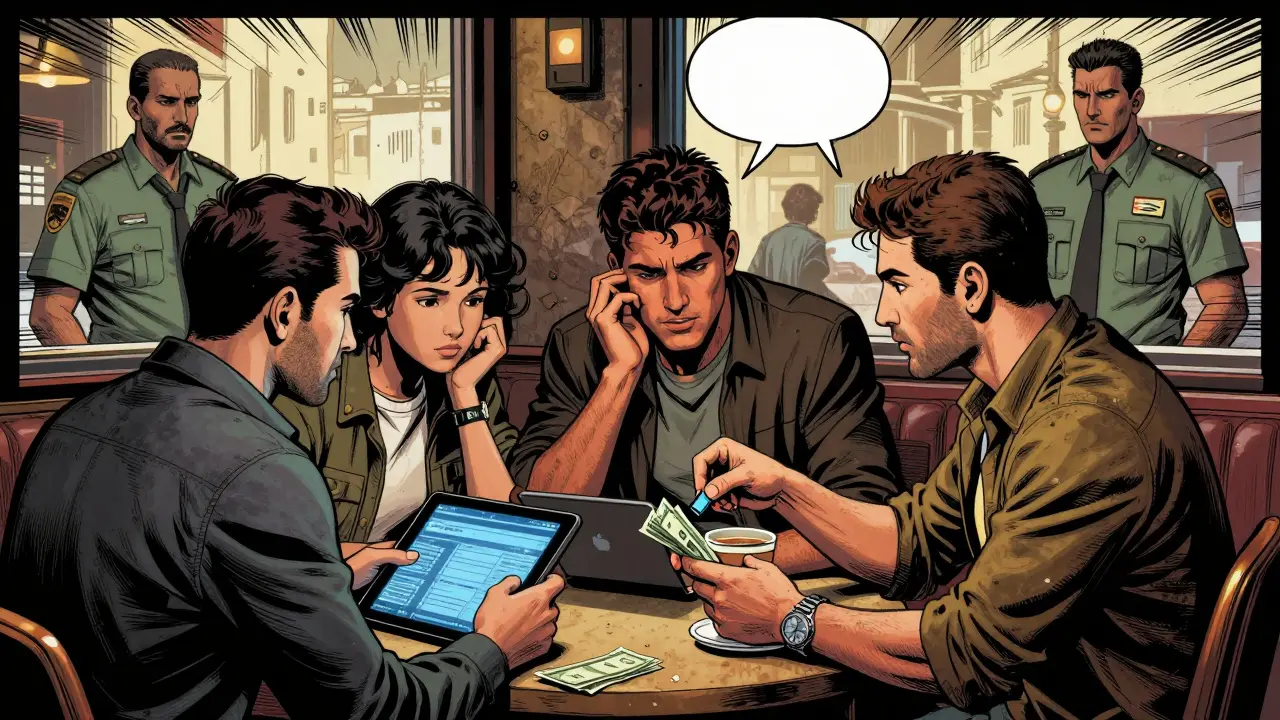
Across Baghdad, Mosul, and Basra, small groups of miners meet in quiet cafes. No names. No phones. Just whispers. They swap tips on how to hide their rigs, where to get cheap electricity, and how to avoid detection. Some use solar panels. Others tap into industrial power lines. A few even rent out space in abandoned buildings.
At least two people have been arrested for crypto-related activity since 2017, according to underground sources. But legal expert Hayan Al-Khayyat says he’s never seen a formal trial. No court records. No public charges. That’s not because the law isn’t there - it’s because enforcement is patchy. The government doesn’t have the resources to chase every miner. So it plays a game of cat-and-mouse.
How It’s Hurting Iraq’s Economy
The ban isn’t just affecting miners - it’s hurting businesses too.
Imagine you’re a small Iraqi exporter trying to sell goods to a buyer in Turkey. The buyer wants to pay in USDT (Tether), a stablecoin. But your bank won’t accept it. Your bank won’t even let you open a wallet. So you’re stuck using wire transfers - which take days, cost more, and often get stuck in bureaucratic delays. Sometimes, funds disappear entirely.
This isn’t rare. It’s standard. Because Iraq’s anti-money laundering rules are strict - and crypto is completely off the table - companies have no alternatives. They’re forced into slow, expensive, paper-heavy systems. International trade is slower. Costs are higher. Small businesses lose out.
Some Iraqi tech startups have even moved their operations to Jordan or Dubai just to access crypto-friendly banking. The brain drain isn’t just about jobs - it’s about innovation. Crypto isn’t just digital money. It’s a tool for financial inclusion. And Iraq is locking itself out of that future.
Who Else Has a Total Ban? And How Does Iraq Compare?
Iraq isn’t alone. As of 2025, only about ten countries have outright bans on cryptocurrency. Here’s the short list:
- China - shut down mining in 2021 for energy and control reasons
- Bangladesh - criminalizes possession and trading since 2017
- Egypt - bans crypto on religious and economic grounds
- Algeria - prohibits all transactions since 2018
- Nepal - no legal framework, so it’s effectively banned
- Afghanistan - Taliban regime enforces strict prohibition
- Morocco - banks can’t process crypto
- Bolivia - banned in 2014, but reversed in 2024
- Russia - banned financial use, but allows mining and holding
What’s striking is that most of these countries are either economically unstable, religiously conservative, or both. Iraq fits right in. But here’s the thing: Bolivia reversed its ban in 2024. Russia lets mining continue. Even Egypt is quietly exploring regulation. Iraq? Nothing. No talks. No reviews. No signals of change.
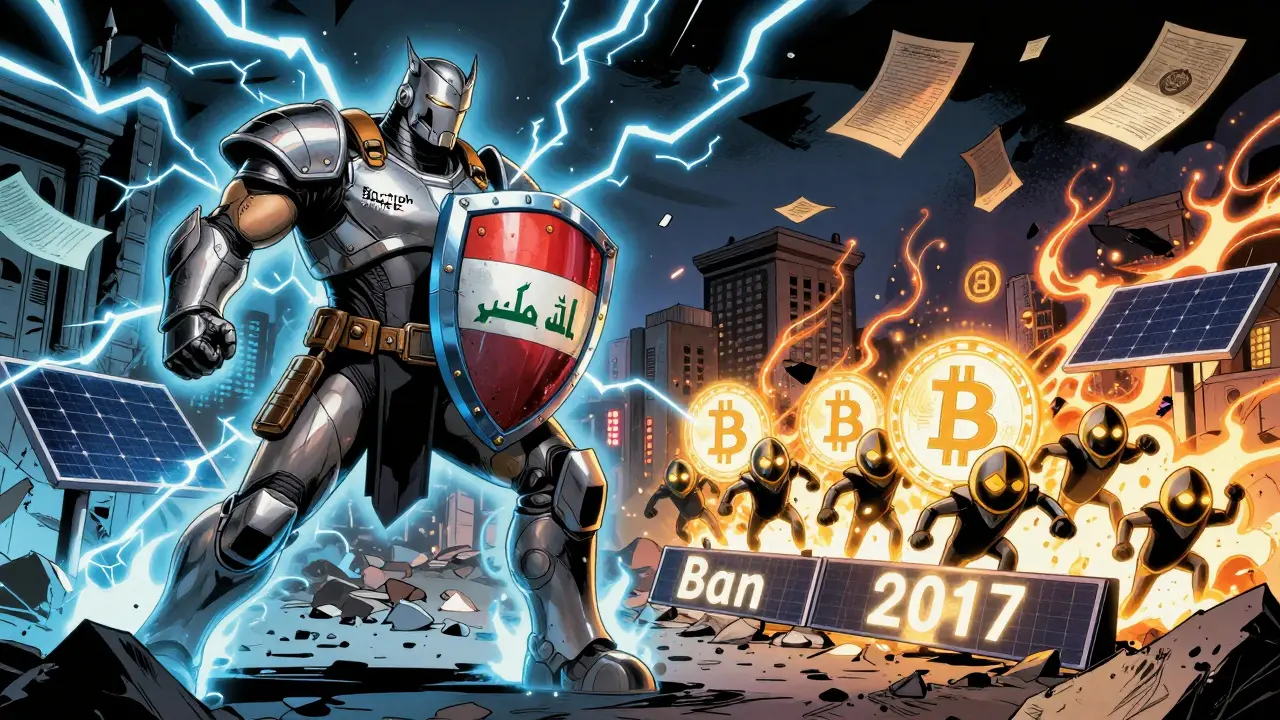
The Big Question: Will Iraq Ever Lift the Ban?
Right now, the answer looks like a hard "no." The Central Bank of Iraq has shown zero interest in revisiting the 2017 decision. No public consultations. No pilot programs. No task forces. The officials who made the call are still in charge. And they still believe crypto is a threat - not a tool.
But the people on the ground? They’re not waiting. Ahmed Crypto says it best: "Whatever you do, we will find alternative ways and precautions to avoid prosecution." That’s the reality. The ban is real on paper. But in practice, it’s just a suggestion. Thousands of Iraqis still mine, trade, and hold crypto. They’re not breaking the law because they’re criminals - they’re doing it because they have no other choice.
Some experts argue that if Iraq legalized crypto with proper licensing, taxes, and oversight, it could generate revenue, attract tech investment, and bring financial services to millions of unbanked citizens. But until the government sees crypto as something it can control - not something it must fear - the ban will stay. And so will the underground.
What This Means for the Future
Iraq’s crypto ban is a snapshot of a country stuck between fear and necessity. It’s not just about Bitcoin or Ethereum. It’s about whether a nation can adapt to new technology while protecting its fragile economy. The ban was meant to protect. But now, it might be holding Iraq back.
Meanwhile, the miners keep running their rigs. The traders keep whispering in cafes. And the banks? They’re still waiting for someone to tell them what to do next.
Is cryptocurrency mining illegal in Iraq?
Yes. Since 2017, the Central Bank of Iraq has banned all cryptocurrency mining and trading. This includes Bitcoin, Ethereum, and any other digital currency. Using digital wallets, mining rigs, or peer-to-peer exchanges is prohibited under Iraqi law.
Are people being arrested for crypto mining in Iraq?
There have been at least two reported arrests linked to crypto activities since 2017, according to underground sources. But there are no public court records or formal trials. Enforcement is inconsistent - authorities focus on large-scale operations, but most individual miners operate without interference.
Why hasn’t Iraq changed its crypto ban despite global shifts?
The Central Bank of Iraq still views crypto as untraceable, uncontrollable, and a threat to financial stability. Unlike countries like Bolivia or Russia that reversed bans or created regulatory frameworks, Iraq has not held any public discussions or formed task forces to reassess the policy. Fear of economic disruption and lack of technical understanding among officials keep the ban in place.
Can I use cryptocurrency for international payments in Iraq?
No. Iraqi banks are legally prohibited from processing any cryptocurrency transactions. Businesses trying to receive crypto payments face frozen funds, rejected transfers, or account closures. This forces companies to rely on slow, expensive wire transfers, increasing operational costs and delays.
Is Bitcoin mining banned because of environmental concerns?
Yes, energy use was a major factor. The Central Bank of Iraq specifically cited Bitcoin’s high electricity consumption as a risk to national energy supply. With frequent power outages and limited infrastructure, allowing large-scale mining was seen as irresponsible. Greenpeace noted Iraq as one of the first countries to link crypto mining to energy waste in its 2017 statement.
Do Iraqi banks allow crypto-related services?
No. Iraqi banks are legally barred from offering any crypto services - including wallets, exchanges, or even holding digital assets. Any attempt to integrate crypto into banking systems is considered a violation of CBI regulations and can lead to penalties or license revocation.
Is there a difference between mining and trading in Iraq’s ban?
No. The 2017 ban covers both activities equally. Whether you’re running a mining rig, buying Bitcoin on a peer-to-peer platform, or using crypto to pay for goods - all are prohibited under the same regulation. The law doesn’t distinguish between mining and trading; both are treated as illegal financial activities.
How do people in Iraq still access cryptocurrency?
People use offline, hidden methods: private Facebook groups, encrypted messaging apps, cash-based peer-to-peer trades, and underground mining in homes or abandoned buildings. Electricity is often tapped from non-registered sources. Most users avoid digital trails entirely, using cash or barter systems to exchange crypto for goods or fiat.
Has any Iraqi official spoken in favor of lifting the ban?
No public official has officially supported lifting the ban. However, some members of the underground crypto community - like Ahmed Crypto and Ashur Al-Nuaimi - argue that regulation, not prohibition, would give the government better control, tax revenue, and oversight. But these views remain outside official policy.
What would happen if Iraq legalized crypto?
Legalization could bring much-needed innovation, reduce reliance on slow banking systems, and open doors for international trade. It could also generate tax revenue from crypto transactions and attract tech investment. But it would require building new infrastructure, training officials, and creating clear rules - something the current government has shown no interest in doing.

This isn't a ban-it's a death sentence for innovation. Iraq's got oil, but they're choking on their own fear. Meanwhile, kids in Basra are running rigs off solar panels and trading Bitcoin for bread. The government's scared of control? Too bad. Control's already gone. They're not stopping crypto-they're just making it uglier, dirtier, and way more dangerous. If you ban something this hard, you don't protect the system-you turn it into a black market playground. And guess who pays? The people.
Ah, so now we're comparing Iraq to Bolivia... because clearly, the only reason a country bans crypto is because it's 'religious' or 'poor.' Funny how the West never mentions that India's been quietly building a digital rupee while people here are still whispering about mining rigs in cafes. You call it 'fear'-I call it wisdom. You don't let unregulated, energy-guzzling gambling masquerading as finance destabilize a country still picking up the pieces from war. Maybe stop romanticizing underground economies and ask: who benefits? Not the poor. Not the farmers. Not the teachers. The middlemen. Always the middlemen.
The fact that you're even calling this a 'ban' shows how little you understand governance. Iraq didn't 'ban' crypto-it recognized that financial sovereignty requires centralized authority. The CBI isn't some backward institution-it's the last line of defense against dollarized chaos. You think Bitcoin is freedom? It's a Trojan horse for foreign capital flight. And you're out here acting like it's a civil rights issue. Wake up. This isn't about tech. It's about nationhood. And you're not helping by pretending that every country should bend to Silicon Valley's ideology
I read this whole thing and just... felt sad. Not because of the ban. But because of the silence. The miners aren't criminals-they're people trying to survive in a system that broke. Imagine having to hide your income because the bank won't let you receive money from a digital wallet. Imagine being told your innovation is illegal because your country can't afford to upgrade. This isn't about religion or energy. It's about dignity. And the real tragedy? No one in power is even asking, 'How do we help?' They just say 'no' and walk away. That's the real crime here.
Let me guess-next you'll be telling me that the CBI is secretly working with the IMF to phase out cash and install blockchain surveillance. You know what they don't tell you? That every 'underground miner' is probably laundering money for militias. The two arrests? That's the tip. The rest? Ghosts. The government doesn't need to chase them-they just need to make sure the lights go out in Baghdad one night and watch the rigs go dark. It's not incompetence. It's strategy. And you're just the guy who thinks Bitcoin is freedom.
I knew it. I KNEW IT. This is all part of the globalist agenda. The Central Bank of Iraq? Probably owned by the same people who run the Fed. They're not banning crypto because of energy-they're banning it because it's the only thing that can bypass the shadow banking network that's been draining Iraq's wealth since 2003. They don't want you to have control. They want you dependent. And now? Now they're using 'religious reasons' to mask the real truth: crypto is the only thing that can break the cycle. But they'll burn down every mosque before they let you have it. I've seen the patterns. This is just Phase 2 of the Great Financial Lockdown.
Oh wow. Another 'poor Iraq' sob story. Let me get this straight-you're mad because Iraq won't let its citizens turn their electricity into Bitcoin while their kids are still using candles? Meanwhile, America's got a $30 trillion debt and we're still flying drones over the Middle East to 'protect stability.' If you're so passionate about crypto freedom, why not move to El Salvador? Or just stop pretending that Iraq's problems are your personal moral crusade. This isn't oppression. It's self-preservation. And if you can't see that, maybe you're the one who needs to get out of the echo chamber.
I used to think crypto was about freedom. Then I met a guy in Mosul who told me he mined for 18 months just to pay for his sister's cancer treatment. No bank would touch him. No wire transfer worked. So he ran a rig in his closet, powered by a stolen generator. He didn't care about decentralization. He cared about survival. That’s the real story here. The ban isn’t about control. It’s about a system that forgot to include the people. We talk about innovation like it’s a tech problem. But it’s not. It’s a humanity problem.
While it is understandable that the Central Bank of Iraq would prioritize macroeconomic stability and the integrity of its financial infrastructure, it is also imperative to recognize that the prohibition of cryptocurrency may inadvertently exacerbate financial exclusion among unbanked populations. A more nuanced, phased regulatory approach-complete with licensed mining zones, taxation protocols, and public education initiatives-could mitigate risks while unlocking potential economic benefits. The absence of dialogue, however, suggests not prudence, but institutional inertia. One must ask: is fear a sustainable policy foundation?
I just don't get why people make this so complicated. Iraq has power outages. People are trying to run machines that use as much electricity as a whole neighborhood. That's not innovation. That's just... not smart. If you want to mine, go to Iceland. Or Canada. Or somewhere with extra power. Don't take it from your neighbors who can't even turn on the lights. Simple.
The fact that no one is being formally prosecuted doesn't mean the ban isn't real. It means enforcement is inconsistent because the state lacks capacity-not because the policy is flawed. In places like this, laws exist as deterrents, not tools. The real issue? The ban prevents any formal adaptation. No oversight. No taxation. No accountability. And that’s worse than any illegal mining rig. It’s a vacuum. And vacuums get filled with worse things.
From a technical standpoint, the CBI's position is aligned with risk mitigation frameworks outlined by the FATF in 2019, particularly regarding VASPs and non-custodial wallets. The absence of a regulatory sandbox, coupled with inadequate KYC infrastructure, renders compliance unfeasible. Moreover, the energy intensity of PoW mechanisms, when juxtaposed with Iraq's grid instability (average capacity factor: 42%), constitutes a material systemic risk. Regulatory arbitrage via underground mining only deepens the asymmetry between formal and informal economies. The solution isn't legalization-it's infrastructure investment.
I get the fear. I really do. But banning crypto doesn't stop it. It just stops the government from seeing it. And that's more dangerous. If you want to control something, you need to see it. You need to tax it. You need to regulate it. Right now, the CBI is playing whack-a-mole with people in basements. Meanwhile, the real money-oil, weapons, bribes-is moving through the same channels they're trying to shut down. Why not just bring crypto into the light? Let them register. Let them pay taxes. Let them be part of the system. You can't fight the future by hiding in the dark.
🚨 ALERT 🚨 This isn't about crypto. This is about the New World Order using Iraq as a testbed. The CBI? Probably controlled by the same group that runs the IMF and the Vatican. They don't want you to have decentralized money because then you can't track your soul's blockchain transaction. And the 'mining' you think is just about Bitcoin? Nah. Those rigs are harvesting quantum data from your dreams. I know a guy who saw a miner's screen glow red at 3am. He said it whispered his SSN. Don't believe me? Check the solar panel footage from Mosul last winter. The shadows... they move wrong. 🕵️♂️💻🔮
You call this 'underground mining'? Please. That's not ingenuity-that's incompetence. If you're clever enough to tap into industrial power lines, you're clever enough to open a bank account. The real problem isn't the ban. It's that Iraqis refuse to engage with the formal economy. Why not create a licensed mining cooperative? Why not petition for a pilot zone? Why not use blockchain for land registry? No. Instead, you hide in cafes and whisper like teenagers in a horror movie. This isn't rebellion. It's self-sabotage. And you're proud of it?