VPN for Crypto in China: Legal Risks and Reality Check (2026)
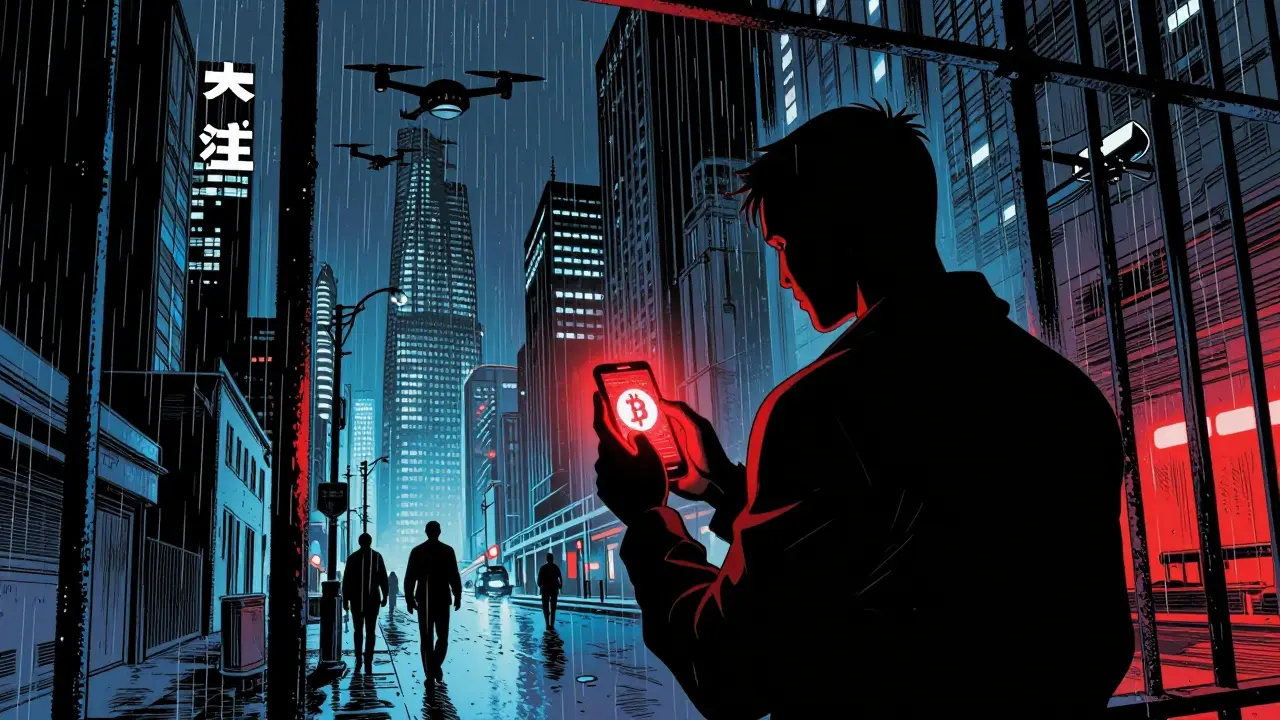
It is June 2026. If you are holding Bitcoin or Ethereum while standing on the streets of Shanghai, Beijing, or Shenzhen, you are technically walking a tightrope without a net. The rules have hardened significantly over the last year. What was once a gray area of "don't ask, don't tell" has shifted into a comprehensive prohibition framework. You cannot trade, you cannot mine, and increasingly, even holding private cryptocurrencies is viewed with extreme suspicion by authorities.
You might think a Virtual Private Network (VPN) is your ticket to freedom. It’s not. Using a VPN to bypass the Great Firewall to access banned platforms like Binance creates a double layer of legal risk. You aren't just breaking financial laws; you are violating internet censorship regulations. This article breaks down exactly what is off-limits, how the government catches people, and why the digital yuan is the only game in town right now.
The Complete Ban: What Is Actually Illegal?
Let’s clear up the confusion first. As of early 2025, China implemented a total ban on all private cryptocurrency activities. This isn't just about exchanges shutting down shops. The regulatory structure covers everything:
- Trading: Buying or selling Bitcoin, Ethereum, or any altcoin on an exchange is prohibited.
- Mining: Operating mining hardware is strictly forbidden and actively raided.
- Ownership: While some civil courts still recognize crypto as "virtual property" for divorce or fraud disputes, this does not mean owning it is legal. It simply means the court will seize it rather than ignore it.
- Token Financing: ICOs, IEOs, and IFOs targeting mainland users are criminal offenses.
- Advertising: Promoting crypto services to Chinese residents is banned.
The goal here is clear: eliminate private cryptocurrency use to protect capital controls and promote the state-backed digital yuan (e-CNY). The e-CNY is expanding rapidly for retail and business-to-business payments under central bank control. It is the only digital currency the government wants you to touch.
Why Your VPN Is Not a Magic Shield
Many travelers and expats assume that because they haven't seen anyone arrested at the airport for having a Tor browser installed, it must be safe. This is a dangerous assumption. The legality of using a VPN varies by province, but the enforcement tactics are consistent and aggressive.
Here is how the system works against you:
- Detection: The Cyberspace Administration of China (CAC) uses advanced traffic analysis to identify non-government-approved VPN protocols. They don't need to read your messages; they just need to see the encrypted tunnel pattern that differs from standard HTTPS traffic.
- Reinstatement Process: To get your service back, you often have to visit a local police station. Officers may confiscate your phone, force you to delete the VPN app, and sometimes demand you explain why you were using it. Only then do they return your device and restore service.
While tourists rarely face long-term imprisonment for simple VPN usage, the inconvenience can ruin a trip or a business meeting. For residents, the stakes are higher. Repeated attempts to circumvent the firewall can lead to being flagged in national security databases, affecting your ability to open bank accounts or rent apartments.
The Double Violation: Internet Censorship + Financial Crime
This is where most people underestimate the risk. Using a VPN alone is an administrative violation of internet regulations. But using that VPN to access Binance or Coinbase? That compounds the offense.
When you connect to a foreign exchange via a VPN, you trigger two separate alarm bells:
| Action | Violation Type | Enforcement Agency | Potential Consequence |
|---|---|---|---|
| Using Unapproved VPN | Internet Censorship Circumvention | Cyberspace Administration (CAC) | Service shutdown, device confiscation, police reporting |
| Trading Crypto | Illegal Financial Activity | People's Bank of China (PBOC), NAFR | Asset confiscation, fines, criminal charges |
| Cross-Border Transfers | Foreign Exchange Control Violation | State Administration of Foreign Exchange (SAFE) | Bank account freezing, travel bans |
| Large Volume Trading | Money Laundering / Tax Evasion | Ministry of Public Security (MPS) | Criminal prosecution, imprisonment |
The People's Bank of China (PBOC) and the National Administration of Financial Regulation (NAFR) work closely with banks. Every major bank in China is required to block transactions linked to cryptocurrency. If you try to move money from your Alipay or WeChat Pay to a crypto-friendly entity-even indirectly through a gaming platform or forex gateway-your account will likely be frozen. Enhanced Know Your Customer (KYC) and Anti-Money Laundering (AML) checks are automated and relentless.

Who Enforces This? The Web of Agencies
It is not just one policeman looking for crypto traders. It is a coordinated effort across multiple government bodies. Understanding who is watching helps you understand the severity of the risk.
- Cyberspace Administration of China (CAC): They manage the Great Firewall. They care about information flow and internet sovereignty. They block the websites and detect the tunnels.
- People's Bank of China (PBOC): The central bank. They care about monetary policy and capital flight. They push the digital yuan and kill private crypto.
- State Administration of Foreign Exchange (SAFE): They monitor cross-border money flows. If you are moving RMB out of China to buy USD-pegged stablecoins, SAFE is tracking that leak.
- Ministry of Public Security (MPS): The police. They handle the arrests for illegal fundraising, fraud, and serious financial crimes.
- China Securities Regulatory Commission (CSRC): They oversee traditional markets but also crack down on unregistered token offerings that resemble securities.
This multi-agency approach means there is no "blind spot." Even if the CAC misses your VPN traffic, the PBOC might flag your bank transfer. If the bank doesn't catch it, the MPS might investigate if the transaction volume looks suspicious.
Penalties: More Than Just a Fine
If you are caught trading cryptocurrency in China, the penalties are severe and apply equally to citizens and foreigners. There is no "expat exemption."
Administrative Penalties: For minor infractions, you might face warnings, forced deletion of apps, or temporary bans from financial services. However, "minor" is defined loosely by local authorities.
Confiscation of Assets: Any financial gains from cryptocurrency activities are considered illicit proceeds. The government does not tax these profits; it seizes them entirely. If you made $10,000 trading Bitcoin, that $10,000 plus the principal investment can be confiscated.
Criminal Charges: If your activities are deemed "illegal fundraising" or "financial fraud," you face criminal prosecution. This can result in imprisonment. Large-scale operations, such as running a mining farm or organizing a trading group, carry heavier sentences. Even individual traders with high volumes can be charged with disrupting financial order.

The Digital Yuan: The Only Safe Path
China is not against digital money. They are against *private* digital money. The digital yuan (e-CNY) is the state's answer to Bitcoin. It offers instant settlement, low fees, and privacy features controlled by the central bank.
For businesses and individuals in China, the path forward is integration with the e-CNY ecosystem. It is already widely accepted for retail purchases and is expanding into B2B payments. Unlike Bitcoin, which operates on a public blockchain outside government control, the e-CNY allows the PBOC to monitor and regulate all transactions. This aligns with China's goals of financial stability and capital control.
Stablecoins pegged to the offshore yuan (CNH) are being explored in adjacent jurisdictions like Hong Kong, but mainland participation is strictly limited to sandboxed environments focused on cross-border payment efficiency. Do not expect liberalization. The trend is toward tighter control, not looser rules.
Technical Risks Beyond the Law
Even if you ignore the legal risks, the technical reality is harsh. The Great Firewall is constantly evolving. In 2025 and 2026, detection methods have become more sophisticated.
- Server Blocking: VPN providers lose servers daily. One day your connection works; the next, it times out. This inconsistency makes reliable trading impossible.
- Data Exposure: Many cheap or free VPNs log your data. In China, using an untrusted VPN could expose your identity and browsing history to third parties or even state actors.
- Fraudulent Platforms: Scammers know Chinese users are desperate for access. Fake crypto exchanges that mimic Binance or Coinbase appear frequently. These sites are designed to steal funds from users accessing them via unstable VPN connections.
Future Outlook: Expect Tighter Restrictions
Don't hold your breath for a reversal. Industry analysts predict that China's restrictive approach will intensify. The government is heavily investing in blockchain technology for supply chain management and government services, but always on private, permissioned ledgers.
As global regulatory frameworks evolve, China is doubling down on its digital yuan. Technological improvements in AI-driven traffic analysis will make VPN detection even more effective. Blockchain forensics tools used by the MPS will become better at tracing illicit flows back to individual wallets.
If you are in China, the safest strategy is to avoid private cryptocurrencies entirely. Use the digital yuan for digital payments. Keep your crypto assets in jurisdictions where they are legal, and do not attempt to bridge the gap using a VPN. The cost of getting caught-both financially and legally-is far too high.
Is it illegal to own Bitcoin in China in 2026?
Yes, effectively. While some civil courts recognize crypto as virtual property for dispute resolution, the 2025 comprehensive ban prohibits trading, mining, and commercial activities. Holding crypto exposes you to asset confiscation if discovered, and attempting to transact is a criminal offense.
Can I use a VPN to access Binance in China?
Technically, you might find a working server, but it is highly risky. Using a non-government-approved VPN violates internet censorship laws. Combining this with accessing a banned financial platform like Binance compounds the legal risk, potentially leading to service shutdowns, police questioning, and asset seizure.
Will I go to jail for buying crypto in China?
For small, personal amounts, immediate jail time is rare but not impossible. However, large-volume trading, operating exchanges, or engaging in what authorities deem "illegal fundraising" can lead to criminal prosecution and imprisonment. All profits are subject to confiscation.
What happens if my bank detects a crypto transaction?
Your bank account will likely be frozen immediately. Banks are required by the PBOC to block crypto-linked flows. You may face enhanced KYC checks, and repeated violations can lead to being blacklisted from the entire banking system, making daily life in China extremely difficult.
Is the digital yuan (e-CNY) a replacement for Bitcoin?
No, they are fundamentally different. Bitcoin is decentralized and private. The e-CNY is centralized, issued by the People's Bank of China, and fully regulated. The government promotes the e-CNY as the only legal digital currency, aiming to replace cash and private crypto alternatives.