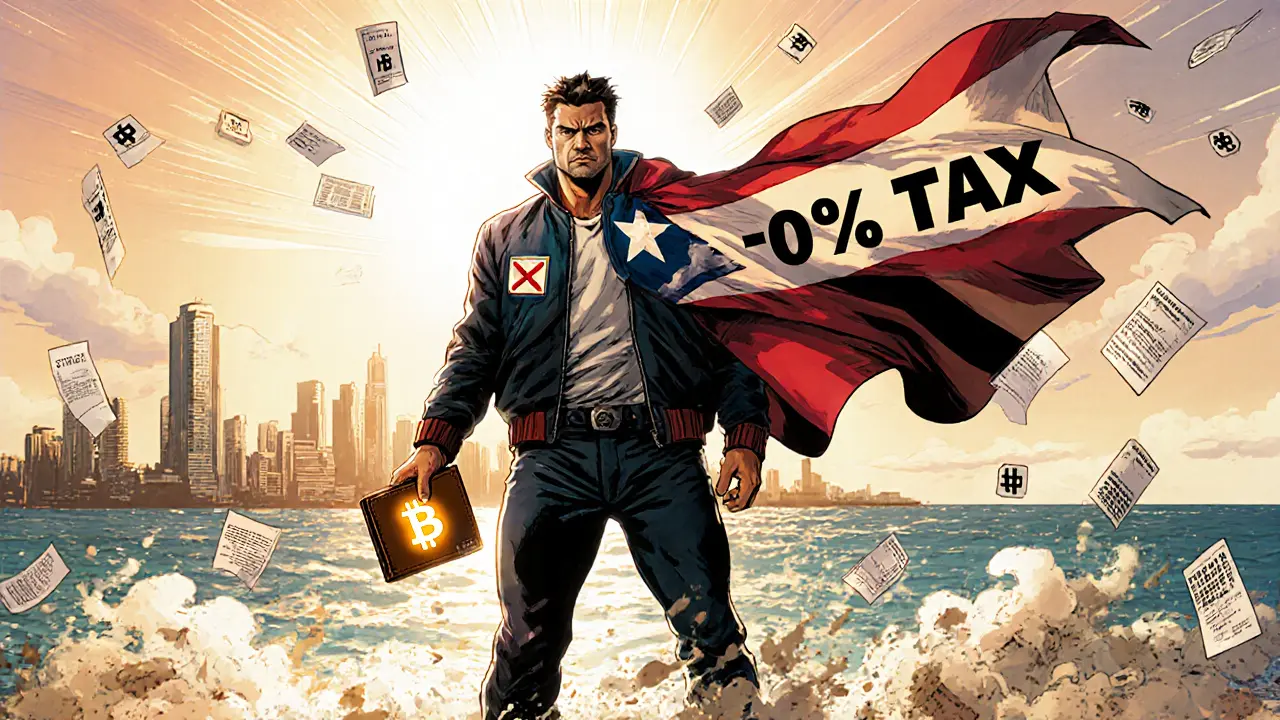
Puerto Rico Act 60: Tax Incentives for Crypto and Remote Businesses
When you hear Puerto Rico Act 60, a set of tax incentives created by Puerto Rico to attract high-net-worth individuals and businesses. Also known as Act 20/60, it lets qualifying residents pay 0% federal income tax on certain types of income—including capital gains from crypto, dividends, and service income from remote businesses. This isn’t a loophole. It’s a legal, government-backed program that’s been used by crypto founders, traders, and digital nomads since 2012 to cut their tax bills to almost nothing.
Act 60 isn’t just about saving money—it’s about relocating your life. People who move to Puerto Rico and become bona fide residents can legally avoid U.S. federal taxes on passive income, like profits from Bitcoin or Ethereum trades. They also get 4% corporate tax rates if they set up a business there. Unlike offshore havens that are shady or unstable, Puerto Rico is a U.S. territory with a functioning legal system, U.S. dollars, and access to American infrastructure. The catch? You have to actually live there. No weekend trips. No mailing in your taxes. You need to spend more than 183 days a year on the island, open a local bank account, and file a Puerto Rican tax return.
Related to this are crypto residency, the strategy of moving your physical location to take advantage of favorable crypto tax laws, and offshore crypto taxation, how digital asset holders use geography to reduce tax liability. These aren’t theoretical ideas—they’re real moves people are making right now. Some traders sold their homes in California or New York, rented apartments in San Juan, and started paying 0% on gains from their crypto portfolios. Others launched remote SaaS companies, paid themselves in crypto, and now report zero federal income tax.
But Act 60 isn’t for everyone. The IRS watches closely. You need solid proof of residency—utility bills, lease agreements, local gym memberships, even your kids’ school records. And while the island offers beautiful beaches and lower costs of living, it also has infrastructure gaps, occasional power outages, and a culture that’s not always welcoming to newcomers. Still, for those who can make the leap, the financial upside is massive.
Below, you’ll find real-world examples of how people are using Act 60 to protect their crypto wealth. Some are traders. Others are founders. A few are just tired of paying 37% of their gains to Uncle Sam. Each story shows a different path—but they all lead to the same place: keeping more of what you earn.
Learn how to legally reduce your crypto taxes using citizenship and residency by investment programs like Puerto Rico Act 60 and Malta’s GRP. Discover real costs, risks, and step-by-step strategies for compliant tax optimization.
READ MORE