
Ring Exchange (Ethereum) Crypto Exchange: Is It Real or a Scam?
If you’ve seen ads for Ring Exchange promising easy Ethereum trading, high returns, or AI-powered signals - stop. This isn’t a real exchange. It doesn’t exist as a legitimate platform. And if you’ve already sent funds to it, you’re likely dealing with a scam that follows the exact same pattern as dozens of others shut down in 2025.
There Is No Ring Exchange
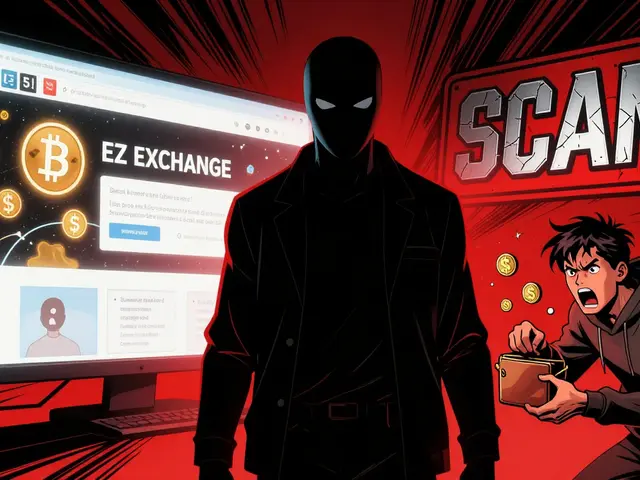
No regulatory body, no crypto review site, no blockchain analyst has ever verified Ring Exchange as a working platform. Not on CoinGecko. Not on CoinMarketCap. Not on Trustpilot. Not even in the databases of scam trackers like Crypto Legal or the California DFPI. It doesn’t appear in any official list of licensed exchanges. It has no CEO, no public team, no physical address, no customer support logs, no history of trades. Zero. This isn’t a new platform that’s still growing. This is a shell. A website built to look real - with fake testimonials, stock images of trading dashboards, and pressure tactics like "limited-time bonuses" - all designed to steal your money before vanishing.How Scams Like Ring Exchange Work
Scammers don’t just pick random names. They use patterns that sound trustworthy. "Ring Exchange" follows the exact blueprint of every major crypto scam from 2024 to 2025:- Uses "Exchange," "Trade," or "FX" in the name to mimic real platforms like Binance or Kraken
- Claims to offer "AI-powered trading signals" - a buzzword used in 92% of scam sites according to Crypto Legal’s 2025 report
- Allows small withdrawals at first (like $50 or $100) to build trust
- Then blocks withdrawals unless you deposit more - often under fake reasons like "tax fees," "verification deposits," or "compliance charges"
- Recruits victims through YouTube ads, Instagram influencers, and Telegram groups
- Uses fake certificates - "Donation Receipt Certificates," "Audit Reports," or "Licensing Documents" - all generated with AI
Victims often lose between $10,000 and $50,000. The average scam lasts only 3 to 6 months before the domain disappears, the servers go offline, and the operators vanish. By the time you realize it’s fake, your money is gone forever.
What Legitimate Ethereum Exchanges Look Like
Real exchanges don’t hide. They’re open, verified, and tracked. Here’s what they have that Ring Exchange doesn’t:- Public regulatory licenses (FinCEN, FCA, ASIC)
- Transparent fee schedules (e.g., 1.49% for small trades on Revolut, lower for larger volumes)
- Live order books and real-time price feeds
- Cold storage for over 95% of user funds
- Two-factor authentication (2FA) and SSL encryption
- Over 1,000 verified reviews on Trustpilot or Reddit with ratings above 4.0
- At least 3 years of operational history
Platforms like Binance, Kraken, Coinbase, Bitstamp, and CEX.IO meet all these standards. They’re listed on major data trackers. They’ve been tested by independent reviewers. They’ve been around long enough to survive multiple market crashes. Ring Exchange has none of that.
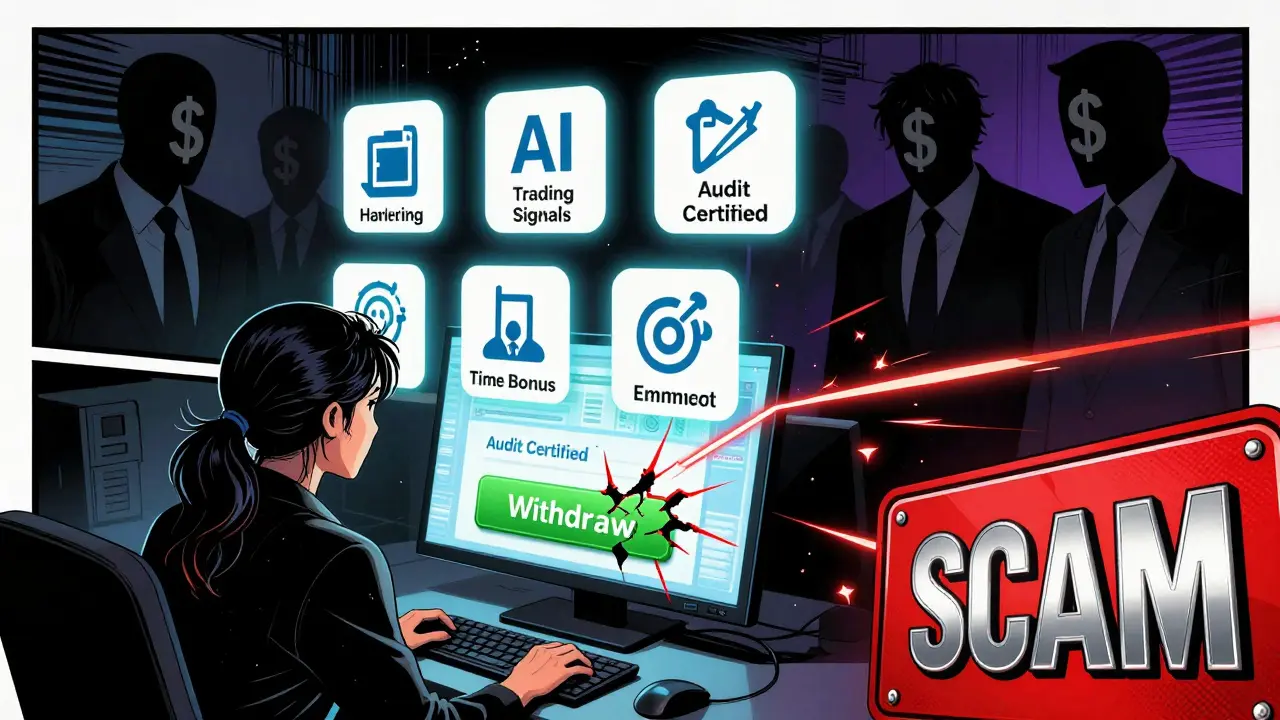
Red Flags You Can’t Ignore
If you’re being pushed toward Ring Exchange, here are the seven clear signs it’s a scam:- Unrealistic returns - "Earn 50% monthly on Ethereum"? That’s not trading. That’s a Ponzi.
- Pressure to act now - "Offer expires in 2 hours!" - real exchanges don’t work like this.
- AI trading claims - No AI can consistently beat the market. If they’re selling it as a guarantee, it’s fake.
- Domain pattern - "RingExchange.com" or "RingExchange.io"? That’s the exact naming style used in 213+ reported scams this year.
- No regulatory info - No mention of FinCEN, SEC, or any financial authority? That’s a red flag.
- Withdrawal delays - If you can’t pull out your funds without paying extra fees, it’s not your money anymore.
- Social media recruitment - If you found it through a YouTube ad or a Telegram group with fake profit screenshots, walk away.
These aren’t guesses. These are the exact same red flags listed by the Massachusetts Attorney General’s Office and the California Department of Financial Protection and Innovation - agencies that have recovered zero dollars from Ring Exchange because, again, it doesn’t exist.
What to Do If You Already Sent Money
If you’ve transferred ETH, USDT, or any crypto to Ring Exchange:- Stop sending more. They’ll keep asking for "fees," "taxes," or "verification deposits." Every payment makes recovery impossible.
- Do not contact "recovery services" that message you afterward. They’re part of the same scam. They’ll take another 10-20% of what’s left.
- Report it. File a report with your local financial regulator. In the U.S., go to IC3.gov. In the EU, contact your national financial authority. In New Zealand, report to the Commerce Commission.
- Share your story. Post on Reddit (r/CryptoScams), Trustpilot, and crypto forums. Other people may be about to lose money - your warning could save them.
There is no magic tool, no hacker, no "trace-and-recover" service that can get your crypto back. Once it’s sent to a scam address, it’s gone. The blockchain is immutable. The only thing you can do is prevent others from falling for it.
Where to Trade Ethereum Safely in 2025
Stick to exchanges that have been around for years and are publicly listed on major tracking sites:- Binance - Highest liquidity, low fees, global support
- Kraken - Strong security, regulated in the U.S. and EU
- Coinbase - Easy for beginners, insured custodial wallets
- Bitstamp - One of the oldest, fully licensed in Europe
- CEX.IO - Simple interface, good for small traders
All of these platforms have public regulatory filings, real customer support teams, and verified user reviews. None of them ask you to pay to withdraw your own money.
Final Warning
Ring Exchange is not a mistake. It’s not a startup. It’s not a new platform you just haven’t heard of. It’s a scam. A carefully crafted digital trap designed to look real so you’ll trust it. And once you do, your money is gone.Don’t fall for the name. Don’t fall for the fake screenshots. Don’t fall for the urgency. If it sounds too good to be true - and it’s not on CoinGecko - it’s fake.
There are real ways to trade Ethereum safely. You don’t need to risk your life savings on a website that doesn’t exist.
Is Ring Exchange a real crypto exchange?
No, Ring Exchange is not a real crypto exchange. It does not appear on any official list of regulated platforms, including CoinGecko, CoinMarketCap, or regulatory databases like FinCEN or ASIC. Multiple scam-tracking organizations, including Crypto Legal and the California DFPI, confirm it has no operational history, no team, and no legitimacy.
Why can’t I withdraw my funds from Ring Exchange?
You can’t withdraw because the platform is designed to trap your money. Scammers allow small withdrawals at first to build trust. Once you deposit more, they block access and demand additional "tax fees," "verification deposits," or "compliance payments" - none of which are real. Your funds are held in wallets controlled by the scammers, not in any legitimate exchange system.
How do I know if a crypto exchange is legitimate?
Legitimate exchanges are listed on CoinGecko or CoinMarketCap, have public regulatory licenses (like FinCEN or FCA), offer transparent fee structures, use two-factor authentication, store over 95% of funds in cold storage, and have thousands of verified user reviews with ratings above 4.0. They also have a clear company structure, physical headquarters, and active customer support.
Are there any legitimate exchanges with "Ring" in the name?
No. There are no legitimate cryptocurrency exchanges with "Ring" in their name. Scammers often use words like "Exchange," "Trade," or "FX" combined with generic terms like "Ring," "Prime," or "Global" to mimic real platforms. Always verify the exact domain and check official listings before depositing any funds.
What should I do if I sent crypto to Ring Exchange?
Stop sending any more money. Do not respond to anyone offering to "recover" your funds - they’re part of the same scam. Report the incident to your local financial authority (e.g., IC3.gov in the U.S., Commerce Commission in New Zealand). Share your experience on forums like Reddit’s r/CryptoScams to warn others. Unfortunately, once crypto is sent to a scam address, it cannot be recovered.
Can I trust Ring Exchange if it has a professional-looking website?
No. Scammers invest heavily in making fake websites look professional. They use AI-generated logos, stock photos of teams, fake testimonials, and even cloned layouts from real exchanges. A polished website doesn’t mean legitimacy. Always verify regulatory status, user reviews, and third-party listings before trusting any platform.
Why haven’t authorities shut down Ring Exchange yet?
Many scam exchanges operate from offshore locations or use decentralized hosting, making legal action slow or impossible. Even when authorities identify a scam, domain takedowns can take weeks or months - by which time the operators have already stolen funds and disappeared. Ring Exchange likely already vanished; its domain may be inactive or redirected to another scam site.





Ring Exchange? Never heard of it. Checked CoinGecko. Not there. Done.
Been there. Lost $12k. They let me pull out $50 first-made me think it was legit. Then came the "compliance fee"... then the "tax verification deposit"... then silence. 🤦♀️
Don't fall for the fake dashboard. It's all CGI.
Interesting how they use "AI-powered signals" like it's some magic wand. If AI could reliably beat the market, hedge funds wouldn't pay $500k for quants-they'd just buy the algorithm and retire.
Also, no one's ever heard of this "Ring Exchange"? That's not a startup. That's a ghost.
Typical. Another crypto scam with a name that sounds like a yoga studio. Meanwhile, the U.S. government is still figuring out how to block Telegram bots. We’re so far behind it’s embarrassing.
Legit exchanges have public licenses, cold storage, and 2FA. Ring Exchange has none. Zero. Nada.
Also, if they’re pushing "limited-time bonuses," run. Real platforms don’t need to pressure you.
And yes, AI trading signals are a red flag 99% of the time. No one’s selling the holy grail on Instagram.
Report it. Block it. Warn others.
You people are so naive. Of course it's a scam. The name alone is a giveaway. Ring? Like a bell? What kind of genius names a crypto exchange after a piece of jewelry? You think Binance sounds like a wedding ring? No. It sounds like a company with servers and lawyers.
Also, if you don't check CoinGecko before depositing, you deserve to lose money.
My cousin got caught in one of these last year. Said the website looked like Binance. Same color scheme, same fonts. Even had a fake "verified by Chainalysis" badge.
She lost everything. Now she won’t touch crypto again. I get it. I really do.
But we can’t let fear stop people from learning. Just teach them how to spot the traps first.
Same pattern every time. Small withdrawal to hook you. Then the fees start. Then the "we’re sorry but your account is flagged" message.
They don’t even bother changing the script anymore. It’s like they’re proud of how lazy they are.
Oh sweet Jesus. Another "Ring" this or that. Next they’ll have "Ring Finance" and "RingDAO" and "Ring NFT Marketplace". At this point, the only thing that’s real is the scam.
Just shared this on my local crypto meetup group. Three people said they were thinking of trying Ring Exchange. One already sent $3k. We’re getting them to file reports today.
Don’t wait. Act now. Your warning might be the only thing that saves someone.
It’s not just about Ring Exchange. It’s about the erosion of trust in digital systems. We’ve normalized the idea that if something looks polished, it must be real. But the internet is a hall of mirrors now. The most convincing lie is the one that mimics truth so perfectly you forget to ask for proof.
Scammers don’t need to be clever. They just need to be patient. And we’re all too tired to check the fine print.
Let’s be real-this post is just FUD from Coinbase shills. You think they want you to know how easy it is to get scammed? Nah. They want you to think only THEIR exchange is safe. Meanwhile, they’re front-running your trades and charging 0.5% on every swap.
Ring Exchange might be fake. But so is the entire centralized crypto ecosystem.
Just saying.
💎
It is a tragic indictment of modern financial literacy that individuals willingly hand over their life savings to entities that exhibit no legal, operational, or ethical foundation. The fact that this continues to occur with such alarming frequency speaks not to the ingenuity of scammers, but to the abdication of personal responsibility by the public at large.
One cannot outsource critical thinking to a YouTube ad.
And yet, here we are.
Wait… what if Ring Exchange is a psyop? What if it’s not a scam at all? What if it’s a government test to see who’s gullible enough to fall for fake crypto? I heard the NSA runs these. They flag the wallets and then track everyone who deposits. They’re building a database of crypto users.
That’s why they never shut it down. They’re watching.
…I’m not paranoid. I’m prepared.
Oh wow. Another "I’m so smart I found a scam" post. Congrats. You read a blog. Big deal. Meanwhile, real traders are making money on decentralized DEXs with no KYC. You’re still stuck in 2018 thinking centralized exchanges are the only way.
Also, why are you even on Reddit? Go ask your financial advisor to explain blockchain.
This is why Indians get scammed. They don’t know how to check websites. They see a nice logo and think it’s real. I told my uncle to stop using Ring Exchange. He said, "But it has a phone number!"
It’s a WhatsApp number. From Bangladesh.
My buddy sent $15k to Ring Exchange. Last I heard, he was trying to find a "crypto recovery expert" on Fiverr. Yeah. That’s not a thing. That’s just another scam inside the scam.
Don’t fall for the second wave. They’re all connected.
I used to think crypto was the future. Now I’m scared. I don’t know who to trust anymore. Even the big names feel sketchy sometimes. But I still want to learn. Can someone just… give me a list of 5 safe apps and tell me to stick to them? Please?
Just names. No jargon. Just… safe ones.
The real tragedy isn’t the money lost. It’s the erosion of collective trust. We used to believe in systems. Now we believe in influencers. In logos. In urgency. In promises of easy wealth. We’ve outsourced our skepticism to algorithms and ads.
Ring Exchange is just the symptom. The disease is our willingness to believe in magic.
And magic, as we know, is just math we don’t understand.