
Richamster Crypto Exchange Review: White-Label Project or Real Platform?
Imagine finding a new cryptocurrency exchange that promises fast trades, low fees, and a clean interface. It sounds like the perfect place to park your Bitcoin or trade Ethereum. But when you dig deeper, you find zero user reviews, no regulatory licenses listed, and silence on social media. This is the reality of Richamster. If you are looking for a safe place to trade crypto in 2026, understanding what Richamster actually is might save you from a costly mistake.
Richamster is not your typical exchange like Binance or Coinbase. It is primarily a white-label cryptocurrency exchange solution developed by the Ukrainian web development agency WebCase. While it appears as a live website, evidence suggests it functions more as a portfolio project or a template for other businesses to launch their own exchanges, rather than an independent platform with a massive user base. Before you deposit a single dollar, you need to know if this platform is legitimate or just a digital shell.
What Is Richamster? The Truth Behind the Brand
To understand Richamster, you have to look at who built it. The platform was created by WebCase, a web development agency based in Ukraine. According to their 2023 portfolio documentation, WebCase built Richamster over a nine-month period using an eight-person team. They used JavaScript/Vue.js for the frontend and Python/Django for the backend infrastructure.
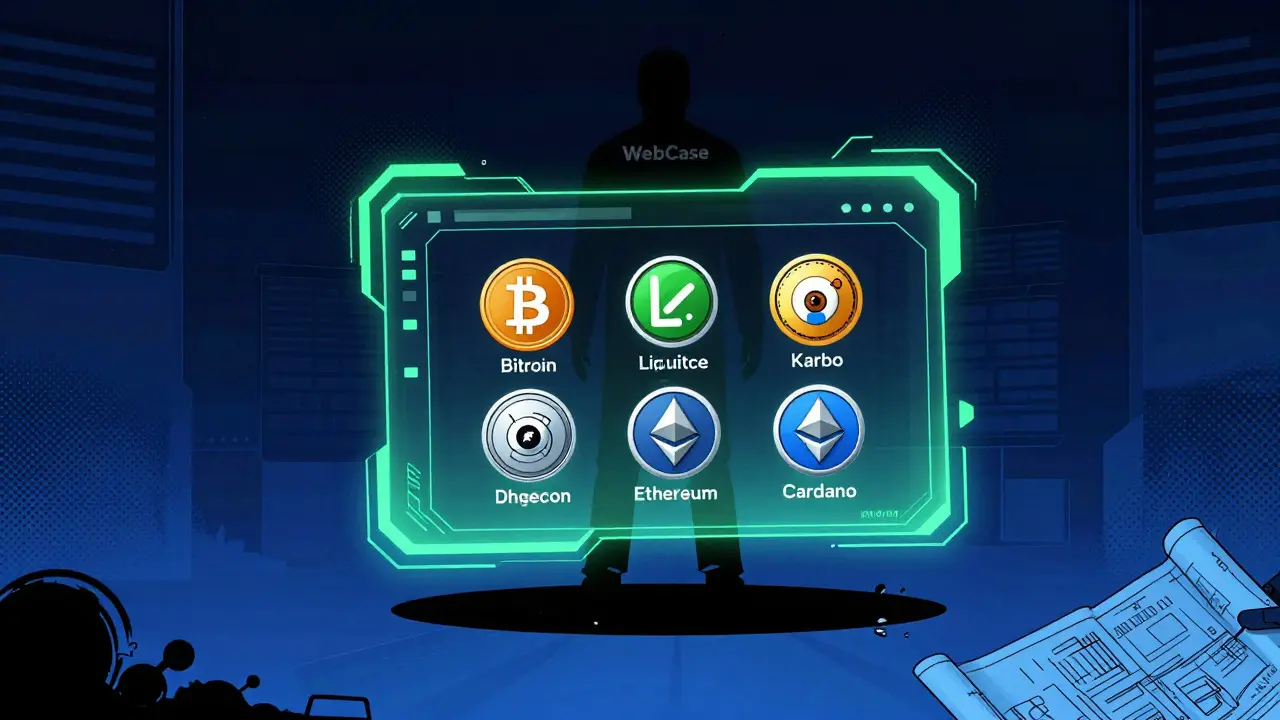
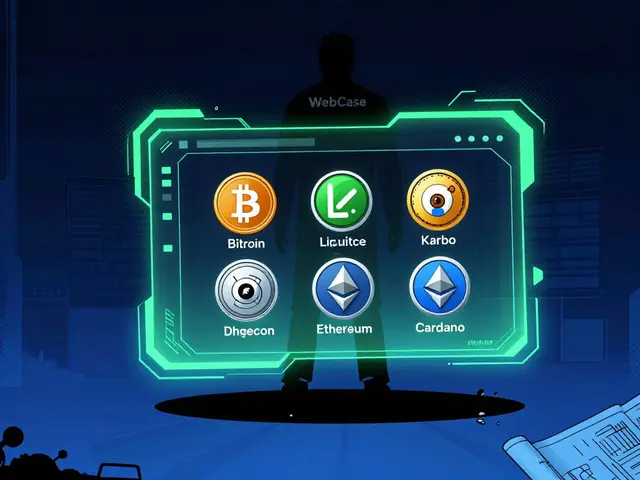
This technical stack is solid and common in the industry. Django is known for its security features, and Vue.js creates responsive interfaces. However, being built by a dev shop doesn't make it a bank. Richamster supports trading for only six cryptocurrencies: Bitcoin (BTC), Litecoin (LTC), Karbo (KRB), Dogecoin (DOGE), Ethereum (ETH), and Cardano (ADA). Compare this to major exchanges that list hundreds of tokens. The limited selection is a huge red flag for anyone looking for diverse investment options.
The platform claims to generate revenue through transaction fees averaging 0.25% per trade. That fee structure looks competitive on paper, especially compared to some older exchanges. But here is the catch: there is no transparency about minimum trade amounts, withdrawal limits, or hidden costs. Without clear terms, a "low fee" can quickly become expensive if you get stuck trying to withdraw your funds.
Security Claims vs. Reality
When it comes to crypto, security isn't a feature; it's the foundation. Richamster’s website claims to offer a dual-layer security architecture. They state that 95% of user funds are stored in cold wallets (offline storage) and that they use two-factor authentication (2FA) for account access. They also mention SSL/TLS 1.3 encryption for data in transit and AES-256 encryption for data at rest.
These are standard industry terms. Every legitimate exchange uses them. The problem? There is no proof. Unlike Gemini, which holds SOC 1 Type 2 and SOC 2 Type 2 certifications and publishes regular audit reports, Richamster has no independent security audits. No penetration test results are publicly available. No third-party firm has verified their claims.
Dr. Elena Rodriguez, a blockchain security specialist at MIT's Digital Currency Initiative, noted in September 2024 that "any exchange claiming robust security without published audit reports or regulatory compliance documentation should be approached with extreme caution." In the world of crypto, trust but verify is the golden rule. With Richamster, there is nothing to verify.
| Feature | Richamster | Established Exchanges (e.g., Gemini, CEX.IO) |
|---|---|---|
| Independent Security Audits | None published | Regularly published (SOC 2, PCI DSS) |
| Regulatory Licenses | None disclosed | Licensed in multiple jurisdictions (FCA, VASP) |
| User Reviews (Trustpilot/Reddit) | Zero verified reviews | Thousands of verified reviews |
| Cold Storage Verification | Claimed (95%), unverified | Proof-of-reserves often provided |
| Customer Support | Email only, no SLA | 24/7 Live Chat, Phone, Email |
The Missing Piece: User Feedback and Community
In the digital age, reputation is everything. If Richamster were a thriving exchange with thousands of users, you would see noise online. You would find discussions on Reddit, complaints on Trustpilot, or tips on Twitter. Instead, you find silence.
A search across major platforms yields zero verified user experiences. Trustpilot, Sitejabber, and Reddit’s r/CryptoCurrency forums have no mentions of Richamster. Even problematic exchanges usually generate some feedback-users complain about slow withdrawals or bad support. The complete absence of voices is itself a major warning sign. As one moderator on r/Scams noted, "the complete absence of user experiences for a platform claiming to be a live exchange is itself a major red flag."
Social media presence is equally weak. Their Twitter account has fewer than 50 followers and shows no organic engagement. Legitimate exchanges actively engage with their communities, announce updates, and respond to concerns. Richamster operates in a vacuum.
Is Richamster a White-Label Solution?
Here is where things get interesting. Evidence strongly suggests that Richamster is not an independent business but a turnkey solution offered by WebCase to other clients. WebCase’s portfolio presents Richamster as a case study of their development capabilities. The documentation mentions that the solution requires 3-4 weeks for client-specific customization and deployment.
If you are a startup wanting to launch your own crypto exchange, you might buy the Richamster software from WebCase. But if you are a retail trader looking to buy Bitcoin, you are likely interacting with a demo or a template. This explains the lack of liquidity, the limited coin selection, and the absence of a real user base. You aren't trading against other people; you might just be clicking buttons on a showcase site.
Performance and Technical Specs
On paper, the technical specs look decent. WebCase claims the platform can handle up to 15,000 concurrent users and process 350 trades per second. Order execution speeds average 120 milliseconds. For a small-scale operation, this is adequate. However, these metrics come from internal testing, not real-world market conditions.
System requirements are minimal, supporting Chrome 80+, Firefox 75+, and Safari 13+. The interface is responsive on mobile devices, which is essential today. But performance means little if the underlying asset pool is empty. High speed is irrelevant if there is no one to trade with.
Regulatory Risks in 2026
The regulatory landscape for crypto has tightened significantly. By 2026, operating an exchange without clear licensing is nearly impossible in major markets. The SEC took enforcement actions against 17 unregistered platforms in 2023 alone. Established exchanges like CEX.IO hold licenses in over 30 countries, including FCA registration in the UK. LCX maintains VASP registration across Europe.
Richamster’s website contains no disclosure of regulatory status. No license numbers, no jurisdictional compliance statements, no legal entity information. In an era where regulators demand transparency, this silence is deafening. Trading on an unregulated platform exposes you to total loss risk with no recourse if something goes wrong.
Should You Use Richamster?
For the average investor, the answer is likely no. Unless you are a developer evaluating white-label solutions for a business venture, Richamster offers little value. It lacks the assets, the liquidity, the security proofs, and the community trust required for safe trading. Stick to established platforms with proven track records, transparent audits, and active user bases. Your capital deserves better than a demo site.
Is Richamster a scam?
While not definitively labeled a scam, Richamster exhibits many red flags associated with fraudulent or non-operational platforms. These include zero user reviews, no regulatory licenses, and no independent security audits. It appears to be a white-label development project by WebCase rather than a live exchange with real liquidity.
Who owns Richamster?
Richamster was developed by WebCase, a Ukrainian web development agency. It is presented in their portfolio as a turnkey solution, suggesting they may sell the software to other entities rather than operating it as an independent exchange themselves.
What cryptocurrencies can I trade on Richamster?
The platform currently supports only six cryptocurrencies: Bitcoin (BTC), Litecoin (LTC), Karbo (KRB), Dogecoin (DOGE), Ethereum (ETH), and Cardano (ADA). This limited selection is unusual for a modern exchange.
Is Richamster regulated?
There is no public information indicating that Richamster holds any regulatory licenses. Major exchanges typically display their licenses prominently. The absence of this information is a significant risk factor for traders.
How much does it cost to trade on Richamster?
WebCase documentation states that transaction fees average 0.25% per trade. However, without transparent terms regarding minimums, withdrawal fees, or spread costs, the true cost of trading remains unclear.




They are hiding the truth behind a veil of technical jesus christ what is wrong with people. The silence on social media is not an accident it is a calculated move by the elites to keep us in the dark. I have been tracking these white label schemes for years and they always lead back to the same shadowy cabal. You think you are trading bitcoin but you are just feeding the beast. Wake up sheeple before your life savings vanish into the ether. It is a trap set by the globalists who want to control every cent you earn. Do not trust any platform that does not bow down to the old ways of gold and silver. This Richamster thing is just another layer of the matrix designed to enslave your digital soul. They use python django because it is easy to manipulate the backend without anyone noticing. Stay vigilant or perish.
honestly this feels like one of those ghost towns u see on the map but never visit. kinda eerie how quiet it is out there. i usually dig deep into these things myself but this time the void stares back. no reviews no tweets nothing. its like the place doesnt exist yet. makes me wanna poke around more tho. maybe someone will pop up soon and spill the beans. till then ill be watching from the sidelines with popcorn ready.
The notion that one might consider depositing funds into such an unverified entity is frankly preposterous. It displays a profound lack of due diligence that is characteristic of the unwashed masses who flock to crypto with the subtlety of a sledgehammer. A proper exchange requires regulatory oversight, audited reserves, and a history of solvency. Richamster possesses none of these virtues. It is a digital mirage, a vanity project for developers who mistake code for commerce. To engage with it is to invite financial ruin upon oneself. One should stick to established institutions that have weathered the storms of market volatility. Anything less is merely gambling dressed up as investing.
I find this whole situation fascinating actually. It really makes you think about what trust means in a decentralized world. If the code is open and the tech is solid why do we need all the bells and whistles? Maybe the silence is just because it is new and people are shy. Or maybe it is a test of faith in technology over bureaucracy. What do you guys think about the idea of trusting the math instead of the regulators? I feel like we are at a crossroads here. Let us discuss this further because it touches on the core philosophy of crypto. Are we building a better bank or just a prettier website?
you say red flag i say green light for innovation. everyone is so quick to judge based on traditional metrics that dont apply anymore. who needs audits when you have clean code. the fact that it is a white label solution proves efficiency not fraud. stop being sheep and start thinking outside the box. the early adopters always get burned but the pioneers change the world. richamster is a pioneer whether you like it or not. ignore the haters they are just jealous of the vision. let it cook.
Look if you know anything about dev shops you know webcase is legit. they build stuff for banks. the fact that this is a template is obvious to anyone who has looked at the source code. its vue js frontend standard stuff. the issue is liquidity not security. you cant trade if nobody is there. its like opening a casino with no chips. simple as that. dont overthink it.
Ukrainian dev agency making crypto exchanges. sounds like a recipe for disaster if you ask me. we need american platforms built by americans for americans. too much foreign influence in our markets. the regulations here are strict for a reason. protect our citizens from these offshore scams. bring the jobs home and regulate the hell out of these digital casinos. freedom means responsibility not reckless abandon.
oh my gosh this is so scary!! 😱 imagine losing all your money because of a typo in a contract or something. please be careful everyone!! 💔 i would never touch it with a ten foot pole. stick to binance or coinbase they have big logos and everything. safety first right?? 🙏✨
i mean its cool i guess. i tried signing up once just to see. the interface is smooth real smooth. but yeah no coins really. feels like a showroom. like walking into a car dealership where all the cars are made of cardboard. pretty but you cant drive them. whatever suits ya i suppose.
Zero audits. Zero licenses. Zero users. It is a scam. Period. Stop debating the nuances of a shell company. The data speaks for itself. You are either stupid or greedy. Pick one. Most likely both. Get out now before you get rekt. The market will eat you alive if you stay in this sandbox.
Oh the drama! The tension! Can you feel it crackling in the air? Here we have a platform that exists in the liminal space between reality and fiction. Is it real? Is it fake? Who can say! The ambiguity is intoxicating. Perhaps the lack of users is a feature not a bug. An exclusive club for the chosen few. Or perhaps it is just empty. The mystery remains unsolved and that is beautiful in its own tragic way. Let us embrace the uncertainty!
hey @2727 nice take but lets get real. 🧐 i checked their twitter and its dead silent. crickets. 🦗 also their email support takes forever to reply. i sent a test msg last week still waiting. typical ghost town vibes. 📉👻