NFT Marketplace Fees and Costs: A 2026 Guide to Building and Trading
You’ve got the idea. You want to launch an NFT marketplace or maybe you’re just trying to figure out why your last trade cost more in gas than the art itself. Either way, money is the elephant in the room. It’s not just about the price of the JPEG; it’s about the invisible web of costs that keeps these platforms running. In 2026, the landscape has matured, but the financial mechanics remain tricky. Are you paying for convenience, security, or just poor infrastructure? Let’s break down what you actually pay, both as a builder and a trader.
Key Takeaways
- Development varies wildly: A basic MVP costs around $40,000, while enterprise-grade platforms exceed $250,000.
- Transaction fees are standard: Most major platforms charge between 2.5% and 3% on sales, though newer Polygon-based sites often offer lower rates.
- Royalties are key: Creators typically set royalties between 5% and 10%, which directly impacts buyer willingness to purchase.
- Maintenance is underestimated: New operators often underestimate ongoing server and security costs by up to 400%.
- Gas fees still matter: Despite Layer 2 solutions, Ethereum congestion can still spike costs above $500 during peak times.
The Hidden Cost of Building Your Own Platform
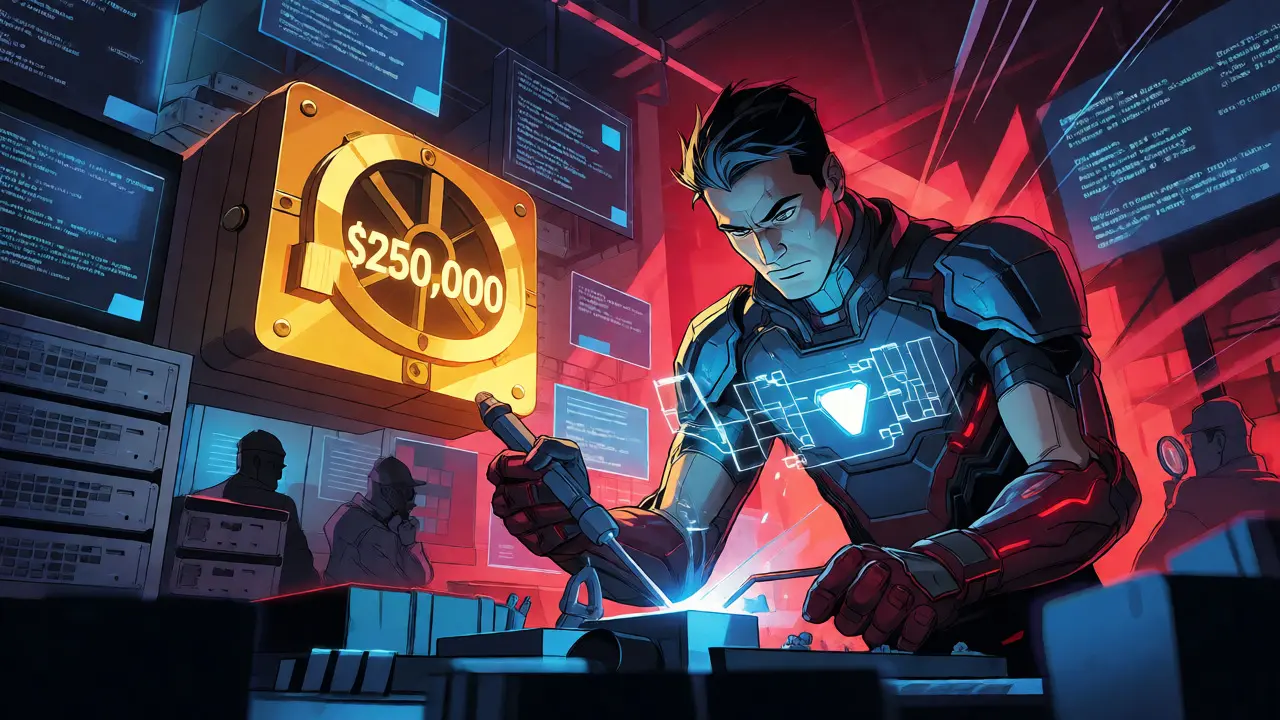
If you’re thinking of launching your own NFT Marketplace a digital platform where users buy, sell, and mint non-fungible tokens using blockchain technology, don’t let the "no-code" hype fool you. Real custom development isn’t cheap. According to recent industry reports from early 2025, a lean Minimum Viable Product (MVP) starts at roughly $40,000. But if you want something scalable with multi-wallet support and advanced smart contracts, you’re looking at over $250,000.
Where does that money go? It’s not just coding. You need a solid team ($10k-$100k), secure smart contracts ($5k-$50k), and decentralized storage like IPFS or Arweave ($3k-$30k). Security audits alone can cost $5,000 to $15,000, and they aren’t optional-skip them, and you risk a hack that wipes out user trust overnight. Plus, there’s UI/UX design. If your site looks clunky, people won’t stay. Design budgets range from $3,000 to $30,000 depending on how polished you want the experience to be.
Here’s the kicker: maintenance. Perimattic’s analysis found that 78% of new marketplace owners underestimate ongoing costs by 300-400%. You’re not done when you launch. You need monthly node maintenance ($500-$2,500) and quarterly updates for bug fixes and performance tweaks ($2,000-$5,000). If you ignore this, your platform becomes slow and buggy, driving users away faster than you can say "gas fee."
Understanding Transaction Fees for Traders
For buyers and sellers, the sticker price of an NFT is rarely the final number. Platforms charge service fees to keep the lights on. As of 2026, the industry standard hovers around 2.5%. OpenSea and Rarible both stick to this 2.5% cut on final sale prices. SuperRare, positioning itself as a premium curated space, charges 3%. Why the difference? Curation and community management. Higher fees often mean better quality control, but they also mean higher barriers to entry for casual traders.
Then there are listing fees. Some platforms charge nothing to list, while others charge anywhere from $1 to $200 per listing. High listing fees can kill momentum for creators who list frequently but sell infrequently. Bidding fees in auction formats usually sit between 1% and 3% of the auction price. If you’re bidding on a $5,000 piece, expect to lose another $50-$150 just to participate.
| Platform | Service Fee (% of Sale) | Listing Fee | Network Focus | Best For |
|---|---|---|---|---|
| OpenSea | 2.5% | $0 | Ethereum/Polygon | General trading & volume |
| Rarible | 2.5% | $0 | Ethereum | Community governance |
| SuperRare | 3.0% | Curated only | Ethereum | Premium digital art |
| NFTrade | 0% | $0 | Polygon | Low-cost experimentation |
| TofuNFT | 5.0% | Varies | Binance Smart Chain | Asian market focus |
The Royalty Dilemma: Who Gets Paid?
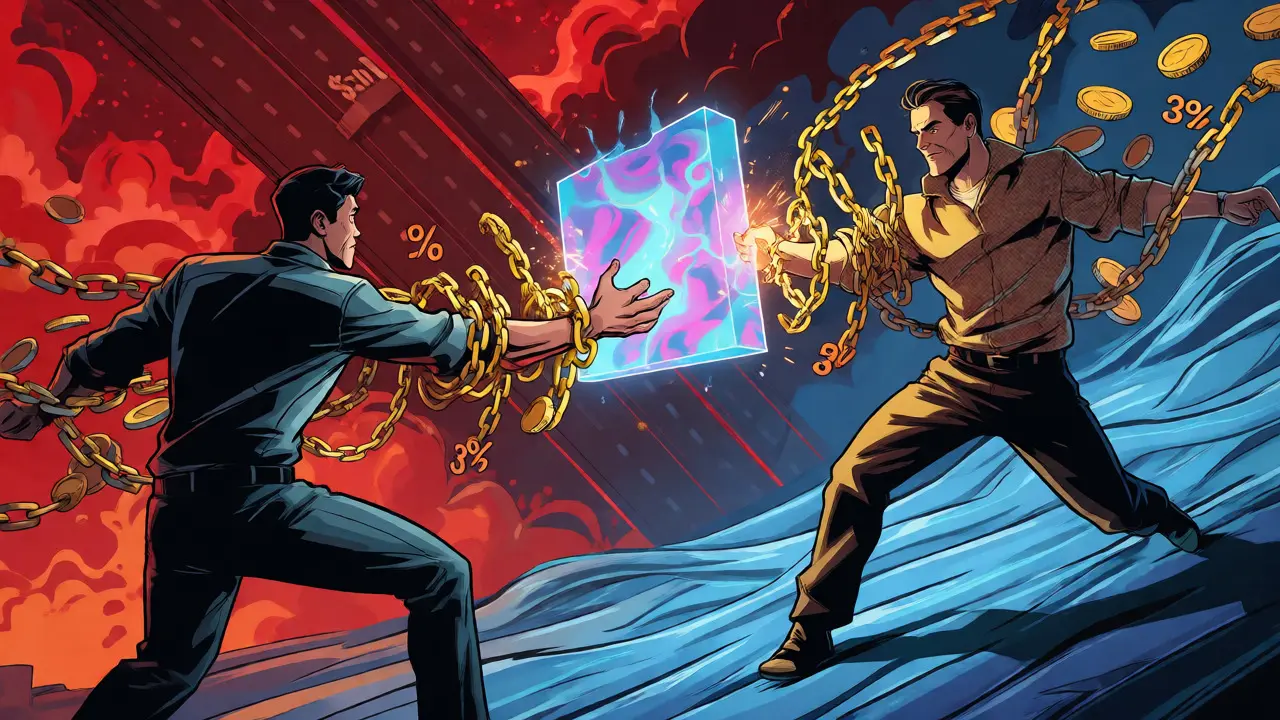
Royalties are the lifeblood for artists. Typically, creators set a royalty rate between 5% and 10% of the sale price. So, if your NFT sells for $1,000, you might get $50-$100 every time it changes hands. This sounds great until you realize that high royalties can deter buyers. Wildnet Edge’s data suggests that transaction fees exceeding 5% can scare off up to 63% of potential buyers. It’s a delicate balance. Set royalties too low, and artists starve. Set them too high, and liquidity dries up because no one wants to pay double-digit percentages on top of platform fees and gas.
In 2026, we’re seeing a shift toward flexible royalty models. Some platforms allow dynamic royalties that decrease over time or based on the number of trades. This encourages secondary market activity. If you’re building a platform, automating this distribution is crucial. Manual royalty payments are a nightmare and prone to error. Automated systems drive user engagement by nearly 37%, according to case studies from Cubix.
Gas Fees and Network Congestion
You can’t talk about NFT costs without mentioning gas. While Layer 2 solutions like Polygon have drastically reduced costs to pennies, Ethereum mainnet remains expensive during peak times. Alchemy warned in early 2025 that gas fees could surge to over $500 during congestion, compared to typical costs of $50-$150. This makes micro-transactions on Ethereum impractical. If your target audience buys $10 collectibles, you need to be on a cheaper chain like Solana, Polygon, or Base.
User behavior reflects this. We saw a 42% drop-off rate on Polygon-based marketplaces during periods of extreme Ethereum congestion, showing that users are sensitive to network instability. If your platform relies heavily on Ethereum but doesn’t offer seamless bridging or L2 options, you’ll lose customers to competitors who prioritize speed and low cost.
Revenue Models That Actually Work
How do marketplaces make money beyond the obvious service fee? Successful platforms in 2026 use tiered structures. One standout example involved a Cubix-developed platform that offered 0% fees for the first 100 listings and then switched to 1.5%. This strategy attracted 15,000 active users in six months. It lowered the barrier to entry for new creators while ensuring revenue once the ecosystem was established.
Another model involves charging for premium features rather than transactions. Think analytics dashboards, verified badges, or priority support. These add-on services provide recurring revenue without penalizing high-volume traders. Enterprise adoption is growing here, with 41% of Fortune 500 companies now running branded NFT stores. They care less about small transaction cuts and more about brand visibility and customer data ownership.
Avoiding Common Pitfalls
Most failed NFT marketplaces didn’t fail because of bad tech; they failed because of bad math. Perimattic noted that 68% of failures cited improper fee structuring as a primary issue. Charging $150+ per listing resulted in 89% creator abandonment within 90 days in some cases. Creators are fickle. If you nickel-and-dime them, they’ll move to a competitor with zero listing fees.
Also, beware of complexity. Implementing cross-chain functionality adds 3-4 months to development timelines and significantly increases costs. Unless you have a clear demand for it, start single-chain. Focus on nailing the core experience before trying to support Bitcoin Ordinals, Solana SPL tokens, and Ethereum ERC-721s all at once.
What is the average cost to develop an NFT marketplace in 2026?
Costs vary widely based on features. A basic MVP ranges from $30,000 to $40,000. Fully scalable platforms with cross-chain capabilities and advanced analytics can cost between $150,000 and $250,000+. Monthly maintenance adds another $4,000 to $6,000.
Do I have to pay gas fees to list an NFT?
It depends on the platform and network. On Ethereum, listing often requires a small gas fee unless the platform uses a lazy-minting method. On Polygon or Solana, listing fees are negligible or zero. Always check the specific platform's documentation.
Why are some NFT marketplace fees higher than others?
Higher fees often reflect curation, security, and community features. Premium platforms like SuperRare charge more to maintain exclusive artist communities and rigorous vetting processes, whereas open platforms like OpenSea rely on volume and lower individual fees.
Can I change my royalty percentage after selling an NFT?
Generally, no. The royalty percentage is encoded in the smart contract at the time of minting. Once an NFT is sold, that rate is fixed for all future secondary sales on compatible platforms. Some newer standards allow for mutable royalties, but this is not yet universal.
Are there hidden costs when buying NFTs?
Yes. Beyond the listed price, you pay network gas fees, platform service fees (usually 2.5%), and potentially creator royalties (5-10%). Always calculate the total cost before placing a bid to avoid surprises.