
Iranian Rial Crypto Trading Restrictions: The 2026 Reality
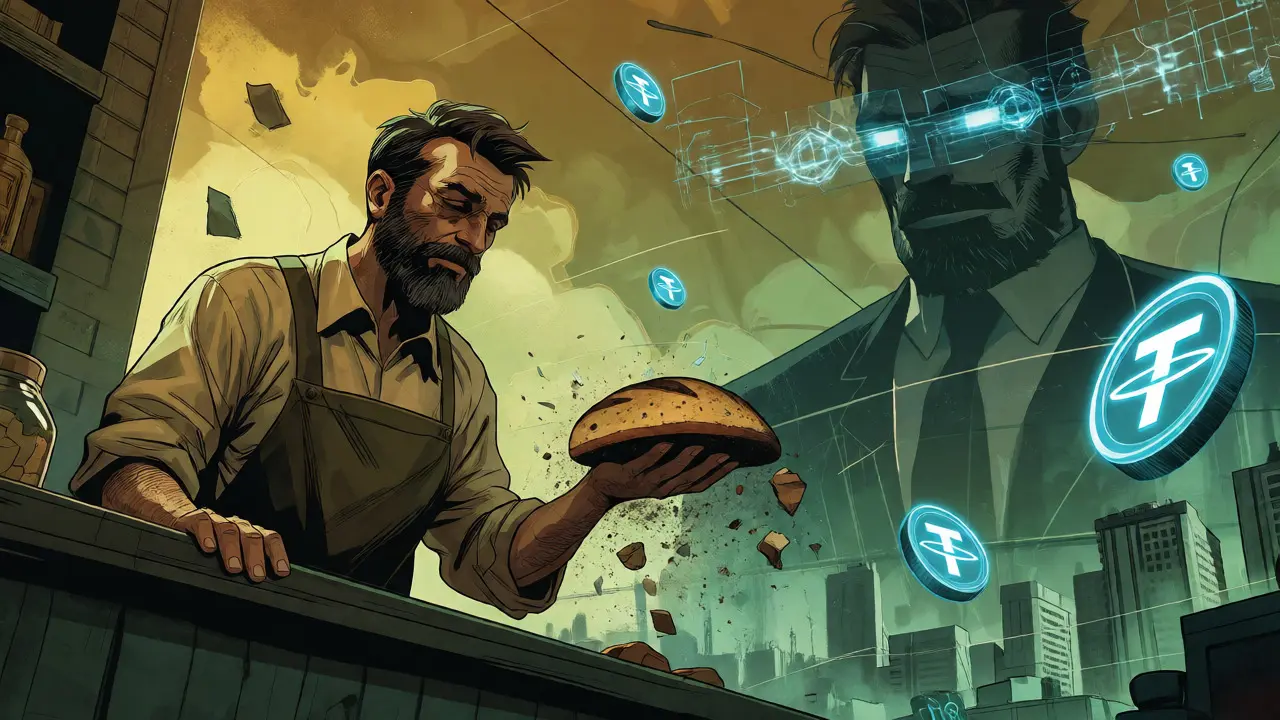
Imagine trying to buy a loaf of bread with money that loses half its value every few months. That’s the daily reality for millions in Iran. To escape this financial freefall, people turned to cryptocurrency, specifically stablecoins like Tether (USDT). But if you think you can just hop on an exchange and trade freely, think again. As of late 2025 and into 2026, the Iranian government has tightened the screws harder than ever before.
The situation is a high-stakes game of cat and mouse. On one hand, the state loves mining Bitcoin because it brings in hard currency from abroad without touching the local economy. On the other hand, they hate that ordinary citizens use crypto to bypass the official banking system and protect their savings. This contradiction has led to a regulatory maze that confuses even seasoned traders. If you’re looking at the Iranian market or trying to understand why your transactions are getting flagged, you need to know exactly what rules are in play right now.
Why the Central Bank of Iran Hates Your Stablecoins
To understand the restrictions, you have to look at the Central Bank of Iran (CBI). Their main job is to keep the Iranian rial alive. When everyone sells rials to buy dollars or USDT, the rial crashes. So, the CBI decided to cut off the oxygen supply.
In December 2024, the CBI effectively blocked all domestic payment gateways that allowed direct swaps between the rial and cryptocurrencies. You couldn’t just log onto a website and pay with your bank card anymore. They demanded that every platform get a specific license and hand over detailed transaction data. By January 2025, some exchanges were unblocked, but only if they plugged into the government’s own API system. This means the state sees every single move you make. It’s not just about stopping payments; it’s about total surveillance of capital flow.
Then came February 2025. Iran banned all cryptocurrency advertising. No more billboards, no more Instagram influencers promoting new tokens, no more online banners. This was a global first in terms of scope. The message was clear: don’t hype up digital assets when the national currency is struggling. For traders, this meant less public information and a shift toward private, word-of-mouth networks. It made finding reliable platforms much harder and increased the risk of scams.
The $5,000 Rule and Holding Caps
The most painful restriction hit home in September 2025. Just hours before UN sanctions were set to be reinstated, the CBI announced strict caps on stablecoin usage. This wasn’t a vague guideline; it was a hard number enforced by Asghar Abolhasani, the deputy governor of the Central Bank.
Here is the breakdown of the current limits that define the market today:
| Restriction Type | Limit Value | Target Audience | Enforcement Mechanism |
|---|---|---|---|
| Annual Purchase Cap | $5,000 USD equivalent | Individuals & Corporations | Banking API Monitoring |
| Total Holdings Cap | $10,000 USD equivalent | Individuals | Exchange Compliance Checks |
| Transition Period | One Month | Existing Holders | Mandatory Reduction Notice |
If you held more than $10,000 in USDT, you had exactly one month to sell down to that level. Failure to comply could result in frozen accounts or fines. This rule effectively turned stablecoins from a universal hedge into a small-scale savings tool. You can’t park your life savings in Tether inside Iran anymore. You have to rotate funds out, often back into gold or real estate, which are also heavily taxed and regulated.

Tether Freezes and the Migration to DAI
You might ask, "If the government controls the exchanges, why do I care about international companies?" Because the blockchain doesn’t respect borders. In July 2025, Tether executed its largest-ever freeze of Iranian-linked funds. They targeted 42 specific addresses. Many of these wallets were connected to Nobitex, Iran’s largest domestic exchange, and others linked to sanctioned entities.
This wasn’t just a random glitch. It was a coordinated enforcement action. When Tether freezes funds, you lose access to your money instantly. There is no customer support hotline that will fix it in five minutes. The response from the Iranian community was swift and clever. Users didn’t panic-sell into rials. Instead, they migrated to DAI, a decentralized stablecoin issued by MakerDAO.
They moved their assets to the Polygon network. Why Polygon? Because it’s cheap and fast. This shift shows how adaptable Iranian traders are. They treat stablecoins not as products from a specific company, but as generic tools. If Tether gets risky, they switch to DAI. If Ethereum fees are too high, they go to Polygon. This agility allows them to keep trading despite the constant threat of freezing.
Mining vs. Trading: The State’s Double Game
It seems contradictory, right? The government bans you from buying Bitcoin easily, yet it encourages massive mining operations. Here’s the logic: Mining generates revenue for the state. Iran has cheap electricity, partly subsidized by the state. Foreign and domestic miners set up shop, consume power, and produce Bitcoin. The state takes its cut or forces miners to sell their output through official channels at fixed rates.
This creates about $1 billion annually in Bitcoin mining revenue. It helps the country bypass sanctions because the goods sold for this energy aren’t tracked like traditional exports. However, this activity strains the electrical grid. During winter, when demand spikes, the government sometimes shuts down miners to keep the lights on in homes. So, while trading is restricted to protect the rial, mining is tolerated-and even encouraged-because it acts as a hidden export sector.

The Rise of Taxation and the Digital Rial
In August 2025, Iran passed the Law on Taxation of Speculation and Profiteering. This was a major milestone. For the first time, crypto gains were treated like profits from gold or foreign exchange. You now owe capital gains tax on your trades. This signals that the government accepts crypto exists and wants a slice of the pie. It’s a move away from outright prohibition toward formal regulation.
At the same time, Tehran launched a pilot for its own digital currency, called Rial Currency. Unlike Bitcoin, this isn’t mined. It’s electronic cash issued directly by the Central Bank. It’s being tested on Kish Island. The goal? To reduce reliance on the US dollar in domestic transactions. But here’s the catch: regular Iranians don’t trust it yet. They see it as another way for the state to monitor spending. Most prefer the anonymity and stability of decentralized stablecoins, even with the risks.
Practical Implications for Traders in 2026
If you are trading in or with Iran, you need to adjust your strategy. The old days of unlimited arbitrage are gone. The spread between local prices and global markets is wider due to friction and risk premiums. You cannot rely on simple P2P transfers without checking the counterparty’s reputation carefully. KYC (Know Your Customer) requirements are stricter, and AML (Anti-Money Laundering) checks are automated via government APIs.
- Diversify Stablecoins: Don’t keep all your eggs in the USDT basket. Keep some DAI or USDC, though USDC faces similar scrutiny.
- Watch the Caps: Ensure your holdings stay under the $10,000 threshold to avoid forced liquidation notices.
- Use Layer 2 Networks: Stick to Polygon or Arbitrum for lower fees and faster settlement times, which reduces exposure during volatile periods.
- Expect Delays: Withdrawals to local banks can take longer due to compliance reviews.
The tension between preserving wealth and obeying the law drives the market. People still trade billions of dollars’ worth of volume annually, but they do so quietly. The black market for crypto remains robust, often operating outside the licensed exchanges entirely. This underground liquidity provides an escape valve for those who want to exceed the official limits, albeit at higher costs and risks.
Can I buy Bitcoin with Iranian Rials?
Directly, it is difficult. The Central Bank blocked most rial-to-crypto payment gateways in late 2024. Most purchases happen through Peer-to-Peer (P2P) platforms where users transfer rials via bank cards or informal hawala systems, then receive crypto. Licensed exchanges require full KYC and adhere to strict purchase caps.
What is the maximum amount of stablecoins I can hold?
As of the regulations introduced in September 2025, individuals are capped at holding $10,000 worth of stablecoins. Additionally, annual purchases are limited to $5,000 per person or entity. Exceeding these limits requires selling down within a mandated transition period.
Is cryptocurrency mining legal in Iran?
Yes, mining is legal and regulated. The government issues licenses to miners. However, mining operations face electricity consumption caps and must often sell a portion of their mined Bitcoin to the Central Bank at official rates to help stabilize the rial.
Why did Tether freeze Iranian addresses?
Tether froze addresses linked to sanctioned entities and potentially illicit flows, including connections to the Islamic Revolutionary Guard Corps (IRGC). This is part of global anti-money laundering efforts. Iranian users responded by migrating to alternative stablecoins like DAI on the Polygon network.
Do I have to pay taxes on crypto profits in Iran?
Yes. Following the Law on Taxation of Speculation and Profiteering enacted in August 2025, cryptocurrency trading profits are subject to capital gains tax, similar to gold and foreign exchange speculation.





It is wild how much surveillance is baked into these regulations now 😳. The shift to DAI on Polygon was such a smart move by the community though, honestly impressive resilience 🙌.
The government has no right to dictate how people store their own wealth. It’s not just regulation, it’s theft of personal freedom. If I can’t hold more than $10k in stablecoins without being punished, who really owns my money?
You’re missing the macroeconomic context entirely. The CBI isn't acting out of malice but necessity. Hyperinflation requires capital controls. The mining vs trading dichotomy is standard for resource-rich nations with sanctioned currencies. It’s basic monetary policy, not some grand conspiracy.
Basic monetary policy doesn't involve freezing individual bank accounts for holding digital assets. You sound like you're defending the oppressor because it sounds sophisticated.
I find the philosophical implications of this quite fascinating. When the state monitors every transaction via API, does money still function as a medium of exchange or does it become a tool of behavioral control? The migration to decentralized networks suggests that users are seeking a form of economic privacy that mirrors political dissent. It raises questions about whether financial sovereignty is possible under heavy state intervention.
Why didn't they just ban crypto outright if they hate it so much? Seems like half measures. Also, why is mining allowed if it strains the grid? Seems contradictory.
Boring article. Standard stuff.
They are watching us all. The switch to DAI is just a distraction. They will freeze those too eventually. The blockchain is not anonymous anymore. Don't trust them. They want to tax everything and track every cent. It's all connected to the global reset.
My heart goes out to the families trying to protect their savings. Losing value every few months is terrifying. It’s sad that something as simple as buying bread becomes a high-stakes game. Hope things stabilize for them soon.
This proves adaptability wins! Keep grinding, keep learning new networks! The Iranian traders are tougher than most Western investors who panic at the first dip. Respect the hustle!
Great breakdown. For anyone looking to understand the mechanics, the distinction between mining revenue and retail trading caps is crucial. It highlights how the state prioritizes foreign currency inflows over domestic financial freedom. A well-structured analysis of a complex regulatory environment.
One must consider the historical precedent of fiat collapse. The Central Bank's actions are predictable. However, the reliance on Tether was naive from the start. Decentralized alternatives were always inevitable. Those who failed to diversify early have only themselves to blame for their losses.
oh great another country trying to control what we do with our money. surprise surprise
As someone from a similar background, the black market aspect is key here. Official channels are too slow and taxed. The informal hawala systems adapted quickly. Its interesting to see tech merge with traditional informal finance networks.
Wait, wait, wait!!! Did they really ban ALL advertising??? That is insane!! How do people even know which exchanges are legit then?? Sounds like a recipe for disaster... and scams!!
The arbitrage opportunities mentioned are likely eroded by the friction costs. With KYC requirements tightening, the liquidity premium on P2P trades will increase. We should expect wider spreads between local rial prices and global USDT rates. The transition period for existing holders is particularly aggressive given the volatility of the underlying asset class.
It’s a mess. A complete clusterfuck of bureaucratic incompetence mixed with authoritarian greed. They squeeze the little guy while letting the big miners feast. Typical.
Hey everyone! This is tough but we got this! Stay positive and keep trading smart! The community is strong and resilient. We can navigate these changes together! Keep believing in the future of crypto! It will get better, I promise! Let's support each other through the hard times! 💪✨