

How News Events Trigger Crypto Volatility
When a major news story breaks, cryptocurrency prices don’t just twitch-they lurch, crash, or spike in seconds. Unlike stocks or bonds, crypto doesn’t wait for market hours or analyst reports. It reacts instantly, often violently, to headlines, tweets, or regulatory announcements. Why? Because crypto markets are built on sentiment, speed, and scarcity of reliable data. When news hits, it doesn’t just inform traders-it triggers a chain reaction across algorithms, retail investors, and global exchanges.
Why Crypto Reacts So Fast
Most traditional assets have anchors: earnings reports, balance sheets, dividend yields. Crypto doesn’t. Bitcoin isn’t valued because it earns profits. It’s valued because people believe in it-and that belief shifts fast. A single tweet from Elon Musk can move Bitcoin 15% in minutes. A regulatory denial from the SEC can erase billions in market value overnight. This isn’t irrational. It’s structural. Crypto trades 24/7, with no closing bell. While Wall Street sleeps, traders in Tokyo, Lagos, and Buenos Aires are still buying and selling. Retail investors make up over 60% of trading volume. They don’t have institutional research teams. They rely on headlines, Reddit threads, and Twitter trends. When a major event happens, they react before they think. And that reaction gets amplified by automated systems.How News Turns Into Price Swings
Not all news affects crypto the same way. Some triggers have predictable patterns:- Central bank moves-When the Federal Reserve raises interest rates, Bitcoin often drops. Higher rates make safer assets like U.S. Treasuries more attractive. Money flows out of risky bets like crypto. In 2023, every Fed rate hike triggered a 5-10% Bitcoin decline within hours.
- Regulatory crackdowns-China’s 2021 ban on crypto transactions sent Bitcoin from $55,000 to $31,000 in under a month. The SEC’s delays in approving Bitcoin ETFs in 2023 caused repeated 8-12% swings every time a decision was postponed or updated.
- Geopolitical shocks-The Israel-Hamas war in late 2023 spiked oil prices. Investors feared inflation and more rate hikes. Bitcoin fell 11% in two days, even though no crypto exchange was directly involved.
- Stablecoin crises-When Silicon Valley Bank collapsed in March 2023, USDC (a dollar-backed stablecoin) briefly lost its peg. It dropped to $0.87 as users panicked about its reserves. That panic spread to Bitcoin and Ethereum as traders scrambled to exit risk.
These aren’t isolated events. They feed into each other. A negative headline triggers a Google search spike. That spike shows up in algorithmic trading models. Those models execute trades before humans even read the article. Then, retail traders see the price drop and rush to sell. It’s a feedback loop, and it happens in under 10 minutes.
The Role of Social Media and Sentiment
Studies from 2020 to 2023 show a direct link between social media buzz and crypto price swings. When Bitcoin-related search volume on Google rises by 20%, volatility increases by 18% within 24 hours. Twitter sentiment analysis shows that a single negative post from a verified account can trigger a 3-5% drop in Ethereum within minutes. Interestingly, it’s not the most popular accounts that matter most. Research found that users with fewer followers but higher engagement-like niche crypto analysts or long-time forum posters-have more influence than celebrities. Their posts are seen as more credible. A well-timed Reddit thread about an SEC investigation can move markets more than a viral tweet from a billionaire. This isn’t just noise. Algorithms scan thousands of news feeds and social posts every second. They assign sentiment scores: positive, negative, neutral. If the score dips below a threshold, automated systems sell. If it spikes, they buy. These bots don’t care if the news is true-they care if it’s trending.
Algorithmic Trading: The Hidden Amplifier
You’ve heard of high-frequency trading in stocks. In crypto, it’s even faster. Machines don’t wait for 9 a.m. They’re awake at 3 a.m., scanning headlines, parsing Twitter, and executing trades in milliseconds. A single keyword like “SEC denies” or “China bans” can trigger thousands of sell orders before any human has time to react. These systems also react to each other. One bot sells because of a headline. That drops the price. Another bot sees the drop and assumes a panic is starting, so it sells too. Then stop-loss orders kick in. Margin calls follow. The whole thing snowballs. This is why a 2% news-driven dip can turn into a 15% crash in under an hour. The result? Crypto volatility is often 3-5 times higher than the S&P 500 during major news events. The VIX (Wall Street’s “fear index”) now moves in tandem with Bitcoin volatility. When stocks get jittery, crypto gets jitterier.Why Regulation Is the Biggest Trigger
No other factor causes longer-lasting, wider-sweeping volatility than regulation. Unlike economic data, which can be debated, regulatory decisions are binary: approved or denied. Clear or unclear. Legal or illegal. In 2023, every update on the Bitcoin ETF application caused a 5-15% price swing. When the SEC delayed approval, Bitcoin fell 8%. When it hinted at approval, it jumped 12%. The swings weren’t just on Bitcoin-they rippled across altcoins. Ethereum, Solana, and Cardano all moved in sync, even though they had nothing to do with the ETF. Why? Because ETF approval signals legitimacy. It means institutional money is coming. So when the SEC delays, investors fear that legitimacy is slipping away. When it moves forward, they rush in. The market doesn’t just react to the news-it reacts to what the news means for the future. International coordination makes it worse. If the G20 agrees on crypto rules, every exchange worldwide feels it. A ban in the EU can cause a 10% drop on Binance, Kraken, and Coinbase-all at once.
Market Structure Makes It Worse
Crypto markets are thinner than stock markets. Liquidity is uneven. A $10 million trade on Bitcoin might barely move the price on Binance. On a smaller exchange, it could crash the order book. That’s why news hits harder on smaller platforms. There are no circuit breakers. In the NYSE, if a stock drops 10% in five minutes, trading halts. In crypto? Nothing stops the fall. Prices can dive 30% before anyone hits pause. Also, off-peak hours in traditional markets are peak hours for crypto. When U.S. markets close, Asian traders wake up. If bad news breaks at 2 a.m. EST, there’s less liquidity to absorb it. That means bigger swings.What’s Next? The Future of News-Driven Volatility
As more institutions enter crypto-through ETFs, corporate treasuries, and regulated custody-volatility might calm down. Bigger players don’t trade on headlines. They trade on fundamentals. But that’s still years away. Meanwhile, AI is getting better at reading news. Sentiment analysis tools are now trained on crypto-specific language. They can detect sarcasm, coded warnings, and hidden meanings in tweets. That means algorithms will react faster-and with more precision. Central Bank Digital Currencies (CBDCs) will add another layer. If the U.S. or EU launches a digital dollar or euro, that’s not just tech news-it’s regulatory news. It could make crypto seem obsolete, or it could make it seem necessary. Either way, prices will move. The bottom line? News will keep driving crypto volatility. Not because the market is broken. But because it’s still young. As it matures, it’ll become less reactive. Until then, every headline is a potential earthquake.Why does Bitcoin drop when interest rates rise?
When central banks raise interest rates, safer assets like U.S. Treasury bonds become more attractive because they offer higher returns with less risk. Investors move money out of speculative assets like Bitcoin to lock in those returns. This outflow reduces demand for Bitcoin, causing its price to fall. In 2023, every Fed rate hike led to a 5-10% Bitcoin decline within hours.
Can social media predict crypto price moves?
Yes, to a degree. Studies show that spikes in Google searches for Bitcoin or Twitter sentiment around key terms like "SEC" or "ETF" correlate strongly with price movements within 24 hours. The strongest signals come from niche accounts with high engagement-not celebrity tweets. Algorithms use this data to trigger trades before humans react, making social media a leading indicator, not just noise.
Why do stablecoins like USDC affect Bitcoin prices?
Stablecoins act as the bridge between traditional finance and crypto. When USDC depegs-like when $3.3 billion of its reserves were held at a failed bank in 2023-traders panic. They sell Bitcoin and Ethereum to convert into cash or other stablecoins. This mass sell-off creates downward pressure on crypto prices. Even though stablecoins are supposed to be stable, their credibility is tied to trust in the financial system-and when that cracks, crypto follows.
Do crypto markets move with stocks?
Normally, not much. Crypto and stocks have weak correlation during calm periods. But during major crises-like the 2023 U.S. banking collapse or the 2022 FTX meltdown-their prices move together. When investors fear economic instability, they flee all risky assets. This "risk-off" behavior links crypto to stocks, even if they’re fundamentally unrelated.
Is crypto volatility getting worse?
It’s evolving, not necessarily worsening. In 2021, volatility was extreme due to retail hype. In 2023, institutional involvement brought more stability between events, but news-driven spikes became sharper. The rise of algorithmic trading means reactions are faster and more violent. So while long-term swings are smoother, short-term shocks are now more intense.






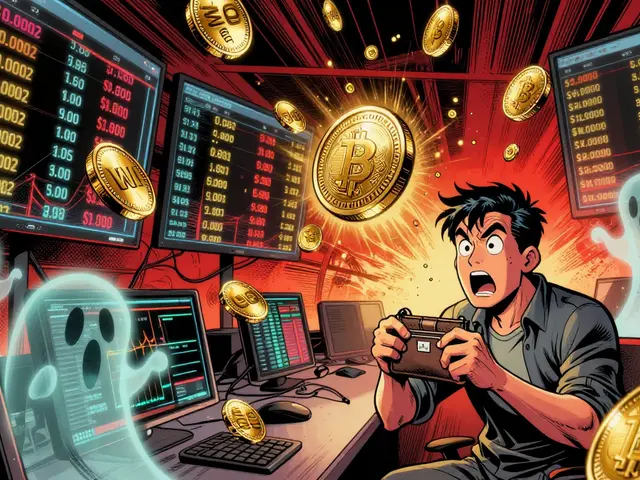

Let’s be real-crypto doesn’t care about your spreadsheets or your 9-to-5. It’s a wild animal, and news is the whip. I’ve seen Bitcoin drop 12% because some guy in a Discord server said ‘SEC might say no tomorrow.’ No data. No logic. Just panic. And guess what? It worked. Algorithms picked it up, retail followed, and boom-$800M vanished before breakfast. This isn’t chaos. It’s a system. A brutal, beautiful, broken system.
Stop pretending it’s supposed to make sense. It’s a sentiment engine with leverage. And we’re all just riding the storm.
Man, I remember when I first got into crypto and thought ‘oh, this is just like stocks.’ Nope. It’s more like watching a live-action horror movie where the monster is a tweet. I used to get anxious every time I saw Elon’s name pop up. Now? I just laugh. Because I know the market’s not reacting to him-it’s reacting to the 200,000 people who just panicked because they saw his name.
Still, I’m glad I didn’t sell during the USDC depeg. That was wild. But I held. And yeah, I’m still here. Still learning. Still betting on the future.
Why does a Fed rate hike make Bitcoin drop? Because people think it’s a signal, not because it’s a fact. It’s psychological. We’ve trained ourselves to see macro events as crypto events. It’s like Pavlov’s dogs, but with wallets.
And honestly? The fact that a Reddit thread can move markets more than a Bloomberg headline says something profound. We’re not in Wall Street anymore. We’re in the jungle. And the jungle doesn’t care about your MBA.
Stop romanticizing volatility. It’s not ‘structural’-it’s pathological. Crypto’s entire value proposition is built on trust in anonymous code. And yet, it collapses because someone on Twitter misspelled ‘ETF’? That’s not innovation. That’s a cult with a blockchain. The fact that you call this ‘rational’ proves you’ve lost touch with reality.
It is my considered opinion, based upon empirical observation and peer-reviewed behavioral finance literature, that the phenomenon under examination is not anomalous, but rather a predictable consequence of asymmetric information dissemination within decentralized, liquidity-constrained, non-regulated asset classes. The absence of circuit breakers, coupled with algorithmic feedback loops, constitutes a systemic vulnerability of considerable magnitude, particularly when juxtaposed against the temporal inertia of traditional financial infrastructure. One must therefore conclude that the observed volatility is not indicative of market inefficiency, but rather of structural evolution under duress.
Okay, but like… imagine if you woke up one day and your entire life’s savings was based on whether Elon Musk posted a meme of a dog. That’s not investing. That’s a fever dream. I’ve seen people cry over 3% dips. I’ve seen guys sell their cars because a tweet said ‘BTC to the moon.’ And then, 2 hours later, it’s down 10%.
It’s not even fun anymore. It’s like being in a relationship with someone who changes their mind every 10 minutes. ‘I love you.’ ‘I hate you.’ ‘I love you.’ ‘I’m dumping you for Dogecoin.’
Why do I keep doing this? I don’t know. But I’m still here. And I’m not sorry.
They say crypto is the future. But the future is a dumpster fire with a whitepaper. I watched a guy on YouTube cry because his Solana NFT dropped from 5 ETH to 0.2 ETH after a single SEC tweet. He had taken out a loan. He had told his mom he was ‘building wealth.’
And now? He’s cleaning toilets in Ohio. This isn’t finance. It’s a psychological experiment on human greed, and we’re all lab rats. The only thing more terrifying than the market is how many people still believe in it.
Man, I’ve been in this space since 2017. I’ve seen the crashes. I’ve seen the pumps. I’ve seen people make millions and lose it all in a weekend. But here’s the thing-every time I think it’s over, something new happens. A new regulation. A new tech. A new meme. And somehow, the market keeps going.
I don’t know if it’s smart. But I do know it’s alive. And that’s more than I can say for most things these days.
From India, I’ve seen how crypto connects people. My uncle in Delhi, my cousin in Kerala-we all check prices at 3 a.m. because that’s when the U.S. news drops. We don’t have brokers. We have WhatsApp groups. We don’t have analysts. We have Reddit threads. And somehow, we make it work.
It’s messy. It’s loud. But it’s ours. And for people like us, without banks or credit cards, this is freedom. Not perfect. But real.
The feedback loop between sentiment, algorithmic execution, and retail behavior is a textbook example of emergent market dynamics in a low-friction, high-leverage environment. The absence of traditional anchors creates a hyper-sensitivity to exogenous stimuli, which, when aggregated across global nodes, manifests as nonlinear price action. The key insight is that volatility isn’t noise-it’s the signal of distributed consensus formation under uncertainty. Institutional adoption will not eliminate this-it will merely reframe its parameters.
When I first saw Bitcoin drop because of a war in Gaza, I thought: ‘This is insane.’ But then I realized-it’s not about Gaza. It’s about fear. Fear of inflation. Fear of collapse. Fear that the system we trust is broken. Crypto doesn’t cause fear. It just reflects it.
I don’t trade anymore. I just watch. And I’m amazed. Not because I think it’s smart. But because it’s human.
The notion that social media sentiment drives asset valuation is not merely flawed-it is an affront to the principles of fundamental analysis. The reliance upon algorithmic sentiment scoring, derived from unverified, unmoderated, and emotionally charged textual inputs, constitutes a systemic failure of market integrity. The absence of regulatory oversight is not a feature-it is a catastrophic design flaw. This is not innovation. It is anarchy masquerading as finance.
Stablecoins are the glue. When USDC depegs, it’s not just about one coin. It’s about trust. People use them to move money in and out of crypto. If that bridge breaks, the whole thing shakes. I’ve seen traders panic and sell everything because they thought their USDC was worth 87 cents. It’s not about Bitcoin. It’s about the plumbing.
News doesn’t move crypto. FOMO moves crypto. And FOMO isn’t driven by headlines-it’s driven by people pretending they know what they’re doing. I’ve watched the same guy post ‘BTC to 100K’ every week for a year. He’s broke. But he’s still posting. That’s the real market.
Let me be clear: this isn’t a market. It’s a theater. The actors? Retail traders with smartphones. The stage? Global exchanges. The script? A viral tweet. And the audience? Millions who think they’re investing, when really, they’re watching a soap opera written by bots.
But hey-at least it’s entertaining.
Algorithmic trading is the silent force behind every spike and crash. No human sees it coming. No analyst predicts it. Machines react faster than thought. They don’t read. They scan. They don’t think. They execute. And that’s why crypto moves like lightning. Because it’s not driven by people anymore. It’s driven by code. And code doesn’t care if you’re rich or poor. It only cares if the signal triggers.
Volatility isn’t a bug-it’s a feature. A young market needs turbulence to grow. Every crash filters out the weak. Every rally attracts the bold. Crypto isn’t broken because it reacts to news. It’s evolving because it’s unshackled. The S&P 500 doesn’t move on a tweet. But it doesn’t move at all, either. Crypto moves. And that’s why it matters.
It’s funny how we blame the market. But really, we’re the ones who built it. We’re the ones who turned a tweet into a trade. We’re the ones who clicked ‘buy’ without reading the article. The bots just amplified what we already did. The system didn’t break. We did.