
Future of Staking as Consensus in Blockchain Networks
Staking as a consensus mechanism isn’t just another tech buzzword-it’s the backbone of how most modern blockchains operate today. If you’ve ever wondered why Ethereum stopped using so much electricity, or why your crypto wallet now offers a "stake your ETH" option, the answer lies in the quiet revolution that began with Proof of Stake a consensus mechanism where validators are chosen based on the number of tokens they hold and are willing to lock up as collateral. It replaced the brute-force mining of Proof of Work a consensus mechanism that relies on computational power to validate transactions and secure the network, and in doing so, it changed everything about how blockchains scale, secure themselves, and interact with users.
How Staking Replaced Mining
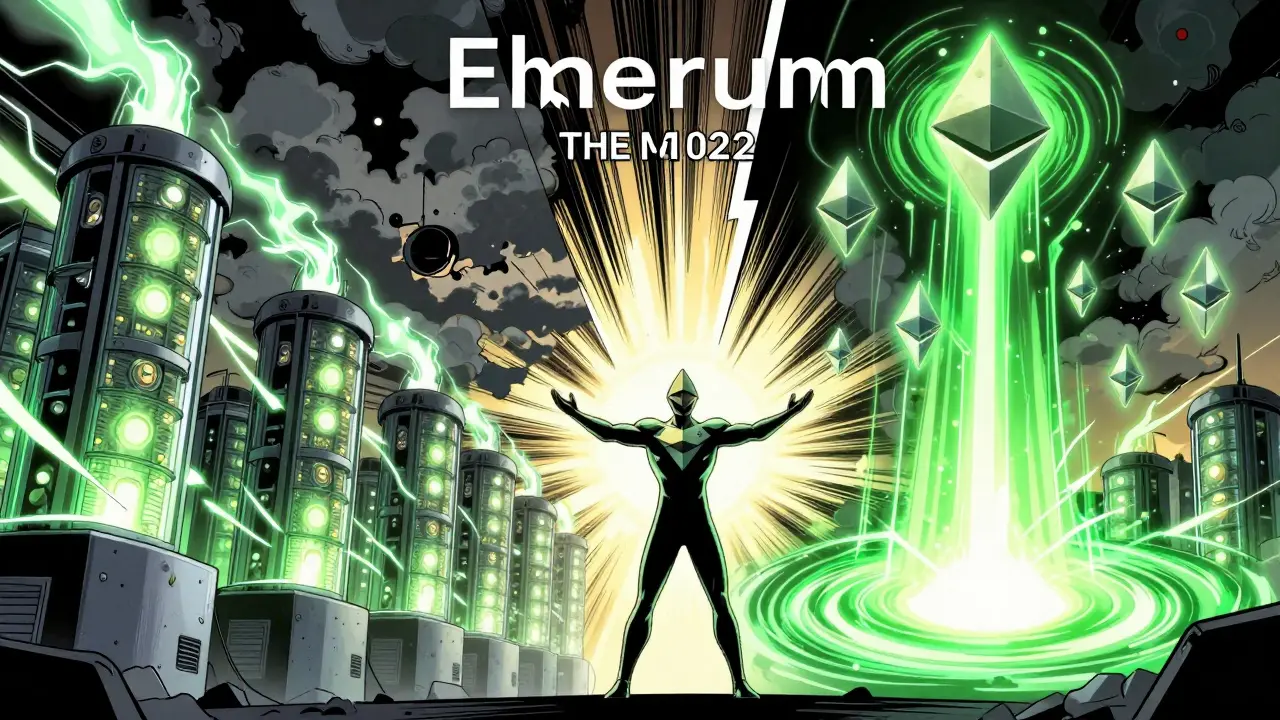
Before September 15, 2022, Ethereum ran on Proof of Work-the same system Bitcoin uses. Miners competed to solve complex math puzzles using powerful computers, consuming massive amounts of electricity. At its peak, Ethereum’s energy use was comparable to a small country. Then came The Merge Ethereum’s historic transition from Proof of Work to Proof of Stake on September 15, 2022, eliminating energy-intensive mining. Overnight, Ethereum slashed its energy consumption by 99.84%. That’s not a marketing number-it’s a fact verified by the Ethereum Foundation. The network went from using as much power as Peru to using less than a single data center.
Staking works differently. Instead of mining rigs, you lock up your ETH-32 ETH to be exact-to become a validator. Your stake acts like a bond: if you behave honestly, you earn rewards. If you try to cheat, you lose part or all of your stake. This economic penalty, called slashing, is what keeps the network secure. It’s not about who has the fastest computer-it’s about who has the most to lose.
Why Staking Dominates Now
As of 2024, Proof of Stake a consensus mechanism where validators are chosen based on the number of tokens they hold and are willing to lock up as collateral networks control $606 billion in market value-nearly 40% of the entire crypto market. That’s not because they’re trendy. It’s because they work better for real-world use.
Take speed. Ethereum confirms transactions in about 12.8 seconds on average. Bitcoin? Around 60 minutes. Solana, another PoS chain, can handle over 100,000 transactions per second. Compare that to Bitcoin’s 7 TPS. For apps that need fast, cheap payments-like DeFi, NFTs, or gaming-PoS isn’t just better. It’s the only option.
And accessibility? Anyone with a laptop and a few ETH can join. You don’t need a warehouse full of ASIC miners. You can even stake as little as 0.01 ETH through Liquid Staking Derivatives tokens issued by protocols like Lido that represent staked assets while allowing liquidity. Platforms like Lido and Rocket Pool let you delegate your stake without running your own server. That’s why over 28 million unique addresses are staking across major blockchains today-a 63% jump from 2023.
The Hidden Flaws
Staking isn’t perfect. One big fear is centralization. The top 100 staking entities control over 31% of all staked ETH. That means a handful of companies-like Lido, which holds 32% of all staked ETH-have outsized influence. If they go down, or get hacked, the ripple effect could be massive. That’s what happened in July 2023, when a bug in a consensus client caused 1,342 validators to be slashed, losing $1.2 million in ETH. It wasn’t an attack. It was a software glitch. But the damage was real.
Then there’s the "nothing at stake" problem. In theory, a validator could support multiple blockchain forks because it costs nothing to do so. But Ethereum fixed this with slashing. If you vote for a fork that’s not the main chain, you lose your stake. Other chains like Tezos and Cardano use similar economic incentives to keep validators honest.
And let’s not forget the regulatory storm. In May 2025, the U.S. Securities and Exchange Commission (SEC) declared that certain staking services could be classified as investment contracts. That means platforms like Coinbase, which paid out $1.05 billion in staking rewards in 2023, now face legal uncertainty. Over 67% of staking providers have already stopped serving U.S. customers. This isn’t just a compliance issue-it’s a threat to the global nature of crypto.

What’s Next: Restaking, Layer-2s, and DeFi Integration
The future of staking isn’t just about locking ETH. It’s about reusing it.
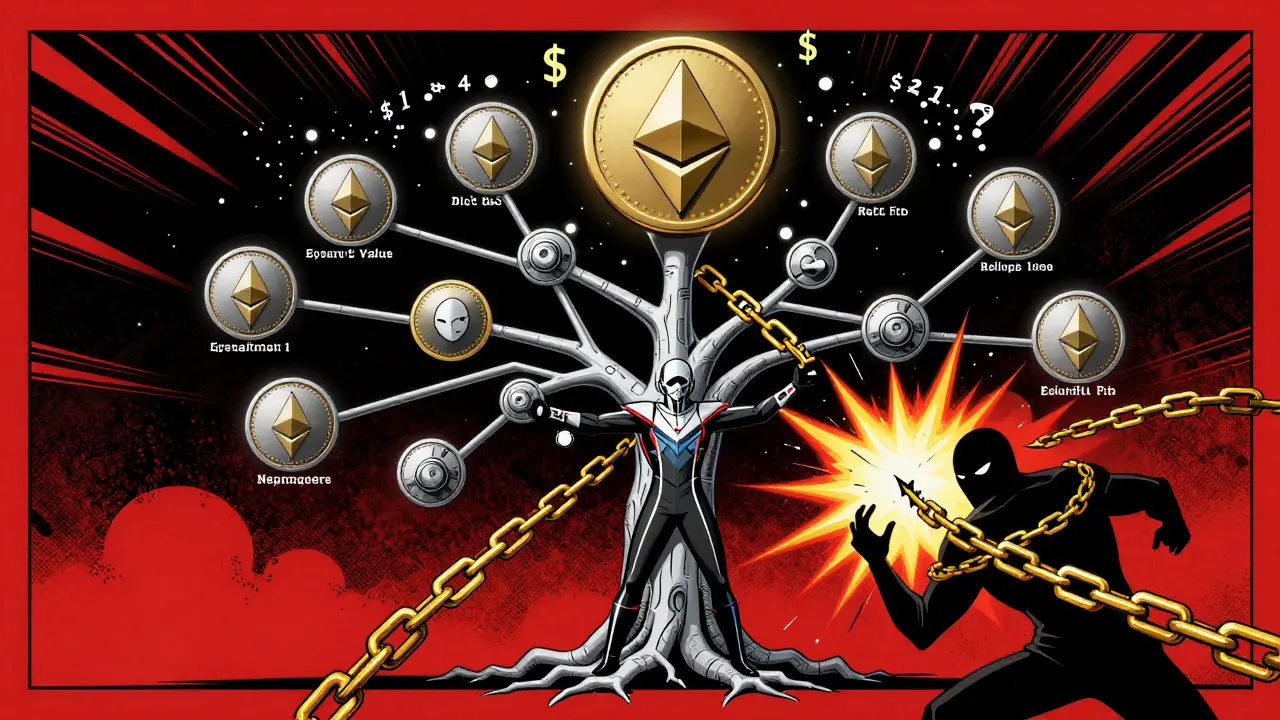
Restaking the practice of reusing staked assets to secure additional protocols, such as Ethereum Layer-2 rollups is the next big leap. With EigenLayer a protocol that allows Ethereum validators to re-stake their ETH to secure additional services, creating a shared security model, validators can now use their staked ETH to protect other networks-like rollups or oracle services-while still earning rewards. As of June 2024, EigenLayer secured over $12.4 billion in value this way.
And it’s not stopping there. DeFi protocols decentralized finance applications that enable lending, borrowing, and trading without intermediaries are starting to bundle staking with yield strategies. Imagine staking your ETH, earning rewards, and automatically using those rewards to buy options or lend them out-all in one click. That’s the future. Messari projects the liquid staking market will grow from $28.7 billion in 2024 to $142.3 billion by 2027.
Ethereum’s upcoming Pectra upgrade (Q1 2025) will make staking even easier. The minimum stake drops from 32 ETH to 16 ETH. Single-slot finality will cut confirmation times by 8x. And more users will be able to participate without needing a full validator node.
Staking vs. Mining: The Security Debate
Bitcoin maximalists still argue that Proof of Work is the only truly secure consensus. Their logic? You can’t fake physical hardware. To attack Bitcoin, you’d need to control over 50% of all mining power-a near-impossible feat because of the cost and energy required.
But PoS defenders, like Ethereum co-founder Vitalik Buterin, say that’s outdated thinking. In PoS, an attacker would need to buy 51% of all staked ETH. At current prices, that’s over $100 billion. And even if they did, they’d lose it all the moment they tried to cheat. Slashing makes attacks financially suicidal.
Real-world data backs this up. PoS networks like Ethereum have achieved 99.99% uptime. Bitcoin, while secure, has faced multiple 51% attacks on smaller forks. PoW’s security comes at a cost: energy. PoS’s security comes at a cost: economic alignment. Both have trade-offs. But for a network trying to scale, PoS wins.
Who’s Really Staking?
Most people think staking is for whales. It’s not. Retail users still make up 68.7% of all staked assets. Institutions like Coinbase Cloud and Figment account for 22.3%. But the real story is in the numbers: average staking durations have jumped from 142 days to 207 days. That means people aren’t just trying staking for quick rewards-they’re betting on the long-term health of the network.
And returns? Most Ethereum stakers earn between 3.8% and 5.2% annually. That’s not flashy, but it’s steady. And for users who avoid centralized exchanges and stake directly, the security is better. The trade-off? Technical complexity. Nearly 30% of users cite key management and server maintenance as barriers. That’s why liquid staking is growing so fast.
Final Thoughts: A New Foundation
The future of blockchain isn’t about mining rigs or energy-hungry data centers. It’s about economic alignment, accessibility, and efficiency. Staking as a consensus mechanism has already proven it can scale, secure, and sustain a network with over $20 billion locked in. It’s not without flaws-centralization, regulation, and technical risk are real. But the direction is clear: staking is becoming the default.
What’s next? More integration with DeFi. More restaking. More Layer-2 security layers. More users. The technology is maturing. The infrastructure is building. And the energy savings? They’re not just good for the planet-they’re good for business.
Is staking safer than mining?
It depends on what you mean by "safe." Proof of Work is harder to attack because it requires massive physical resources. But Proof of Stake makes attacks economically suicidal-you’d need to spend billions to steal a network, and then lose it all instantly. For most users, PoS offers stronger security per dollar spent.
Can I stake Ethereum without 32 ETH?
Yes. You can use liquid staking services like Lido, Rocket Pool, or Coinbase. These let you stake as little as 0.01 ETH. You get a token (like stETH) that represents your staked ETH and earns rewards. It’s easier, but you’re trusting a smart contract.
What happens if a staking platform gets hacked?
If you stake directly on Ethereum’s network, your ETH is safe-it’s secured by the blockchain itself. But if you use a centralized exchange or liquid staking protocol, you’re exposed to their smart contract risk. Lido had a brief outage in 2023. Coinbase has never been hacked for staking, but the risk exists. Always understand where your assets are held.
Will the SEC shut down staking?
Not entirely. The SEC’s 2025 statement targeted staking-as-a-service offered by centralized platforms, not individual staking. Retail users who stake directly on Ethereum’s network aren’t affected. But most exchanges now block U.S. users from staking services. The legal gray area remains, but decentralized staking is still legal.
How much do I earn from staking?
Ethereum staking yields between 3.8% and 5.2% annually, depending on network activity. Other chains vary: Solana offers around 7%, while Cardano offers 4-5%. Fees charged by staking services (like Lido’s 4.5%) reduce your net return. Always check the total APY after fees.
Is staking environmentally friendly?
Yes. Ethereum’s transition to PoS cut its energy use by 99.84%. PoS networks collectively prevent 113.7 million metric tons of CO2 emissions yearly-equivalent to removing 24.6 million gasoline cars from the road. That’s why climate-focused investors now favor PoS chains.
What’s the difference between PoS and DPoS?
Proof of Stake (PoS) lets anyone stake to become a validator. Delegated Proof of Stake (DPoS), used by EOS and Tron, lets token holders vote for a small group of validators (usually 21-100). DPoS is faster but more centralized. PoS is more decentralized but slower to finalize.




staked my 0.05 eth on lido last month and honestly? it’s been chill. no drama, just steady rewards. love that i dont need a server or to be a crypto wizard 😊
the real win here is how accessible staking is now you dont need 32 eth anymore and that changes everything for regular people like me i used to think this was only for tech bros with 3 monitors now i just click a button and my eth works for me
so you're telling me we replaced energy waste with centralized control by a few big players like lido? brilliant. the system is just more efficient at concentrating power. this isn't progress it's rebranding.
people act like staking is ethical but let's be real you're literally betting on the future of money while the world burns and governments watch and the sec just sits there waiting to pounce this isn't innovation it's financial gambling dressed up as revolution
i get both sides. mining had real environmental costs but staking introduces new risks like smart contract exploits and single points of failure. maybe the answer isn't picking one over the other but hybrid models that preserve decentralization while reducing energy use
ok but who really controls the validators?? i mean like... if lido goes down what happens to all those steth tokens?? and dont even get me started on the fact that the same people who run the nodes also run the exchanges and the wallets and the apps and the analytics dashboards... its all one big circle jerk
the us sec is right to be concerned. staking-as-a-service is clearly an unregistered security offering. this isn't a technical debate it's a legal one. if you're earning yield on something you don't fully control it's a security. period. the global crypto movement is built on a foundation of regulatory evasion and now the house of cards is collapsing under its own hypocrisy
they say slashing prevents attacks but what if the slashing logic itself gets hacked? what if the code has a backdoor? what if the validators are all controlled by a single entity with ties to a foreign government? this isn't secure it's a honeypot for state actors and we're all just sitting here like sheep waiting to be sheared
as someone from the south i just wanna say this staking thing is wild. my grandma just started staking 0.1 eth through coinbase and she thinks it's like a savings account. she's not wrong. maybe the real revolution is that crypto is finally becoming normal
i staked my eth and got steth back. it's like magic money. i use it in uniSwap and compound and earn more. it's not just staking anymore it's staking x2 x3. we're in the age of compound yield now 🚀
why is everyone so excited? this is just another way for the rich to get richer. the 1% are staking 80% of the supply. the rest of us are just trying to get our 0.01 eth to earn 4% while they rake in millions. i'm tired of this narrative.
the beauty of proof of stake is that it aligns incentives. when your capital is at risk you're not just a passive observer you become a guardian of the network. this isn't about hardware or hash rates it's about economic commitment. the fact that over 28 million addresses are participating shows that people are voting with their wallets not just their opinions. this is organic adoption at scale
restaking is the real game changer. eigenlayer is enabling shared security across l2s and oracles which creates a feedback loop of trust. validators aren't just securing eth anymore they're securing the entire modular blockchain stack. this is the infrastructure layer of web3's next phase. if you're not thinking about restaking you're already behind
enough with the woke crypto bs. ethereum's energy savings? laughable. the real energy cost is in the hardware for l2s and the servers running the staking pools. and who's paying for all this? us. the retail suckers. the whole thing is a pyramid scheme dressed up as sustainability
While I appreciate the technical exposition presented herein, I must express profound concern regarding the structural fragility inherent in delegated staking mechanisms. The systemic concentration of validator power within centralized entities constitutes an existential threat to the foundational tenets of blockchain decentralization. Furthermore, the legal ambiguity surrounding staking-as-a-service presents a non-trivial compliance risk that may precipitate regulatory intervention of unprecedented scope.
Staking works because it makes honesty profitable. That's it. No magic. No mining. Just math and incentives.
You think this is progress? You're delusional. The real winners are the VC-backed staking protocols that take 4.5% off your yield. Meanwhile, regular people are told to "just trust the system" while their assets are locked in smart contracts written by anonymous devs. This isn't decentralization. It's capitalism with a blockchain logo.
I appreciate the thoughtful analysis in this post. As someone from India, I've seen firsthand how staking has opened financial inclusion for millions who previously had no access to yield-bearing assets. The fact that even small amounts can now earn passive income is transformative. It's not just about technology-it's about dignity. More people need to understand this isn't just crypto-it's economic empowerment.