Future of Crypto Portfolio Management: AI, Regulation, and Institutional Shifts in 2026
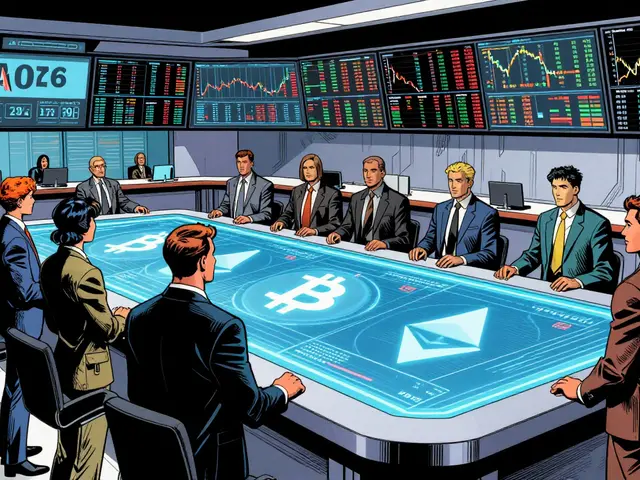
Remember when buying Bitcoin felt like betting on a wild horse race? That era is officially over. By mid-2026, managing a crypto portfolio looks less like gambling and more like running a hedge fund. The market has matured from chaotic speculation into a structured asset class that sits comfortably alongside stocks and bonds in professional investment strategies. If you are still treating your digital assets as a lottery ticket, you are likely leaving money on the table-or worse, risking it unnecessarily.
The landscape has shifted dramatically since the regulatory fog began to lift with the GENIUS Act and coordinated efforts between the SEC and CFTC. Today, institutions aren't just watching from the sidelines; they are driving the bus. With billions flowing into spot ETFs and tokenized real-world assets (RWAs) gaining traction, the tools and strategies for managing these portfolios have evolved too. This isn't about chasing memecoins anymore. It's about strategic allocation, risk management, and leveraging data-driven insights to navigate a complex ecosystem.
From Speculation to Strategy: The Institutional Wave
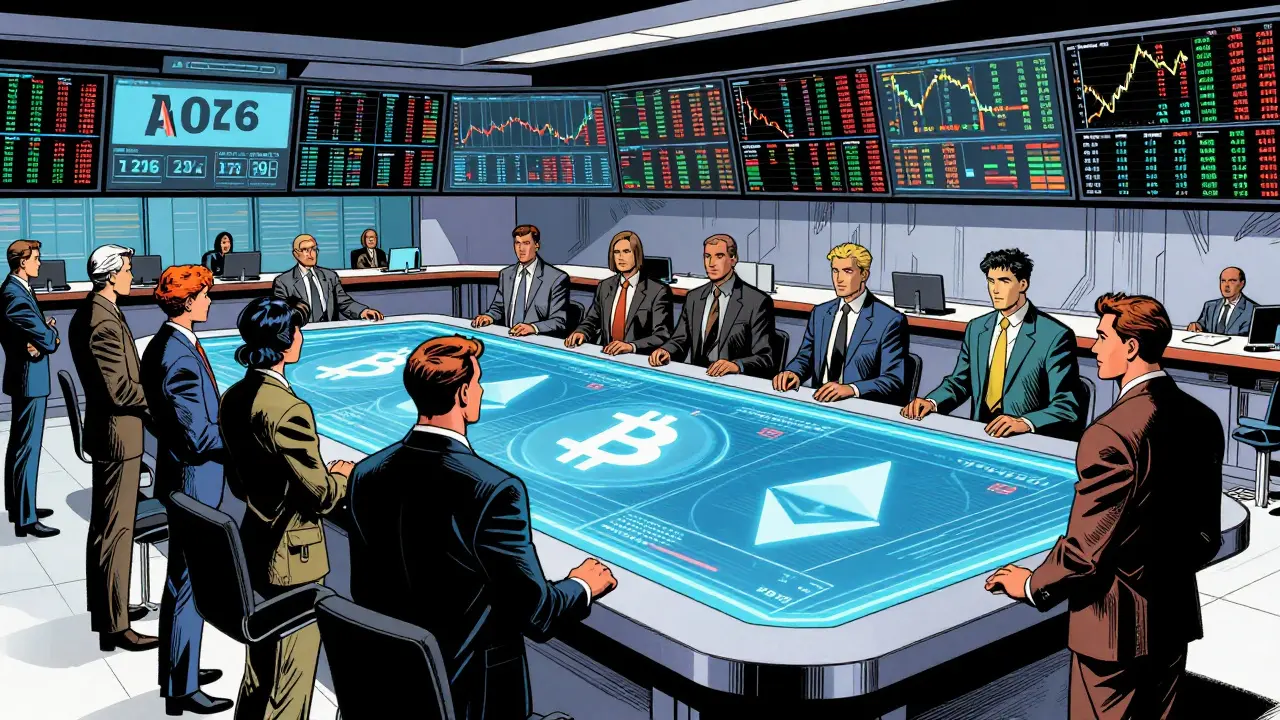
The biggest change in crypto portfolio management is who is playing. In 2022, only about 22% of financial institutions had any exposure to digital assets. Fast forward to 2025 and early 2026, and that number has skyrocketed to 86%. Why? Because the regulatory uncertainty that once scared off big money has largely been replaced by clear frameworks.
State Street Global Advisors reported that the passage of the GENIUS Act provided the foundational clarity needed for mainstream adoption. This legislation didn't just legalize crypto; it integrated it into existing financial reporting standards. For example, the implementation of FASB’s ASC 350-60 standards means businesses now measure digital assets at fair value, improving transparency in how gains and losses are reported. This shift has made crypto palatable for conservative investors and pension funds alike.
Consider the numbers: U.S. Bitcoin ETFs held $27.4 billion in assets as of late 2024, with Schwab customers alone holding $25 billion in crypto ETFs. Morgan Stanley analysts noted that these products are transitioning from niche speculation to portfolio staples. When Coinbase enters the S&P 500 or MicroStrategy joins the Nasdaq-100, as predicted by State Street, crypto exposure becomes automatic for millions of index fund investors. Your portfolio manager doesn't need to pick individual coins anymore; they just buy the index.
| Asset Class | Institutional Allocation | Retail Aggressive Allocation |
|---|---|---|
| Core Assets (BTC/ETH) | 60-70% | 70% |
| Tokenized RWAs | 20-25% | 5% |
| Narrative/AI Tokens | 5-10% | 15% |
| DeFi Protocols | 5-10% | 10% |
| Stablecoins/Liquidity | 5-10% | 5% |
This table highlights a key difference: institutions prioritize stability and yield through Real-World Assets (RWAs), while retail investors often chase higher-risk narrative tokens. Understanding where you fit helps define your strategy.
AI-Powered Analytics: The New Edge
If regulation built the road, Artificial Intelligence (AI) is the engine driving modern portfolio management. You can no longer rely on gut feeling or Twitter threads to make decisions. The volume of data is simply too vast. Platforms like Token Metrics process 1.2 million data points per second to identify market anomalies before they hit the headlines.
Why does this matter? Because speed and accuracy determine profit margins. In the past, you might have waited for a price chart to show a trend. Now, AI tools analyze on-chain metrics, sentiment analysis, and developer activity simultaneously. For instance, during the March 2025 market correction, portfolios using AI-driven predictive analytics maintained better risk-adjusted returns compared to those relying on manual analysis.
a16z Crypto’s 2025 State of Crypto Report identified "crypto x AI" as the dominant innovation theme, with 67% of developer activity focused on integrating blockchain applications with AI agents. This isn't just hype. Bitwise Investments forecasted that tokens launched by AI agents would spearhead a new wave of market activity. As an investor, this means you need tools that can evaluate these projects objectively, filtering out noise from genuine technological advancement.
For the average investor, this translates to using platforms that offer automated rebalancing triggers. Instead of checking your portfolio daily, you set parameters-like a 5% deviation in allocation-and let the system adjust. This removes emotional decision-making, which is often the biggest enemy of consistent returns.

Tokenized Real-World Assets: Bridging Two Worlds
One of the most exciting developments in 2025 was the explosion of Tokenized Real-World Assets (RWAs). This sector allows you to own fractional shares of physical assets like real estate, treasury bills, or commodities on the blockchain. Bitwise predicted that RWA value would surpass $50 billion in 2025, representing a 150% year-over-year growth.
Imagine buying a fraction of a commercial building in New York for $100 and earning rental income directly into your wallet. Platforms like the Real Estate Metaverse enabled this, offering average annual returns of 6.8% from rental income. While 22% of early adopters faced liquidity challenges during market corrections, the potential for diversification is undeniable. RWAs bring traditional finance yields into the crypto ecosystem, reducing reliance on volatile speculative assets.
However, this introduces new complexities. You need to understand the underlying asset, the legal structure, and the custody solutions. Cherry Bekaert’s analysis highlighted that successful RWA investments require robust legal frameworks to ensure ownership rights are enforceable. This is why institutional-grade custody solutions, such as multi-party computation wallets from Fireblocks or Copper, have become standard. Security isn't optional; it's the foundation of trust.
Risk Management in a Volatile Market
Volatility hasn't disappeared; it has just become more predictable. Active management outperformed passive holdings by 23.7% in 2024, according to SPDR Galaxy Digital Asset ETFs data. But active management comes with a cost-averaging 1.25% in fees versus 0.45% for passive ETFs. Is it worth it? XBTO’s analysis suggests yes, if you can achieve 2.1x better risk-adjusted returns during high-volatility events.
Key risk management protocols include:
- Tactical Positioning: Adjusting exposure based on macroeconomic indicators rather than just price action.
- Derivatives Usage: Using options and futures to hedge against downside risk without selling core assets.
- Liquidity Management: Keeping 5-10% in stablecoins like USDC to capitalize on market dips.
- Geographic Diversification: Mitigating jurisdiction-specific regulatory risks by spreading exposure across different regions.
Trustpilot reviews reveal that 32% of retail users struggle with DeFi yield optimization, citing impermanent loss exceeding 18% during ETH volatility spikes. This is a critical lesson: complexity carries a penalty. If you don't fully understand the mechanism behind a yield farm, you shouldn't put money in it. Stick to transparent, audited protocols with proven track records.
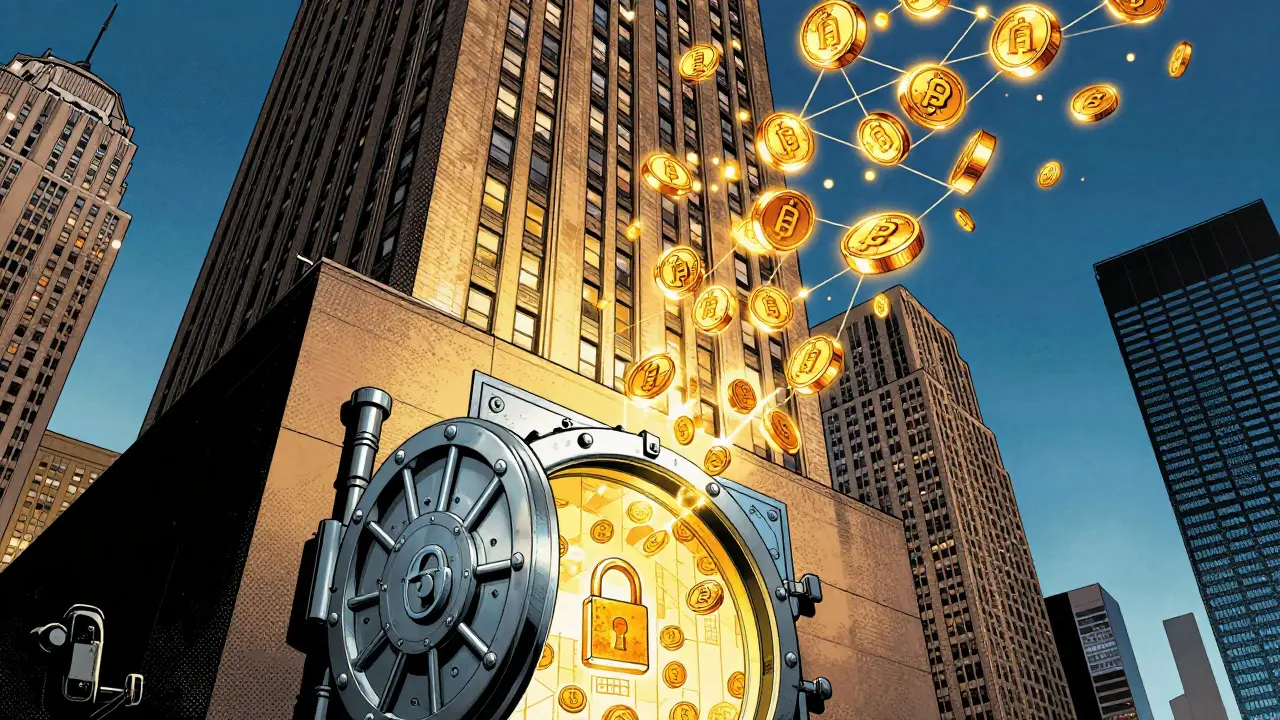
Practical Steps for Modern Portfolio Construction
Building a resilient crypto portfolio in 2026 requires a structured approach. Here is a step-by-step guide based on current best practices:
- Define Your Core Allocation: Start with 40-60% in Bitcoin and Ethereum. These are your anchors, providing stability and long-term appreciation potential.
- Add Yield Through Staking: Allocate 10-20% to staked ETH or other proof-of-stake assets to generate passive income. Ensure you use reputable staking providers to avoid slashing risks.
- Diversify with RWAs: Invest 10-20% in tokenized treasuries or real estate to balance volatility with steady yields.
- Satellite Positions for Growth: Dedicate 5-15% to high-growth sectors like AI-integrated blockchains or Layer 2 solutions. Research thoroughly; this is where alpha is found but also where losses occur.
- Maintain Liquidity: Keep 5-10% in stablecoins to rebalance during downturns or seize opportunities.
- Automate Rebalancing: Use tools that trigger buys/sells when allocations deviate by more than 5% from your target.
Don't forget the tax implications. Cherry Bekaert’s survey showed that 78% of users require specialized crypto tax software due to the complexity of tracking transactions across multiple chains and protocols. Ignoring this can lead to significant penalties down the line.
Looking Ahead: What’s Next?
The trajectory is clear. By 2027, Morgan Stanley projects crypto will represent 3-5% of institutional portfolios. The integration of AI, regulatory clarity, and tokenization will continue to deepen. We are moving toward a future where your bank account and your crypto wallet are seamlessly connected, managed by intelligent algorithms that optimize for your specific risk tolerance.
For now, focus on education and discipline. The tools are available, the regulations are settling, and the opportunities are real. But success belongs to those who treat their portfolio with the seriousness it deserves-not as a get-rich-quick scheme, but as a vital component of a diversified financial future.
Is crypto portfolio management suitable for beginners in 2026?
Yes, but with caution. Beginners should start with simple ETFs or major assets like Bitcoin and Ethereum rather than diving into complex DeFi protocols. Using automated platforms with educational resources can help bridge the knowledge gap. Avoid high-leverage trading until you fully understand the risks.
How do I choose between active and passive crypto management?
Passive management (buying and holding ETFs) is lower cost and less stressful, ideal for long-term investors. Active management offers higher potential returns (23.7% outperformance in 2024) but requires more time, expertise, and incurs higher fees (1.25% vs 0.45%). Choose active if you have the time to monitor markets and use AI tools effectively.
What are Tokenized Real-World Assets (RWAs)?
RWAs are physical assets like real estate, gold, or government bonds represented as tokens on a blockchain. They allow fractional ownership and provide traditional finance yields within the crypto ecosystem. In 2025, the RWA market surpassed $50 billion, offering a stable diversification option for volatile crypto portfolios.
How has the GENIUS Act impacted crypto investing?
The GENIUS Act provided crucial regulatory clarity, enabling institutions to invest confidently. It established standards for reporting and custody, leading to increased adoption by banks and pension funds. This has reduced regulatory uncertainty and brought crypto closer to mainstream financial integration.
Do I really need AI tools for my crypto portfolio?
While not mandatory, AI tools provide a significant edge by processing vast amounts of data faster than humans. They help identify trends, manage risk, and automate rebalancing. For serious investors, especially those managing larger sums, AI analytics can improve risk-adjusted returns and reduce emotional decision-making errors.