
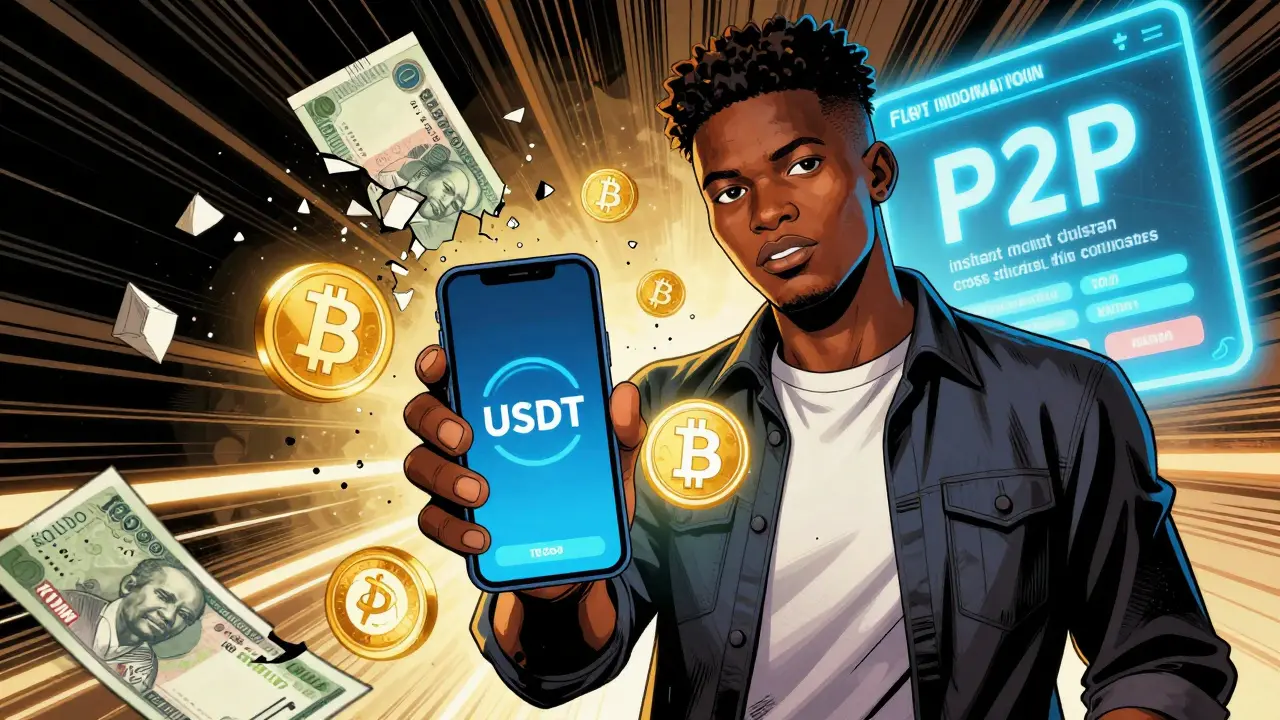
Crypto Adoption in Nigeria: How Economic Pressure Is Driving Mass Crypto Use
By 2025, over 22 million Nigerians - about 10.3% of the country’s population - owned cryptocurrency. That’s not a niche trend. It’s a full-blown financial shift. And it didn’t happen because of hype, ads, or influencers. It happened because the naira kept losing value, banks refused to serve crypto users, and people had no other way to protect their money.
Nigeria’s economy has been under pressure for years. Inflation hit 24% in 2023. The naira lost more than 75% of its value against the US dollar since 2016. For many, savings in local currency became a losing game. A man earning 150,000 naira a month in 2018 could buy 150 chicken eggs. By 2025, that same salary bought 30. Crypto wasn’t a luxury - it was survival.
Why Crypto? Because the Banks Didn’t Help
One in three Nigerian adults has no bank account. Even those who do often face long delays, high fees, or outright refusals when trying to move money abroad. Sending $100 to a family member in the U.S. through Western Union or MoneyGram cost up to 8% in fees. With crypto, you can send the same amount for under $1, and it arrives in minutes.
Before 2021, the Central Bank of Nigeria (CBN) banned banks from dealing with crypto companies. That didn’t stop people. It just pushed them underground. P2P trading exploded. Platforms like Binance, Paxful, and LocalBitcoins became lifelines. Users bought Bitcoin with naira, then traded it for USDT - a stablecoin pegged to the dollar. Suddenly, their money didn’t vanish overnight.
Then, in late 2023, the CBN lifted the ban. Banks could now legally process crypto transactions again - as long as the exchange was licensed. That single policy change turned a black market into a regulated market. Exchange volumes jumped 300% in six months. By 2025, Nigeria ranked second in the world for crypto adoption, behind only India.
The P2P Revolution: Crypto Without Banks
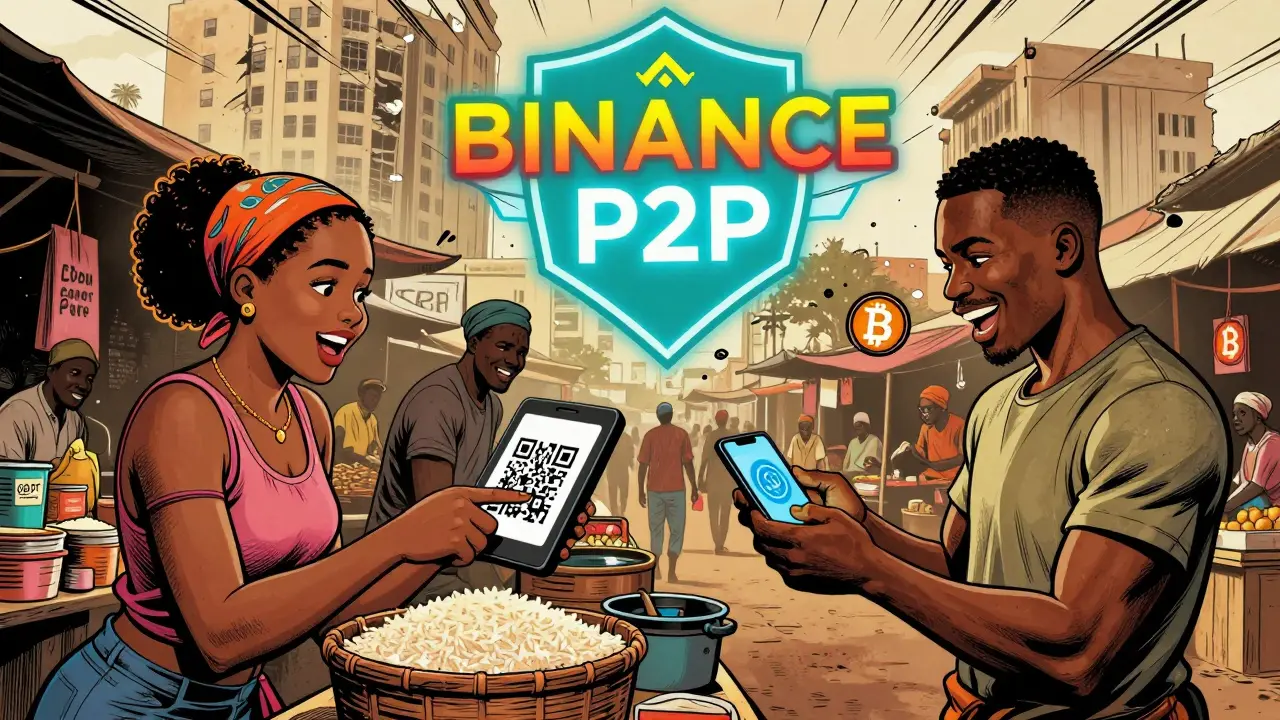
Nigeria’s crypto scene is built on P2P trading. There’s no need for a bank. You meet a seller on Binance P2P, pay them via bank transfer, mobile money, or even cash at a local shop, and they send you Bitcoin or USDT. No middleman. No approval. No waiting.
This system works because Nigerians trust each other more than institutions. Community trust replaced bank trust. Telegram groups and WhatsApp chains became training centers. Experienced users taught newcomers how to avoid scams, check seller ratings, and lock in rates before payment. Within two to four weeks, most users could trade confidently.
And it’s not just for Bitcoin. Stablecoins like USDT and USDC are the real stars. They don’t swing wildly like Bitcoin. They hold their value. A freelancer in Lagos gets paid in USDT from a client in Germany. They hold it. They use it to buy groceries from a vendor who accepts crypto. They convert a little to naira when needed - but only enough to cover daily expenses.
From Survival to Innovation
It’s not just about avoiding loss anymore. Crypto is now a tool for building.
In 2025, Moniepoint - a Nigerian fintech app that lets small businesses accept payments - became a unicorn worth $1 billion. Google invested. Why? Because Moniepoint integrates crypto payments. A market vendor in Kano can now receive dollars directly into her phone, no bank needed. She doesn’t need a business license. She doesn’t need collateral. She just needs a smartphone and an internet connection.
Even Nigeria’s banking infrastructure is changing. The Nigeria Inter-Bank Settlement System (NIBSS), which handles all interbank transfers, partnered with Zone’s blockchain network in early 2025. Now, banks settle payments faster, with less fraud, using blockchain tech. It’s not decentralized finance - it’s traditional finance using crypto tools.
And it’s working. Sub-Saharan Africa saw over $205 billion in crypto transactions between July 2023 and June 2024. Nigeria alone accounted for nearly half. In March 2025, when the naira dropped 12% in a week, crypto volume spiked to $25 billion in one month - while other regions saw declines. People didn’t buy crypto because it was trendy. They bought it because their money was disappearing.
Who’s Using Crypto - And Why
It’s not the rich. It’s not tech bros. It’s the young, the working class, the freelancers, the traders.
- 80% of Nigerian crypto users are under 35.
- Over 60% use crypto to receive international payments - freelancers, remote workers, content creators.
- More than 70% use crypto to hedge against inflation - keeping savings in USDT instead of naira.
- Over 8% of all crypto transactions in Sub-Saharan Africa are under $10,000. That’s retail, not institutional. This is everyday people, not hedge funds.
Reddit threads and WhatsApp groups are full of stories: “I bought 0.02 BTC last year. Today it’s worth 3x what I paid. I used it to pay my sister’s school fees.” Or: “I got paid in USDT. I bought rice, beans, and oil from a local shop that accepts crypto. No bank, no delay.”
DeFi - decentralized finance - is still niche. Most people don’t know what liquidity pools or yield farming are. They just want to hold something that won’t vanish overnight.

The Challenges: Not All Smooth Sailing
It’s not perfect. There are still big problems.
Exchanges crash during volatility spikes. When the naira drops, P2P trading surges. Servers overload. Users can’t log in. Withdrawals stall. Some platforms take days to respond to support tickets.
Security is another issue. New users don’t always understand private keys. Some store them on their phones. Others write them down on paper and lose them. Scams are common - fake giveaways, phishing sites, impersonators on Telegram.
And while the CBN’s 2023 policy shift was a win, regulation is still shaky. What if the next government reverses course? What if international pressure forces Nigeria to clamp down again? There’s no guarantee this stability lasts.
Still, trust is growing. More Nigerians now use licensed exchanges like Quidax and Yellow Card. They’ve seen the system work. They’ve saved money. They’ve paid bills. They’ve sent help home.
The Future: Crypto as Infrastructure
Nigeria isn’t trying to replace the naira. It’s trying to give people options. The government is exploring a central bank digital currency (CBDC) - the eNaira. But so far, it’s slow, clunky, and unpopular. People don’t trust it. They’ve already found something better.
The real future isn’t in government apps. It’s in apps like Moniepoint, in blockchain-powered bank settlements, in P2P platforms that work even when the power goes out. It’s in the fact that a 19-year-old in Port Harcourt can earn dollars from a client in Canada and spend them locally - without ever touching a bank.
By 2026, experts predict over 25 million Nigerians will hold crypto. That’s one in eight people. And it’s not slowing down. As long as inflation stays high, the naira keeps falling, and banks stay unreliable, crypto will keep growing.
This isn’t a bubble. It’s a response. A practical, grassroots, life-saving response to broken systems. And in Nigeria, crypto isn’t just money. It’s freedom.
Why is crypto so popular in Nigeria compared to other African countries?
Nigeria has the largest population in Africa - over 220 million - and the continent’s biggest economy. But it also suffers from extreme inflation, a collapsing currency, and poor banking access. These problems are worse than in most African nations. With 36% of adults unbanked and remittance fees as high as 8%, crypto became the fastest, cheapest, and most reliable alternative. No other African country has combined such massive demand with such broken infrastructure - making Nigeria the epicenter of crypto adoption on the continent.
Can I use crypto in Nigeria without a bank account?
Yes, absolutely. Many Nigerians use crypto without ever having a bank account. P2P platforms like Binance allow you to buy crypto using mobile money (MTN MoMo, Airtel Money), cash deposits at local shops, or even bank transfers from someone else’s account. You don’t need to own a bank account to trade. You just need a smartphone, internet access, and a trusted seller. This is how millions first entered the crypto space.
Is crypto legal in Nigeria in 2026?
Yes, crypto is legal to own, trade, and use. The Central Bank of Nigeria lifted its 2021 ban on banks servicing crypto businesses in late 2023. Licensed exchanges like Binance, Quidax, and Yellow Card now operate openly. You can buy, sell, and hold crypto without fear of arrest. However, the government still doesn’t recognize crypto as legal tender. You can’t use Bitcoin to pay taxes or buy a car from a dealership - but you can use it to pay a freelancer, send money abroad, or save your income.
What’s the best crypto to use in Nigeria right now?
USDT (Tether) is the most widely used. It’s pegged to the U.S. dollar, so it holds its value when the naira drops. Most P2P trades are done in USDT. Bitcoin is popular for long-term savings, but it’s too volatile for daily use. USDC is gaining ground too, especially on licensed exchanges. For sending money abroad, USDT is the standard. For holding value, Bitcoin. For trading, USDT. That’s the hierarchy most Nigerians follow.
How do I start using crypto in Nigeria?
Start with Binance P2P. Download the app, create an account, and verify your ID. Then, search for USDT sellers with high ratings and low prices. Pay via bank transfer or mobile money. Once you receive the USDT, store it in a wallet like Trust Wallet. Don’t leave it on the exchange. Learn from Nigerian crypto Telegram groups - they offer free guides in Pidgin English. Within a week, you’ll be trading confidently. Skip DeFi until you understand private keys and security.
Is crypto safer than keeping money in a Nigerian bank?
It depends. Banks can freeze accounts, delay withdrawals, or collapse under pressure - and they’re not insured like in the U.S. Crypto wallets aren’t insured either, but they’re immune to bank runs and currency devaluation. If you hold USDT, your money doesn’t lose value overnight. If you keep naira, it does. For most Nigerians, crypto isn’t about safety - it’s about preservation. It’s not perfect, but it’s often more reliable than the alternatives.




Okay but let’s be real - this isn’t crypto adoption, it’s desperation. Nigeria’s government failed so hard that people are using Bitcoin to buy rice. That’s not innovation, that’s a cry for help. And don’t even get me started on USDT - it’s just a centralized scam with a blockchain coat of paint. The whole thing is a house of cards held up by inflation and ignorance.
This is one of the most inspiring economic transformations I’ve seen in decades. When institutions fail, people innovate. Nigeria’s grassroots crypto movement isn’t just about money - it’s about dignity. The fact that a market vendor in Kano can receive dollars directly via smartphone? That’s empowerment. This model could be replicated across the Global South. Kudos to every Nigerian who turned crisis into agency.
Wait, wait, wait... You say 22 million people use crypto? That’s 10.3% of the population? Did you even check the math? 22 million divided by 220 million is 10%, not 10.3%. And you’re calling this ‘mass adoption’? That’s like calling a sneeze a pandemic. Also, USDT? That’s Tether. The same company that got fined $4B for lying about reserves. This isn’t freedom - it’s financial roulette.
I think this is kinda cool but idk if i got all the details right. Like, wait, so people just pay cash to strangers for usdt? That sounds risky. Also, is it really that easy to avoid scams? I feel like i’d get hacked in like 2 days. But hey, if it works for them, more power to them. Just wish i understood it better.
I really appreciate how this post breaks it down. The shift from survival to innovation is key. Most people think crypto = speculation, but here it’s infrastructure. The Moniepoint example? That’s the future. Imagine if every country let people bypass broken systems like this. Also, the P2P trust model is fascinating - it’s like a digital version of village economies. We’re seeing decentralized community building in real time.
This is why India is ahead. We have 1.4 billion people and we don’t need crypto to survive. Nigeria’s economy is a mess because of corruption and bad leadership. Crypto isn’t a solution - it’s a symptom. And now you’re praising it like it’s some kind of revolution? Wake up. Real progress is building institutions, not gambling on blockchain.
I read this whole thing and just sat there quietly. It’s wild how something so broken can create something so functional. The part about the 19-year-old in Port Harcourt earning from Canada and buying rice locally? That’s poetry. No grand speeches, no politicians - just a kid with a phone and a network. Sometimes the best revolutions don’t have flags.
While the anecdotal evidence presented is compelling, one must consider the macroeconomic implications. The reliance on unregulated stablecoins introduces systemic risk to financial stability. Furthermore, the absence of consumer protection mechanisms renders users vulnerable to irreversible losses. The Central Bank’s decision to permit licensed exchanges is pragmatic, yet insufficient. A robust regulatory framework, not merely permissive licensing, is imperative for sustainable adoption.
Let’s be honest - this isn’t adoption. It’s a liquidity crisis masquerading as innovation. USDT is a Ponzi wrapped in a whitepaper. People aren’t choosing crypto - they’re fleeing a collapsing currency. And Moniepoint? A unicorn? That’s like calling a leaky boat a yacht. The whole thing is a temporary patch on a ruptured dam. The moment the dollar stabilizes or regulators crack down, this whole house of cards evaporates. This isn’t the future. It’s the last gasp of a failed state.
Crypto works because banks suck.
I knew it! This is all a CIA plot! They want us to use crypto so they can track every single transaction. And USDT? Tether is owned by the same people who run the Fed. The naira collapse? Manufactured. The CBN didn’t lift the ban - they were forced to. There’s a global plan to replace cash with digital currency. Nigeria’s just the test lab. And don’t tell me about ‘freedom’ - freedom is a lie. They’re just making us dependent on a system that can be shut off with a button. I’ve seen the documents.
This made me so hopeful. I’ve been following Nigerian crypto stories for a while and it’s amazing how people are helping each other - teaching in WhatsApp groups, sharing tips in Pidgin, trusting neighbors instead of banks. I wish more people in the US understood that crypto isn’t just for flipping coins. It’s for real life. Like, my aunt in Kenya uses mobile money to send cash to her kids - imagine if she could use USDT instead and not lose 10% in fees. This is the kind of tech that actually helps people. Thank you for sharing this.
I just cried reading this. My cousin in Lagos started using crypto last year after her salary got wiped out by inflation. She told me she finally felt like she had control. Not because she got rich - but because she didn’t lose everything. The part about the vendor in Kano? That’s my mom’s story. She used to wait 3 days for a bank transfer to send money home. Now she gets paid in USDT and buys groceries the same day. It’s not perfect. But it’s real. And it’s saving lives. I’m so proud of them.